The Net Worth Americans Think They Need at 45 vs. the Real Number
Money and midlife have always been complicated dance partners. Picture this: you’re staring down your mid-forties, juggling mortgage payments, maybe college savings, possibly aging parents who need help. You wonder if you’re doing okay or falling behind. Turns out, there’s a massive disconnect between what people think they should have saved by 45 and what’s actually sitting in their bank accounts. The gap is honestly staggering.
Let’s be real, most of us have no idea if we’re on track. We compare ourselves to neighbors, scroll through finance Instagram, and hope for the best. The reality, though, is much more complex than any social media post can capture.
What Americans Think They Need by 45

Americans believe they need roughly $1.26 million to retire comfortably, according to a 2025 Northwestern Mutual survey of over 4,500 adults. While that figure represents total retirement needs rather than specifically at age 45, it reveals how people are thinking about their financial futures. Here’s the thing: many folks in their forties assume they should be well on their way to hitting that million-dollar mark.
Over one in three Americans believe you need more than $500,000 in savings and investments to be financially secure. For someone at 45, that translates to an expectation that you should have amassed a serious nest egg by midlife. The mental math goes something like this: if you’re halfway through your working years, shouldn’t you be halfway to your retirement goal?
Financial experts have promoted various rules of thumb that feed these expectations. Common guidance suggests you should have three times your salary saved by age 40 and six times by age 50. That means at 45, the expectation hovers around four to five times your annual salary stashed away somewhere.
The Sobering Reality of Actual Net Worth at 45
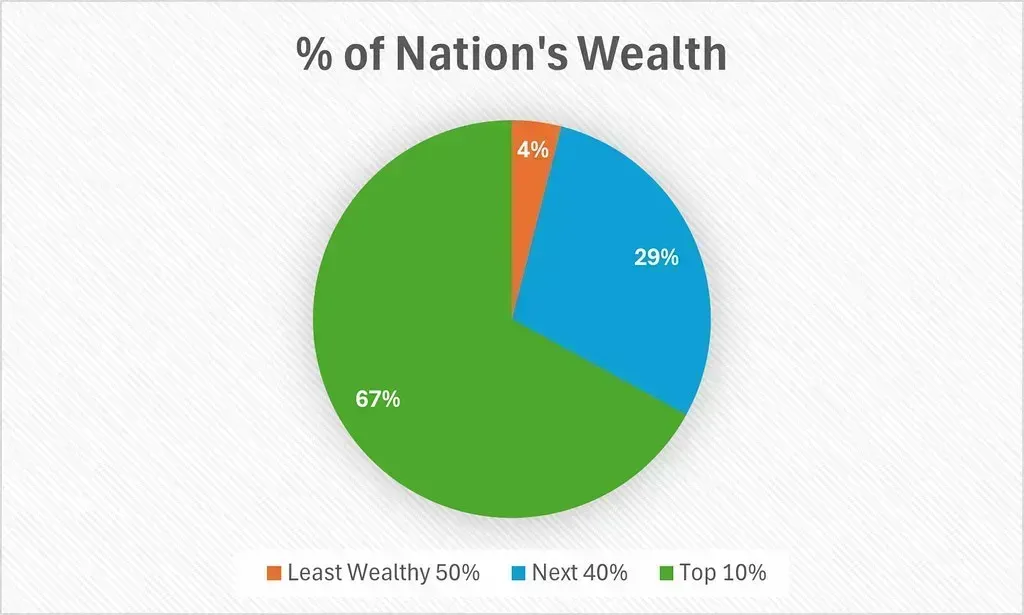
Now for the reality check that might sting a bit. The average net worth for Americans aged 45 to 54 was $975,800 as of 2022, according to Federal Reserve data. That sounds pretty good, right? Hold on. The median net worth for this same age group was just $247,200. There’s your wake-up call.
Why such a huge difference? The average gets skewed dramatically by ultra-wealthy individuals. Median net worth considers the 50th percentile of earners – those right in the middle – while average net worth factors in outliers of people with very high and very low net worths. Half of Americans in their mid-forties have less than roughly a quarter million dollars to their name.
As of October 2025, Empower’s user data showed average net worth in the 40s at $770,892. Still, these figures tell us that most 45-year-olds are nowhere near that aspirational million-dollar mark they think they need. The gap between expectation and reality creates a quiet panic that many people carry around but rarely discuss openly.
Why the Gap Exists Between Perception and Reality

So what’s causing this massive disconnect? Part of it comes down to competing financial pressures that people didn’t fully anticipate. Americans are unable to meet their retirement goals as they struggle financially due to high inflation, high interest rates and a weakening job market. Your forties often bring peak expenses: kids, healthcare costs that start creeping up, maybe helping elderly parents.
Peak earning years typically fall between ages 45 and 54, though it’s common to have substantial debts at this stage of life, like mortgages and car loans. Just because you’re earning more doesn’t mean you’re saving more. That new income gets absorbed by lifestyle inflation, often called “lifestyle creep,” where spending rises right alongside salary increases.
Just over one-quarter of Americans ages 44 to 54 (27%) believe their savings are on track to fund their retirement, with an additional 15% saying they’re on track but will have to retire after age 65. Translation: nearly three-quarters of people in their mid-forties know they’re behind or will need to work longer than planned. The awareness is there, even if the solutions aren’t always clear.
The Midlife Squeeze Hitting Gen X Especially Hard

Generation X, those currently in their mid-forties to early sixties, faces unique challenges. Gen X is the least confident generation about retirement, with only 46% saying they believe they’ll hit retirement in good financial shape. They’re sandwiched between obligations in a way that’s genuinely unprecedented.
Gen X is the least confident generation, with only 61% believing they will save enough, as many juggle mortgages, student loans and caregiving responsibilities. Think about it: they’re often supporting both children and aging parents simultaneously, a financial pressure cooker that previous generations didn’t experience to the same degree. College costs have exploded, and unlike their parents, many Gen Xers don’t have traditional pensions waiting at retirement.
Research shows this squeeze is real, not imagined. Lower-middle-class Americans nearing retirement age are worse off than their counterparts more than two decades ago, while policymakers overlook this group who don’t qualify for many assistance programs. They make too much for help but not enough to feel secure. It’s honestly a brutal spot to occupy.
What This Means for Your Financial Future

Knowing the gap exists is one thing. Figuring out what to do about it is another entirely. First, stop comparing yourself to unrealistic benchmarks. About 34% of Americans believe you need $500,000 or more to be financially secure, and experts say this is realistic, though a portfolio that size with a 4% withdrawal rate would produce only $20,000 per year. Your actual needs depend on your lifestyle, location, and dozens of other personal factors.
More than half (57%) of working Americans feel behind on retirement savings, with 48% of workers who have a specific retirement goal not thinking it’s likely they’ll save that much. You’re not alone in this struggle. The system itself makes saving difficult for most people.
An estimated 56 million private sector workers don’t have a retirement plan at work, meaning more than one-third simply don’t have the opportunity to save for retirement. If your employer doesn’t offer a plan, you’re fighting an uphill battle from the start. Still, there are moves you can make: maximize whatever retirement accounts you can access, avoid unnecessary debt, and honestly assess what your future really needs rather than what magazine articles tell you.
The truth is, financial security looks different for everyone. What you actually need at 45 might be less about hitting some arbitrary number and more about having a realistic plan, reducing debt, and building momentum. The gap between expectation and reality doesn’t have to define your future, but it does require facing the numbers head-on, making adjustments, and forgiving yourself for not being in a place that might have been unrealistic to begin with. Are you where you thought you’d be at this age?