9 Vintage Corningware Patterns Worth Money Today
Most people think a vintage CorningWare dish is worth either nothing or a fortune. The truth sits in the middle, and it’s stranger than either story. Viral posts have claimed $10,000 or more for Spice of Life, yet real sold listings tell a much quieter tale.1
Still, a handful of patterns, short-run designs and early marks really do bring collector money. Where prices vary, we say so plainly. One famous pattern on this list is far more common than its reputation, and the one at #1 has guide prices thousands of dollars apart.
#9 – Nature’s Bounty: The One-Year Pattern
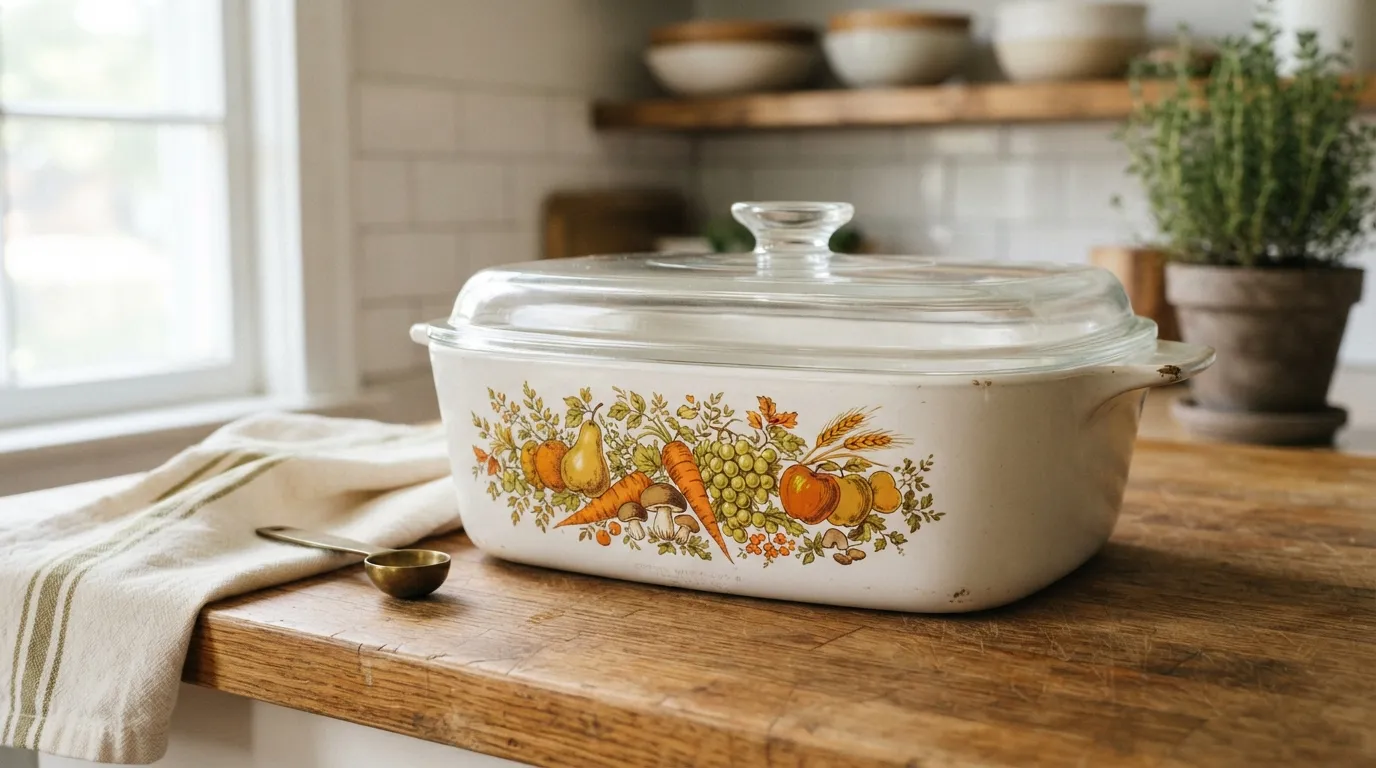
Some of the most collectible dishes in America sat on store shelves for roughly a year. Nature’s Bounty is the textbook case, because guides list it as a 1971-only pattern. That means far fewer survivors than a design sold for decades.
Rarity is the biggest value driver, and a pattern pulled after one season leaves a thin supply behind. Then there’s the lid: a bare casserole worth $20 might bring $60 or more with its original lid.
Guides disagree on the money, so treat every figure as a rough estimate. One lists the pattern at $50 to $120, while another puts a 1.5-quart loaf pan at $75 to $175.2
If one year on the shelf is short, #8 is shorter still. It came and went almost before shoppers noticed.
#8 – Renaissance: Here and Gone
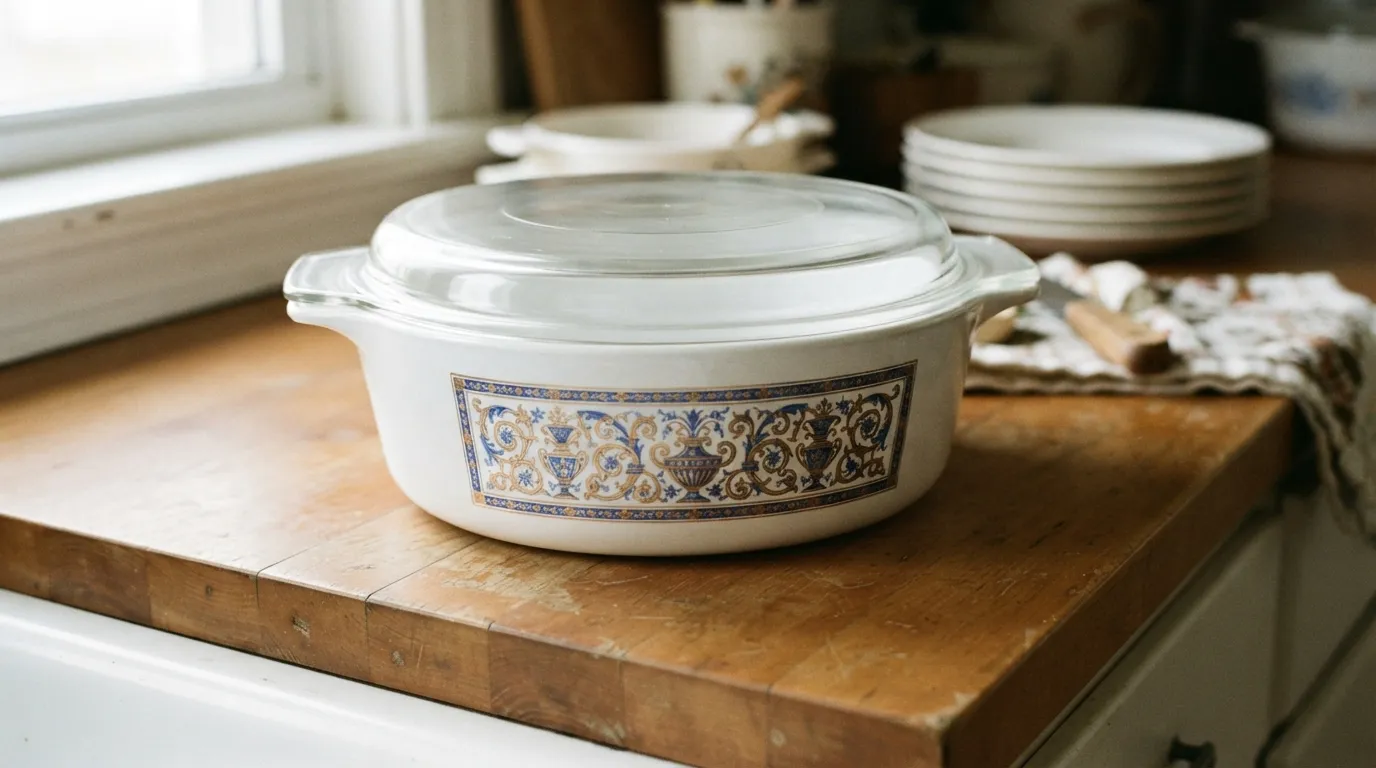
Not every famous pattern had a long life, and Renaissance proves it. The big names like Spice of Life ran for years, but Renaissance was gone in a blink.
That short production run is part of what makes it one of the more valuable casseroles, according to one thrift-store guide. One price table dates it to 1970 and lists casseroles from 1.5 to 4 quarts at $80 to $150.2
Here’s the part sellers rarely say out loud. Some sellers slap a rare pattern name on a common pattern, and one identification guide warns buyers about exactly that.3
At a Glance
- Dated to: 1970, per one price table
- Casserole sizes listed: 1.5 to 4 quarts
- Estimate in that table: $80 to $150, so a rough guide only
- Biggest risk: a rare name stuck on a common dish
The safer move is to compare only recent sold prices for the same pattern, size and condition. A rare-sounding name tells you nothing until you know what a buyer actually paid.
Next comes a pattern where even the production dates depend on who you ask.
#7 – Blue Heather: Three Guides, Three Answers
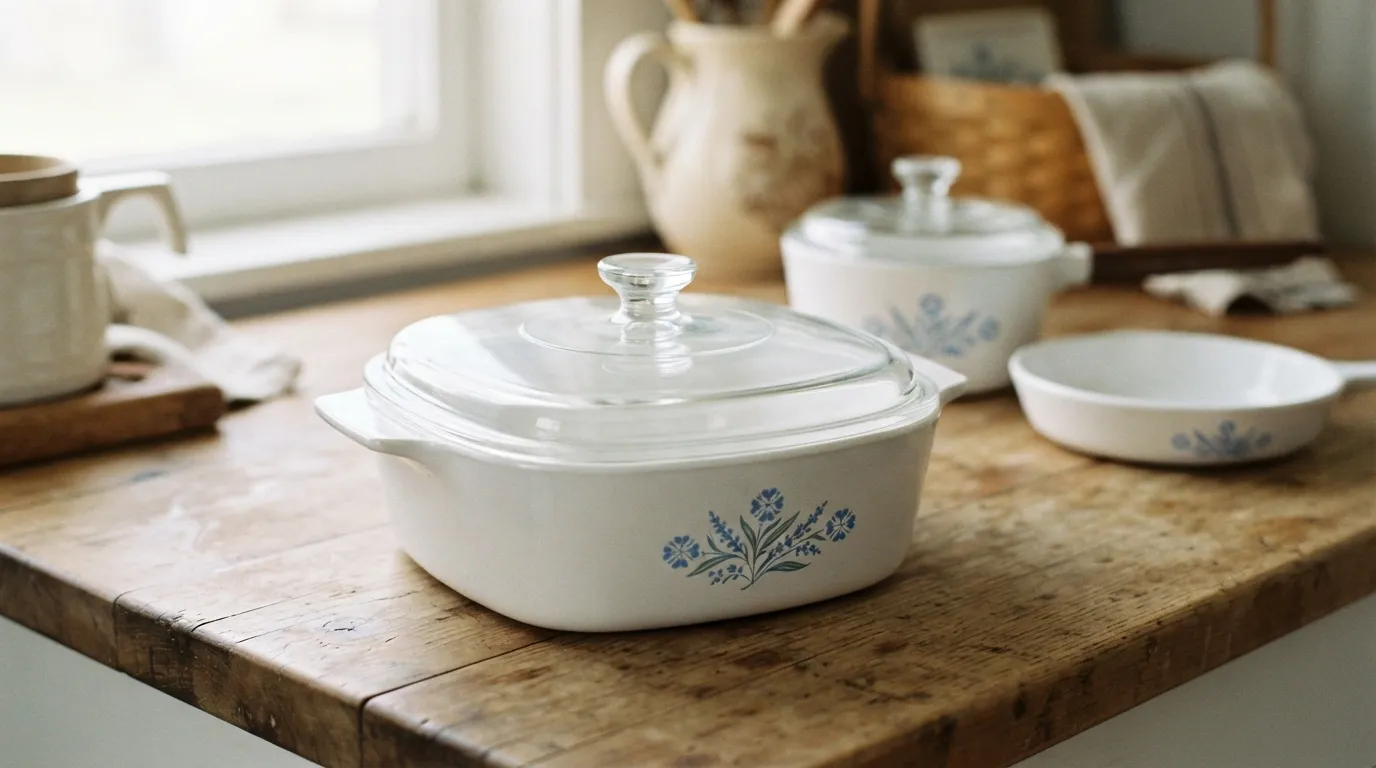
Ask three price guides when Blue Heather was made and you’ll get three different answers. One says 1976 to 1977, another says 1977 to 1981, and a third says 1976 to 1981.
The safest summary is that it ran in the late 1970s and, by some accounts, into the early 1980s. One guide names it among the rarest and most valuable patterns, right next to Black Starburst.4
The prices swing wildly too. One table shows $100 to $150, while another lists a 2.5-quart casserole at $200 to $500.
The top of one range is more than three times the top of the other. That gap is a sign these are estimates, not guaranteed sale prices.
Now go back to the very beginning, to the pattern that started it all.
[article_quiz]#6 – Wheat: The Pattern Before Cornflower
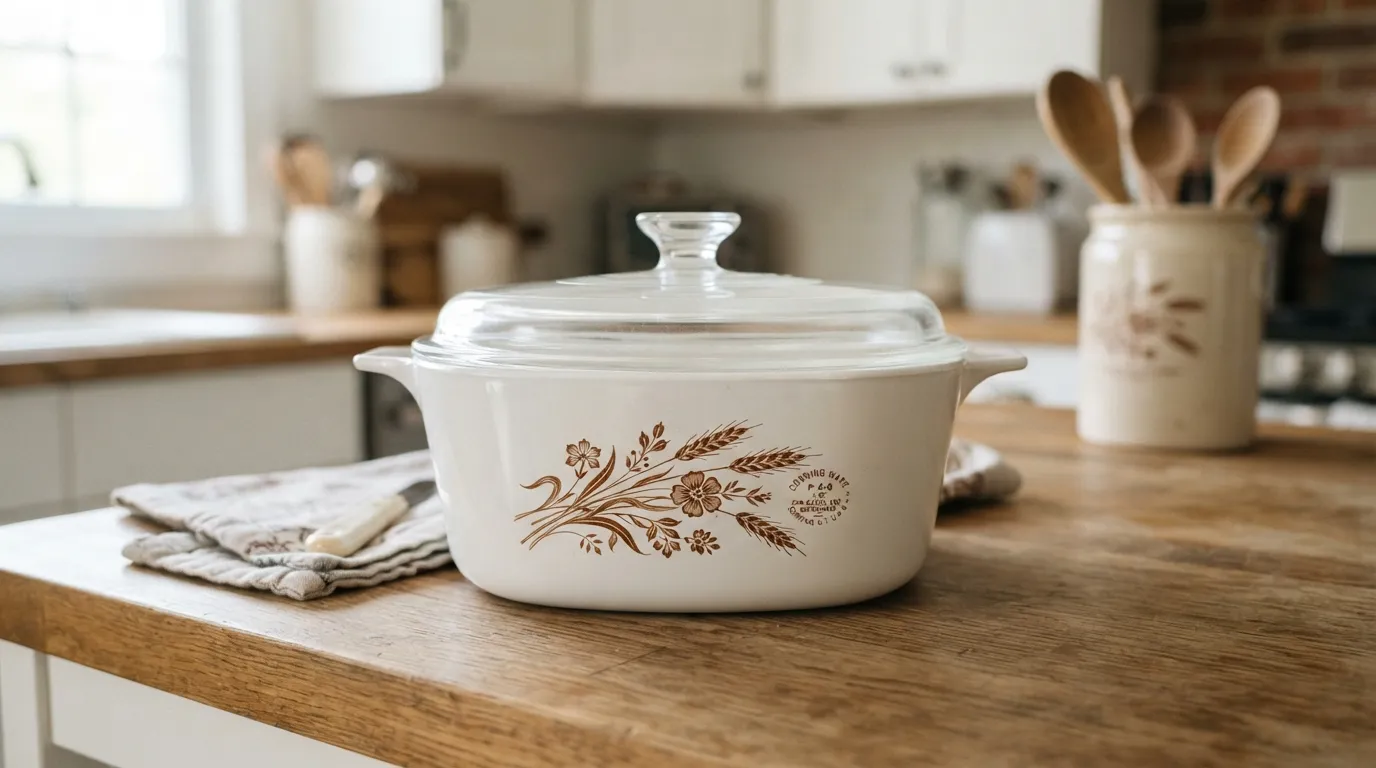
The very first CorningWare pattern wasn’t Blue Cornflower, and most people don’t realize it. The first pattern produced was Wheat, which was test marketed in 1958.5 6
Cornflower followed later that same year, and its fame pushed Wheat into the background. One collector guide calls early Wheat pieces extremely rare and valuable, because they mark the very start of production.4
Here’s the catch. We found no reliable sold-price data for Wheat, so any dollar figure attached to it deserves suspicion.
What you can check is the base. Genuine Pyroceram usually shows “CORNING WARE” as two words with the Corning Glass Works flame-in-flask logo, though marks changed across the years.
Fast Facts
- First pattern produced: Wheat
- Test marketed: 1958
- Blue Cornflower arrived: later the same year
- Sold-price data: none we could rely on, so no number here
Up next is a soft pastel floral that vanished by 1975.
#5 – Floral Bouquet: The Pastel That Disappeared
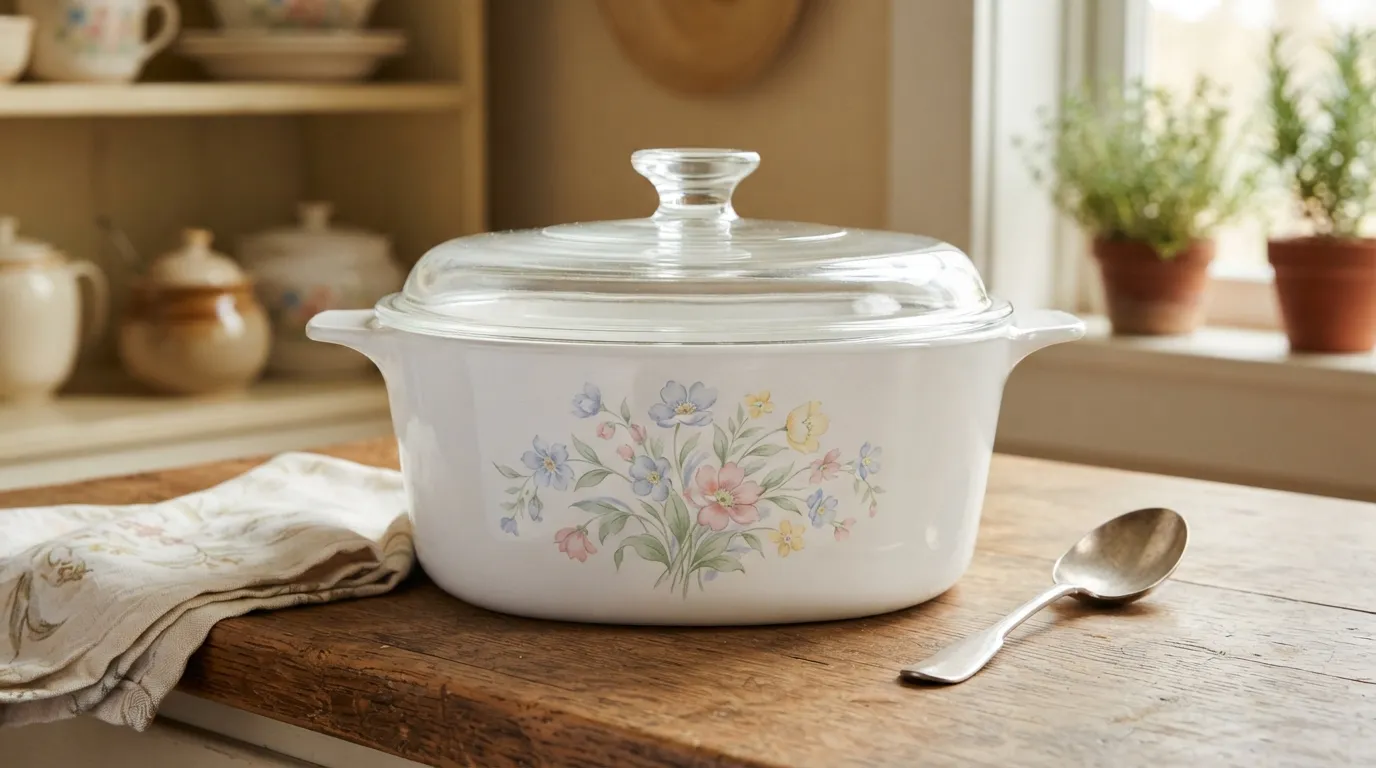
A soft, watercolor-style flower design keeps turning up on collector lists. Guides describe Floral Bouquet as a pastel arrangement made from 1971 to 1975.
That run ended long before Cornflower’s, which stayed in continuous production until 1988. An appraiser who has appeared on the History Channel named it among the patterns to look for.
Prices are all over the map. One guide lists a 3-quart casserole at $100 to $300, another says $50 to $300, and a third lists Floral Bouquet or other short-run pieces at $150 to $700.
The highest estimate is more than double the next highest. Condition, size and whether the lid is original explain much of the spread.
Now for the pattern everybody assumes is rare. It mostly isn’t.
#4 – Blue Cornflower: The Most Overrated Dish in the Thrift Aisle
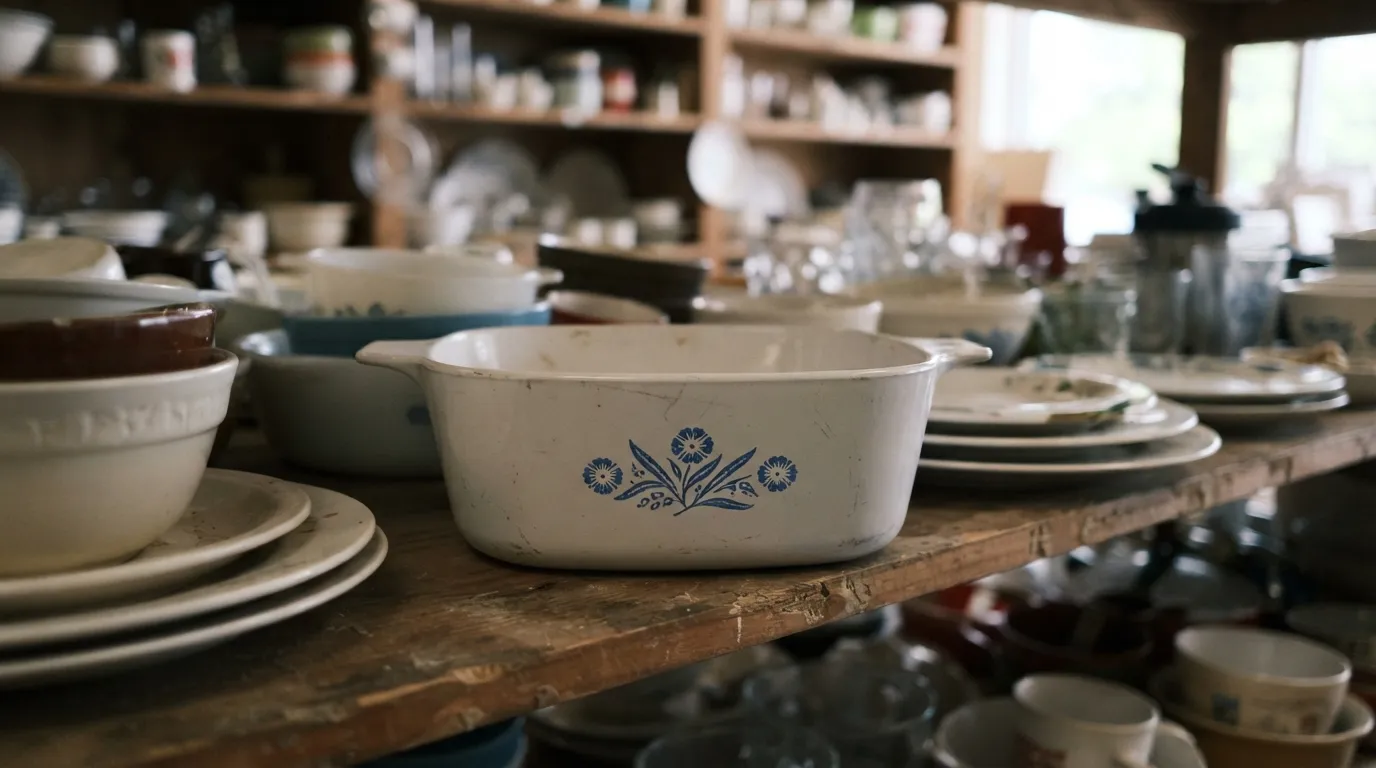
Here’s the mistake almost everyone makes with Blue Cornflower. The pattern is often wrongly believed to be rare and extremely valuable, when its long run made it one of the easiest dishes to find.
It was in continuous production from 1958 to 1988, then again from 1993 to 1994. Some appraisers argue the everyday casserole is the most overhyped dish in the thrift aisle.
The numbers back them up: casseroles are often valued at $30 to $45, with some climbing into the hundreds. Early is where the money hides, because one 1958 Blue Cornflower baking dish reportedly sold for $149 on eBay, while more common pieces went for a few dollars.
Look for sloped sides and small handles, since after 1972 the sides became straighter and the handles got bigger. Also note that P-series model numbers were introduced in fall 1961, so the earliest pieces won’t carry one.
Quick Compare
- Before 1972: sloped sides, small handles
- After 1972: straighter sides, bigger handles
- Before fall 1961: no P-series model number
- Production years: 1958 to 1988, then 1993 to 1994
Next is the pattern at the center of a $10,000 rumor.
#3 – Spice of Life: The $10,000 Myth
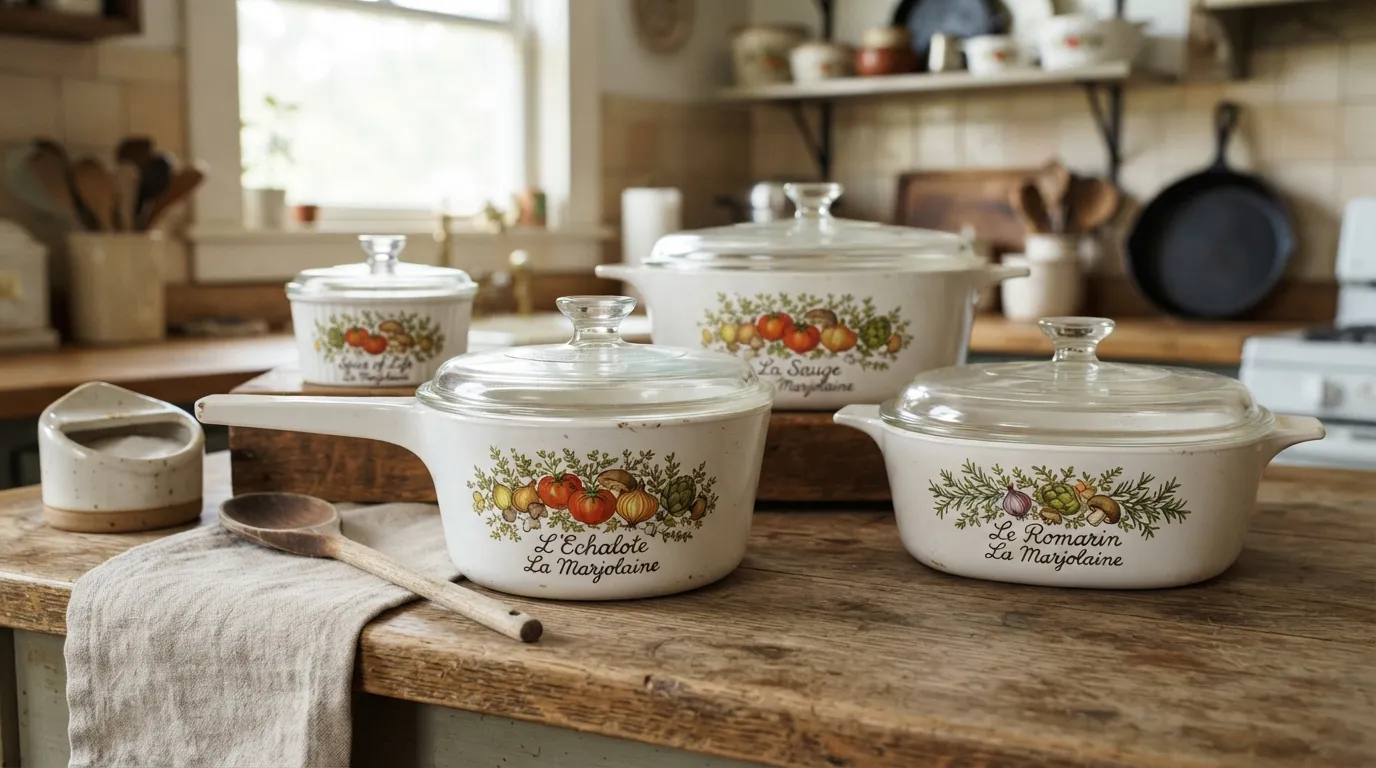
No pattern has been hit harder by internet hype than Spice of Life. Appraisal sites call the five-figure claims a myth, and say the pattern was mass-produced from 1972 to 1987.1 7
The design shows vegetables and herbs, and early versions carry French names such as L’Echalote, La Marjolaine or Le Romarin. Those script variants are where collectors look for the better prices.
Real money is lower and uneven. One guide says typical pieces sell for $15 to $25, while another estimates $20 to $350 depending on script variant, size and condition.
Actual listings show that spread. A lot of four La Marjolaine pieces sold on eBay for $78, while a boxed Le Romarin set sold for $310 in another listing.
Then there’s a floral that collectors hunt set by set.
#2 – Wildflower: The Short-Run Floral Collectors Chase
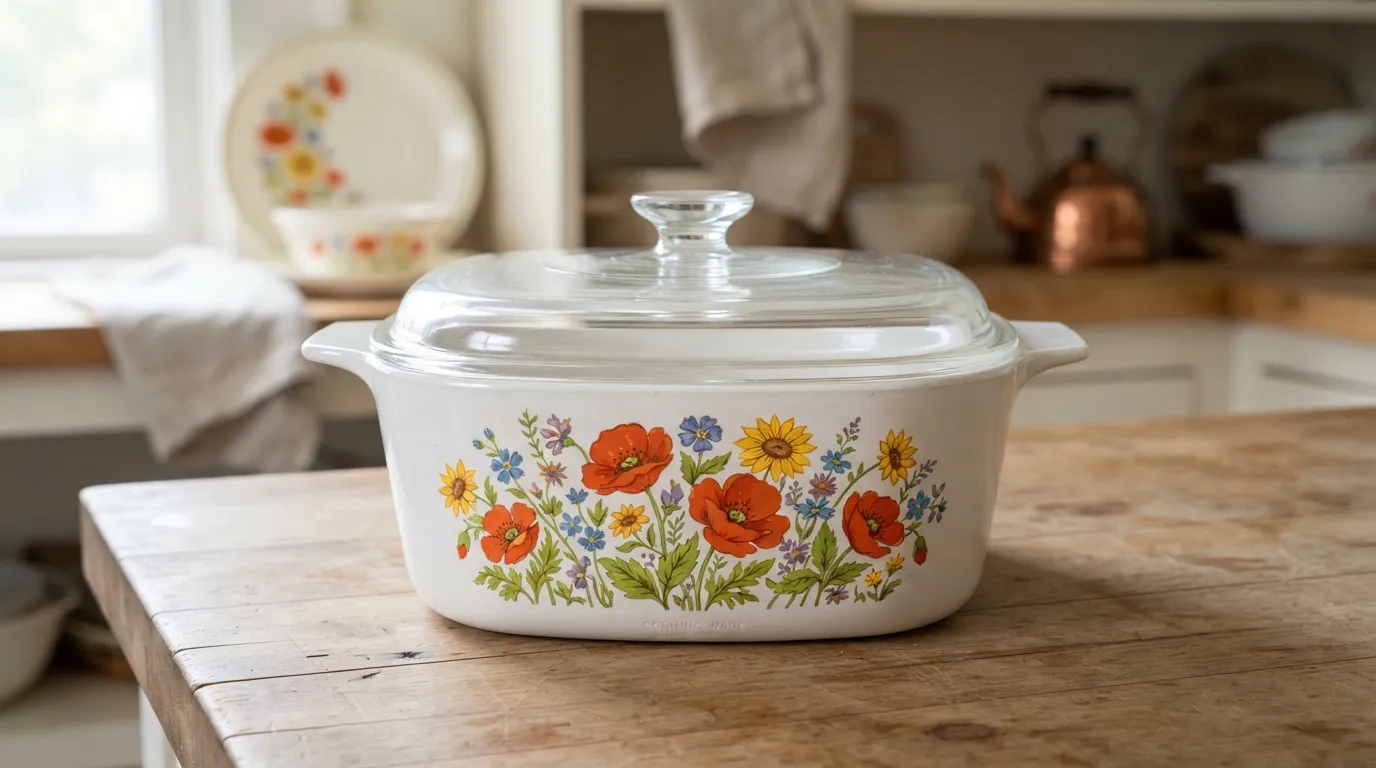
A bright, busy floral that ran for under a decade now sits near the top of many wish lists. The design combines orange-red poppies, yellow sunflowers and small blue flowers with green leaves, and it ran from 1977 to 1984.
Check the form before you get excited. Corning also put Wildflower on its Corelle dinnerware, and the cookware and tableware behave differently in heat.
Estimates vary a lot. One guide lists $30 to $200, while another says $120 to $500 for a piece in excellent condition.
A Wildflower casserole with lid from a 14-piece set sold on eBay for $174.99. Meanwhile, common pieces without lids sell considerably lower, and complete sets in good condition are the most collectible.
Which brings us to the pattern that tops more lists than any other.
#1 – Black Starburst: The Pattern at the Top
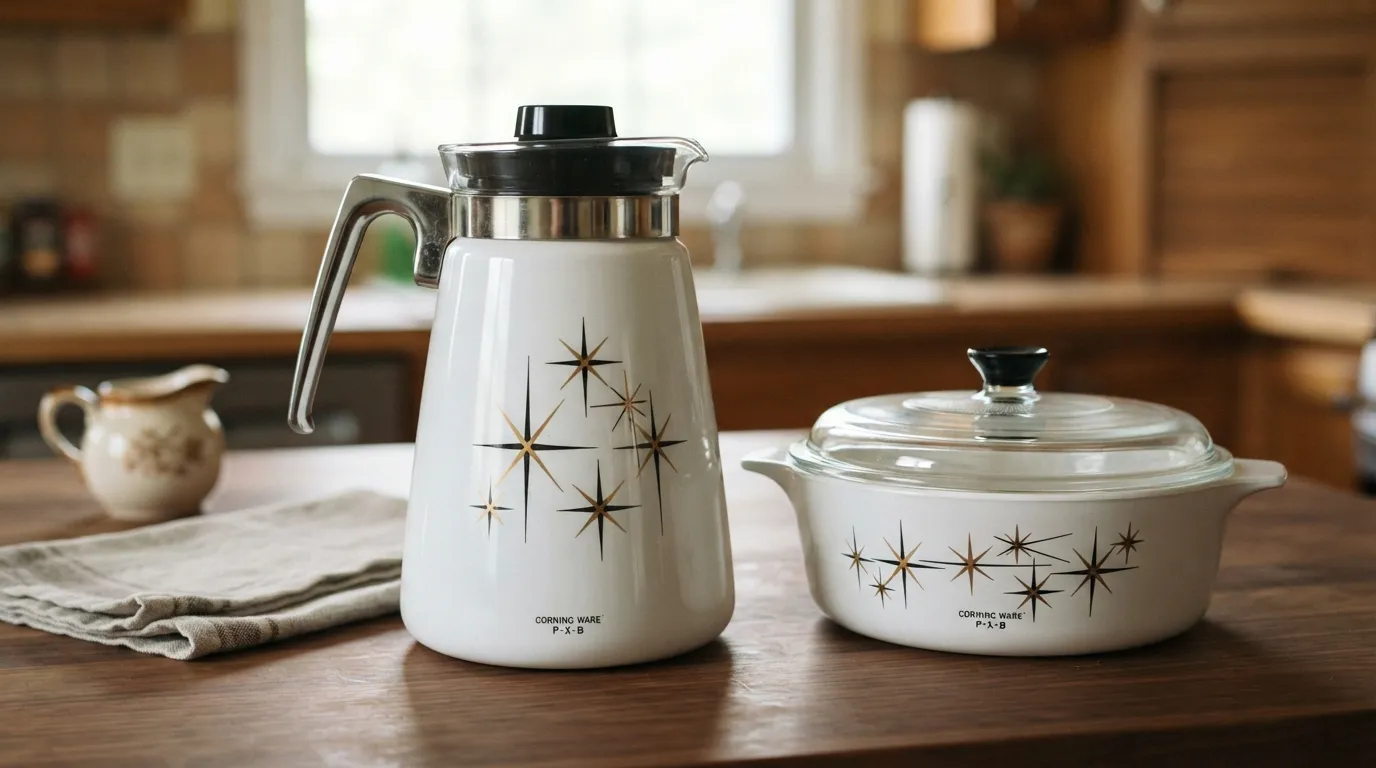
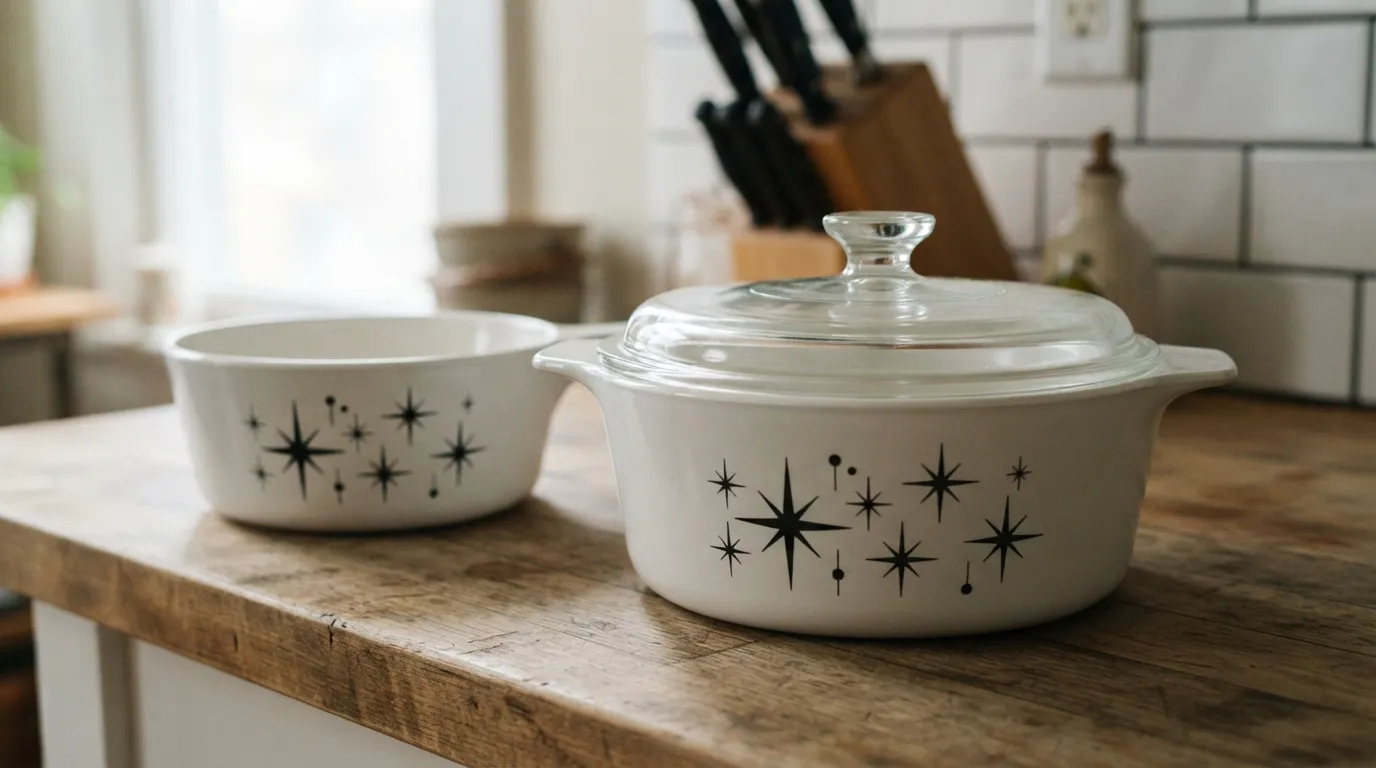
Sources disagree about almost everything here, except where Black Starburst ranks. One guide calls Black Starburst, also known as Atomic Starburst, consistently the most valuable vintage pattern.3
Dates differ by source, though one lists 1959 to 1963. Guides also disagree on the look and the forms: one describes gold starbursts on black, another says it was made only for percolators, and a third lists oven dishes and casseroles.
A 1979 percolator recall over a handle defect is one reason a thrift guide gives for percolator rarity.8 The price range is enormous, as the guide snapshot below shows.
Worth Knowing
- Low end: one guide lists complete percolators at $50 to $100 or more
- Middle: another says individual pieces sell for $100 to $300, with pristine larger pieces above $5007
- High end: a third quotes $700 to $3,000
- Takeaway: the ranking is consistent, but the dollar figures are not
One report says complete sets have crossed $2,000. Yet another guide warns that condition, completeness and recent sold results matter more than optimistic asking prices.
So what do you do with all of this? One habit beats every price guide.
[article_quiz]The Bottom Line
The most shocking finding is how little the hype matches the sales. The $10,000 Spice of Life story is a myth, and the everyday Blue Cornflower casserole is common.
The real money sits in short runs, early marks, matching lids and complete sets. Black Starburst leads most lists, but guide prices range from about $50 to $3,000, so check sold listings before you believe any number.
Always flip the dish over and read the stamp first. The pattern on the front gets the compliments, but the bottom tells the real story. Which one is sitting in your cupboard right now?
- WorthPoint Corning Ware Appraisal: https://www.worthpoint.com/articles/collectibles/sorry-you-cant-get-rich-off-your-old-corning-ware
- Valuable Patterns Price Guide: https://www.vipartfair.org/most-valuable-corningware/
- Vintage Corningware Collector’s Guide: https://vintagegreenantiques.net/vintage-corningware/
- Rare CorningWare Identification Guide: https://appraisily.com/articles/identification-rare-vintage-corningware-patterns/
- CorningWare Wikipedia Overview: https://en.wikipedia.org/wiki/CorningWare
- CorningWare Pattern Identification Marks: https://appraisily.com/articles/rare-identification-rare-corningware-patterns/
- CorningWare Thrift Value Guide: https://underpricedai.com/blog/vintage-corningware-value
- Most Valuable Patterns Thrift Guide: https://shopping.yahoo.com/home-garden/kitchen/articles/most-valuable-vintage-corningware-patterns-123000073.html