The New “Social Security Cliff”: Why Your 2027 Benefits Might Be Taxed Higher Than You Think
Picture this. You worked your whole life, paid into the system every single paycheck, and now you’re finally collecting Social Security. Then tax season hits. Suddenly you owe hundreds, maybe thousands more than you expected. Welcome to the Social Security cliff, a trap that’s swallowing up more retirees every single year.
Here’s the thing nobody talks about enough: those small annual cost of living increases can actually cost you money. Sounds crazy, right? Yet it’s happening to thousands of Americans as we head into 2027, and the mechanics behind it are both frustrating and entirely avoidable if you know what to watch for.
The Frozen Thresholds That Time Forgot

Back in 1983, Congress set the tax limits at $25,000 for individuals and $32,000 for married couples, which would equal approximately $75,000 for individuals and $95,000 for couples in 2025 dollars. Those numbers haven’t budged since. Not once.
Think about that for a second. The thresholds for taxation have been fixed in nominal terms since their inception, and since they are not adjusted for inflation, they decrease in real terms over time, pushing people into higher tax brackets. What started as a tax aimed at high earners has gradually become a middle class burden. Every year, inflation erodes the real value of these limits while your income creeps upward with cost of living adjustments.
In 1984, less than 10% of Social Security beneficiaries paid taxes on their benefits, but today, that figure has risen to nearly 56%. That’s a staggering shift. The system was never designed to hit this many people.
How Combined Income Creates a Trap

Let’s talk about combined income, because this is where things get tricky. Combined income includes your adjusted gross income, tax-exempt interest income, and one-half of your annual Social Security benefits. Notice that half your benefits count toward the calculation even before you know if they’re taxable.
For single filers, benefits begin to be taxed once provisional income exceeds $25,000 and up to 85% can become taxable above $34,000. For married couples, those thresholds are $32,000 and $44,000. The formula is complex and honestly feels designed to confuse people.
Here’s what makes it particularly sneaky. Provisional income doesn’t feel tangible because it is not a line item on their tax return, and no one ever sees it on a bank statement. You have to calculate it yourself, and most people don’t realize they’ve crossed a threshold until they’re preparing their taxes.
The 2026 COLA Increase Could Push You Over

The Social Security Administration announced a 2.8% cost-of-living adjustment for 2026, which translates to an extra $56 per month for the average retired worker. Sounds like good news, right? Not necessarily.
Because these thresholds are not indexed for inflation, every annual COLA pushes more retirees over the line, and a $56 monthly increase could be just enough to move you from the “no tax” zone to the “85% tax” zone. Let’s be real: that’s brutal. You get a modest raise to help with rising costs, and the government takes a bigger bite out of your check.
This is the cliff in action. For thousands of middle-income seniors, that modest $50-a-month raise could trigger a tax bill worth 10 times that amount because while your benefits go up with inflation, the income thresholds for taxing those benefits have not moved since the 1980s.
The New Senior Deduction Offers Some Relief

There is some good news heading into 2027, though it’s temporary. Under the One Big Beautiful Bill Act, a new senior deduction has been introduced specifically for those aged 65 and older, allowing an additional $6,000 deduction from taxable income starting with the 2025 tax year. If you’re married and both over 65, that’s a $12,000 shield.
The One Big Beautiful Bill Act has added another $6,000 bonus senior deduction that substantially reduces how many retirees meet those income limits, at least through 2028. However, this benefit phases out for higher earners. Taxpayers aged 65 and older will be able to deduct an additional $6,000 from their taxable income for tax years 2025 through 2028, with those making up to $75,000 in income or $150,000 for joint filers seeing the full benefit.
According to a brand new analysis from the Council of Economic Advisers, 88% of all seniors who receive Social Security will pay no tax on their Social Security benefits under this new provision. Still, these benefits will sunset after four years. What happens in 2029? Nobody knows yet.
State Taxes Add Another Layer of Complexity
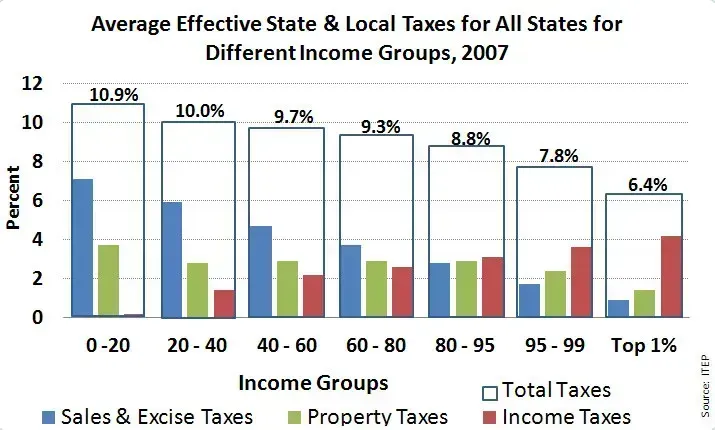
Federal taxes aren’t the only concern. Nine states tax Social Security benefits, although income thresholds and exemptions vary. The good news is that some states are moving away from this practice.
In 2024, Kansas, Missouri and Nebraska all ended state taxes on Social Security, and as of Jan. 1, West Virginia now has a 100% tax deduction on Social Security benefits. Some other states that still tax Social Security income, such as Rhode Island and Minnesota, have proposals to end those taxes.
If you live in one of the remaining states that tax benefits, you’re facing a double whammy. You could owe both federal and state taxes on the same income. In states that currently do tax benefits, those levies typically apply at higher income thresholds, so proposals to eliminate state taxes on Social Security benefits target higher-income retirees. It’s worth checking your state’s rules carefully.
Why Working in Retirement Can Backfire

Thinking about a part-time job to supplement your Social Security? Be careful. Working in retirement can lead to higher taxes on your Social Security or even cuts to your benefits if you’ve retired early. The rules here are particularly punishing for early retirees.
In 2026, beneficiaries who will not reach FRA until a later year have $1 withheld from their Social Security payment for every $2 in work income above $24,480. So if you earn too much while collecting early, Social Security literally claws back part of your benefit.
Even if you’re past full retirement age, working can still increase your tax burden by pushing your combined income higher. It’s a catch-22. You want to stay active and earn some extra money, but the tax consequences can erase much of what you gain. Honestly, it feels like the system punishes exactly the kind of behavior we should be encouraging.
The Proposals That Could Change Everything

There’s legislation floating around Congress that could eliminate federal taxes on Social Security entirely. In September, Sen. Ruben Gallego joined by Rep. Angie Craig unveiled the You Earned It, You Keep It Act in the U.S. Senate, which would permanently abolish federal taxes on Social Security benefits.
If Congress passes the act in 2026, taxes on Social Security benefits would end beginning in 2026, affecting income tax returns filed in 2027. To offset the cost, the bill proposes increasing the Social Security payroll tax wage base so that, starting in 2026, all wages above $250,000 would be subject to the 6.2% payroll tax, up from the prior $176,100 cap.
But passage remains uncertain, with negotiations and highly partisan political bargaining always a factor on Capitol Hill. Don’t count on it happening, but it’s worth watching.
Strategies to Minimize Your Tax Burden

If you suspect you’re close to a threshold, act now. Calculate your 2026 estimated combined income by adding up your expected pension, IRA withdrawals and interest, then add 50% of your new, higher Social Security benefit. The math isn’t fun, but it’s essential.
If the math shows you crossing a threshold, you can request voluntary tax withholding from your Social Security checks by having the SSA take out 7%, 10%, 12%, or 22% now to avoid a massive surprise bill next April. This spreads the pain throughout the year instead of delivering one brutal blow.
Another smart move: Consider a qualified charitable distribution if you are 70 ½ or older, where you can move money directly from your IRA to a charity, and this money never counts as income, which helps keep your combined income low and thus minimize your Social Security taxes. It’s a win-win if you’re charitably inclined anyway.
The Medicare Premium Cliff Adds More Pain

Just when you thought it couldn’t get worse, there’s another cliff to worry about: Medicare premiums. For the 2024 tax year affecting Medicare costs in 2026, exceeding the lowest tier limits by even one dollar triggers an additional $1,052 per person in Medicare premiums, and for married couples, this translates to $2,104 in increased annual costs, effectively creating a 210,400% tax rate on that single additional dollar.
That’s not a typo. Earn one dollar too much and you get hit with over two thousand dollars in extra costs. It’s absurd. The system is riddled with these hidden cliffs that can devastate your retirement budget if you’re not paying close attention.
This is separate from income tax but works the same way. Small increases in income can trigger disproportionately large increases in costs. You need to plan for both.
Looking Ahead to 2027 and Beyond

So what does all this mean for your 2027 benefits? Raising the thresholds would cost tax revenue, so it keeps getting pushed aside, which means more retirees will owe tax on Social Security in 2026. Without congressional action, the problem only gets worse.
More retirees cross these limits each year simply due to cost-of-living adjustments, higher interest rates or growing retirement account balances. Even if you don’t change a thing about your finances, you could still find yourself paying more taxes year after year.
The intent behind using unindexed thresholds in the 1983 legislation was that eventually, over a long period of time, there would essentially be no thresholds and all Social Security benefits would become subject to taxation. That’s the endgame Congress set in motion over forty years ago. We’re watching it play out in slow motion.
The Social Security cliff isn’t some distant future problem. It’s here, it’s real, and it’s catching more people every year. The 2027 tax season could be particularly painful if you’re not prepared. Run the numbers now, consider your options, and don’t let a modest cost of living increase turn into a massive tax surprise. Your retirement depends on it. What steps are you taking to protect your benefits from higher taxes?