10 Popular U.S. Chili Styles Organized by Regional Preference
Order chili in Cincinnati and you may get a plate of spaghetti buried under a snowdrift of shredded cheese, with oyster crackers and hot sauce on the side. Carry your own family recipe into a cook-off or potluck in the wrong region, and you can start an argument you never planned.
This countdown runs through ten American styles, from the mildest pot to the most contested one. Stay for the last, because it answers a question that splits family tables across the country: does Texas law forbid beans in chili? The first pot on the list has no red in it at all.
#10 – White Chicken Chili With No Red in the Pot
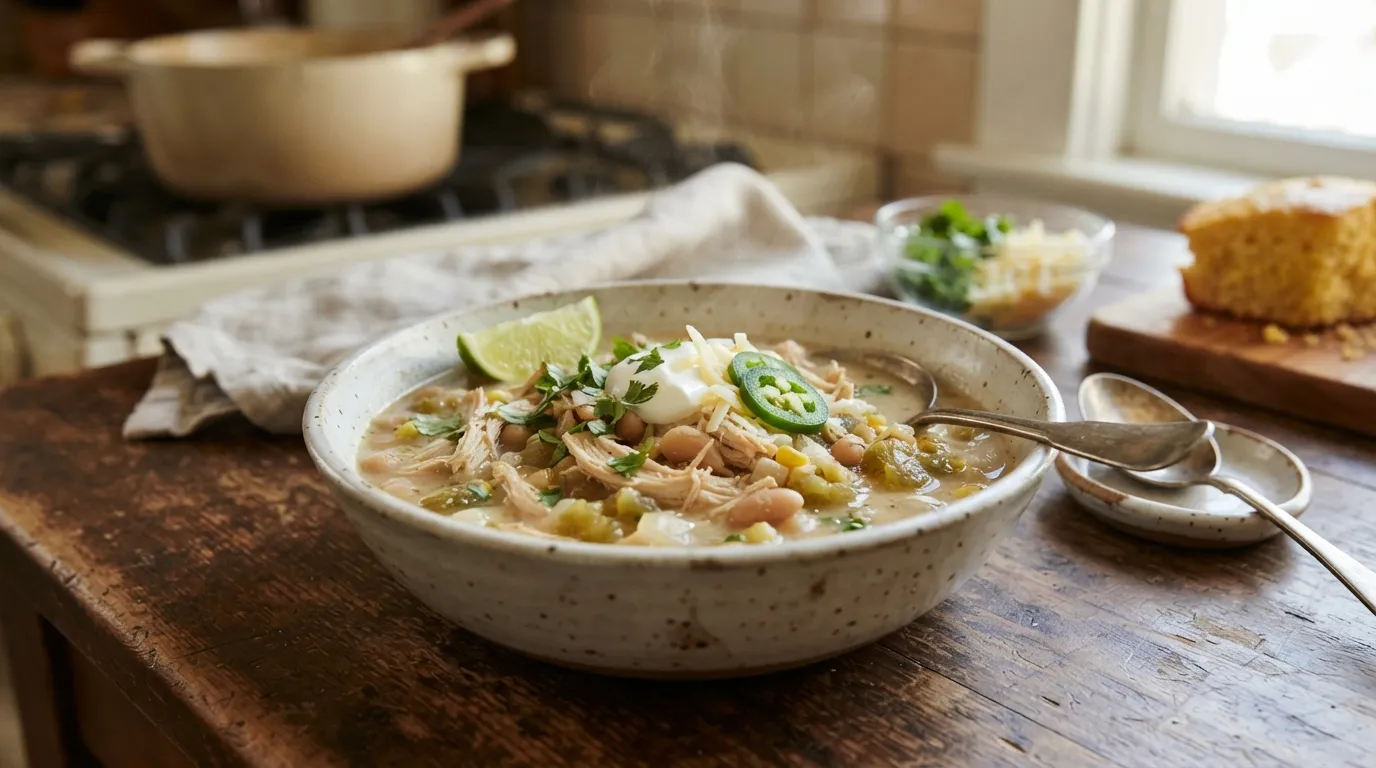
White chicken chili has no single birthplace, which is worth knowing before you hunt for the authentic recipe. Cooks across the country make their own versions, so any recipe you find is one kitchen’s approach, and your own changes are fair game.
The usual build is shredded chicken, white beans, green chiles and a pale broth, with cumin carrying most of the seasoning. Great northern or cannellini beans with mild green chiles make the classic base, and a jalapeño or two can raise the heat if you want it.
It’s also the quickest pot on this list, because chicken cooks fast and canned white beans need no soaking. A shredded rotisserie chicken skips the longest step, and a spoonful of sour cream or a splash of cream stirred in at the end gives you a richer bowl.
Beans stay in the picture for the next pot, though there they share the kettle with tomatoes, and the chili powder goes in with a very light hand.
#9 – The Midwestern Pot of Beans and Tomatoes
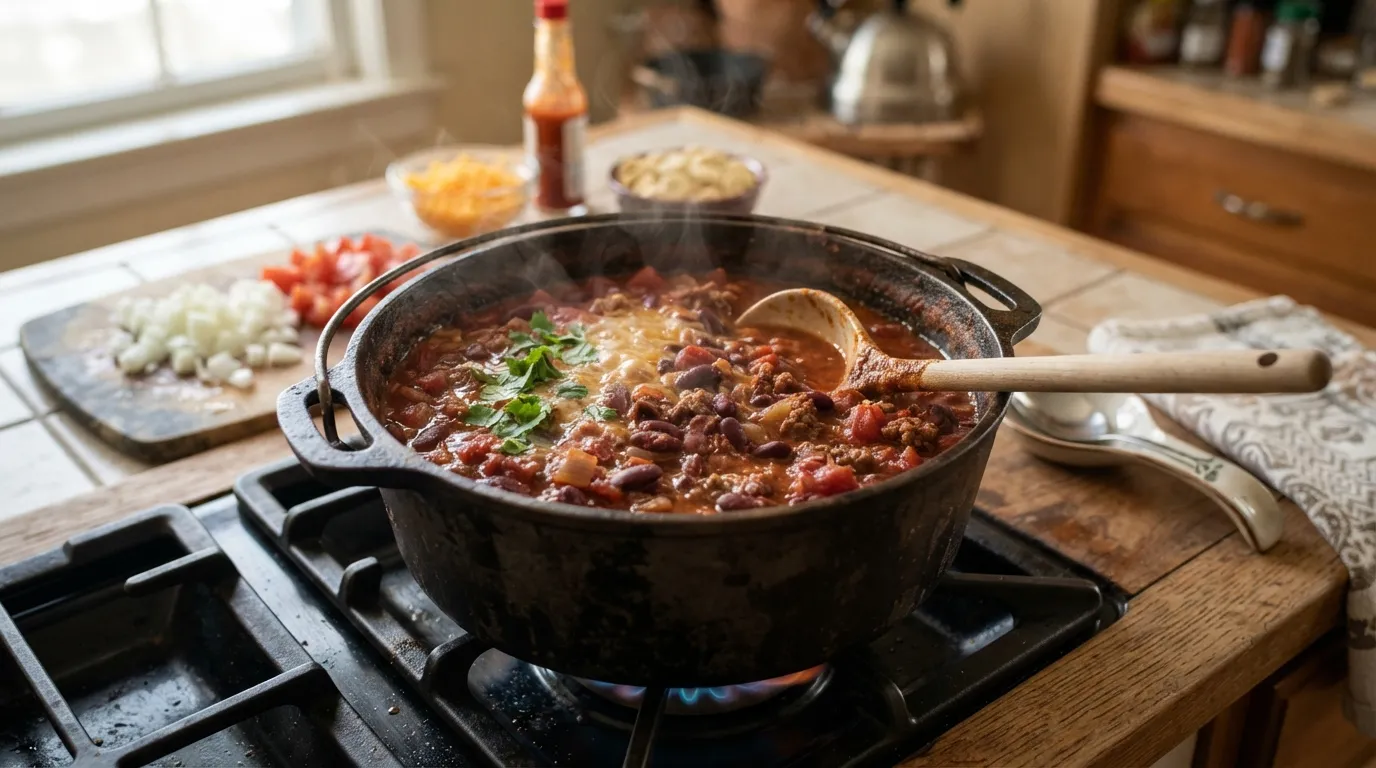
If your family’s chili came with kidney beans and tomatoes, you grew up on a style that’s common in home kitchens across the Midwest. It’s the pot many cooks picture when they hear the word chili, even though it sits a long way from the Texas original.
As chili spread beyond Texas, it changed from kitchen to kitchen to suit local tastes. Midwestern cooks, who often preferred milder heat, used chili powder sparingly and let the beans and tomatoes do more of the work.
That mildness is the right call when you’re feeding a mixed crowd, because heat is easy to add at the table and impossible to take back out of the pot. Cook it mild and put hot sauce on the table, and each guest sets the heat for their own bowl.
Chili doesn’t always need a bowl, either. In one Southwestern tradition it goes into a split-open snack bag, and the dishwasher gets the night off.
#8 – Frito Pie Served Straight From the Bag
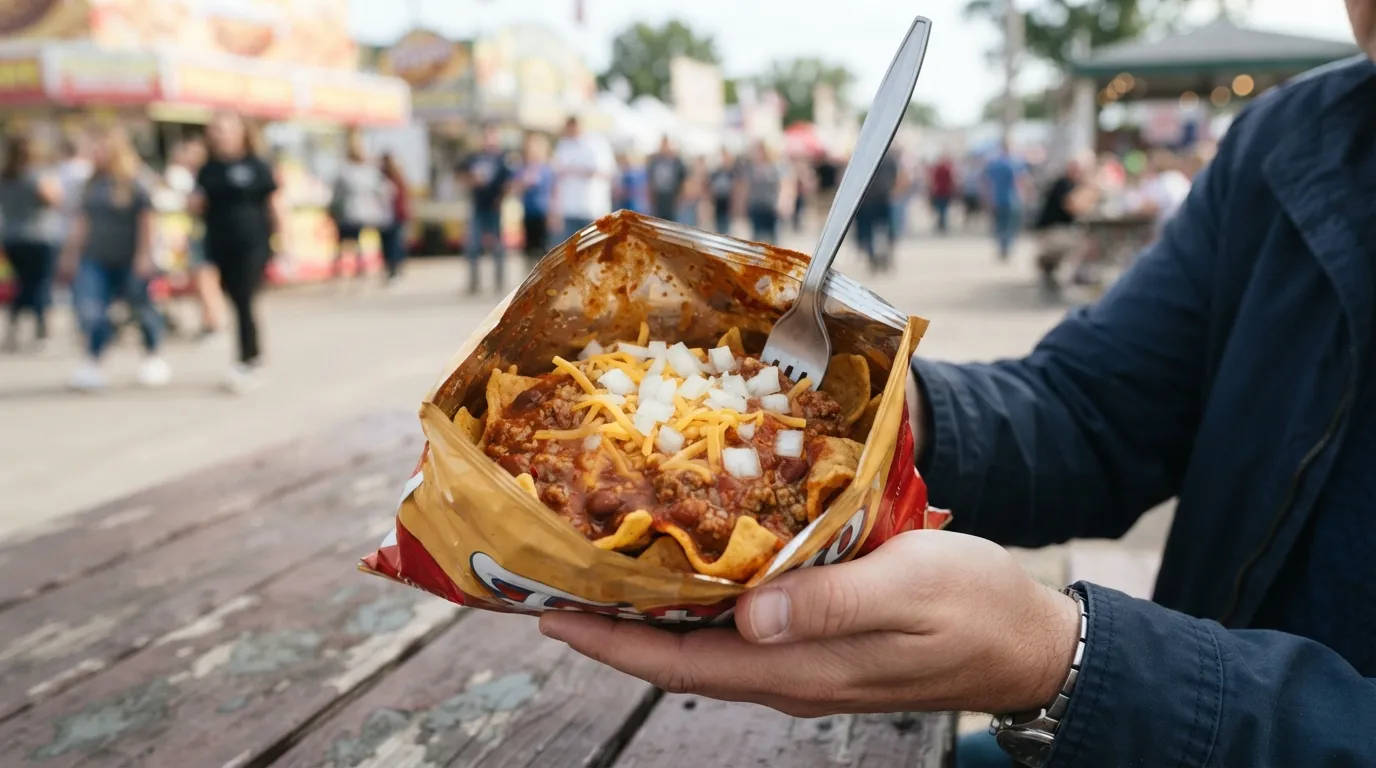
Frito pie needs a bag of corn chips, a ladle and almost no cleanup. The classic serving splits the bag open, spoons in a helping of red chili, and tops it with cheese and onion.
You eat it with a fork, right out of the bag. It’s a dish built for a crowd, which is why it turns up at ball games, fairs and school fundraisers.
Texas and New Mexico both lay claim to inventing it, so treat any single origin story with caution. The argument is half the fun, and nobody has settled it yet.1
The chili has to be thick. Thick chili holds up; thin chili turns the chips soft in minutes. If your pot runs thin, simmer it uncovered until it clings to a spoon, and a thick Midwestern pot of beans and tomatoes works here too.
The pot that follows trades beef for pork and red chiles for roasted green ones, and in its home state it often ends up on top of a burrito.
[article_quiz]#7 – Colorado Green Chili Built on Pork
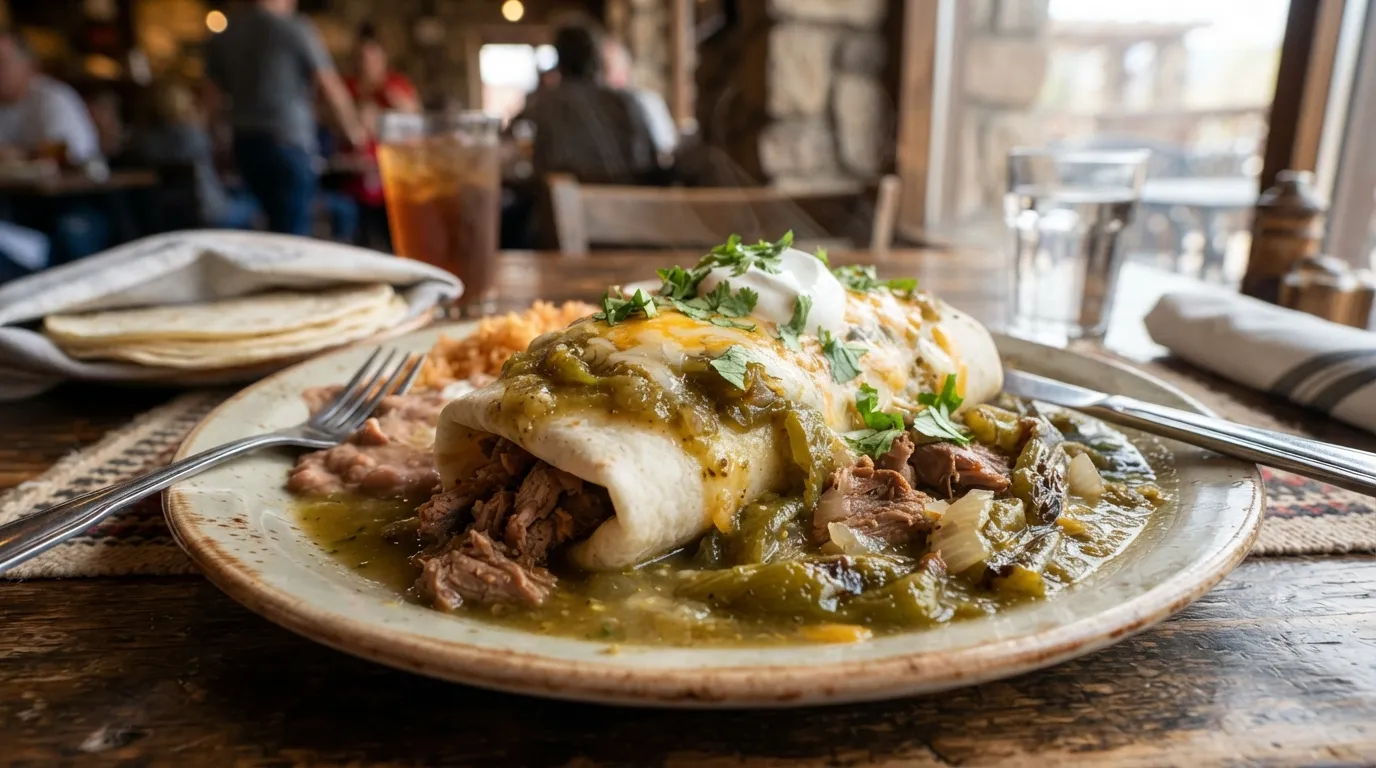
Colorado green chili swaps the beef for pork and the dried red chiles for roasted green ones. The result is closer to a stew than a bowl of red, and in Colorado it’s often ladled over a burrito instead of served in a bowl.
Recipes differ from cook to cook on tomatoes, thickness and whether a little flour goes in, so treat any single version as one family’s way. What holds steady is pork cooked until it falls apart in a pot of green chiles, onion and garlic.
At a Glance
- Meat: pork, usually shoulder
- Chile: roasted green, not dried red
- Texture: closer to a stew than a bowl of red
- Favorite way to serve it: smothered over a burrito
Roasting sets the flavor. Roast the green chiles until the skins blister, then steam and peel them, and the pot picks up a smoky depth that’s harder to get from a can.
Wear gloves for the peeling, because chile oils on your fingers will find your eyes later. Pork shoulder suits this job because its fat and connective tissue soften during long, slow cooking, and a night in the refrigerator lets the flavors settle and makes the fat easy to skim off.
#6 – Chili Over Spaghetti Beyond Cincinnati
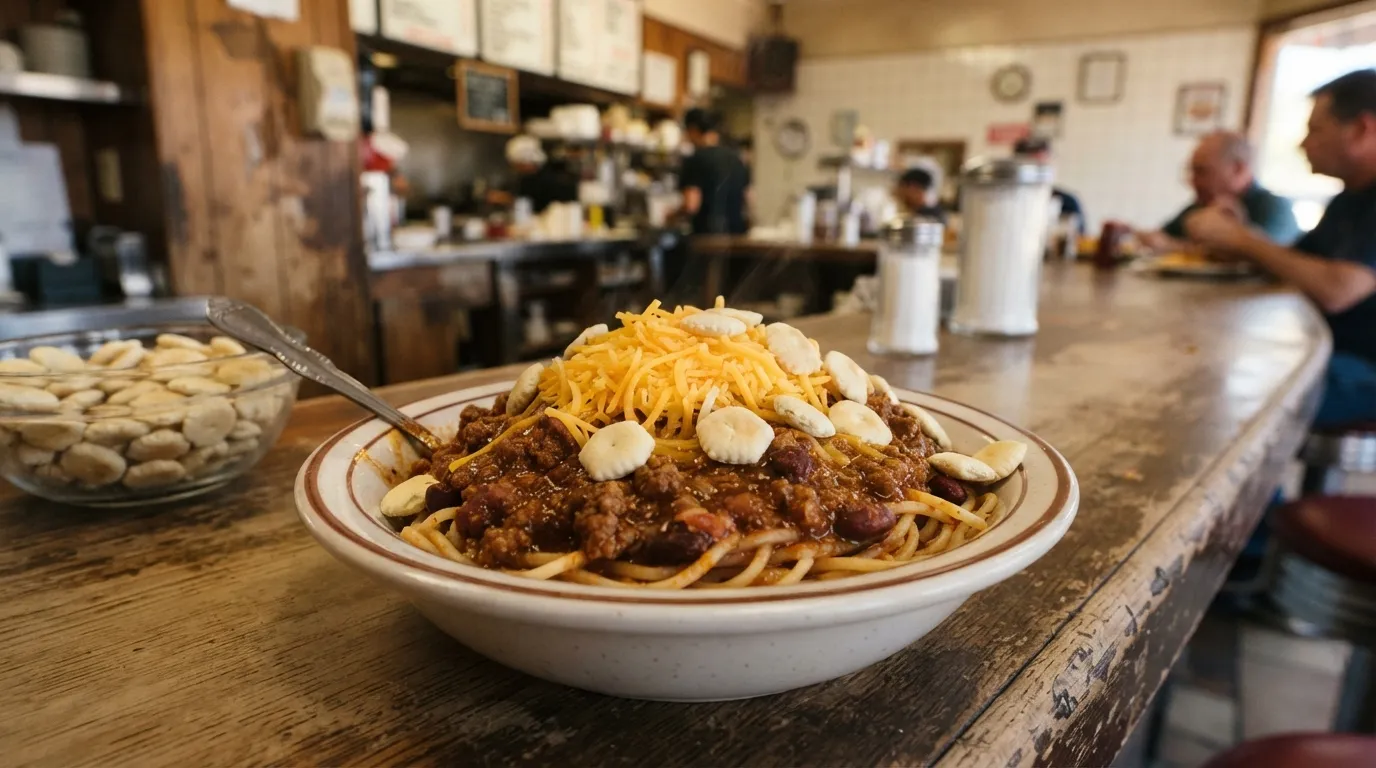
Spaghetti under chili isn’t a Cincinnati monopoly. Chili John’s, a parlor in Burbank, California, serves Southwestern chili that’s most commonly ordered over spaghetti with oyster crackers or shredded cheese.2 Other toppings are available, but that’s the usual order.
The chili itself is Southwestern in style, so the spaghetti is a serving choice rather than a separate recipe. That’s the idea worth borrowing: a pot you already make can become a different dinner just by changing what’s underneath it.
Any thick, meaty chili works over spaghetti with cheese and crackers, which makes it a smart plan for leftovers from the Colorado pork pot or a Midwestern bean pot. It also stretches the meal, since a pound of pasta feeds more people than another ladle of chili would.
Now for a city that took the spaghetti idea and built a whole chili culture around it, then argued for a century about what to call the result.
#5 – Springfield, Illinois, and Its Chili Parlor Tradition
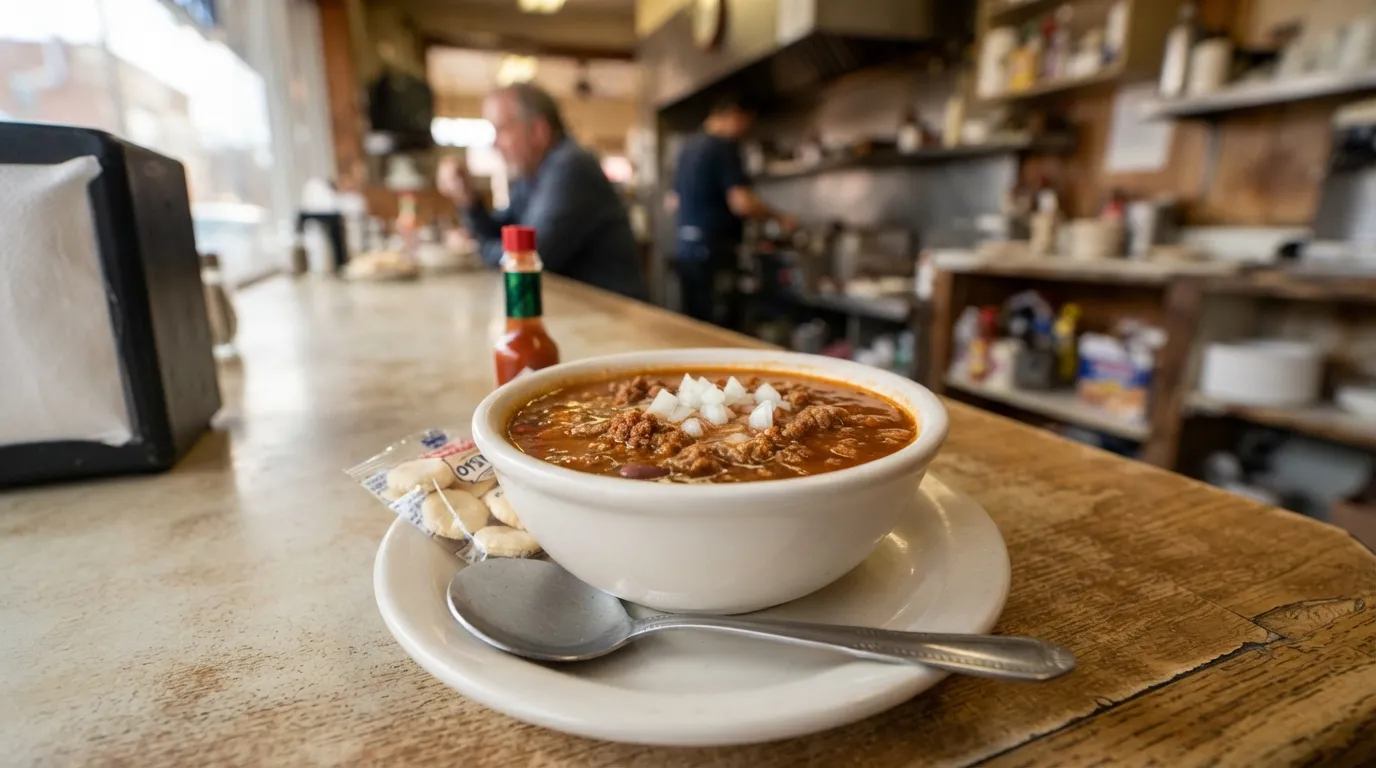
Springfield, Illinois, treats chili as a local institution, with chili parlors that have been feeding the town for generations. If you grew up there, a bowl at the counter may be as tied to home as any family recipe.
The local style is often described as thinner and soupier than a Texas bowl, built on ground beef and beans and eaten with crackers. Recipes vary by parlor and by household, so there’s no single official version to quote.
That brothy texture changes how you eat it. A thinner chili is made for crackers, not chips, since the crackers soak up the broth and give the bowl some body.
Springfield is also a reminder that chili’s map isn’t just Texas, New Mexico and Ohio. Plenty of mid-sized American towns have their own pot, their own counter stools and their own fierce loyalties.
The next city has the most famous loyalties of all, and its signature order comes with a numbering system.
#4 – Cincinnati Chili and the Way It’s Ordered
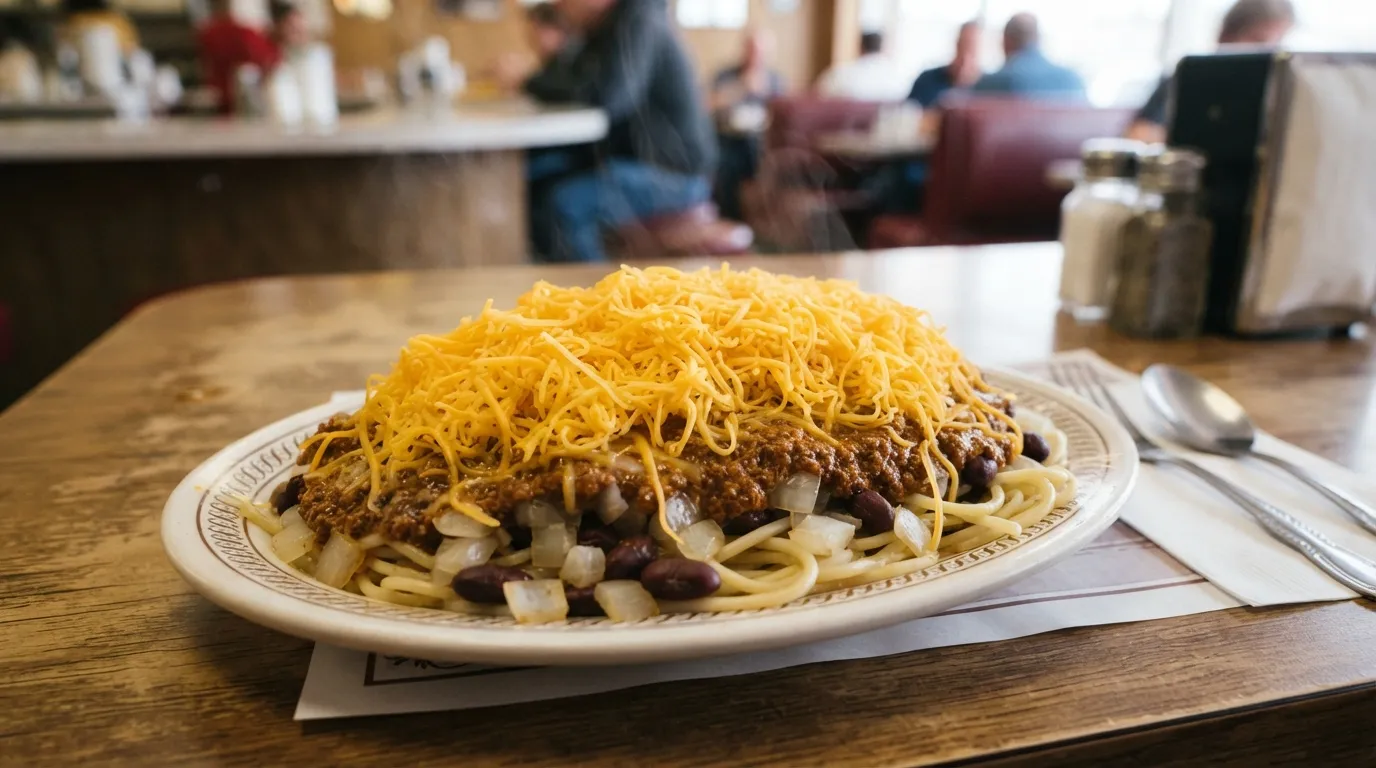
Cincinnati chili is the style that makes visitors ask whether it counts as chili at all. The sauce is thinner than most, usually seasoned with warm spices that many cooks compare to those in Mediterranean-style cooking, and it’s ladled over spaghetti.
Its story is usually traced to Empress Chili, opened in 1922 by Macedonian immigrant brothers Tom and John Kiradjieff.3 4 Local chains like Skyline and Gold Star helped spread the style across the region.
Then comes the ordering code, which is simple once you see it laid out.
Quick Compare: The “Ways”
- 2-way: spaghetti and chili
- 3-way: add a mound of shredded cheddar
- 4-way: a 3-way plus either onions or beans
- 5-way: a 3-way plus both onions and beans
The cheese goes on last and goes on high. Oyster crackers and hot sauce on the side finish the plate, and locals tend to have strong views on how much of each is right.
Our next pot is a stew with a state-wide question attached, and the answer is one of two colors, or both.
#3 – New Mexico Green Chile Stew With a Question Attached
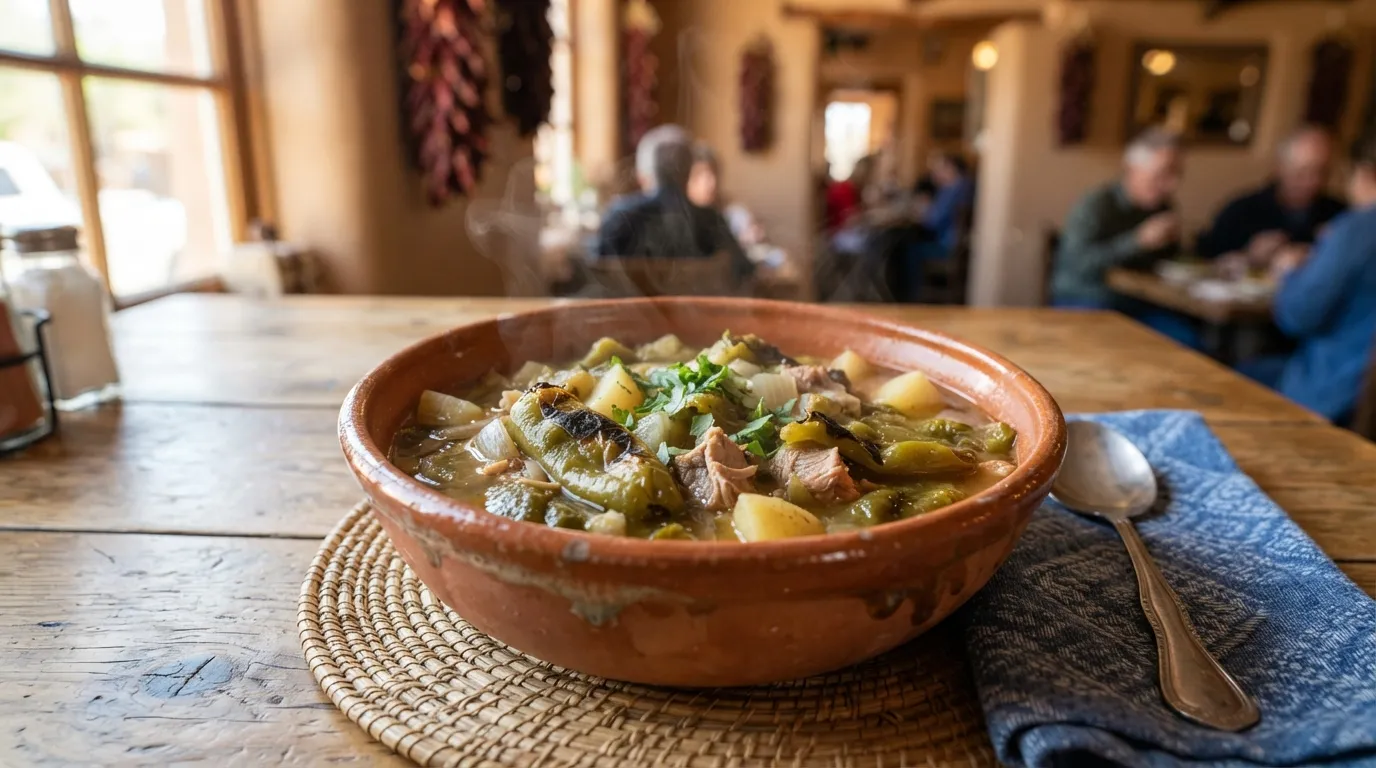
In New Mexico, restaurants commonly ask a question that has become a kind of state motto: red or green? Answer ‘Christmas’ and you’ll get both.
Green chile stew leans on roasted green chile, typically from the Hatch area or another New Mexico growing region, along with pork or beef and often potatoes. The chile isn’t a seasoning here so much as the main ingredient.
That’s the big difference from the Colorado pot a few spots back. In a New Mexico stew, the chile sets the heat level, and it varies from mild to fiery depending on the batch. Even the same variety can taste different from one season to the next.
Many New Mexico households roast chile in big batches in the fall and freeze it to last through the year. The smell of roasting chile drifting through a parking lot is a seasonal signal for a lot of people there.
Two pots remain, and both go back to the place where chili’s story is most often said to begin: open-air plazas, lantern light and some very shrewd businesswomen.
#2 – San Antonio’s Chili Queens and the Original Street-Food Bowl
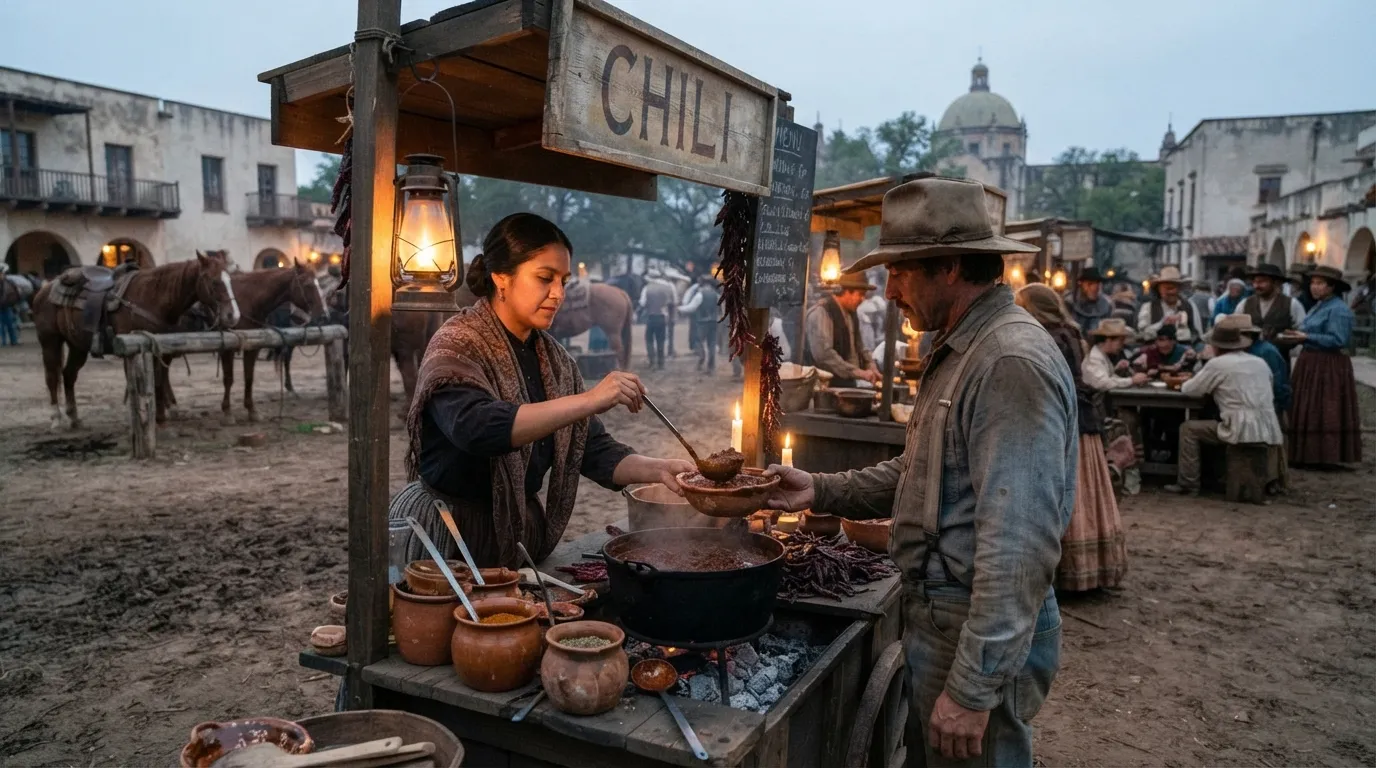
Long before chili was a cook-off sport, it was street food in San Antonio. Women known as the chili queens set up open-air stands in the city’s plazas in the 1800s, serving bowls of spicy meat stew in the evening.
Their stands became a draw for locals and visitors alike. A San Antonio chili stand at the 1893 World’s Columbian Exposition in Chicago is often cited as helping introduce chili to a national audience.
Exact recipes weren’t written down the way modern cookbooks do it, so be wary of anyone who claims to serve the original. What’s generally described is a meaty, chile-forward stew eaten fast and hot, without much fuss.
City health regulations eventually pushed the chili queens off the plazas, though the tradition has been revived in festivals and tributes since. It’s a good reminder that chili began as food for the street, not the competition table.
Which brings us to the last pot, the bowl that gets the loudest arguments and the one that answers the beans question.
#1 – The Texas Bowl of Red and the Great Bean Debate
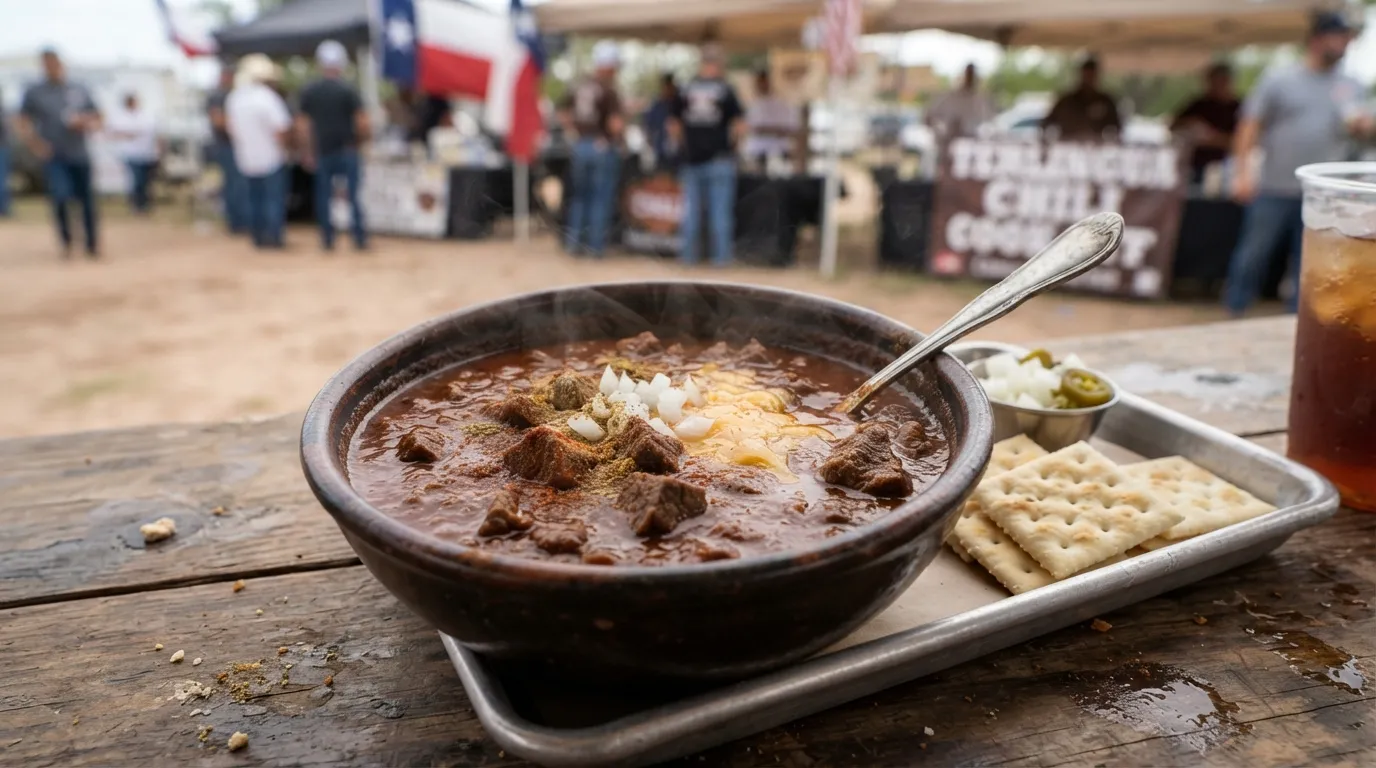
Texas red is the style most people mean when they argue about authenticity. It’s built on beef, often cubed chuck instead of ground, simmered with dried red chiles and cumin until it’s thick and deeply savory.
Chili was named the official state dish of Texas in 1977,5 and the debate over beans has been going ever since. There is no Texas law that forbids beans in chili. The rule is tradition, not statute.
Many Texans still insist a true bowl of red has no beans, and plenty of cook-offs back them up. Competitions such as the one in Terlingua, which traces back to 1967,6 and many others set their own rules, and those often exclude beans from the red chili category.
Fast Facts
- State dish: chili, named the official dish of Texas in 1977
- Classic build: beef, dried red chiles and cumin
- Bean law: none, only tradition and cook-off rules
- Famous cook-off: Terlingua, with roots back to 19676
So the real answer is that beans are a house rule, not a legal one. Serve them on the side, stir them in or leave them out, and the only enforcement you’ll face is a raised eyebrow across the table.
It lands last because it’s the pot everyone else on this list is quietly arguing with. Every other style here is, in some way, a reply to the bowl of red.
[article_quiz]Which Pot Is Yours?
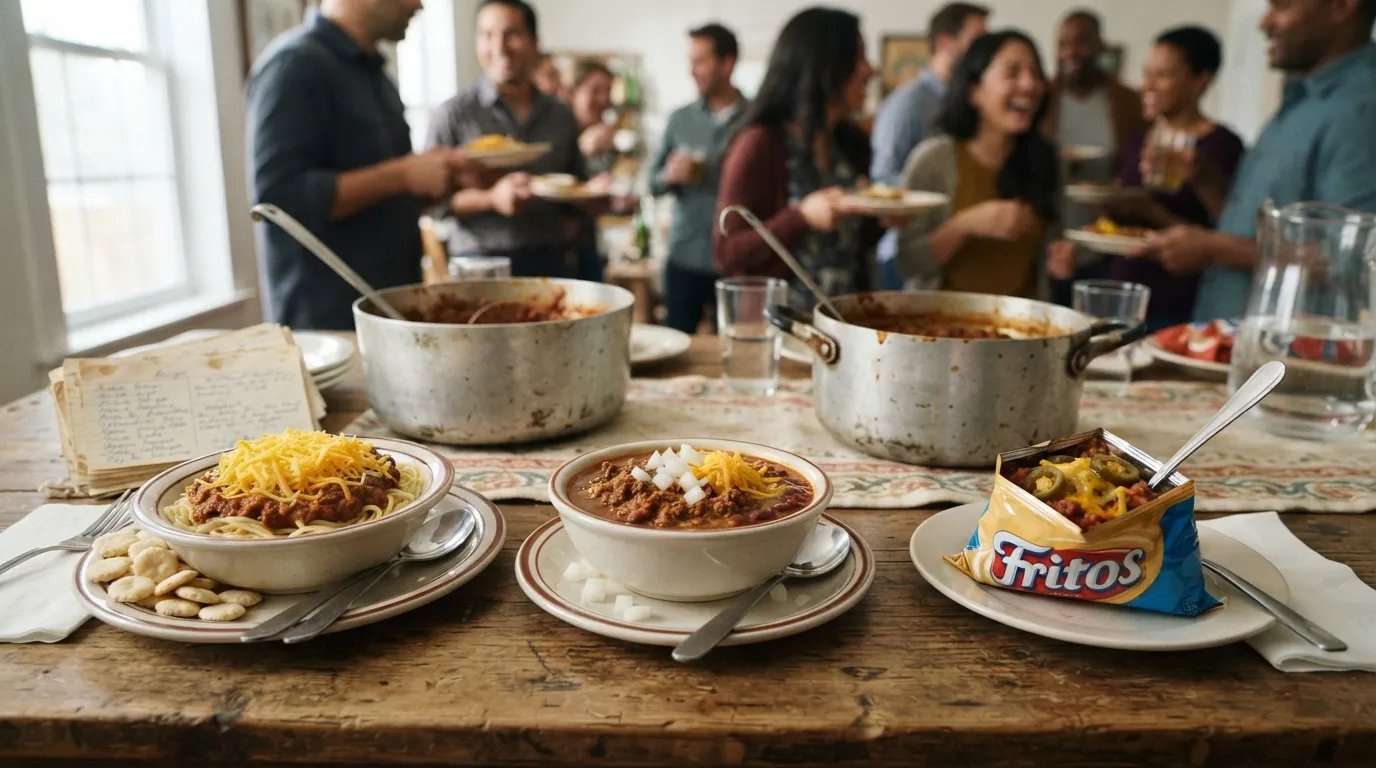
Ten pots, ten answers, and every one of them is somebody’s idea of home. The Cincinnati spaghetti plate, the Springfield counter bowl and the bag of Fritos with a fork can each bring back a particular winter, a particular kitchen and a particular ladle.
Chili has always been a recipe people carry with them and adjust to wherever they land. If your family’s version didn’t make the list, that’s not a mistake, it’s just one more regional style.
Next time you’re at a potluck, ask whose pot it is and where the recipe came from. The story behind the chili is usually better than the chili, and it’s the part that gets passed down with the dented pot and the stained recipe card.
- Frito Pie Origin Dispute: https://www.kxan.com/news/texas/did-the-frito-pie-actually-originate-in-texas/
- Chili John’s Burbank: https://en.wikipedia.org/wiki/Chili_John’s
- Cincinnati Magazine Empress History: https://www.cincinnatimagazine.com/iconic-eats-2022/cincinnati-chili-turns-100-at-empress/
- Empress Chili Official Story: https://www.empress-chili.com/
- CASI Texas State Dish Proclamation: https://www.casichili.net/state-food-proclaim.html
- Original Terlingua Cook-Off History: https://abowlofred.com/blog/the-brief-history-of-the-original-terlingua-international-championship-chilli-cook-off/