6 Grocery Store Breads Ranked From Least to Most Healthy
That brown, seeded, wholesome-looking loaf in your cart may be closer to white bread than the bag lets on. The first ingredient tells you more than the biggest words on the front, and Harvard’s Nutrition Source suggests a whole grain should be listed first or second.1
This ranking runs for six types, judged as they usually appear on shelves, so the label on your own loaf can move it up or down a rung. The first-place loaf beats plain 100% whole wheat by a narrower margin than its reputation suggests, and a few healthy-sounding names land lower than you would guess.
#6 – White Bread Made From Refined Wheat Flour
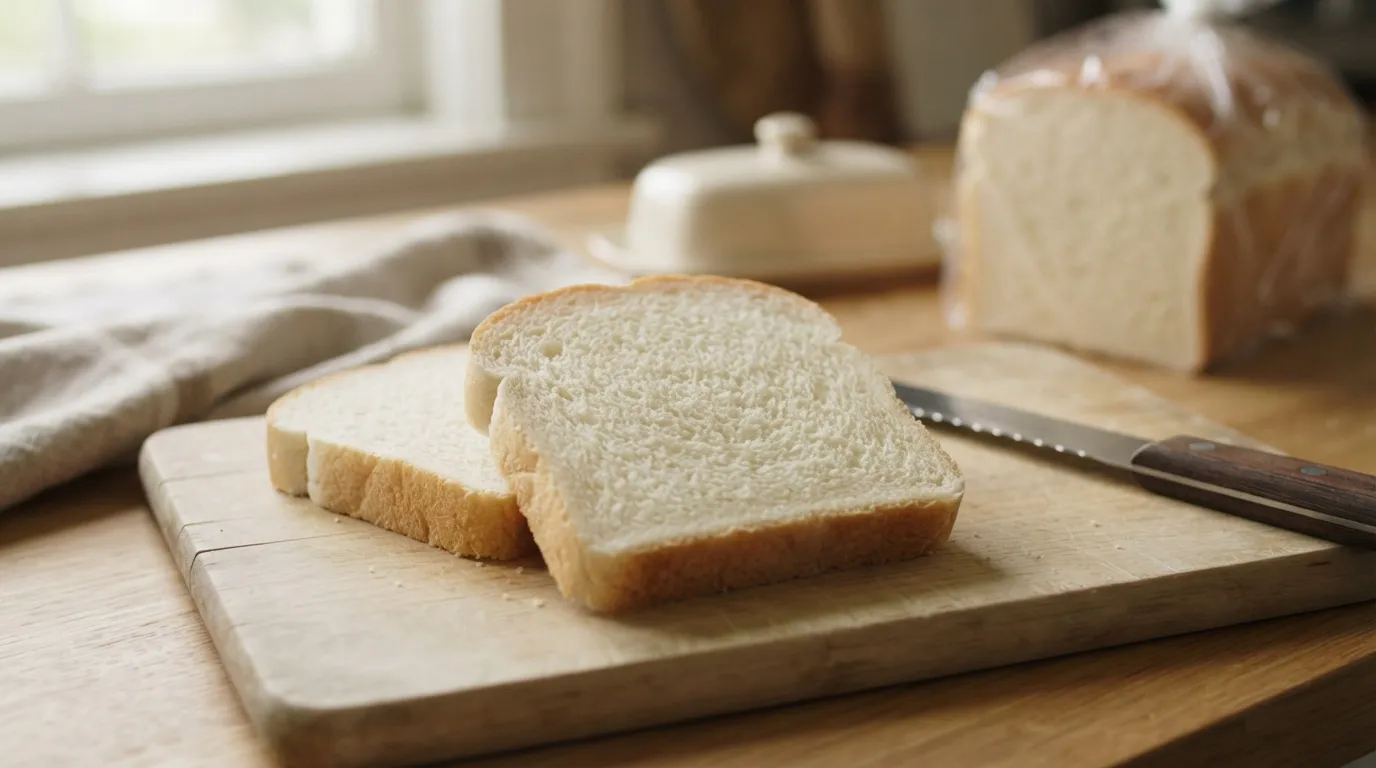
White bread is made from ground wheat endosperm, after the bran and germ have been removed. The bran is the fiber-rich outer layer that supplies B vitamins, iron, magnesium and antioxidants, so a refined slice gives up the part of the grain that carries much of the nutrition.
Harvard’s Nutrition Source advises limiting refined grains such as white bread, and it lists white bread among the unhealthier carbohydrate sources, alongside pastries and sodas.1 The reasoning comes down to what the milling took out, since refined white flour lacks the nutrients and benefits of whole grains.2
That earns white bread last place here, though no one is banning it. Soft white slices still suit a grilled cheese or French toast, but they make a weak default for the toast and sandwiches you eat several times a week.
Fast Facts
- Kept in the mill: the endosperm, the starchy center of the wheat kernel.
- Removed: the bran and the germ.
- The bran is where much of the fiber, B vitamins, iron and magnesium sit.
- Best use: a grilled cheese or French toast, not an everyday default.
Color is a poor guide to what comes next, since products that are darker in color are not necessarily whole grains.
#5 – Loaves Labeled Wheat Without the Word Whole
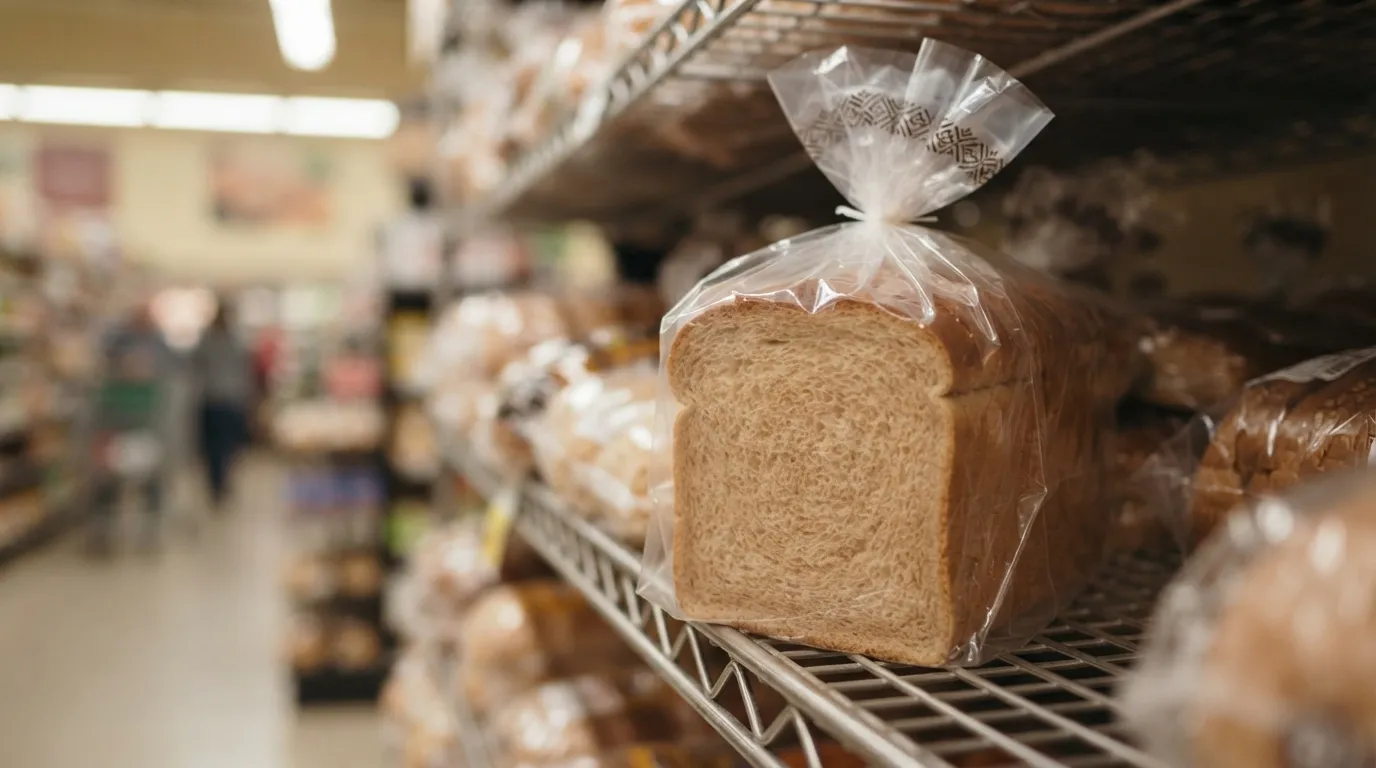
White flour is wheat flour too, which is why the word wheat on a bag settles very little. Harvard Health says to look for the word “whole” or “whole-grain” before the grain’s name as the first ingredient.3
A dietitian writing for NBC News calls enriched wheat bread code for white bread, which is a blunt way of saying the flour is refined. If the first ingredient reads only wheat flour or enriched flour, you are looking at a white loaf in brown clothing.
- Look for “whole wheat” or “100% whole wheat” as the first ingredient.
- Aim for at least 3 grams of fiber and no more than 5 grams of sugar per serving, the range Harvard’s school nutrition handouts suggest.4
- Stone-ground, multigrain, fortified, cracked wheat and organic are descriptions that do not guarantee a whole grain product.3
On a typical shelf, plain wheat bread climbs only one rung above white, because the fiber that milling removed is missing from both. A loaf that opens with whole wheat flour is a different bread altogether, and the word whole is worth more than the word wheat.
Piling more grains into a loaf’s name does not fix the flour underneath, as the multigrain aisle shows.
[article_quiz]#4 – Multigrain Loaves With a Long List of Grains
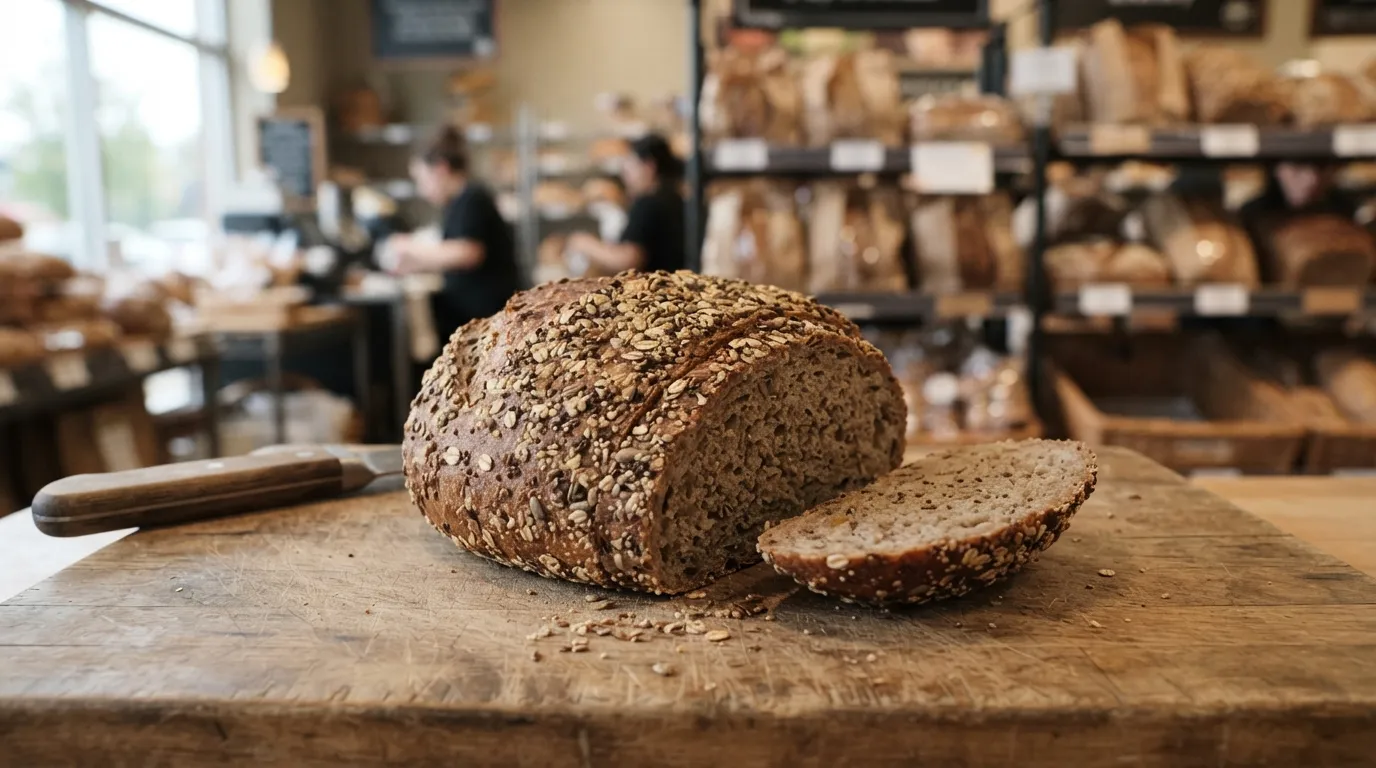
Multigrain sounds like a promise, but it only describes how many kinds of grain went into the loaf. It says nothing about whether those grains are whole, and Harvard Health’s label guide describes multigrain as a mixture of grains, mostly refined.5
Harvard’s handouts add that labels such as “made with whole grains” and “seven grain” often are not made with mostly whole grains.5 So the ingredient list has to confirm what the front implies, and a whole grain should be listed first.
Sugar deserves a look too. One set of whole grain checks asks that added sugar not be among the first three ingredients, and it can appear as corn syrup, dextrose or fructose.
Harvard researchers comparing label shortcuts found that products flagged by “whole grain first” or “whole” anywhere had more fiber and less sodium, but also more sugar and energy. A multigrain loaf that passes the ingredient and fiber checks can be a good one.
Quick Compare
- “Multigrain”: a mixture of grains, mostly refined, according to Harvard Health’s label guide.
- “Made with whole grains” or “seven grain”: often not mostly whole grain, per Harvard’s handouts.
- A whole grain listed first: the stronger sign, though Harvard researchers found those products can also carry more sugar and energy.
The same label on another bag can describe something close to white, which is why multigrain sits fourth.
#3 – Sourdough and the Long Fermentation Behind It
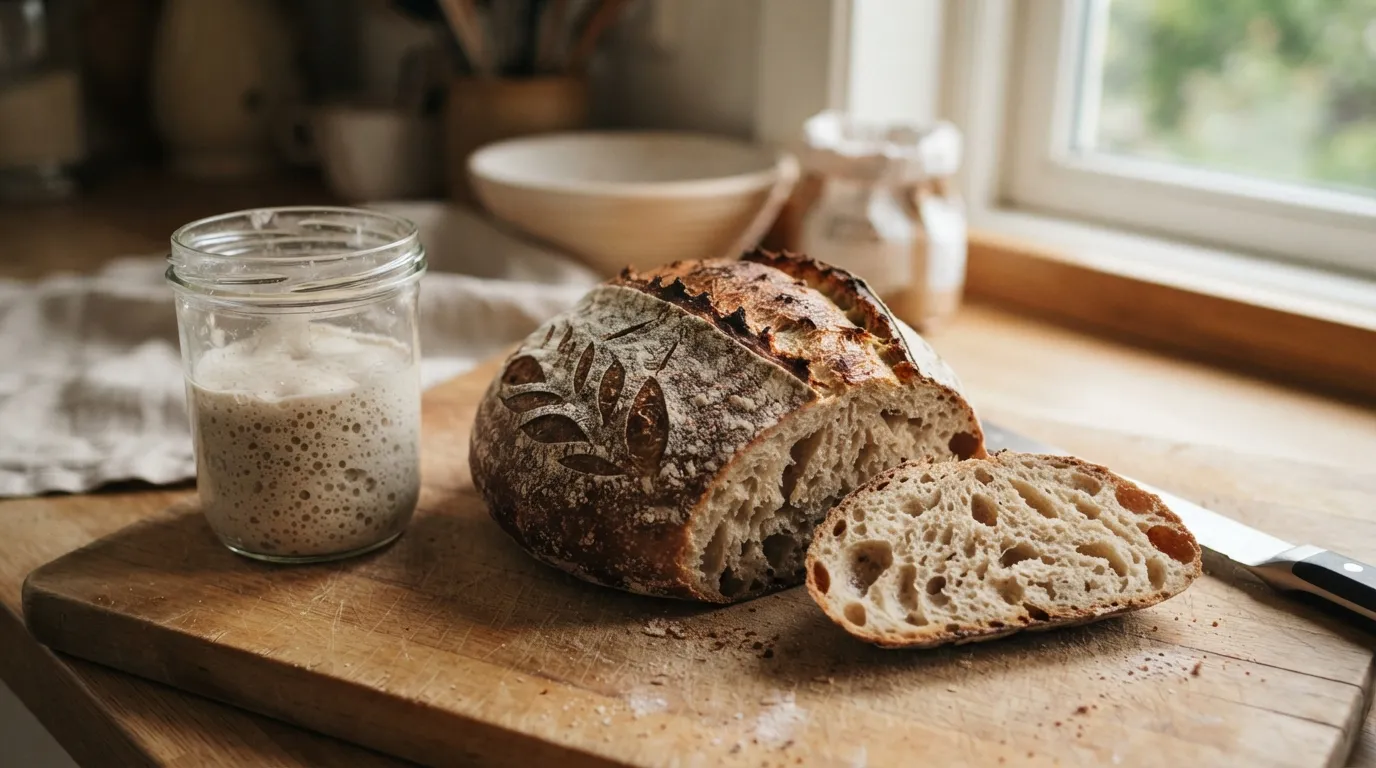
Traditional sourdough uses naturally occurring yeasts and lactic-acid bacteria, and the organic acids made during fermentation can change the structure of the starch. Those changes are why sourdough gets so much attention where blood sugar is concerned.
A 2022 review of 18 clinical trials found smaller blood glucose rises after sourdough than after industrially fermented bread, with the benefit strongest when whole-wheat flour was used.6 The certainty of that evidence was rated low to very low, and a 2026 review of 27 studies found the case that sourdough itself improves glucose and insulin responses still not convincing.7
The dietitian in the NBC column mentioned earlier makes an exception for traditional sourdough while favoring whole grain over refined. The reviews point to the same version: whole-wheat sourdough made slowly.
A white sourdough with a quick rise deserves no extra credit for its name. Danish rye bread is typically made with sourdough, and rye as a grain has its own sorting problem between light and dark flours.
#2 – Whole-Grain Rye and Its Light Rye Look-Alike
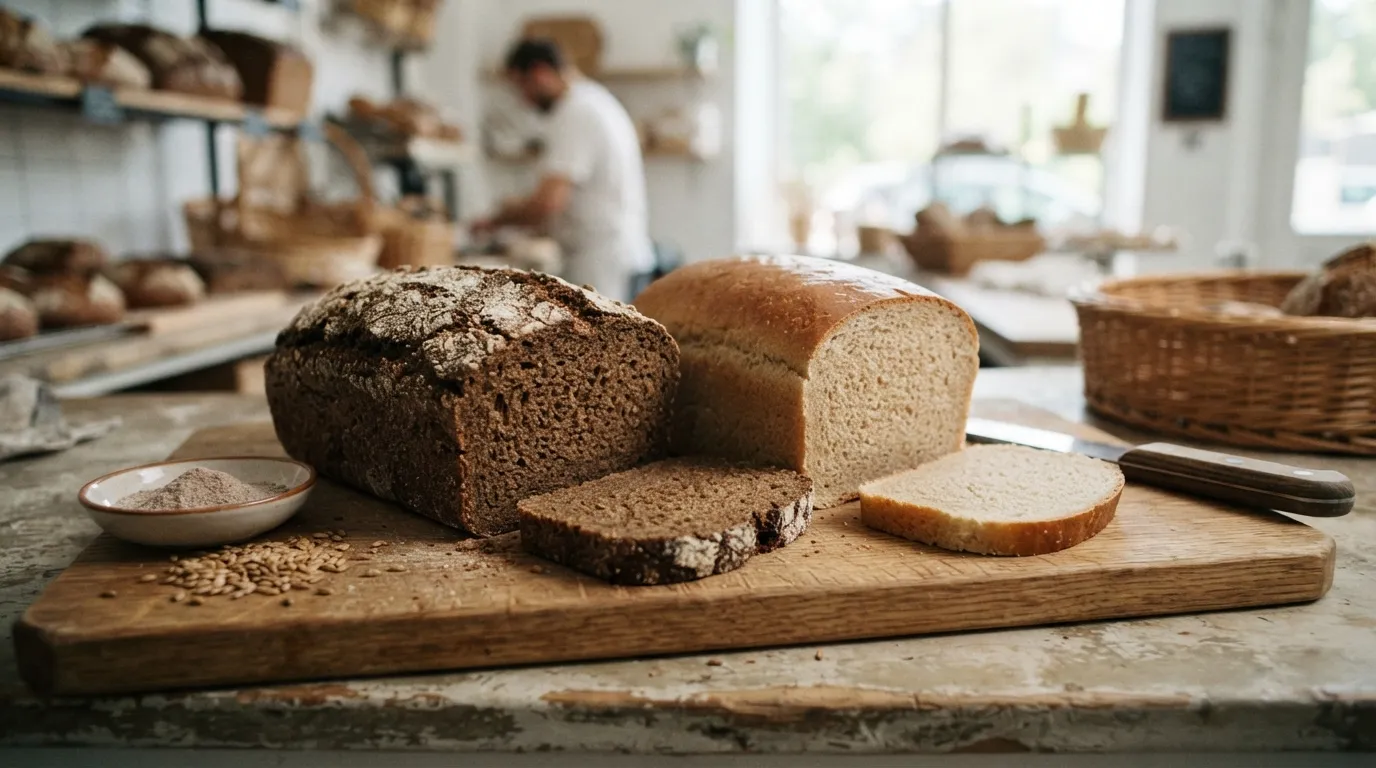
Harvard Health lists rye among the whole grains, but rye bread is only as whole as its flour. Rye flour is classified as light or dark by the amount of bran left after milling, so the label decides which kind you are holding.
Light rye is often mixed with wheat flour, and a slice made mostly from refined flour may offer barely more fiber than white bread. Rye bread counts as whole grain only when it is made with wholemeal rye flour or a good share of whole rye grain, and the words “rye bread” alone guarantee nothing.
- Whole rye flour, rye meal or cracked rye grains should be the first ingredient.
- “Rye flour” with no “whole” or “dark” in front of it is likely refined.
- A dense crumb with visible bits of grain points to more whole grain.
- Caraway tells you nothing about the flour, and in the United States rye bread nearly always has it unless labeled unseeded.
Whole-grain rye earns second place because its case rests on the flour, which the label lets you check, rather than on a process the label cannot show. That is the difference from sourdough, and it is also why a light rye loaf would drop to about where plain wheat sits.
Whole grain still leaves one more variable, which is what happens to the grain before it reaches the mill.
#1 – Sprouted Whole Grain Bread With Grains and Legumes
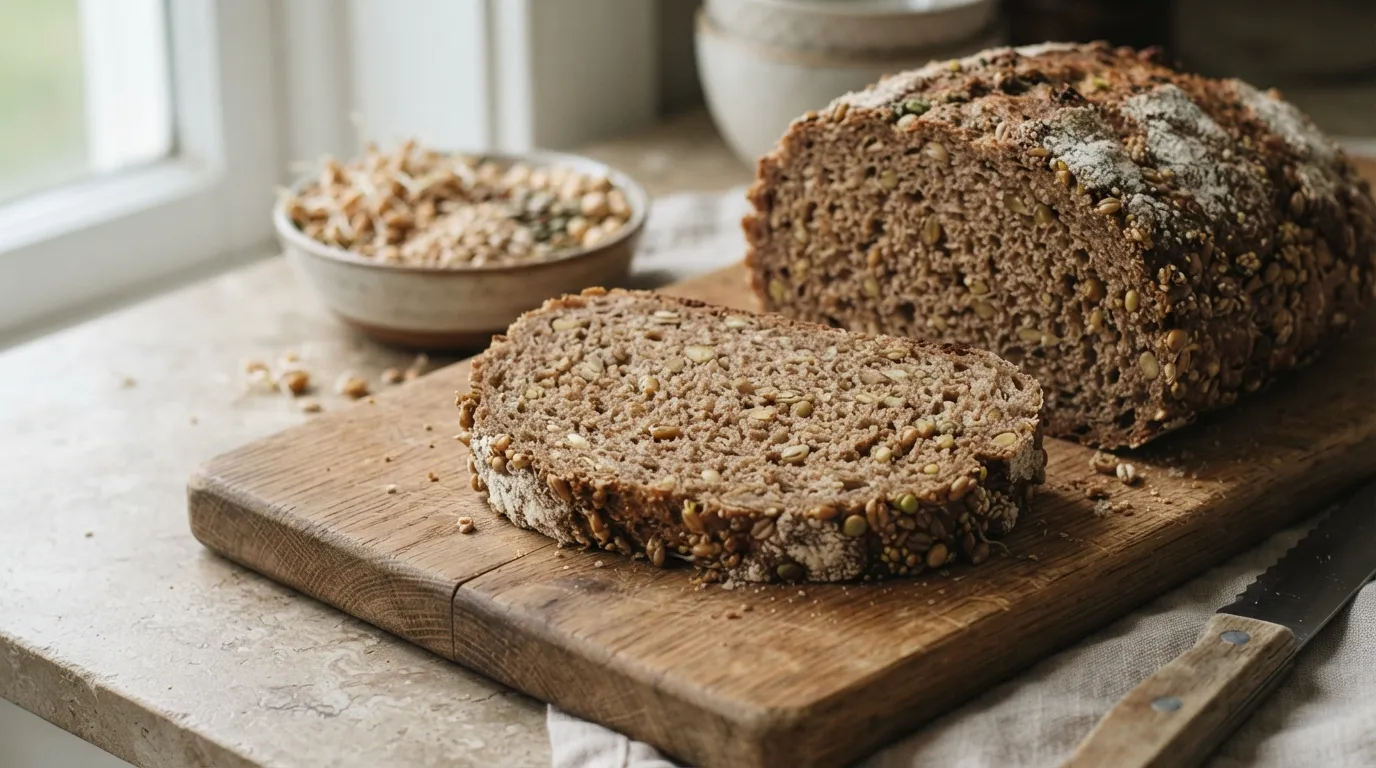
Sprouted bread is made from whole grains that have been allowed to sprout before being milled into flour. Because it also uses the entire grain, it is nutritionally similar to bread made with whole grain flours, with a few possible extras.8
Ezekiel 4:9 bread, for example, includes sprouted wheat, barley, lentils, soybeans and spelt. Healthline reports that sprouted grain bread had the lowest glycemic index in a comparison with 11-grain, 12-grain, sourdough and white bread.8
- One slice of Arnold Stone Ground 100% Whole Wheat in the NBC column: 60 calories, 1.5 grams of fiber, 3 grams of protein.
- One slice of Food for Life Ezekiel 4:9 sprouted wheat bread: 80 calories, 3 grams of fiber, 4 grams of protein, no sugar.
- Slice size and recipes differ by brand and change over time, so compare the current labels on the loaves you are choosing between.
Sprouted bread is not gluten-free, and some sprouted breads are made with added flour or gluten, so the word sprouted does not promise a short ingredient list. Beyond that, sprouted breads may hold slightly more trace minerals and otherwise offer much the same advantages as whole grain bread over refined bread.
That puts sprouted whole grain bread first by a modest margin, as one review of the research describes the gains over standard whole wheat. It only holds when sprouted whole grains lead the ingredient list.
If it is not on your shelf, a 100% whole wheat loaf that opens with whole wheat flour, as Harvard advises, gives up little.
[article_quiz]A Better Way to Read the Bread Aisle
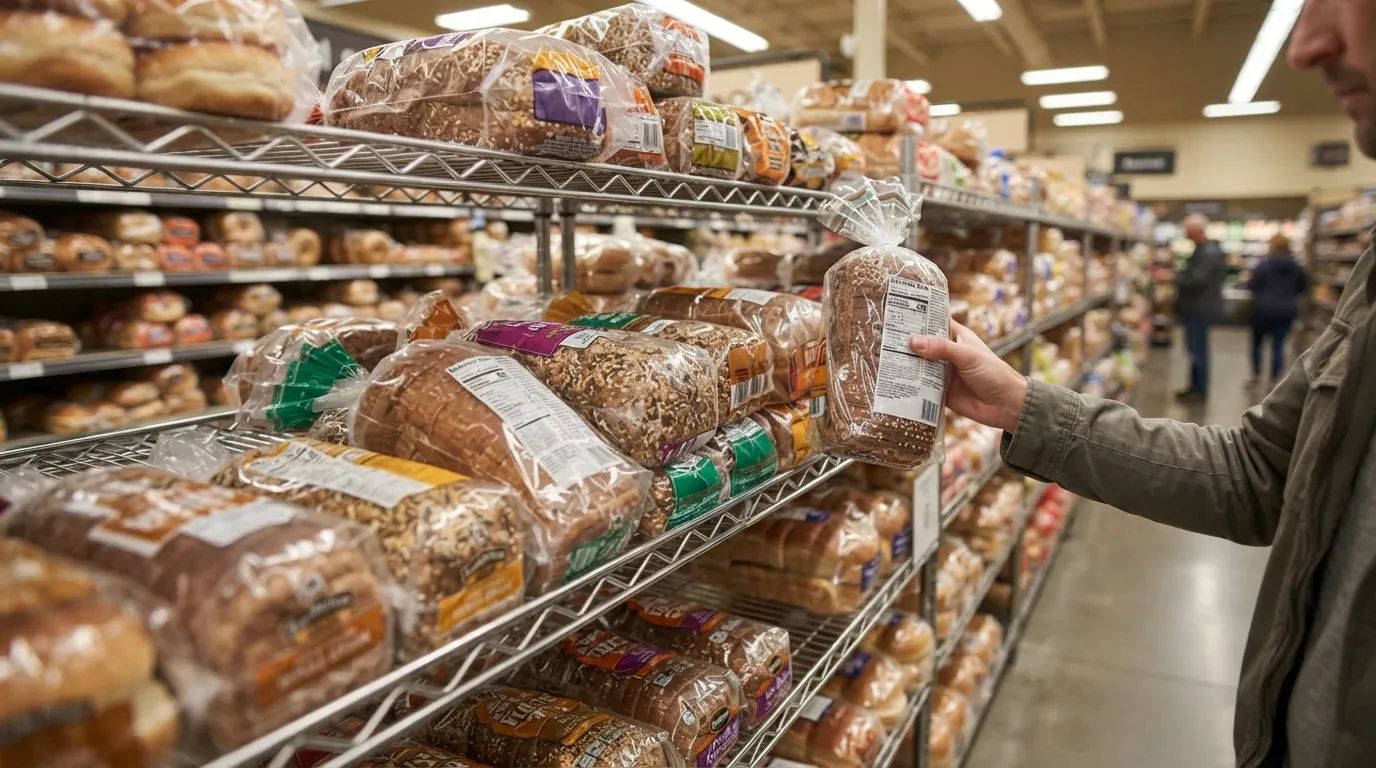
Each of these six loaves can land higher or lower depending on the flour inside, so treat the ranking as a starting guess for the aisle. The front of the bag is the sales pitch, and the ingredient list and the fiber line on the back are where the loaf has to prove itself.
If you have a medical condition or follow a special diet, your doctor or a dietitian can tell you which breads suit you. Otherwise, two checks cover most of the work: whether a whole grain comes first, and what the fiber and sugar lines say.
At a Glance
- First ingredient: a grain named with the word “whole” in front of it.
- Fiber: at least 3 grams per serving, per Harvard’s handouts.
- Sugar: no more than 5 grams per serving, per the same handouts.
- Added sugar: not among the first three ingredients, under one set of whole grain checks.
So what is the first ingredient on the bag of the bread in your kitchen right now?
- Harvard Carbohydrates Nutrition Source: https://nutritionsource.hsph.harvard.edu/carbohydrates/
- Harvard Whole Grains Tip Sheet: https://hsph.harvard.edu/wp-content/uploads/2025/09/wholegrains_2024.pdf
- Harvard Experts Scouting Whole Grains: https://chicagohealthonline.com/ask-the-harvard-experts-scouting-out-whole-grains-in-food/
- Harvard Parent Whole Grains Handout: https://content.sph.harvard.edu/wwwhsph/sites/84/2021/02/EWKM-WholeGrains.pdf
- Harvard Health Whole Grain Labels: https://www.health.harvard.edu/blog/whole-grains-or-no-grains-food-labels-can-be-misleading-202009302284
- Sourdough Glycemic Control Review: https://www.tandfonline.com/doi/abs/10.1080/10408398.2022.2108756?tab=permissions&scroll=top
- Sourdough Glycaemia Systematic Review: https://www.frontiersin.org/journals/nutrition/articles/10.3389/fnut.2026.1910648/full
- Healthline Sprouted Grain Bread: https://www.healthline.com/nutrition/sprouted-grain-bread