Amazon Cuts Ties with Flock Following Backlash over Its Super Bowl Commercial
A 30-second ad featuring a lost dog and a network of AI-powered cameras was supposed to be heartwarming. Instead, it ignited one of the most intense privacy debates of the year. The backlash erupted after a 30-second Ring ad aired during the Super Bowl, featuring a lost dog found through a network of cameras, sparking fears of a dystopian surveillance society. What followed was swift, loud, and consequential: Amazon’s Ring terminated its entire partnership with police surveillance company Flock Safety just days later, sending a clear signal that public pressure on Big Tech still has teeth.
The Super Bowl Ad That Set Off a Firestorm

Ring, the Amazon home-security division, ran one of the most-liked ads during Super Bowl LX: a spot promoting Search Party, a feature that helps people find lost dogs using AI to scan opt-in footage from Ring cameras in a neighborhood. On the surface, it was a feel-good pitch. The 30-second ad that sparked the controversy features a function called “Search Party” that can help locate lost pets. “Pets are family. But every year, 10 million go missing, and the way we look for them hasn’t changed in years. Until now,” the narrator said in the ad.
Viewers took to social media to criticize it for being sinister, leaving many wondering if it would be used to track humans and saying they would turn the feature off. The reaction split audiences down the middle. It prompted significant online blowback from people who noted that the same cameras, which can be paired with facial recognition technology, can be used to track people. What started as a clever marketing moment quickly snowballed into a national conversation about surveillance, civil liberties, and the line between helpful technology and invasive monitoring.
The Ring–Flock Partnership and What It Actually Meant
The Amazon company announced its partnership with Flock last October, giving owners of its video doorbells the option to share footage with law enforcement agencies that use the startup’s software to assist with their “evidence collection and investigative work.” The arrangement was framed as voluntary and community-focused. The deal, which the companies announced in October, would have given Ring customers the option to share video from their doorbell cameras with police in some instances through a program called Community Requests. It had yet to launch.
Amazon aired a Super Bowl ad touting a feature similar to Community Requests, called Search Party, that would allow Ring users to share their doorbell video to help find lost dogs. It prompted significant online blowback from people who noted that the same cameras, which can be paired with facial recognition technology, can be used to track people. That program was unrelated to Flock. Still, the public made little distinction between the two. This triggered nationwide criticism, with concerns that the feature could be used to surveil people. Many believed that this was one of the surveillance features offered through Amazon’s partnership with Flock.
The Official Termination and How Both Companies Framed It

Amazon’s Ring terminated its partnership with police tech company Flock Safety. The announcement came on February 12, 2026, just days after the Super Bowl. In a statement released Thursday, Ring said the two companies made a “joint decision” to cancel their planned collaboration, citing financial and time concerns. Notably, Ring’s announcement does not cite the ad as a reason for the “joint decision” for the cancellation.
Flock announced on its website that “the planned integration between Flock and Ring’s Community Request tool has been canceled. The integration never launched, so no Ring customer videos were ever sent to Flock. We believe this decision allows both companies to best serve their respective customers and communities. Flock remains dedicated to supporting law enforcement agencies with tools that are fully configurable to local laws and policies.” Ring spokesperson Emma Daniels went further, stressing that the Flock partnership was never active, and the companies never announced a date for it to go live. “No videos were ever shared between these services,” Daniels said.
Political Pressure and Civil Liberty Groups Pile On
Senator Ed Markey, D-Mass., wrote an open letter to Amazon about the commercial, calling the technology “creepy.” He did not stop there. In a published letter addressed to Amazon CEO Andrew Jassy, Markey wrote that the backlash to the Super Bowl commercial “confirmed public opposition to Ring’s constant monitoring and invasive image recognition algorithms.” The letter reflected a growing consensus among lawmakers that AI-powered consumer cameras deserve far more scrutiny than they currently receive.
The Electronic Frontier Foundation declared that “no one will be safer in Ring’s surveillance nightmare.” The group elaborated pointedly, warning that “the company previewed future surveillance of our streets: a world where biometric identification could be unleashed from consumer devices to identify, track and locate anything – human, pet, and otherwise,” the group said in a February 10 blog post. Various advocacy groups, including the American Civil Liberties Union and the Electronic Frontier Foundation, expressed concerns about the potential privacy violations posed by Flock cameras. Meanwhile, a protest calling on the e-commerce company to cut its ties with Flock, ICE, and CBP was scheduled for Friday outside Amazon’s Seattle headquarters.
Flock Safety’s Broader Controversy and the ICE Question
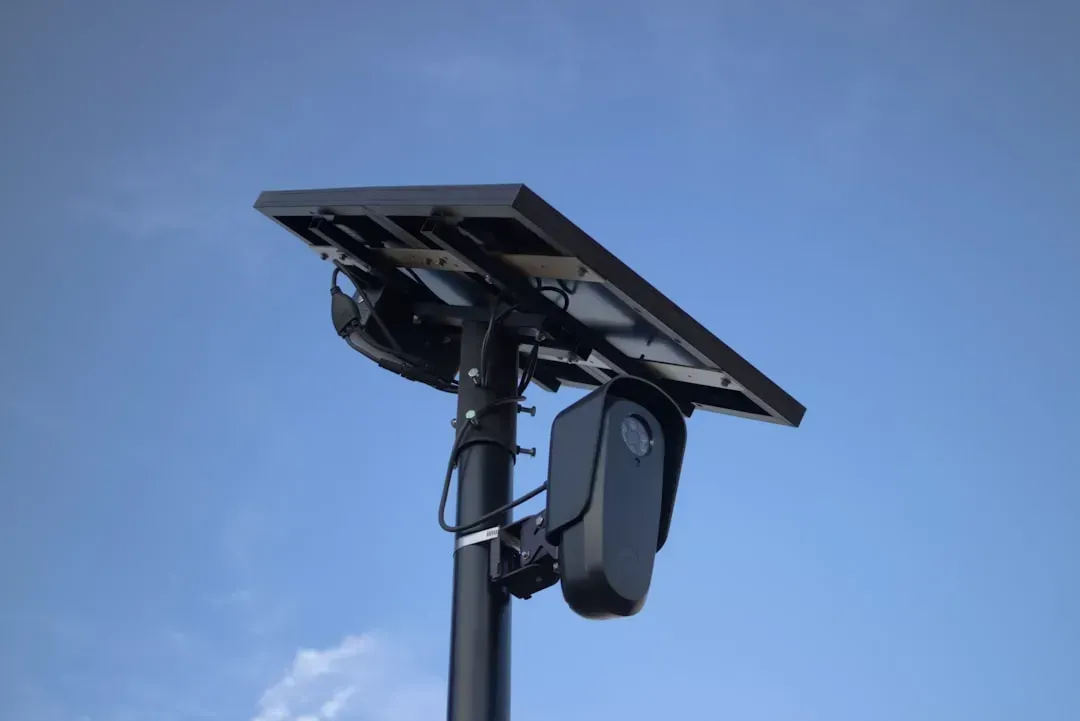
Flock has become one of the most dominant law enforcement surveillance companies in the country. It is best known for its network of thousands of license plate reader cameras scattered across the U.S., which record and identify cars by their license plates in real time as they pass. The scale is staggering. Its cameras are mounted in thousands of communities across the U.S., capturing billions of photos of license plates each month. Flock’s systems have been adopted by thousands of communities and law enforcement agencies across the country, and both ICE and CBP have reportedly accessed Flock’s data as part of President Donald Trump’s immigration crackdown.
Flock has denied that it shares data with ICE or any “sub-agency” of the Department of Homeland Security. However, the denials have done little to calm the controversy. Reviews of audit logs by researchers, journalists, and officials have found local police departments appear to be conducting searches on behalf of federal agencies. In such cases, the officer performing the search listed terms like “ICE” or “immigration” as the reason for performing the search. Unlike other police tech companies, Flock uses the video to create a centralized database and lets participating police officers around the country track vehicles’ movements without warrants. Controversy over that access, as well as fears that local police can share Flock information with federal agencies like Immigration and Customs Enforcement, has led some cities and towns to cancel their Flock contracts.
Cities Revolt and Ring’s Future Partnerships Remain in Question

The liberal college towns of Flagstaff, Arizona; Cambridge, Massachusetts; Eugene, Oregon; and Santa Cruz, California, are among a list of at least 30 localities that have either deactivated their Flock cameras or canceled their contracts since the beginning of 2025, with much of the activity happening in just the last three months. The grassroots movement has been relentless. The Lynnwood City Council voted unanimously to terminate its contract with Flock Safety, the company that operates automated license plate reader cameras, after concerns that the system was used for immigration enforcement.
Amazon still has an ongoing contract that partners its Community Requests feature with Axon, another leading police surveillance company. Critics warn the Flock cancellation may be more symbolic than substantive. Dave Maass, director of investigations at the EFF, said that “customers of Ring and the bystanders their cameras surveil have reason to distrust the company’s assurances.” “Ring has a long history of privacy failures and violations that go back years before it announced its partnership with Flock,” Maass added. “Furthermore, surveillance companies like Ring have previously made promises amid public pressure only to backtrack later.” Doorbell cameras have steadily become common across the U.S., with an estimated 27% of American households now using them, according to the consumer technology market research firm Parks Associates. Ring is by far the most popular doorbell camera, Parks found.