Dead Shopping Malls Are Coming Back – and Their New Purpose Is Even More Concerning
Warehouses on Steroids: When Retail Becomes Industrial
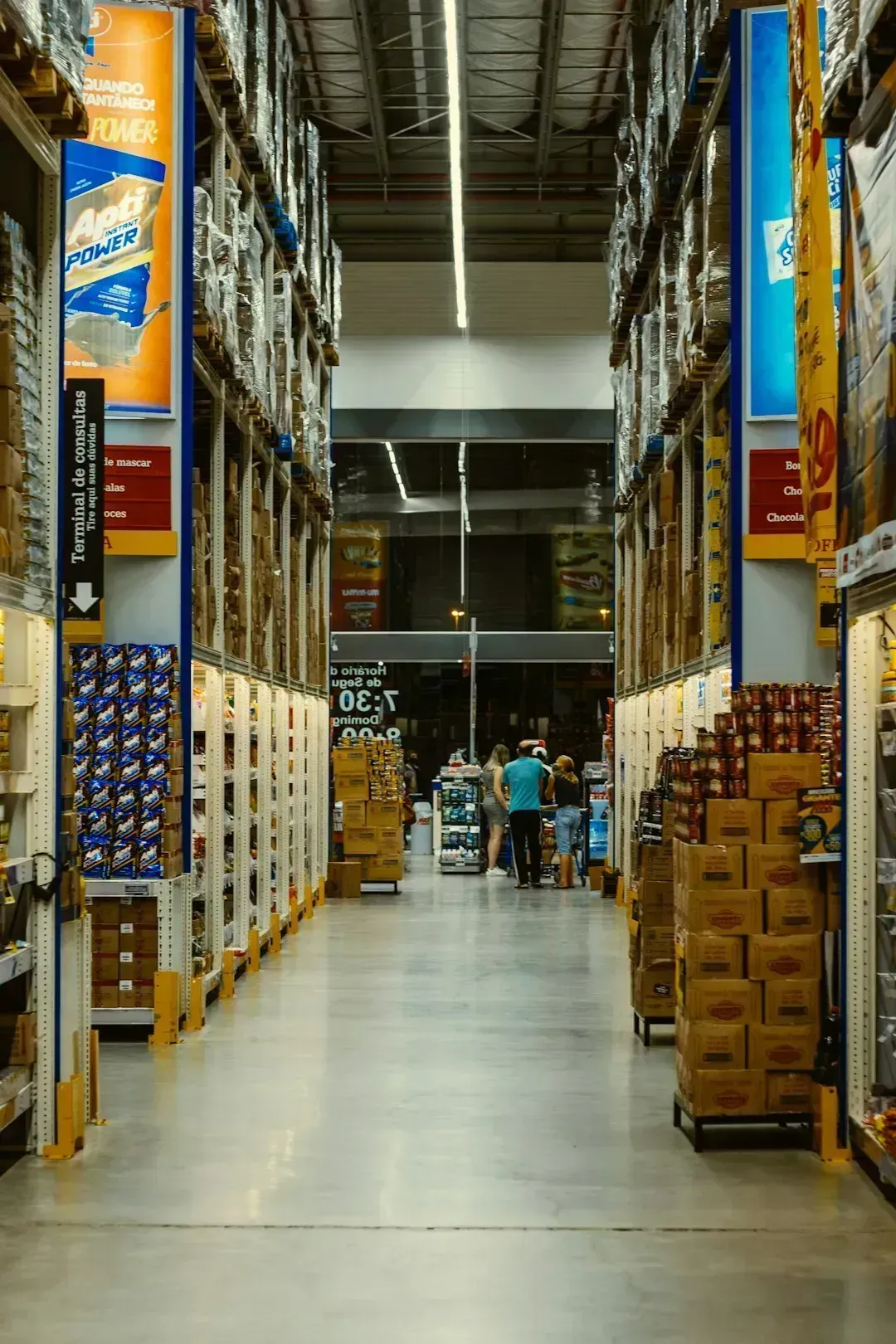
Between 2016 and 2019, Amazon converted around 25 malls into fulfillment centers, quietly transforming the landscape while most of us were scrolling through our phones. The e-commerce giant acquired malls in Baton Rouge, Louisiana; Knoxville, Tennessee; Cleveland, Ohio and Worcester, Massachusetts, converting them into fulfillment centers. In Euclid, Ohio Amazon took over a space previously occupied by the local mall and turned it into a fulfillment center that employees around 2,000 full-time associates. While warehouses and fulfillment centers may be more reliable employers than brick-and-mortar retailers in the coming years, cities risk losing out on valuable sales taxes by converting stores into logistics centers.
There’s something unsettling about watching the spaces where generations once gathered for school shopping and food court hangouts turn into industrial hubs for package sorting. A mall tends to generate property, income and sales taxes for the surrounding community, whereas an industrial building isn’t going to bring in sales taxes. The transformation feels less like innovation and more like erasure of public gathering spaces.
The Rise of Data Centers Where Pretzels Once Ruled

One of the most surprising – and potentially lucrative – conversions is transforming these spaces into data centers. Several U.S. malls have already been converted into data centers, including in Ohio, where a shuttered shopping mall became a colocation facility after its anchor tenants left. The demand for data centers from Amazon’s cloud business and Amazon Web Services (AWS) as well as Microsoft Azure, Google Cloud, Equinix, Digital Realty, CyrusOne, Vertiv Holdings Co. and Oracle Cloud are likely to consider dying malls as target real estate for data center operations.
Data centers demand significant energy, and not all communities are equipped to handle the strain on local utilities, with environmental questions around water usage, since many facilities rely on water cooling systems. Data centers, while valuable for digital infrastructure, typically employ fewer people than retail spaces once did. The shift from bustling retail destinations to silent server farms creates economic questions about job creation and community vitality that deserve more scrutiny.
Housing Crisis Solution or Dystopian Nightmare?
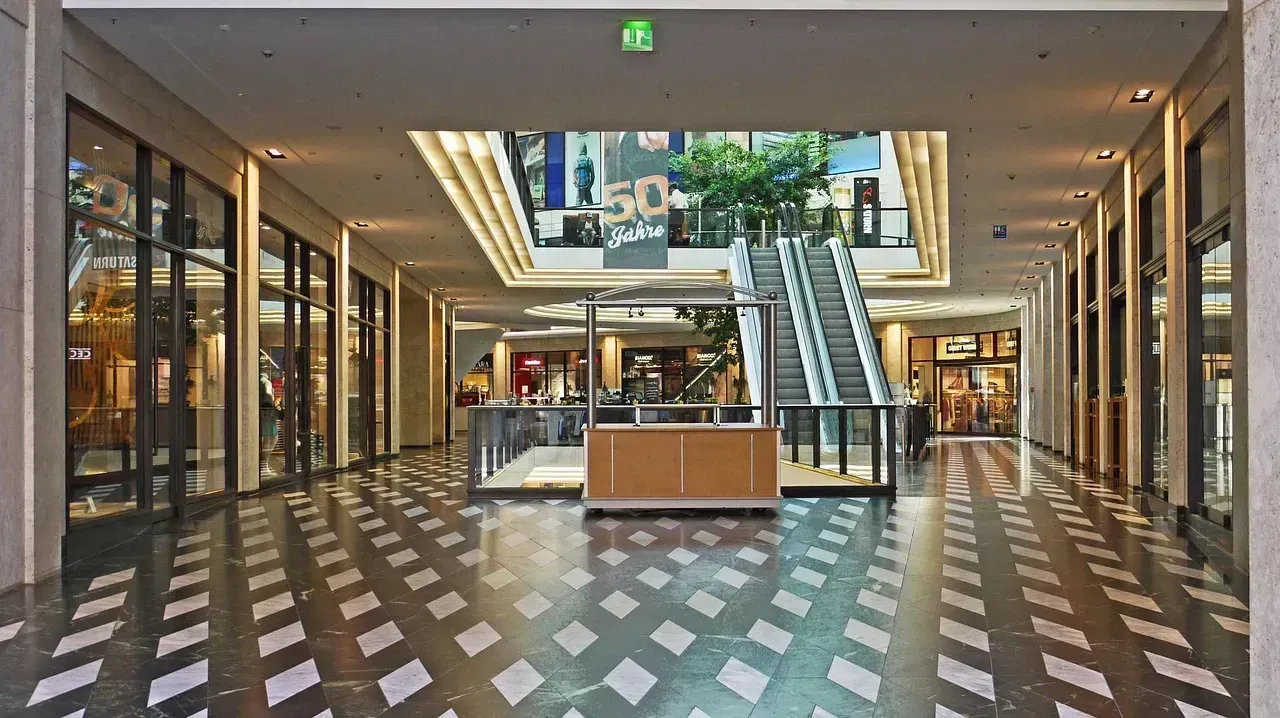
Turning just 10% of underperforming retail sites into housing could create 700,000 new units nationwide, according to a November report from Enterprise Community Partners. In Arlington, Virginia, high-rise apartment complexes such as the Witmer and Milton have sprouted up in vacant mall space, housing 700 individuals within walking distance of stores. In Plano, Texas, developers transformed Collin Creek Mall into a mixed-use community with 2,300 apartments all while retaining the original structure of the mall.
However, the reality of these conversions raises serious questions about livability. One of the largest problems in converting a mall to housing is that malls are designed with no windows; how do you make a humane apartment in a mall? There isn’t enough plumbing to replumb each unit so that every single store has plumbing and a kitchen, requiring a tremendous amount of resources because they’re just not built for human habitation. Let’s be real: living in a former food court doesn’t exactly scream comfort, even if developers slap on luxury amenities.
Communities Losing More Than Just Shopping
In 2024, 7,325 retail locations were shuttered, and in 2025, the number of closures was expected to double, with as many as 15,000 U.S. stores closing. Retail locations expected to close. Retail closures reached their highest level since the 2020 pandemic, according to Coresight Research, with a total of 7,325 locations shuttering. Sixty-eight percent of Americans live within one hour of a ‘dead mall’ and 2 in 5 live near two or more dead malls.
Concerns about traffic congestion and environmental impact can surface when truck activity increases in previously consumer focused areas. Sixty-two percent believe mall closures negatively impacted their local economy. Communities are watching the places where they once socialized transform into industrial sites or housing complexes they may not be able to afford, fundamentally changing the character of neighborhoods built around these retail hubs.
What Comes Next for Mall Graveyards
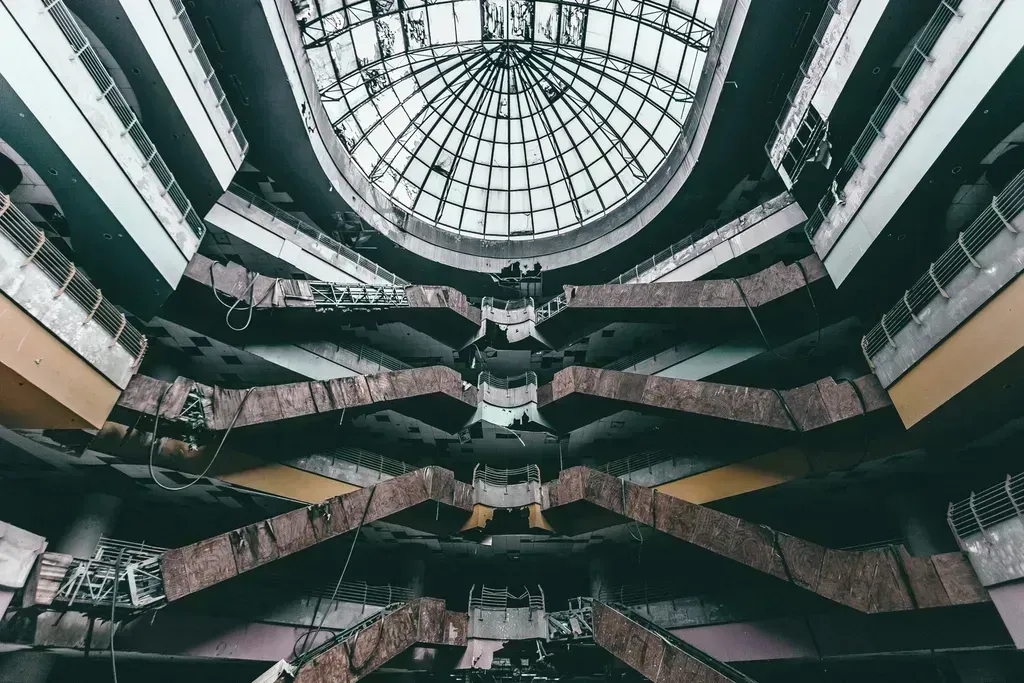
StoneCreek identifies more than 150 malls across North America that either have been redeveloped in recent years or are in the works. Inflation and a growing preference among consumers to shop online to find the cheapest deals took a toll on brick-and-mortar retailers in 2024. Malls currently have an 8.7% vacancy rate, which is the highest among all retail property types, with service-based tenants expected to lease more retail space in the coming year than goods-based tenants, a trend that JLL called “a historic shift in the retail property sector”.
The transformation of American malls reflects broader societal shifts we’re still grappling with. These conversions aren’t necessarily negative, though they warrant caution. Local governments and developers must weigh the trade offs carefully, balancing economic revitalization with quality of life concerns for residents. The future of these spaces will determine whether communities gain something valuable or simply lose another piece of shared public life. What do you think about these mall transformations? Does your neighborhood need housing more than gathering spaces?
The Hidden Winners in America’s Mall Makeover

While communities wrestle with losing their gathering spaces, a select group of players are cashing in big time on this retail apocalypse. Private equity firms and real estate investment trusts have been quietly buying up distressed malls at bargain prices, sometimes for pennies on the dollar compared to their original value. These investors aren’t sentimental about the food courts where you had your first date or the arcade where you spent countless quarters. They’re running cold calculations on square footage, zoning flexibility, and potential returns that would make your head spin. The most profitable conversions? Data centers and fulfillment warehouses, which can generate three to four times the revenue per square foot compared to traditional retail tenants. It’s honestly a bit ironic when you think about it – the same e-commerce companies that killed malls are now the ones moving into their corpses, turning them into the infrastructure that powers online shopping. Some community advocates argue these deals happen too fast, with little public input, leaving residents to wake up one day and discover their former mall is now a windowless concrete fortress humming with servers.
The Tax Loophole That’s Making This Transformation Unstoppable

Here’s something that’ll really get under your skin: many of these mall conversions are being supercharged by tax incentives originally designed to help struggling communities. Opportunity Zone programs, created to revitalize economically distressed areas, are now bankrolling the transformation of dead malls into industrial facilities that provide far fewer jobs than the retail spaces they’re replacing. A typical mall might’ve employed 2,000 people across dozens of stores and restaurants, but a data center? Maybe 50 permanent staff once it’s operational. Developers can defer and reduce capital gains taxes by investing in these zones, which sounds great on paper until you realize they’re essentially getting paid by taxpayers to eliminate community gathering spaces and replace them with facilities that wall off the public entirely. Some municipalities are catching on and trying to add stipulations about job creation and community benefits, but the legal framework heavily favors property owners. The kicker is that many of these same investors lobbied for these tax breaks in the first place, positioning themselves to profit from the very crisis they helped create through their involvement in e-commerce expansion.