I Downsized After 60 – 8 Things I Wish I Knew First
There’s a moment most people over 60 recognize. You walk past that unused guest bedroom for the hundredth time, glance at the three-car garage holding mostly boxes, and think: why are we still living this way? Downsizing sounds simple on paper – sell big, buy small, breathe easier. Honestly, though, the reality is a little more complicated than that.
Millions of Americans are now facing this exact crossroads. According to the American Association of Retired Persons (AARP), approximately 3 million Americans aged 65 and older downsize their homes each year, a number expected to increase as the Baby Boomer generation continues to age. The movement is real, it’s growing, and for many people it works beautifully. For others, a few surprises along the way made the whole thing harder than it needed to be. Let’s dive in.
1. The Emotional Weight Is Heavier Than You Expect

Let’s be real: nobody fully prepares for how it feels to pack up a home where your kids took their first steps, where decades of holidays unfolded in the living room. Research published in The Gerontologist reveals that residential relocation in later life ranks among the top three most stressful life events for older adults, alongside the loss of a spouse and major health diagnoses. That is a striking statistic, and yet most people go into downsizing thinking it will feel liberating from day one.
This grief response is often complicated by societal expectations that downsizing represents a positive “rightsizing” that should be embraced rather than mourned. This mismatch between internal emotional experiences and external expectations can leave seniors feeling misunderstood and isolated in their grief. Give yourself permission to feel it fully. The relief and the freedom come, but often only after the grief has been honored first.
2. Your Belongings Will Be a Much Bigger Problem Than You Think

Dr. David Ekerdt, who directs the Gerontology Center at the University of Kansas, coined the term “material convoy” to describe how we accumulate possessions throughout our lives that reflect our identities and relationships. His research indicates that by age 70, many individuals have amassed between 300,000 and 400,000 items, each with its own meaning and memory. That number is almost hard to believe until you start opening closets you haven’t opened in years.
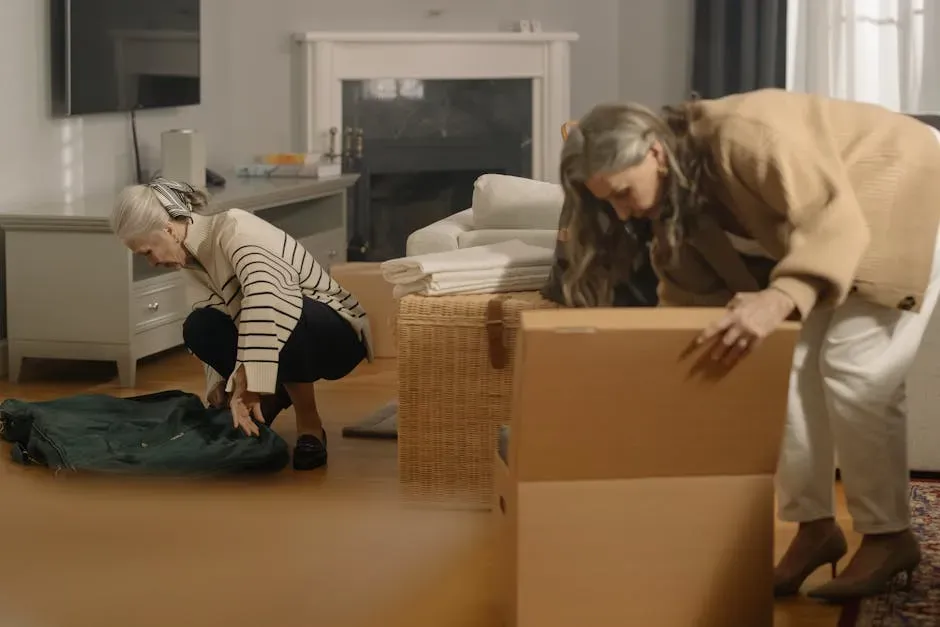
Many have lived in the same home for 40 to 60 years, making the process both physically and emotionally taxing – often leading to decision fatigue. The practical advice from relocation experts is consistent: start early, start small, and start with the easy stuff. Breaking the process into manageable chunks over time helps avoid decision fatigue, especially since seniors may only be able to tackle 15 minutes at a time. Begin with non-sentimental, easy-to-let-go items to build decision-making momentum.
3. Adult Kids Probably Don’t Want Your Stuff

Here’s something that stings a little but needs to be said plainly. Most people assume their children will eagerly claim the dining table, the china set, the vintage armchairs. Today’s adult children don’t necessarily want or have the home space to take the things their parents are downsizing. This is not a failure of sentiment – it’s just the reality of how younger generations furnish their lives differently today.
While these discussions can be emotionally difficult, it’s important to understand that decisions are often based on practicality, not lack of sentiment. Interestingly, adult children may value unexpected, sentimental items – like an old cookie tin – over larger or more traditional heirlooms like dining sets. So instead of assuming, ask. The conversations will surprise you – and save you from packing things that end up at a donation center anyway.
4. The Financial Benefits Are Real, but Don’t Assume It’s a Simple Win

According to Vanguard, home equity makes up roughly half the net worth of homeowners aged 60 and older. For those who purchased their homes decades ago, the numbers are striking. In 2000, the median-priced home was $119,600, while the median home reached nearly $418,000 in December 2023, a 350% increase. That kind of appreciation is genuinely life-changing equity. Yet downsizing doesn’t automatically mean you walk away richer on a monthly basis.
While downsizing does offer financial benefits, there are some unforeseen expenses that go hand in hand with relocating to a new area. In some instances, property taxes may be more expensive than your previous home, even on a smaller house. Utilities may also be more expensive in a new area. The average annual cost to maintain a single-family home rose 5 percent over the past year to $10,593, compared with $8,759 for a townhome and $3,258 for a condo, according to home services site Thumbtack. Running those numbers carefully before signing anything is not optional – it’s essential.
5. The Capital Gains Tax Situation Is More Complex Than You Realize

I think this is the single most overlooked detail when people plan their downsizing move. For many retirees, the home they’ve lived in for decades is their single largest asset and a cornerstone of retirement security. Yet rising property values – paired with a capital gains tax rule that hasn’t changed in nearly 30 years – are leaving more older adult homeowners feeling stuck. The problem: if you sell, the tax bill on decades of appreciation could be massive.
Under current capital gains tax rules, which haven’t been updated since 1997, homeowners are able to exclude up to $250,000 in profit when selling a home, or $500,000 for married couples filing jointly. While this may seem like a pretty hefty tax break, the reality is that these amounts haven’t been updated in nearly three decades. There is movement in Congress to change this – the “More Homes on the Market Act” was reintroduced by Rep. Jimmy Panetta in February 2025 with a group of bipartisan cosponsors, with the primary goal of doubling the capital gains exclusion on the sale of a primary residence to $500,000 for individuals and $1 million for married couples. Until that changes, speak with a tax professional before closing any deal.
6. The Housing Market Doesn’t Always Cooperate with Your Timeline

Here’s the thing about downsizing in today’s environment: you’re not just selling, you’re also buying. And that second part is where a lot of people run into trouble they didn’t anticipate. Buyers are competing for limited stock of smaller homes, according to Hannah Jones, senior economic research analyst for Realtor.com. The very homes most retirees want – compact, accessible, low-maintenance – are also exactly what other buyers want.
Roughly 61% of boomers said they do not plan to sell their homes, according to a 2025 survey by Clever Real Estate. That reluctance has a ripple effect, keeping inventory tighter than it might otherwise be. Home prices climbed 31% in real terms from 2019 to 2024, making the idea of utilizing home equity more attractive than ever. Still, finding the right smaller home in the right location at the right price takes patience – often far more than people budget for emotionally.
7. Accessibility Needs to Be Planned for Now, Not Later

Most people in their early 60s feel fine. They’re active, mobile, and don’t really think much about grab bars and stair-free layouts. That’s actually exactly the right time to think about them. When downsizing in retirement, consider choosing a home designed with accessibility in mind – such as a single-story property with walk-in showers, wider doorways and fewer steps. This can enhance safety, comfort and independence so that you can safely age in place.
Many older adults downsize and move because their current house becomes challenging to navigate and may not be as safe for them going forward. Usually, stairs are the culprit. Moving allows you to choose a safer space, so keep this in mind as you select and set up the new home. Think of it like buying shoes that fit your feet today, but also account for the long walk ahead. Choosing for now and for later, rather than just now, saves a second move down the road.
8. The Social Impact of Moving Can Catch You Completely Off Guard
People talk about square footage and equity and maintenance costs. Far fewer talk about loneliness. If you stay in your home for a long time, you’re bound to watch neighbors move or pass away, leaving you isolated and lonely – a condition affecting roughly 44% of Baby Boomers. Downsizing into the right community can actually improve that picture dramatically, but only if you think about it deliberately. A smaller house in the wrong location solves nothing socially.
While downsizing can disrupt existing social connections, it can also create new opportunities, particularly when moving to communities designed for older adults. Research by the Mather Institute found that seniors who moved to age-focused communities reported more diverse social connections than in their previous neighborhoods and higher rates of participation in organized activities. Data from the National Council on Aging shows that 65% of seniors report anxiety about the unknowns during residential transitions. That anxiety is real, but it does not have to become the final outcome – proximity to people and purpose matters more than square footage, every single time.
Downsizing after 60 is one of those decisions that looks straightforward until you’re actually in it. The finances, the emotions, the logistics, the taxes, the search for the right place – it’s a lot of moving parts all at once. The people who navigate it best are rarely the ones who moved fastest. They’re the ones who planned carefully, asked honest questions early, and let themselves feel all of it along the way.
What’s your biggest worry about making the move? Share your thoughts in the comments – chances are, someone else is thinking the exact same thing.