If You Remember These 4 Pizza Chains, Your Childhood Was Top-Tier
There is something almost sacred about the pizza chains of the 1980s and 1990s. They weren’t just places you went to eat. They were the backdrop to birthday parties, Friday night family rituals, and the kind of memories that still hit you right in the chest decades later. The smell of fresh-baked dough, the sticky vinyl booths, the jukebox humming in the corner – it was a whole sensory world that most kids today will simply never get to experience.
Honestly, I think we underestimate how much those pizza nights shaped us. The chains on this list weren’t just selling food. They were selling an era. So settle in, because if you remember any of these four, your childhood was genuinely something special.
1. Pizza Hut: The Red-Roofed Kingdom of Childhood Memories
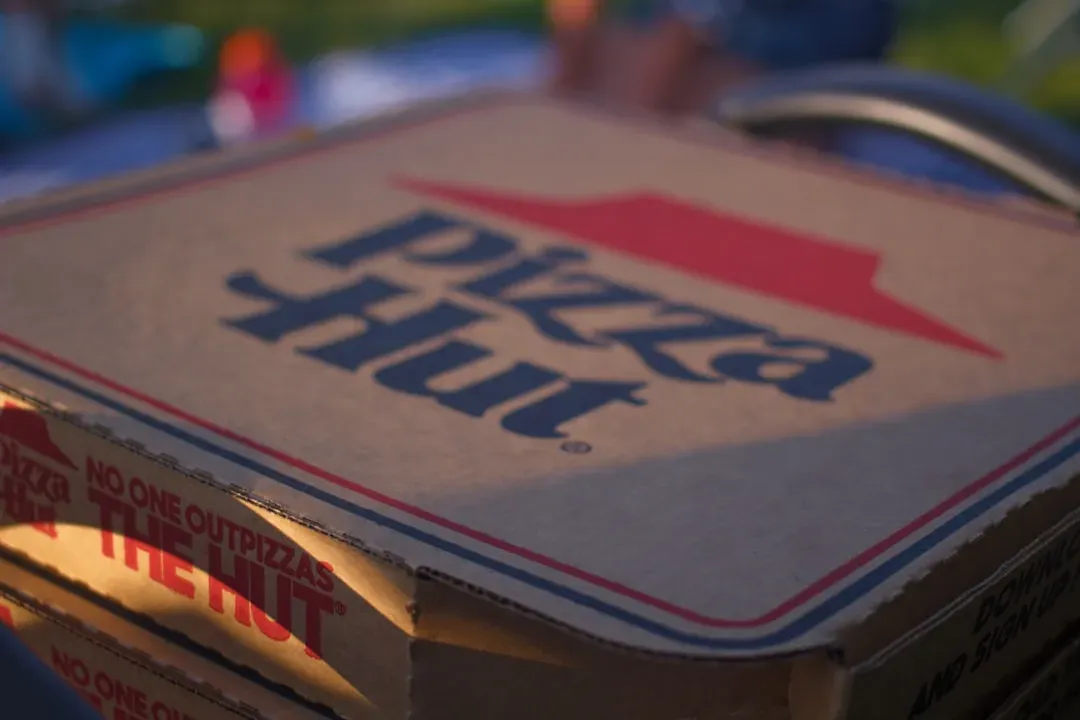
Let’s be real – there was no greater destination for a kid in the 1980s or early 1990s than a dine-in Pizza Hut. For those who grew up in those decades, vintage Pizza Hut calls to mind the classic red-roofed buildings, dim lighting, and cozy booths with checkered tablecloths. It wasn’t fast food in the way we think of it today. It was an event.
Pizza Hut was founded in 1958 by two college students, Dan and Frank Carney, in Wichita, Kansas. They borrowed just $600 to open the first location, and then quickly grew into the largest pizza chain in the world. By the early 1970s, Pizza Hut was everywhere, thanks to its family-friendly dining atmosphere and consistent quality. Think about that for a second. Six hundred dollars and a dream built an empire.
Back in the 1980s and 1990s, Pizza Hut was an actual dine-in experience, complete with tablecloths, fancy lights, music, and pizza served up hot right to your table. The iconic stuffed crust pizza was introduced on March 26, 1995, and by the end of that year, it had become one of their most popular lines. That cheesy crust alone is basically a core memory for an entire generation.
Not only was Pizza Hut invested in delivering the best pizza, but it was also invested in encouraging young readers to hit their goals. The brand first launched the Book It! Program in 1984, which allowed readers to exchange read books for free pizza. That’s a genius move – making children associate reading with pizza. Honestly, it probably worked better than any school initiative.
By the late 1980s and early 1990s, Pizza Hut started transitioning away from its dine-in model to focus more on delivery and carryout services, reflecting changes in consumer habits. The magic, slowly, began to fade. Still, nostalgia for the dine-in era has proven powerful enough to inspire a modern comeback. Dubbed “Pizza Hut Classics,” these revived dine-in locations feature trapezoidal windows and peaked red roofs on the outside, with red booth seating and Tiffany lamps over checkered tablecloths inside. The Classic model was born from a partnership between Pizza Hut and its franchisees, and the first remodel was in Ashdown, Arkansas, in 2019; to date, 144 restaurants have been converted to Classics.
2. Little Caesars: Two Pizzas for the Price of One Was Pure Genius
Here’s the thing about Little Caesars – it was never trying to be fancy. It was trying to feed your whole family for next to nothing, and it absolutely delivered on that promise. Little Caesars Pizza was founded on May 8, 1959, by the married couple Mike Ilitch and Marian Ilitch, with the first location in a strip mall in Garden City, Michigan, named “Little Caesar’s Pizza Treat.” It was humble, scrappy, and ambitious all at once.
In 1979, Little Caesars introduced a special deal: two pizzas for the price of one. To advertise this promotion, the chain came up with the slogan “Pizza! Pizza!” to indicate that customers would be getting double the pie with their order. This catchy phrase would later become synonymous with the brand. I’d argue it became one of the most recognized slogans in American fast food history.
In 1980, the chain had 226 units with sales of $63.6 million. By mid-decade, annual sales had grown more than fivefold to $340 million. The company achieved successful expansion through market saturation, two pizzas for the price of one, and carryout only. That carryout-only model was actually revolutionary at the time. No delivery costs, no waitstaff, just hot pizza handed over a counter.
In 1985, Little Caesars was the largest carry-out pizza company in the U.S., with 1,000 stores and counting. By 1990, Little Caesars had 2,700 locations, more than double the number just five years prior. By 1993, it boasted 4,500 restaurants and $2.3 billion in sales. That kind of growth is almost impossible to comprehend. They were everywhere at once, like a pizza-scented tidal wave sweeping across America.
3. Godfather’s Pizza: The One You Couldn’t Refuse
If you grew up in the Midwest, there is a good chance that Godfather’s Pizza holds a very special place in your memory. It had a slightly dangerous, fun-loving energy about it – the mob-themed branding, the thick crusts, the sense that this wasn’t your average slice joint. Godfather’s Pizza was founded in 1973 in Omaha, Nebraska, by Willy Theisen. Theisen’s vision was to create a premium pizza brand that offered a thicker crust and heartier toppings than competitors. At the time, most major pizza chains focused on affordability and speed, but Theisen saw an opportunity to cater to consumers who wanted more substantial, high-quality pies.
From 1977 to 1979, Godfather’s was the fastest growing food chain in the United States in terms of sales growth. Development of the chain continued until its peak in 1984, when the company amounted to 911 Godfather’s restaurants, generating annual sales of $365 million. Nine hundred and eleven locations. That’s not a pizza chain – that’s a pizza empire. Think about how dominant that presence was across American towns and shopping centers.
In 1981, Theisen sold Godfather’s Pizza to Pillsbury, a large food conglomerate looking to expand its fast-food and casual dining footprint. Under Pillsbury’s ownership, Godfather’s Pizza expanded with franchise locations opening rapidly. By the mid-1980s, they were one of the largest pizza chains in the United States, with over 800 locations nationwide. The pizza was genuinely special. The cheese never slid off the crust and was very well-integrated with the tomato sauce. Exactly one pound of fresh cheese went into a large Godfather’s pizza. One pound. Of cheese. Per pizza. Case closed.
Cracks in the business began to emerge in the late 1980s as Pillsbury, which had acquired multiple restaurant brands, struggled to manage them effectively. Investment in Godfather’s Pizza slowed, and the brand’s expansion began to stall. Meanwhile, competitors such as Domino’s and Little Caesars were aggressively expanding their delivery operations, offering customers faster and more convenient options. It’s a story that echoes across so many great brands of that era – not failing because the product was bad, but simply getting swallowed by the tidal shift in how people wanted to eat.
4. ShowBiz Pizza Place: The Wildest Pizza Experience That Ever Existed
If you remember ShowBiz Pizza Place, consider yourself part of a very exclusive and slightly chaotic club. This was not just a pizza restaurant. This was an entire parallel universe where you could eat pizza, play arcade games, and watch a band of animatronic animals perform on stage. One of the strangest old-school restaurants opened its doors for the first time in Kansas City, Missouri, in 1980. ShowBiz Pizza Place introduced Billy Bob Brockali, the hillbilly bear, alongside The Rock-afire Explosion. Diners flocked to the first location to enjoy music, arcade games, and a whole host of classic pizzas.
It’s hard to forget the excitement of ShowBiz Pizza Place. Known for its animatronic band, The Rock-afire Explosion, this place was more than just a pizza joint – it was a full-blown entertainment hub. Families gathered under its roof not only for the pizza but for the fun, games, and music that filled the air. The sound of arcade machines and laughter created an atmosphere that was both electric and welcoming.
At its peak in 1985, the combined company had 359 stores. That’s a remarkable footprint for a concept this unusual. At that time, those restaurants lured kids in with a promise of pizza, games, rides, and animatronic entertainment. It was the equivalent of putting a theme park and a pizzeria into one building. No wonder parents dreaded the noise and kids lost their minds with joy.
In 1990, the Rock-afire Explosion was phased out and replaced by Chuck E. Cheese’s Munch’s Make Believe Band. Eventually, ShowBiz Pizza Place restaurants were also replaced by the name Chuck E. Cheese Pizza, before dropping the “Pizza” in 1994 to leave Chuck E. Cheese. The animatronic bands that entertained diners in the 1980s are only performing at a few legacy Chuck E. Cheese restaurants today, such as Pineville, North Carolina, and Northridge, California. A whole world, reduced to a handful of legacy machines humming in the corner of two locations. There is something genuinely bittersweet about that.