10 Facts You Didn’t Know About 1776–1976 Quarters Gaining Value in 2026
Chances are you’ve seen a 1776–1976 quarter at some point. Maybe it’s sitting in a drawer, tucked inside a coin jar, or even mixed with spare change you haven’t bothered to sort. Here’s the thing: as we step into 2026, these seemingly ordinary coins are experiencing renewed attention. Let’s be honest, most people assume Bicentennial quarters are just sentimental relics, worth nothing more than their face value.
Surprisingly, that assumption might be costing you. A small number of these coins possess unique characteristics, hidden errors, or metallic compositions that make them legitimately valuable. While you won’t find millions lying around, understanding what to look for could change how you see that dusty quarter collection. Ready to discover what makes these coins special right now?
Nearly Two Billion Were Minted, Yet Some Are Genuinely Scarce
Over 1.6 billion Bicentennial quarters were produced across Philadelphia, Denver, and San Francisco mints. That sounds like an overwhelming supply, right? It is. Most circulated examples carry no premium beyond 25 cents. Yet within this massive output lies a hidden truth: rarity doesn’t stem from low mintage but from survival in high condition.
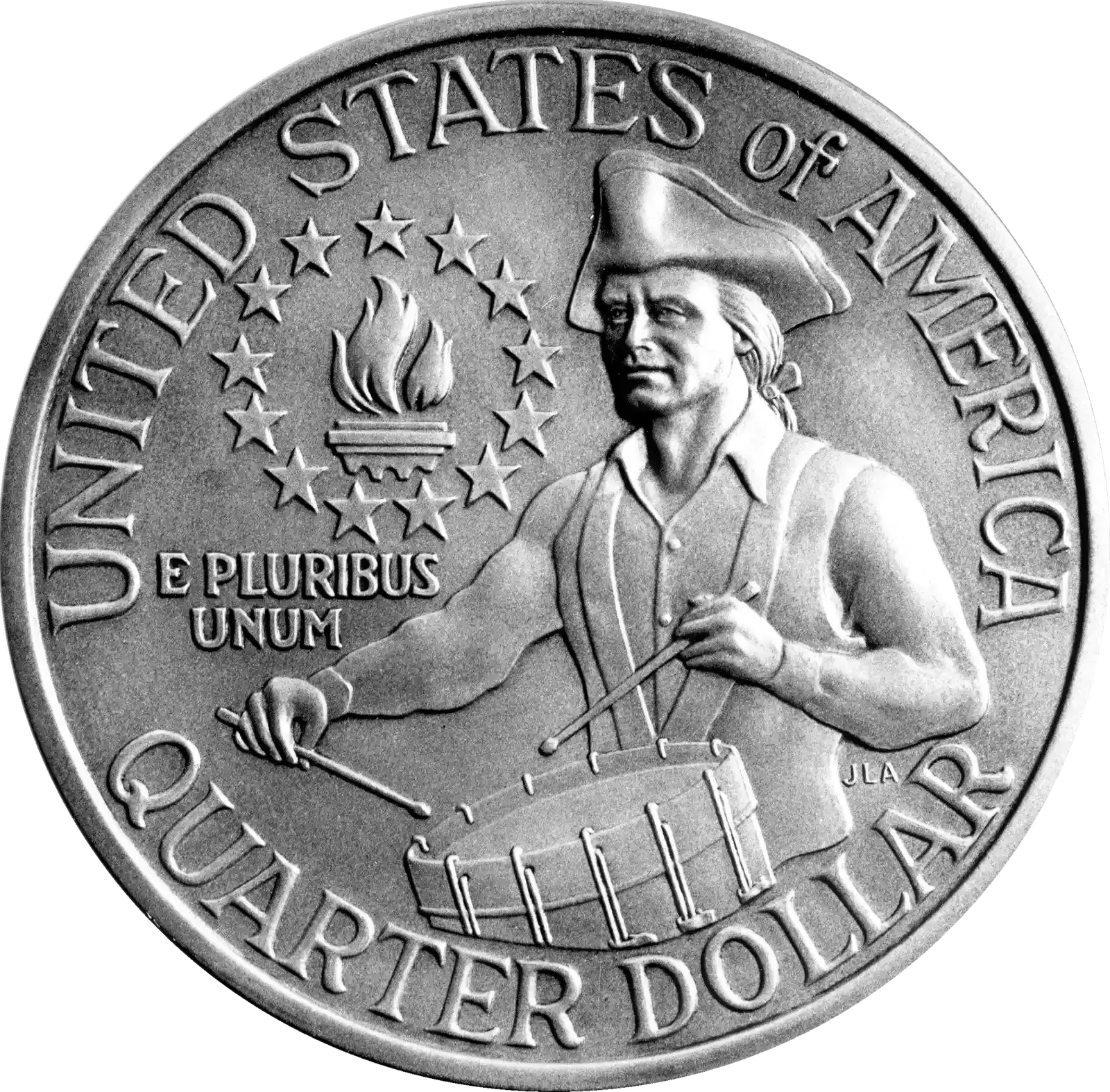
Decades of circulation damaged the majority. Finding pristine specimens – ones that avoided scratches, wear, and tarnish – is increasingly difficult. What seemed common in 1976 becomes surprisingly rare when you factor in condition. Collectors today hunt for examples with sharp drum details and unblemished surfaces, qualities most coins simply don’t possess anymore.
Silver Versions Command Serious Premium Over Clad Counterparts
About nine million examples were issued with 40% silver composition, as opposed to the traditional copper-nickel, destined towards collectors. These weren’t meant for everyday transactions. They came in special collector sets. The silver content alone gives them intrinsic value beyond numismatic appeal.
Millions of silver Bicentennial quarters were melted in 1982 and subsequent years, reducing the surviving population. That’s a critical detail many overlook. When silver prices spiked years ago, countless collectors cashed in their holdings for melt value. Fewer survive today, especially in exceptional grades, which explains why silver varieties can command substantial premiums among collectors.
The 50th Anniversary Is Fueling Fresh Collector Demand
The year 2026 has seen a surge in interest as the 50th anniversary of the Bicentennial celebration approaches. Anniversary years stir nostalgia. People who remember 1976 want to reconnect with that moment. Younger collectors discover coins they never knew existed. As we approach the 50th anniversary of the bicentennial celebration in 2026, interest in these commemorative coins may experience renewed growth.
Auction activity reflects this shift. Certified coins are drawing stronger bids than they did just a couple years ago. It’s not hype exactly, more like organic rediscovery. When cultural moments intersect with collecting, prices respond accordingly. That’s what’s happening right now with these quarters.
A 1976-S Silver MS69 Sold for Nearly Twenty Thousand Dollars
One of three PCGS MS-69 silver clad dual dated 1776-1976 Bicentennial quarter dollars sold for $19,200 on June 9, nearly quadrupling what it realized back in 2007. Think about that figure for a moment. It’s hard to believe a quarter could fetch that much, yet the combination of perfect grade, silver composition, and scarcity made it possible.
Leading the pack is a 1976-S MS69 silver quarter that achieved $19,200 at auction – nearly 77,000 times its face value. Not every silver Bicentennial quarter will reach five figures, obviously. Still, the record demonstrates what top-tier examples can achieve when serious collectors compete for them.
Doubled Die Errors Are the Holy Grail for Error Hunters
The 1976-D Double Die Obverse varieties represent the most sought-after errors in the bicentennial series. FS-101 shows clear doubling on ‘LIBERTY’ and the date ‘1776-1976,’ while FS-102 displays pronounced doubling on ‘IN GOD WE TRUST’ and Washington’s profile details. These aren’t subtle flaws you need a microscope to detect. Once you know where to look, the doubling becomes obvious.
PCGS has labeled this double die FS-101, and depending on the condition of the coin on the Sheldon 1-70 scale, you might hit the jackpot if you can find one. The DDO is so rare that PCGS has only holdered fewer than 60 of this type. However, it estimates that 850 are out there. That means hundreds remain undiscovered, possibly sitting in rolls or old collections. These errors are easily visible to the naked eye once you know where to look, making them excellent targets for cherry-picking from circulation or dealer inventory.
High-Grade Regular Strikes Can Exceed Six Thousand Dollars
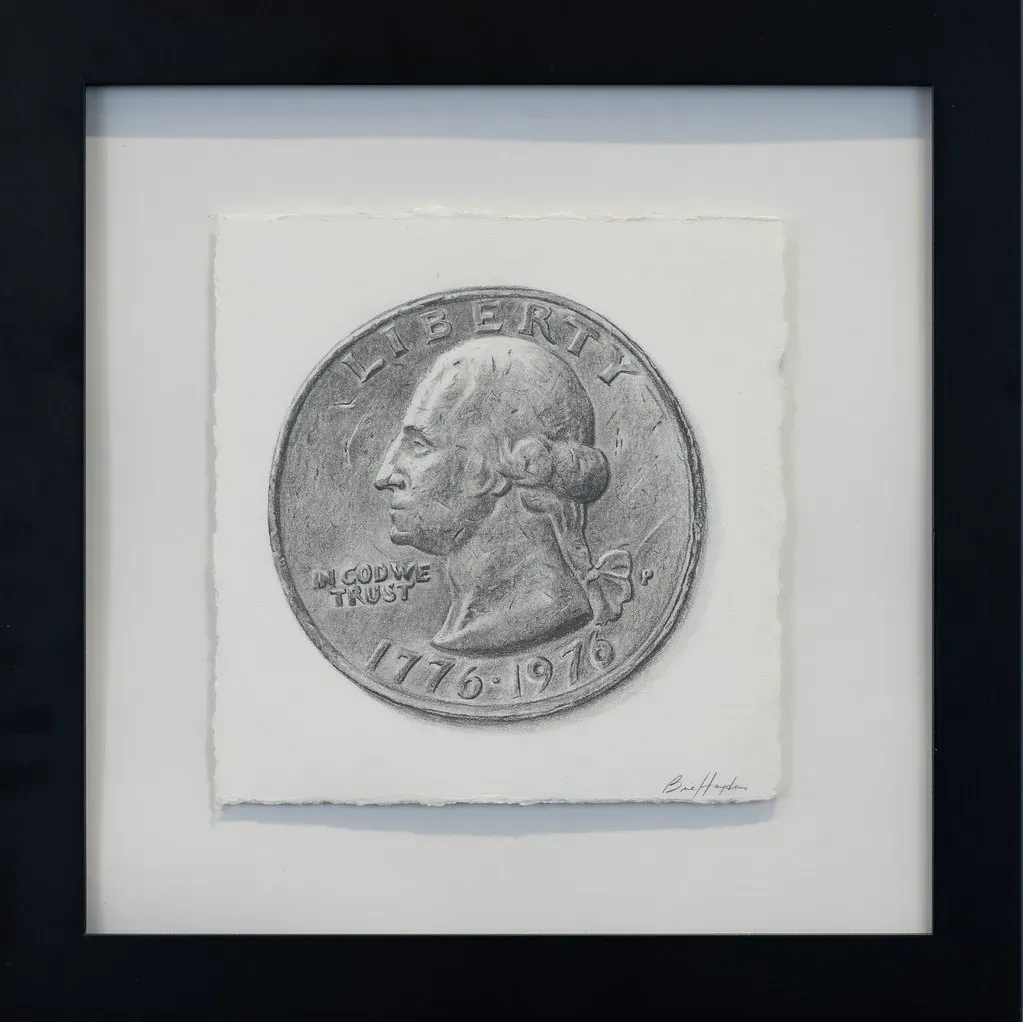
High-grade regular strikes also command serious money, with a 1976-D MS68 reaching $6,463. Their prices range from $3,220 to $6,463 in Uncirculated condition. These aren’t error coins or silver varieties. They’re standard copper-nickel clad quarters that simply survived in flawless condition.
Coins graded MS68 are exceptionally scarce. As of September 2024, PCGS reports only 13 coins in this grade, while NGC reports 15. The population is minuscule. When fewer than 30 examples exist at a particular grade level out of hundreds of millions minted, you’ve got genuine scarcity regardless of the coin’s composition.
Proof Coins With Deep Cameo Finishes Are Highly Prized
The 1976-S Bicentennial Quarter Clad Proof in PCGS PR70DCAM is now primarily a coin sold to collectors on eBay for modest sums (typically between $90 and $100). That might sound modest compared to the stratospheric prices we just discussed, yet it represents a significant markup over face value. Deep Cameo proofs feature mirror-like fields contrasted against frosted devices, creating striking visual appeal.
The PCGS population of 1976-S Bicentennial Quarter Clad Proofs in PR70DCAM has increased from 826 pieces on April 22, 2024 to 872 as of October 23. The PCGS PR70DCAM population has increased from 872 to 904 since October 2024. More coins are being graded as collectors recognize their appeal, though perfect examples remain relatively uncommon even within the proof population.
Minting Errors Like Filled Mint Marks Add Substantial Value
Found on coins minted in Denver, where the ‘D’ mint mark appears filled or partially obscured. This error occurred due to excess metal or clogged dies during production. Collectors are willing to pay a premium for this unique flaw. Errors transform ordinary coins into numismatic oddities. A filled mint mark might seem trivial, yet to collectors it represents a tangible piece of the minting process gone awry.
A 1976 MS64 coin set an auction record of $2,520 on August 18, 2024, highlighting its rarity and desirability in superior condition. Even in grades below gem Mint State, error coins attract premiums disproportionate to their condition because the error itself is the draw, not perfection.
Wrong Planchet Errors Are Among the Rarest and Most Valuable
The most notable error variety from the series is the 1976 Quarter struck on a 10C dime. In 2021, a proof-graded 67 was sold at Heritage Auctions for $12,000. Imagine a quarter design stamped onto a dime-sized blank. The result is a bizarre, unmistakable mistake that shouldn’t exist yet does.
One of the most extraordinary mint errors ever discovered, this 1976-S Bicentennial Quarter was mistakenly struck twice on an already-struck clad dime. Double Denomination Error: A rare occurrence where a coin is struck using dies from two different denominations. Double Struck with Rotation: The quarter dies struck the dime twice, with the second strike rotating 100 degrees counterclockwise. Graded PR67 Cameo by PCGS, this one-of-a-kind mint error sold for $12,000 at Auctions FUN Signature sale in 2021. Wrong planchet errors are genuinely rare because quality control typically catches them before they escape the mint.
Condition Grading Determines Whether Your Quarter Is Worthless or Priceless
According to research by Charles Morgan and Hubert Walker, most 1976 and 1976-D bicentennial quarters are attractive, well-made coins but lack sharpness in specific areas. A fully struck coin without scratches or bag marks is considered a standout example, particularly among uncirculated pieces. For most circulated examples, there is little premium beyond face value. However, certified uncirculated coins, especially in grades MS65 and above, can be expensive.
Let’s be real: worn, scratched quarters you find in pocket change won’t make you rich. The difference between a circulated MS60 and a pristine MS68 is astronomical in market value. Collectors favor the smaller pool of collectible ‘certified’ coins and are willing to pay a premium for grades over MS66. However, the cost associated with submitting these coins for encapsulation greatly reduces the financial incentive to submit the coins in the first place. Professional grading matters, though it comes with fees that make sense only for coins likely to grade exceptionally high.