Elon Musk Says There’s No Need To Stress About Saving For Retirement
Picture this: you’re working your way through another paycheck, trying to decide how much to set aside for a future you can barely imagine. Then the world’s richest man tells you it might not even matter. Sounds surreal, right? Yet that’s exactly what happened when Elon Musk recently shared some eyebrow-raising advice about retirement planning. The tech billionaire has sparked heated debates across financial circles with his suggestion that saving for retirement could become irrelevant within the next couple decades. Let’s dive into what he actually said and why it’s causing such controversy.
The Podcast That Started It All

On the Moonshots with Peter Diamandis podcast, Musk told listeners not to worry about squirreling money away for retirement in 10 or 20 years. His reasoning centers on artificial intelligence becoming so advanced that it fundamentally transforms our economy. Musk’s theory is basically that AI will become so capable that it’ll drop the cost of everything so much that money won’t really matter. It’s a bold vision of the future where technology solves scarcity itself.
By 2030, AI will surpass the intelligence of all humans combined, Musk predicted. He even suggested there could eventually be more humanoid robots than actual people walking around. The Tesla CEO believes we’re heading toward a world where machines handle most labor, productivity soars, and goods become incredibly cheap or even free.
The Universal High Income Dream
Musk’s vision doesn’t stop at cheap stuff. The Tesla and SpaceX CEO predicted AI would help create an abundance of resources for all, where people would have whatever stuff they want and access to superb healthcare and education. Think of it like a techno-utopia where everyone receives what he calls a universal high income. Sounds pretty appealing when you put it that way, doesn’t it?
However, when pressed on whether this abundance would involve government taxation and redistribution, things got awkward. The host asked Musk if corporate profitability would be taxed by the government and redistributed as some level of universal high income or universal basic income, and Musk hemmed and hawed for a moment, seemingly unwilling to acknowledge any role for the government in such a scenario. Instead, he pivoted straight back to telling people not to bother saving.
A History Of Shifting Predictions
Here’s where things get interesting. Last month, he started floating the idea that his company, xAI, will crack AGI in 2026, though in 2024, he claimed that AGI would be achieved in 2025, and in 2023, he was calling for a pause in the development of AI because of the existential risks it would pose. The timeline keeps moving, and the messaging keeps shifting. One year it’s an existential threat, the next it’s our economic savior.
At the U.S. Saudi Investment Forum in November 2025, he compared the future of work to leisure activities like playing sports or video games, and in his view, within 10 to 20 years, work will become entirely optional. Essentially, Musk envisions a future where working is something you choose to do for fun, like gardening in your backyard when you could just buy vegetables at the store.
The Reality Check: Current Retirement Struggles

Let’s be real for a moment. While Musk dreams of robot-filled abundance, millions of Americans are struggling right now. A Clever Real Estate survey from January 2025 found that 45% of retirees fear they will outlive their savings, while roughly 25% of retirees spend nearly one-third of their income on housing costs. That’s not some distant future problem, that’s happening today.
New research shows the typical working American has less than $1,000 saved for retirement, and across all workers, including those with no savings, the median amount saved was just $955. Think about that for a second. The median worker in America has saved less than a thousand dollars for their entire retirement. About 45% of Americans will experience retirement funding shortfalls if they retire at 65, according to Morningstar’s projections from last year.
The Wealth Gap In Retirement Preparation

Not everyone faces retirement equally unprepared, though. The divide between the haves and have-nots is staggering. There’s massive inequality when it comes to retirement readiness, with workers earning more than $150,000 a year contributing nearly 13 times more toward retirement than those earning under $50,000, a report out in November found. When the richest man on the planet tells everyday workers not to worry about saving, it hits differently than if your financial advisor said it.
Only 55% of American adults said they had a rainy day fund of three months expenses saved up for an emergency, down from a high of 59% in 2021, according to a survey by the Federal Reserve. Persistent inflation and weak wage growth have made it harder, not easier, for regular folks to sock away money. Meanwhile, Musk’s net worth sits around 700 billion dollars, give or take.
Why Financial Experts Are Alarmed

Financial planners aren’t buying Musk’s pitch, and they’re not shy about saying so. For everyday Americans trying to plan their financial lives, it’s reckless advice. The concern is straightforward: what if Musk is wrong? If AI doesn’t arrive on schedule or doesn’t benefit everyone equally, you’ll be very glad you didn’t outsource your retirement to a prediction made by Elon.
Financial professionals generally agree that retirement planning remains essential under today’s economic conditions, as no robust, widely supported policy or economic structure currently exists that would guarantee a universal income or the elimination of scarcity any time soon, and until such mechanisms are in place, individuals are still responsible for building their own safety nets. It’s a matter of planning for the world we actually live in, not the one we hope might exist.
The Psychological Danger Of Wishful Thinking

There’s another risk beyond just bad financial planning. Statements like Musk’s pose a psychological risk: people might take them as permission to put off saving or skip participating in employer matching plans, exactly the habits that can jeopardize long-term security. If you’re already struggling to save and someone as successful as Musk tells you it won’t matter anyway, why not just spend that money now?
People may take them as permission to relax their savings, delay opening retirement accounts or skip employer matching programs, behaviours that can seriously weaken long-term financial security. Free money from employer matching is probably the closest thing most people will ever get to Musk’s vision of abundance, yet his comments could discourage folks from taking advantage of it.
Social Security Uncertainty Adds To The Anxiety

Making matters worse, Americans are increasingly worried about Social Security’s future. When asked about the projected depletion of the main Social Security trust fund by 2033, the majority of retired adults say they are concerned about receiving their promised benefits, up from 71% in 2024, and more than three quarters of both non-retired and retired adults say they are concerned that promised benefits will not be paid to them in retirement if the fund runs out.
About 56 million Americans age 65 and older receive Social Security benefits per federal data, the lowest earning workers rely on it, and Social Security is the primary source of income for retirees with household incomes below $50,000, according to Transamerica’s 2025 retirement survey. For millions of people, Social Security isn’t just supplemental income, it’s survival. Telling them not to save because robots will save us all feels tone deaf at best.
What Musk Gets Right About The Future
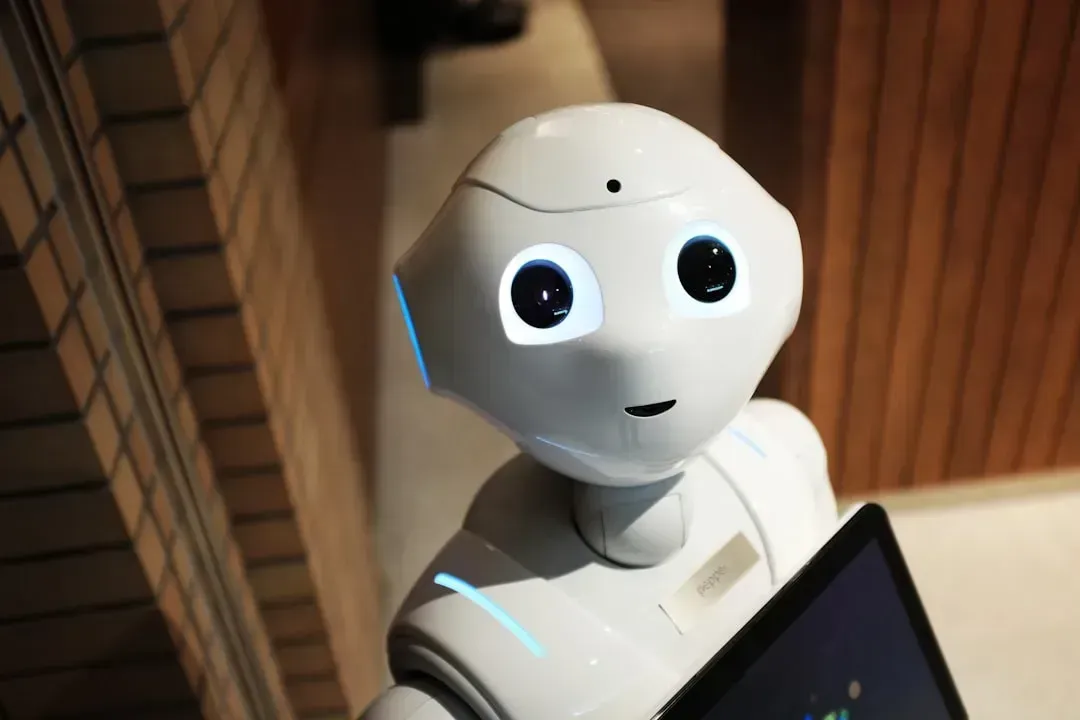
To be fair, Musk isn’t entirely off base about technology’s trajectory. We are seeing genuine advances in AI and robotics. Musk’s comments build on his earlier claims that AI and humanoid robots will make work optional within 10 to 20 years and render money itself irrelevant. Technology has historically made goods cheaper and more accessible. Your smartphone has more computing power than entire rooms of equipment from decades past, at a fraction of the cost.
Longevity research is also advancing rapidly. Some scientists believe we could see genuine breakthroughs in extending healthy human lifespan within the coming decades. If people live significantly longer, retirement planning does need to adapt. The problem is banking your financial security entirely on maybes and might-happens.
The Bumpy Transition Nobody Wants To Talk About

Even Musk acknowledges his utopian vision might not roll out smoothly. Musk himself admitted the transition could be bumpy, potentially causing social tensions or a crisis of purpose if people no longer need jobs in the traditional sense. That’s quite an understatement. History shows that major economic transitions create winners and losers, often for generations.
Displacement will likely happen faster than new systems of distribution are built, and governments, institutions, and cultures tend to move far more slowly than technology. We’ve seen this pattern play out before with automation and globalization. Workers lose jobs quickly while the promised new opportunities materialize slowly, if at all. Who wants to bet their retirement on navigating that chaos successfully?