10 Retirement Spots Better Than Florida – Number 3 Is a Total Surprise
Florida has long worn the crown as America’s retirement capital. The palm trees, the no-income-tax policy, the golf courses – it all sounds like a dream. So what’s the problem? Honestly, quite a few things, and more retirees are waking up to them than ever before.
Between extreme weather, hot humidity, rising costs, creepy critters and overcrowding, Florida is no longer the go-to state it once was. Homeowners insurance rates have exploded across the state, and some coastal counties are quietly becoming unaffordable for anyone living on a fixed income. The sunshine is real, but so is the financial pressure.
So where should you actually retire? The answer might genuinely surprise you. Some of these spots are warm and beachy. Some are cold and mountainous. One is overseas. Let’s dive in.
1. Scottsdale, Arizona – Desert Living Done Right

Here’s the thing about Scottsdale: it keeps getting ranked at the top for a reason. Scottsdale, Arizona, was named the best city to retire in the U.S. in 2025. That’s not a fluke. The combination of sunshine, world-class healthcare, and outdoor activities makes it genuinely hard to beat.
Access to Mayo Clinic Arizona, ranked number one in the state and on the U.S. News Honor Roll, is one of the biggest draws – and for retirees, access to world-class care is often the deciding factor. That kind of medical infrastructure is something Florida’s smaller retirement towns simply can’t match.
With 51 golf courses and over 1,200 holes, Scottsdale is truly a golf capital, home to Troon North, Grayhawk, and the WM Phoenix Open at TPC Scottsdale. The tradeoff is cost. According to current data from Redfin, Scottsdale’s cost of living is 14% above the national average. It’s a premium destination, but the quality of life arguably justifies it for those who can swing it.
2. North Carolina – The South’s Best-Kept Secret

GOBankingRates identified North Carolina as an up-and-coming state that will be popular with retirees in 2025. And it’s easy to see why. The state offers an almost unfair combination of mountains, beaches, college towns, and mild weather in a single package.
One major reason North Carolina is so attractive to retirees is housing costs. According to U.S. News and World Report, several major cities including Charlotte and Raleigh have median mortgage and rent costs that don’t exceed $1,500 a month. That is seriously competitive, especially for anyone coming from a big coastal market.
Beyond inexpensive housing, North Carolina has lower property taxes than average and reasonably priced homeowners insurance. The state’s income tax rate is also on a downward path. North Carolina has a low flat income tax rate, and that rate will drop even lower over the next few years, sitting at a flat 4.25% for 2025 and set to gradually reduce until 2027 when it reaches 3.99%.
3. Medellín, Colombia – Yes, Really

I know what you’re thinking. But hear this out, because the numbers and the reputation have both shifted dramatically. Colombia has undergone a transformation over the past two decades. Government efforts to establish peace with guerilla groups, reduce crime, and improve infrastructure have been largely successful, and violent crime has fallen dramatically.
Residents of Colombia’s second-largest city enjoy temperate weather year-round, earning Medellín the nickname the “City of Eternal Spring.” Imagine never needing a heavy coat or a year-round air conditioner. That’s the climate here, perched high in the Andes at roughly 5,000 feet elevation.
Colombia’s healthcare system ranks among the best in Latin America, especially in Medellín, which has modern hospitals and well-trained professionals. Private healthcare is affordable, providing quality services comparable to U.S. healthcare. Private insurance plans start at about $150 USD per month. For retirees used to American insurance premiums, that number alone is worth a double take. The exemption of foreign pension income from taxation continues to make Colombia a financially appealing destination.
4. Tennessee – Country Music, Mountains, and Zero Income Tax

Tennessee tends to fly under the radar, which is wild when you look at the actual numbers. Tennessee has one of the lowest costs of living in the United States, at 10% below the national average. That’s a meaningful edge when you’re stretching a fixed retirement income across decades.
Tennessee’s tax structure is among the most retiree-friendly in the country. There’s no state income tax, so your Social Security benefits and retirement income will be untouched, and low property taxes can help you stretch your savings even further. This is one of those rare states where the lifestyle and the financial picture actually line up.
Tennessee combines low living costs with a rich cultural heritage, making it an attractive option for retirees. From the music-filled streets of Nashville to the scenic beauty of the Great Smoky Mountains, this state truly has it all. The Great Smokies alone are enough of a reason to give this state serious consideration, especially for outdoor lovers who don’t want to bake in desert heat.
5. Delaware – Tiny State, Huge Tax Advantages

Most people don’t put Delaware on a retirement shortlist. That, honestly, is their loss. Delaware may be small in size, but it offers big advantages for retirees. With its favorable tax policies, serene environment and proximity to major metropolitan areas, Delaware is a hidden gem for those looking to enjoy their golden years.
Delaware is consistently ranked as one of the most tax-friendly states for retirees, thanks to no state or local sales tax, tax exemptions that allow residents over 60 to exclude up to $12,500 of investment and qualified pension income from state taxes, and no estate or inheritance taxes. That combination is genuinely rare.
Delaware offers a relaxed and peaceful environment with charming coastal towns perfect for enjoying a quieter lifestyle. At the same time, residents get easy access to urban amenities in nearby Philadelphia and Baltimore. It’s a bit like getting the best of multiple worlds in one compact, navigable little state – without the chaos of living in a major city.
6. South Carolina – Beaches, History, and Smart Savings

South Carolina is quickly emerging as one of the smarter alternatives to Florida for retirees who still want warm weather and coastal charm. Retiring in South Carolina provides an affordable alternative to Florida and North Carolina. There’s a $15,000 retirement income deduction for those 65 and older, no Social Security tax, and the cost of living is 11% below the national average.
The state offers a diverse range of retirement options: Myrtle Beach, known for its iconic waterfront and golfing, Charleston, with rich culture and historic antebellum architecture, and with nearly 200 miles of coastline, retirees can also find idyllic communities on islands like Kiawah and Seabrook. There’s real variety here, from lively beach towns to quiet historic streets.
South Carolina offers significant tax advantages. Not only is there no tax on Social Security income, ensuring more of your benefits stay in your bank account, but the state also offers deductions on other retirement income and low property taxes. It’s hard to argue with that combination when weighed against Florida’s rising insurance premiums and overcrowded highways.
7. Iowa – The Underrated Powerhouse of Retirement Comfort

Iowa doesn’t get the glamour it deserves in retirement conversations. Let’s fix that. Original research conducted by life insurance agency Choice Mutual cited Iowa as the best state for retirement in 2024. Several factors pushed it to the top, including the state’s outstanding healthcare system, low crime rates, affordable housing, and low cost of living expenses.
Retirees in Iowa can anticipate spending around $400 in transportation costs and about $622 in healthcare expenses monthly, with the total monthly cost of living coming out to about $3,910. That is a remarkably low number for a comfortable, full life – especially compared to what retirees pay in coastal states.
As of 2023, Iowa residents over the age of 55 are no longer taxed on their retirement income thanks to a 2022 law. Iowa now has a flat rate of 3.8% on taxable income after a new law passed in May 2024. Combine that with genuinely low living costs and strong healthcare, and Iowa starts looking a whole lot more interesting than most retirees give it credit for.
8. West Virginia – Surprisingly Affordable Mountain Living
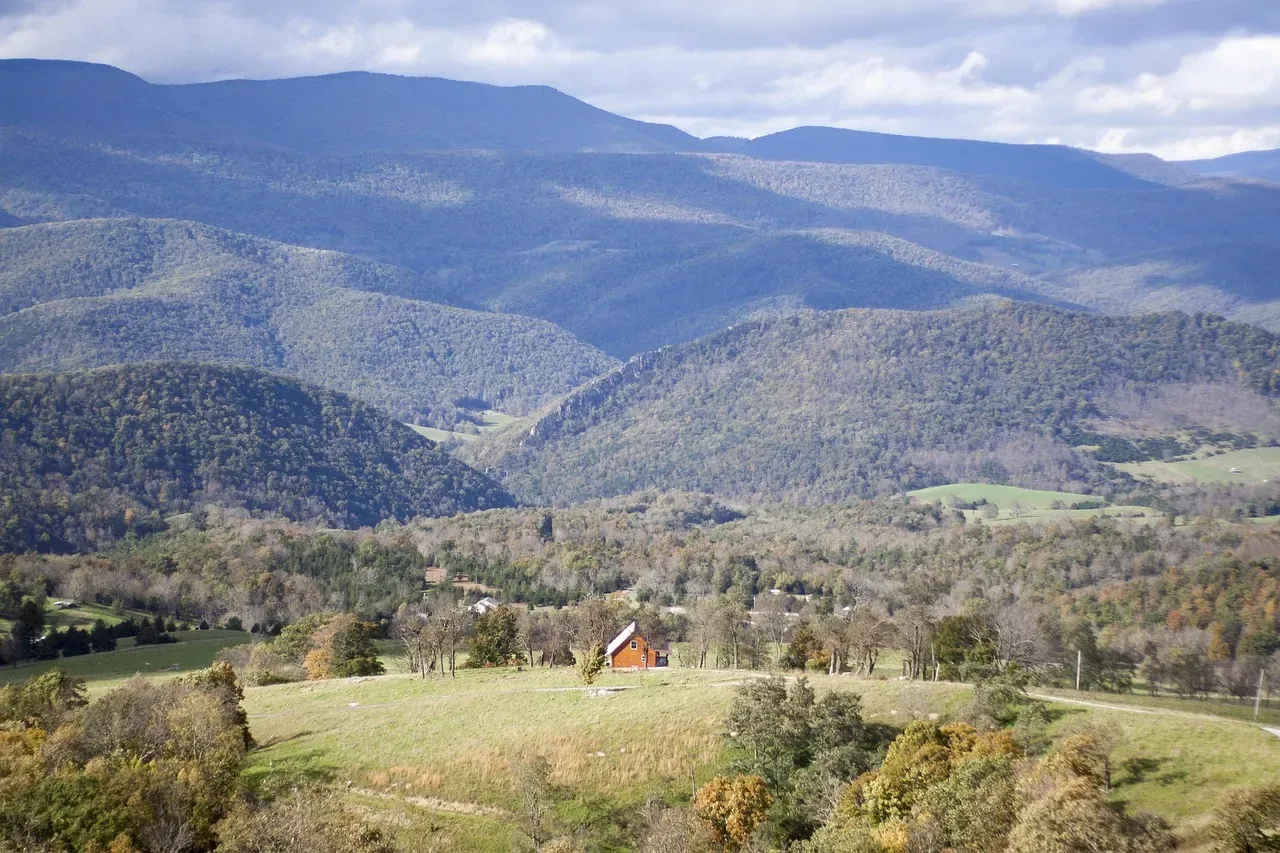
West Virginia might be one of the most overlooked retirement destinations in the entire country. West Virginia offers a cost of living 16% below the national average, along with tax incentives. For retirees on a fixed income, that margin makes a real, tangible difference every single month.
The state has the ninth-lowest average property tax rate in the U.S. at 0.55%. In the capital city Charleston, the median home sale price results in monthly property taxes of less than $120. Less than $120 a month in property taxes. For perspective, that’s less than many Florida retirees pay per week in HOA fees alone.
Charleston offers laid-back, scenic mountain living with big-city amenities, as well as a thriving arts and culture scene. Nearby towns like Hinton and Point Pleasant are known for their tight-knit, welcoming retirement communities. It’s worth noting that West Virginia entirely phased out its tax on Social Security benefits in 2026, making it even more attractive for retirees arriving today.
9. New Hampshire – Cold Winters, But Nearly Zero Taxes

Cold winters are a dealbreaker for many retirees. I get it. But the tax picture in New Hampshire is so extraordinary that it genuinely earns a spot on this list. According to a study conducted by Empower, New Hampshire was ranked as one of the best states to retire in 2024.
New Hampshire’s minimal tax burden, at 5.1%, is the lowest of any U.S. state. There is no tax on Social Security benefits, making it a retiree’s dream spot, even with a 5% tax that was previously imposed on investment income. And here’s the kicker: New Hampshire’s tax on interest and dividends has been fully repealed effective January 1, 2025. That means it is now effectively a no-income-tax state for most retirees.
The lifestyle here is genuinely beautiful, with fall foliage, lake districts, and small towns that feel like something out of a novel. New Hampshire has fully phased out its tax on interest and dividends as of 2025, making it effectively a no-income-tax state for most retirees, per the Tax Foundation. If you don’t mind layering up from November through March, this state quietly offers one of the strongest financial cases for retirement in the entire country.
10. Minneapolis, Minnesota – The Cold Surprise That Actually Works

Yes, Minneapolis. It might be the least expected name on this list, but the data is pretty compelling. Minneapolis is the third-best place to retire according to WalletHub’s 2026 study, and it has one of the most elderly-friendly labor markets in the country, meaning that it has a large percentage of jobs that are easy to perform even for elderly residents.
From a financial perspective, Minnesota is not as tax-friendly as some other states for retirees, as Social Security benefits are partially taxed and there is a state income tax. However, the cost of living is reasonable, and the median home price in Minneapolis is around $380,000 as of 2024, making it more affordable than many coastal cities. That’s a meaningful trade-off for the quality of life on offer.
The cultural scene is a major highlight of Minneapolis. The city is known for its theaters, including the Guthrie Theater, and its rich history in the arts. Retirees who enjoy live performances, art galleries, and museums will feel right at home here. Add world-class healthcare and a famously close-knit community, and Minneapolis starts looking like a real gem – especially for retirees who value vibrant urban culture over sun-soaked boredom.