The 5 Most Welcoming Countries for Americans (And 2 You Might Want to Avoid)
Something is shifting. Quietly, then all at once. According to the U.S. Federal Register, there has been a staggering 102.4% jump in Americans formally expatriating in just the first quarter of 2025 compared to the last quarter of 2024, with an estimated 1,285 Americans leaving to settle elsewhere in just three months. That’s not a trickle. That’s a tide.
A Harris Poll survey found that four in ten Americans have considered or plan to relocate outside the U.S., believing it could improve their quality of life and financial stability. Interest is especially strong among younger generations, with nearly two thirds of Gen Z and more than half of Millennials having seriously considered making the move. So if you’ve ever thought about starting fresh somewhere else, you’re in very good company.
The world is large, the welcome mats are many, but not every door swings open with equal enthusiasm. Here are the five countries where Americans genuinely thrive, plus two where things have gotten, let’s say, complicated. Let’s dive in.
1. Portugal: The Crown Jewel of American Expat Life

Honestly, it’s hard to talk about Americans moving abroad without Portugal showing up within the first sentence. It’s hard to find a country more open to expats than Portugal. With its laid-back pace of life, English-friendly culture, and accessible visa options, it has become one of the most popular relocation destinations in the world. The numbers back that up completely.
The number of U.S. citizens living in Portugal has jumped a remarkable 239% since 2017. That kind of growth doesn’t happen without good reason. Portugal ranks 6th in the Global Intelligence Unit’s Quality of Life Index, while the U.S. comes in at 38th, and Portugal’s overall cost of living including rent is about 34% lower than in the United States.
In late 2022, Portugal launched a dedicated Digital Nomad Visa for remote workers alongside its popular D7 visa for those with passive income. The income requirement is reasonable, and successful applicants gain residency with a path to EU-wide travel, healthcare access, and even citizenship after five years. That’s a serious package for anyone looking to build a long-term life abroad.
Portugal is consistently ranked as one of the safest countries in the world, and in 2026, it remains in the top 10 of the Global Peace Index, well ahead of the U.S. With low crime rates and a welcoming environment, it provides a safe and secure lifestyle whether in urban cities or rural areas. Safety, affordability, warmth, sunshine. I think that combination is pretty hard to argue with.
2. Panama: The Retiree’s Dream Come True

Panama held the number one position in the 2024 InterNations expat rankings, combining exceptional financial satisfaction with streamlined visa processes and an enviable work-life balance. That’s not a fluke. Panama has been a consistent top performer for Americans looking to land softly in a new country.
According to the survey, an extraordinary 94% of expats said they are happy with their life in Panama, and the country is widely regarded as the place to be for retirees. More than a third of respondents are already retired, and nearly one in five said retiring there was their primary motivation for moving.
The cost of living is much lower than in the U.S., and Panama’s quality of life and level of human development are among the highest in Central America. Healthcare is excellent, the economy is strong, and both native Panamanians and the sizable expat community are known for their welcoming natures. The official language is Spanish, but the country’s monetary system uses U.S. dollars and coins. That last part is a genuine game changer for financial planning.
Accommodation in Panama is both affordable and easy to find, and the proximity to the United States makes it incredibly convenient for Americans who want to maintain ties back home while enjoying a significantly lower cost of living. Think of it like moving far away but never truly losing the safety net. That balance is rare.
3. Spain: Culture, Sun, and a Surprisingly Open Door

Madrid, Barcelona, Seville, and Bilbao all boast large English-speaking expat communities, while the coastal city of Valencia is quickly gaining traction as a coveted spot, ranking first in InterNations’ 2024 Quality of Life Index. Spain offers modern cities and quaint small towns, high-quality universal healthcare, and a world-renowned dining and nightlife scene. For anyone who’s spent time there, none of that comes as a surprise.
According to the International LGBTQ+ Travel Association, Spain is one of the most culturally liberal and welcoming countries for LGBTQ+ travelers. In 2005, it became one of the first countries to legalize same-sex marriage, and it hosts one of the world’s largest Pride celebrations, drawing some 1.5 million visitors every year.
In November 2024, the Spanish government announced significant changes to its immigration program, including extending its “job-seeking visa” from three months to a full year. That’s a meaningful shift for Americans thinking about a slow, exploratory move. Spain is a popular choice for Americans thanks to its digital nomad and non-working visas, affordable healthcare, and social culture that prioritizes connection.
One honest note here: Spain isn’t perfect for everyone. Navigating Spanish bureaucracy can be daunting, and job opportunities may require fluency in Spanish. Still, for quality of life, warmth of culture, and sheer beauty, few countries come close.
4. Costa Rica: Pura Vida Is a Lifestyle, Not Just a Phrase

Costa Rica’s “pura vida” lifestyle has captivated retirees, digital nomads, and families alike. The country offers beautiful natural landscapes, from beaches to rainforests, and a warm, friendly culture that quickly makes newcomers feel at home. I know it sounds almost too idyllic, but the data keeps confirming it.
Costa Rica’s public and private healthcare systems are considered top-notch, especially in urban centers like San José. For Americans used to paying enormous insurance premiums, this alone can be a life-changing financial reality check. This Central American country sits just a few hours from the United States by plane and offers a tropical environment with a mild climate and high biodiversity, alongside a cost of living much lower than in the U.S.
Costa Rica has also been smart about attracting remote workers, with clear visa pathways and a stable democratic government that has existed for decades. It’s one of the few countries in Latin America that abolished its military back in 1948, channeling resources into education and healthcare instead. That’s the kind of foundational stability that makes a long-term move feel far less risky.
It’s worth being honest that infrastructure in rural areas can be challenging. Challenges exist in that infrastructure in rural areas may not always meet the standards expats are accustomed to. Still, in the towns and cities where most expats actually settle, Costa Rica consistently delivers on its promise.
5. Portugal’s Neighbor Earns a Spot Too: Germany for the Practical American

Germany is another nation that is very welcoming to Americans. Over half of the population speaks English, and approximately 110,000 Americans already reside in the country. Cities like Berlin boast business opportunities, a relatively lower cost of living compared to other major Western capitals, and a thriving nightlife.
Getting a three-month visa is easy, and permanently relocating to the country is a straightforward process, though it may require the usual legwork such as visiting government bureaus to provide documentation. Germany isn’t a country that rolls out red carpets, but it operates with an efficiency and reliability that many Americans find deeply reassuring.
The healthcare system, the public transit, the robust economy. Germany has a kind of structural solidity that most countries can only aspire to. Germany stands out among the most popular destinations for Americans living abroad because it backs up its reputation with concrete benefits and viable pathways. It may not have the sunshine of Portugal or the beaches of Panama, but it offers a quality of life that’s deeply consistent.
One important caveat: income taxes in the Netherlands are high, and similarly across much of Northern Europe, tax rates on higher salaries can come as quite a shock to Americans accustomed to different structures. Germany is no exception on the tax front, so financial planning before the move is non-negotiable.
Country to Think Twice About #1: France

Here’s the thing about France, and I say this carefully because it is a genuinely beautiful country. France led the way in a major European survey at 15%, making it the country most likely to call itself unwelcoming to Americans. No other European nation even comes close to that level of self-declared coolness toward U.S. visitors.
U.S. favorability in France plunged 33 points by early 2025, tied directly to trade disputes and political tensions, and France’s disapproval rating for the United States currently sits at 67%, which can make it genuinely hard for Americans to feel welcomed in the country. Those are not small numbers. That’s nearly two thirds of the French population holding an unfavorable view.
Some Americans report feeling judged for not speaking French or for expecting the kind of friendly service common back home. It’s not necessarily outright hostility, but cultural friction runs deep. Think of it less as a locked door and more as a door that opens only halfway, and only if you know the right etiquette to knock properly.
U.S. favorability in France plunged by 33 points by early 2025, linked to trade tensions and political dynamics between the two nations. That geopolitical backdrop seeps into everyday interactions in ways that are hard to quantify but very easy to feel. France remains extraordinary for a holiday. As a permanent home for Americans? The data says think carefully.
Country to Think Twice About #2: Norway
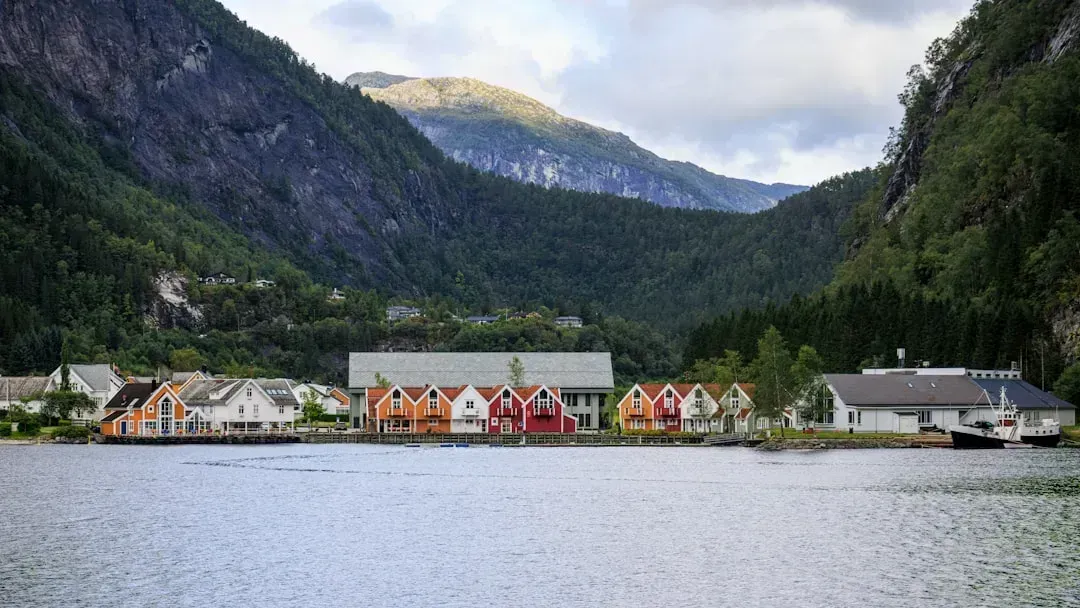
Norway might seem like an odd choice for this list. It’s safe, clean, prosperous, and beautiful. The problem, however, is one of perception. Scandinavian countries stood out most in surveys about the political impact on tourism, with Norway topping the list at 44% of respondents saying the 2024 U.S. presidential election impacted how they view American travelers, followed by Estonia at 35%, Sweden at 31%, Denmark at 30%, and Finland at 29%.
Research by YouGov indicates that Norwegians generally are not enthusiastic about welcoming tourists, with an exception for visitors from Denmark. Around 44% of Norwegians express support for Danish tourists, while Americans and Chinese are the least favored tourists among Norwegians, with opposition reaching 77% and 73% respectively. Nearly four in five Norwegians expressing reservations about American tourists is a striking finding.
In Denmark, approximately half of consumers reported deliberately refraining from buying United States products since Trump’s inauguration. The sentiment clearly flows across the Nordic region. This isn’t purely personal animosity toward individual Americans, it’s a broader geopolitical chill that has made the region less warm than it used to be.
Norway is worth visiting. It’s worth admiring from a distance, frankly. But for Americans thinking about long-term relocation or extended travel in 2025 and 2026, the social friction is real, documented, and worth factoring into the decision. Research by YouGov found that western European attitudes towards the U.S. have become more negative since Trump’s reelection, with more than half of people in Germany, Sweden, and close to three quarters in Denmark now holding an unfavorable opinion of the U.S.