The 5 Rock Voices That Will Never Be Matched
There is something genuinely unrepeatable about the greatest rock voices in history. You can study them, you can imitate them, you can even run acoustic analyses on them, and still come up short. What set these five singers apart was not just technical ability, though they had that in abundance. It was a collision of biology, raw emotion, and something much harder to name. These were voices that felt like they came from somewhere beyond ordinary human experience.
1. Freddie Mercury – The Unmatchable Phenomenon
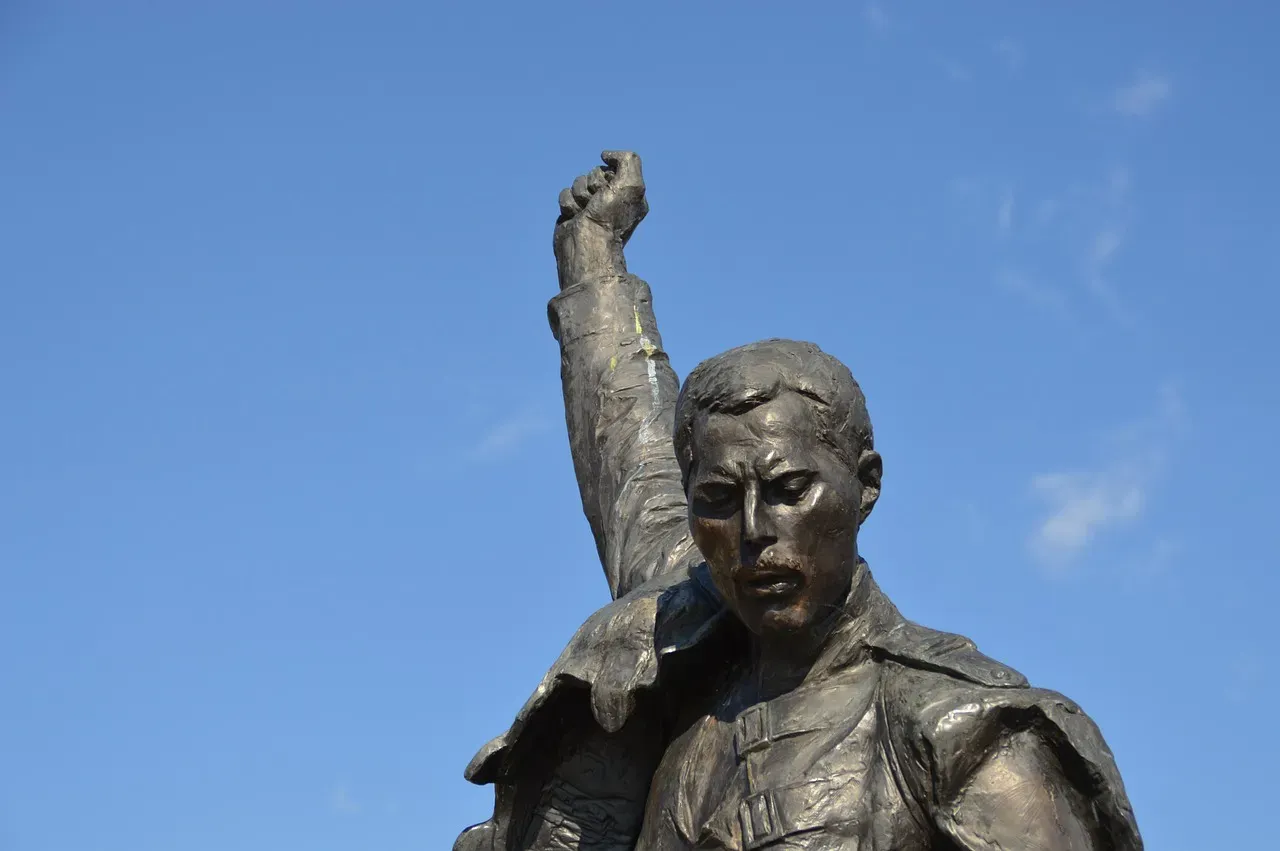
Freddie Mercury, born Farrokh Bulsara on September 5, 1946, was the lead vocalist and pianist of Queen, and is regarded as one of the greatest singers in the history of rock music, known for his flamboyant stage persona and four-octave vocal range. What made his voice so extraordinary went far beyond the notes he could hit. According to research, Mercury likely used a singing technique called subharmonics, most notably used by throat singers, whereby ventricular folds vibrate with the vocal folds, and his vocal chords moved faster than average, fluctuating at 7.04Hz, compared to a typical vocal vibrato that sits between 5.4Hz and 6.9Hz.
A research team undertook a study in 2016 to understand the appeal behind Mercury’s voice. Led by Professor Christian Herbst, the team identified his notably faster vibrato and use of subharmonics as unique characteristics, particularly in comparison to opera singers, studying vocal samples from 23 commercially available Queen recordings, his solo work, and a series of interviews. The polls back it all up, too. Queen legend Freddie Mercury was voted The Greatest Rock Singer of All Time by Planet Rock listeners, with a total of 8,627 votes cast in an open poll, where Mercury took the crown with an impressive 13.4% of the total vote. Billboard magazine placed him second on their 25 Best Rock Frontmen of All Time list in 2015, and third on their 50 Greatest Rock Lead Singers of All Time list in 2023.
2. Robert Plant – The Voice That Defined Hard Rock
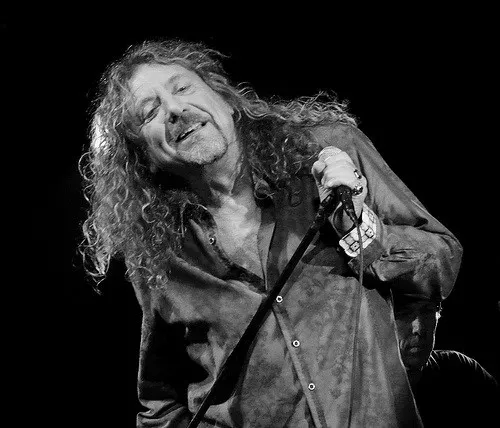
Regarded by many as one of the greatest singers in rock music, Robert Plant is known for his flamboyant persona, raw stage performances, and his powerful, wide-ranging voice. The Encyclopædia Britannica notes that Plant “created the sound that has defined much hard rock and heavy metal singing: a high range, an abundance of distortion, loud volume, and emotional excess.” That is not a small thing. That is an entire genre of singing essentially tracing its DNA back to one man. He possessed a vocal range extending from an F#2 to a C#6, a span that allowed him to whisper and then split the ceiling of an arena within the same song.
In 2009, Plant was voted the “greatest voice in rock” in a poll conducted by Planet Rock, and Rolling Stone ranked him as one of the 100 best singers of all time, with readers placing him in first place of the magazine’s list of the best lead singers in a 2011 poll. With a career spanning more than 40 years and possessing a powerful wide vocal range, Plant has influenced contemporaries and later singers such as Freddie Mercury, Axl Rose, and Chris Cornell. Decades later, Robert Plant and Led Zeppelin are still influencing singers, songwriters, guitarists, and fans alike – sampled, imitated, dissected, and worshipped, but never truly duplicated.
3. Chris Cornell – Rock’s Most Dangerous Instrument

Several music journalists, fan polls, and fellow musicians have regarded Cornell as one of the greatest rock singers of all time. He is considered a key figure of the 1990s grunge movement with an extensive songwriting history, a nearly four-octave vocal range, and a powerful vocal belting technique. His vocal range spanned approximately E2 to E6, covering four octaves of clean, mixed, falsetto, and distorted resonance. Cornell’s voice blended baritone richness, tenor brightness, extreme high-range agility, and an otherworldly ability to maintain clarity even at high-intensity distortion. That combination is, technically speaking, almost physically impossible to replicate.
Cornell was ranked No. 4 on the list of “Heavy Metal’s All-Time Top 100 Vocalists” by Hit Parader, No. 9 on the list of “Best Lead Singers of All Time” by Rolling Stone, and was voted “Rock’s Greatest Singer” by readers of Guitar World. In 2025, Cornell was posthumously inducted into the Rock and Roll Hall of Fame as a member of Soundgarden. Fellow vocalist Eddie Vedder put it simply in a 2009 interview: Vedder stated that Cornell was “the best singer that we’ve got on the planet.” Alice Cooper went even further: after hearing about Cornell’s death, Alice Cooper stated: “Chris Cornell, in our circle, was known as ‘The Voice’ because he had the best voice in rock and roll.”
4. Axl Rose – The Widest Range in Classic Rock
According to various music studies and vocal analyses, Axl’s range stretches from the deep baritone notes of F1 all the way up to an electrifying B♭6, a feat matched by only a handful of singers across genres. A chart from ConcertHotels.com attempted to quantify what makes a great singer, ranking Guns N’ Roses frontman Axl Rose at the top of their list, primarily focused on vocal range. Rose, with his five-octave pipes, goes from an F1 on “There Was a Time” all the way to a B flat 6 on “Ain’t It Fun,” putting him alongside such figures as Mariah Carey and Prince. That extraordinary span placed him at the very summit of rock singers when it came to raw measured range.
Rose could adapt his voice to various moods and genres – gritty hard rock, emotional ballads, bluesy swagger, or even operatic moments – and whether he was howling through “Sweet Child O’ Mine” or delivering a heartfelt lament in “Don’t Cry,” his voice had an emotional depth that connected directly with audiences. While many singers struggle to replicate their studio prowess on stage, Axl often delivered performances that were even more raw and thrilling live, with his ability to maintain pitch, power, and energy across marathon concerts, sometimes spanning three hours or more, being nothing short of remarkable. Even peers recognized his gifts early. In a 1989 interview with Rolling Stone, Axl Rose himself stated about Chris Cornell: “The singer just buries me. The guy sings so great,” adding that Cornell was the best vocalist in rock – a level of generosity that speaks to just how seriously Rose took the craft of singing.
5. Ronnie James Dio – The Metal Titan with a Voice of Gold
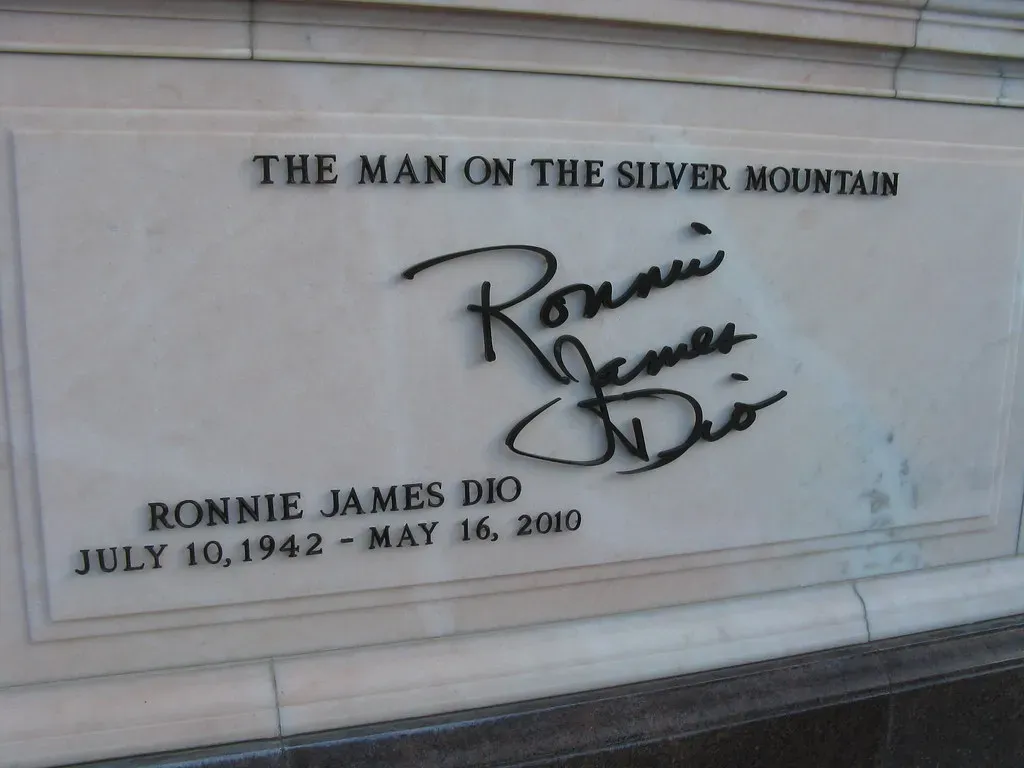
Dio is regarded as one of the greatest and most influential heavy metal vocalists of all time, known for popularizing the “devil horns” hand gesture in metal culture and his medieval-themed song lyrics. Known for his incredible vocal abilities, Ronnie James Dio possessed an impressive vocal range of more than four octaves, and his unique voice captivated audiences and solidified his status as one of the greatest rock vocalists of all time. Despite being known for his powerful singing voice, Dio claimed to have never received any vocal training, instead attributing his singing ability to the breathing techniques he learned while playing trumpet.
Ronnie James Dio was not merely a singer – he was the foundational architect of heavy metal’s fantasy imagery and vocal power. His operatic voice, perfected through trumpet training, defined crucial eras for Rainbow, Black Sabbath, and his own band Dio. His influence, cemented by the ubiquitous “sign of the horns,” remains the benchmark for metal vocalists worldwide. Dio sold over 47 million albums throughout his career. In the 2024 Planet Rock poll, Ronnie James Dio came narrowly close to the top spot, just 255 votes behind Freddie Mercury, picking up 10.5% of all listener votes. One of Dio’s greatest works, “The Devil You Know,” was released in 2009 under the Black Sabbath alter-ego Heaven and Hell, and released when Dio was 65 years of age, it contained some of the singer’s most powerful work – his voice as incredible as ever, as was his masterful ability to tell a story through his lyrics.