12 Mall Food Court Chains From the 90s You Completely Forgot About
You can still hear it if you try: trays clattering, a pretzel timer buzzing, someone yelling a number across the seating area. Everybody remembers the giants, but the 1990s food court also held a crowd of smaller counters that quietly fed a whole generation of mall kids.
This list is real, with chains that actually sat under those glowing menu boards. Some have shrunk to a few locations, some are still around if you know where to look, and one has a business story far bumpier than its cheerful slices suggest. The last one is the one that surprised us most, so keep walking.
1. Gloria Jean’s Coffees: The Smell You Followed Past Three Stores
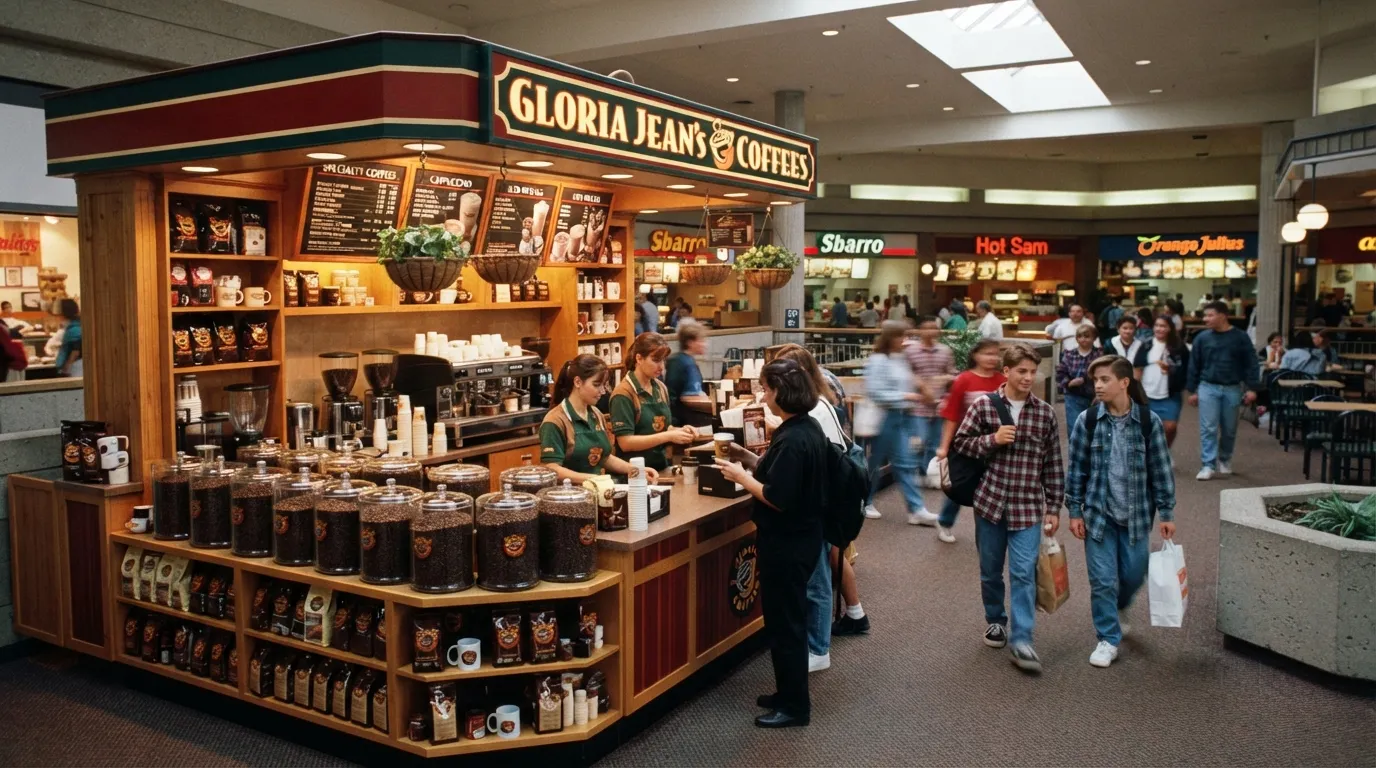
Long before every corner had an espresso bar, the mall had Gloria Jean’s and its bins of flavored coffee beans. Hazelnut and vanilla drifted down the walkway like a dessert you couldn’t see.
Teenagers ordered sweet, icy coffee drinks that felt like milkshakes with a grown-up excuse. Parents bought a bag of beans to take home, which made the whole stop feel like a small family treat.
The brand still exists, but its U.S. presence is far smaller than it was in its mall heyday. Much of its footprint today is overseas, so finding one near you depends entirely on where you live.
If you ever followed a coffee smell around a mall like a cartoon character floating on a scent trail, this is probably the one. It’s a reminder that the food court used to start with your nose.
2. Arthur Treacher’s Fish & Chips: The Butler Who Sold You Dinner
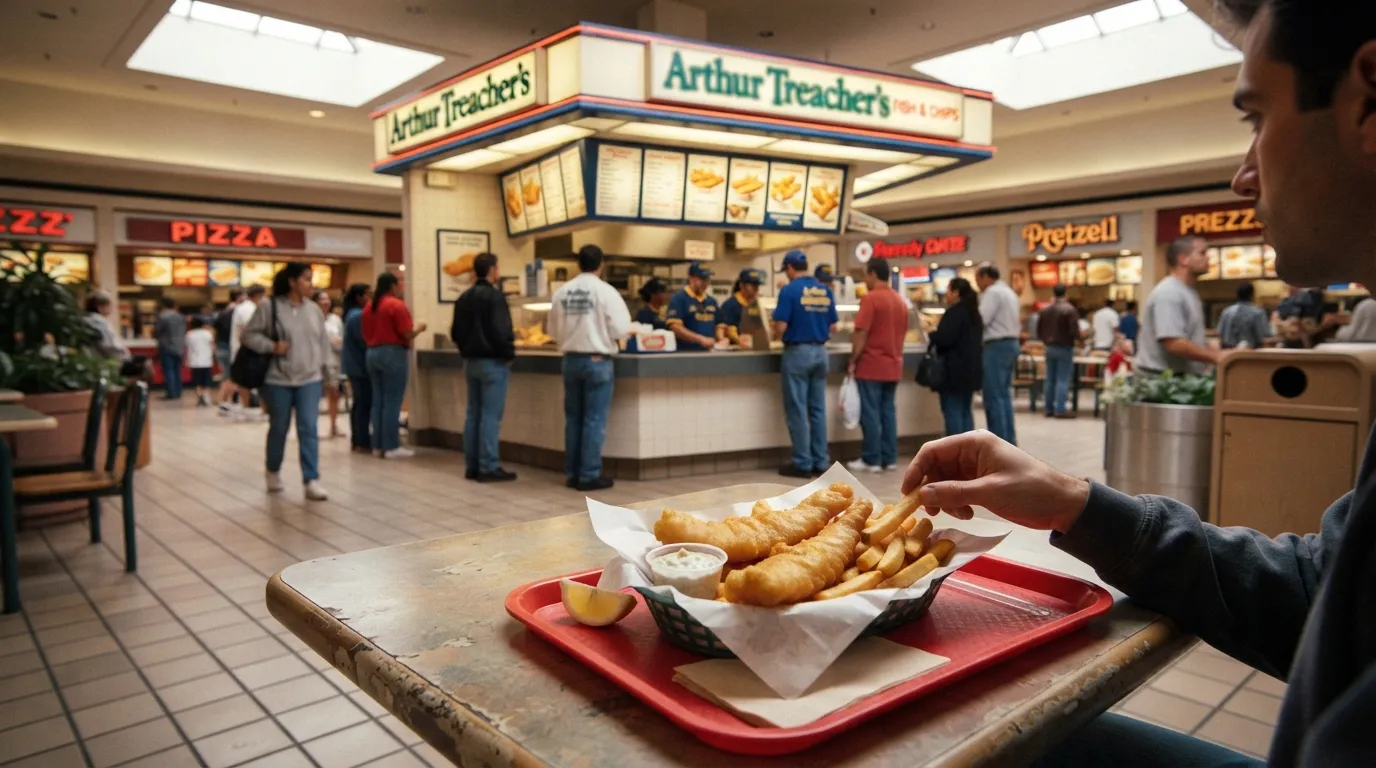
The chain was named for Arthur Treacher, the British actor famous for playing butlers on screen. Plenty of kids probably ate his fried fish without ever knowing who he was.
The appeal was simple: crisp battered fish, thick fries, and a paper-lined basket that felt like a seaside shack beside the pretzel stand. It was a different kind of comfort from burgers and pizza.
The brand’s biggest days came earlier than the 90s, and it has shrunk a lot since. A small number of locations still exist, but the number changes over time.
This is the kind of chain that proves the food court once had real regional personality. Not every name got a second act, but some of them got a very loyal handful of fans.
3. I Can’t Believe It’s Yogurt: The Name That Sounded Like a Dare
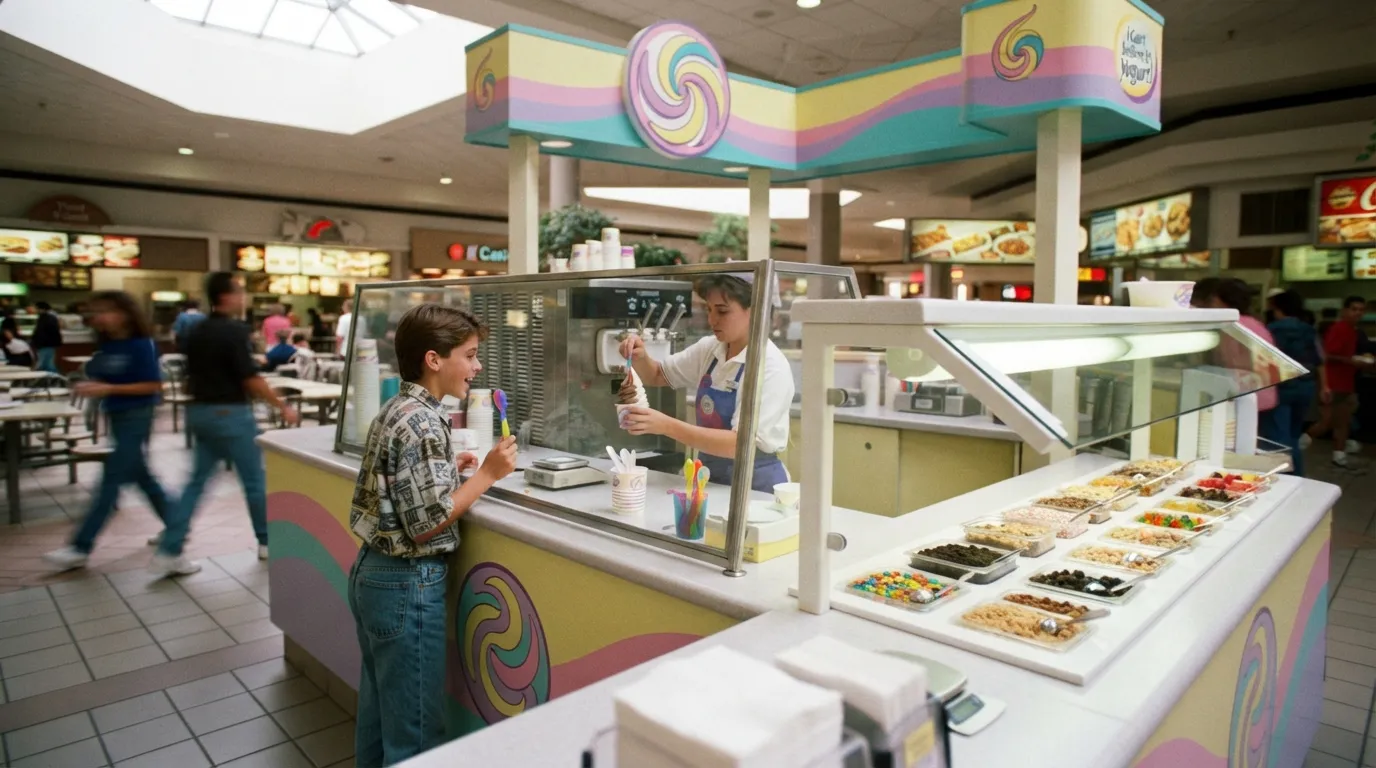
The name practically challenged you to take a bite and prove it wrong. Soft-serve swirled into a cup, toppings lined up under the glass, and suddenly dessert felt like an experiment.
The brand was born in Texas and spread through malls and shopping strips. Back then, frozen yogurt could feel like a trend you were part of just by holding the spoon.
It still exists today, though in a far smaller footprint than during its peak. Locations vary, and many are tucked into places you wouldn’t expect.
For a lot of kids, the real thrill was the toppings bar. One scoop of candy and cookie crumbs could turn a dessert decision into a major life choice.
[article_quiz]4. TCBY: The Yogurt Brand That Had to Change Its Own Name
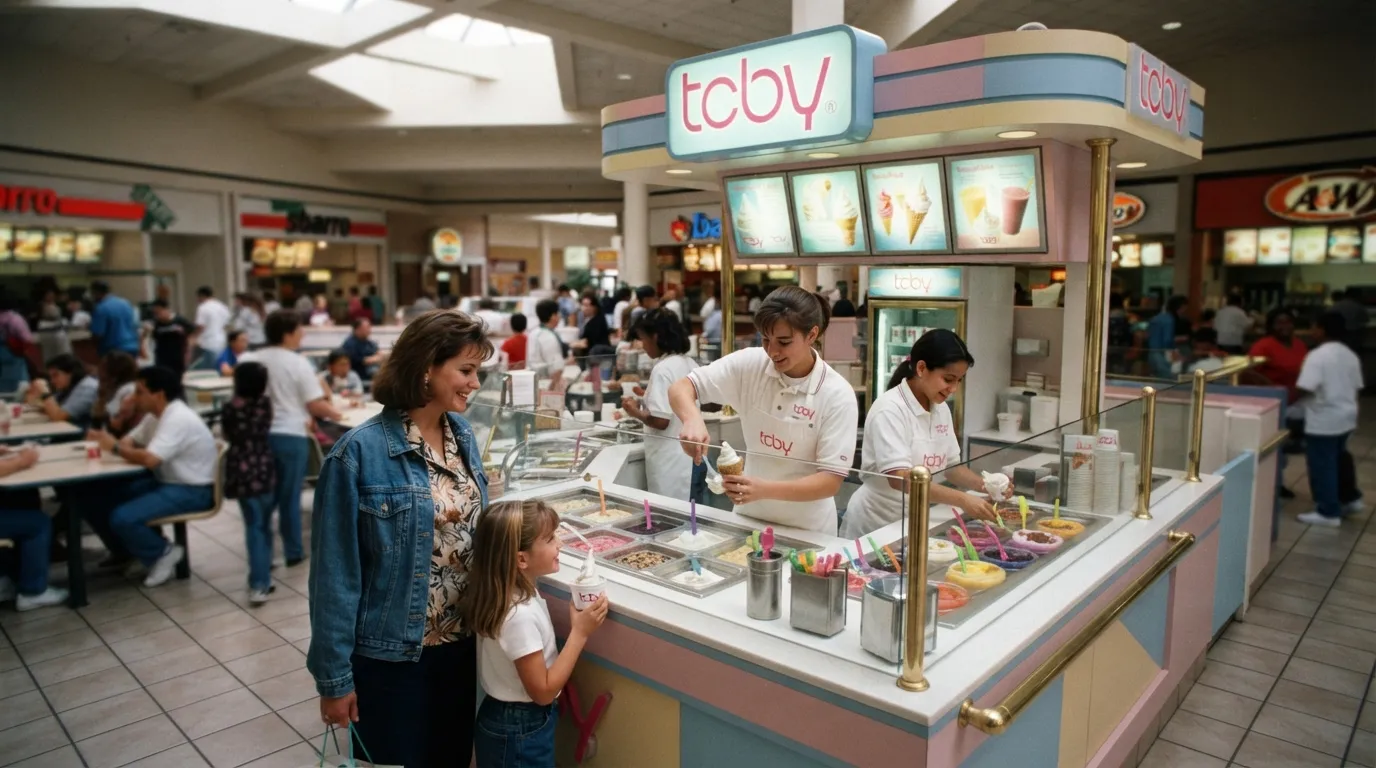
Here is the twist: the company’s early name was This Can’t Be Yogurt, which later became The Country’s Best Yogurt.1 That tidy little acronym stuck, even if few people remember the original.
It started in Little Rock, Arkansas, in 19811 and became a familiar sight in malls across the country. Its cups and sugar cones were part of the decade’s frozen-dessert scenery.
Quick Compare
- I Can’t Believe It’s Yogurt: Texas-born, with a dare-you name and a big toppings bar.
- TCBY: Started in Little Rock in 1981, with a name that was rewritten along the way.
- Today: Both still exist, but with far smaller footprints than in the mall era.
In the 90s, frozen yogurt often felt like the lighter-sounding choice next to a cinnamon roll. Whether it truly was depended on the toppings, and the toppings were rarely modest.
TCBY still exists, but with much less reach than its mall-era self. Finding one now can feel like finding an old arcade token in a coat pocket.
5. Steak Escape: The Grilled Sandwich That Smelled Like a Mini Cookout
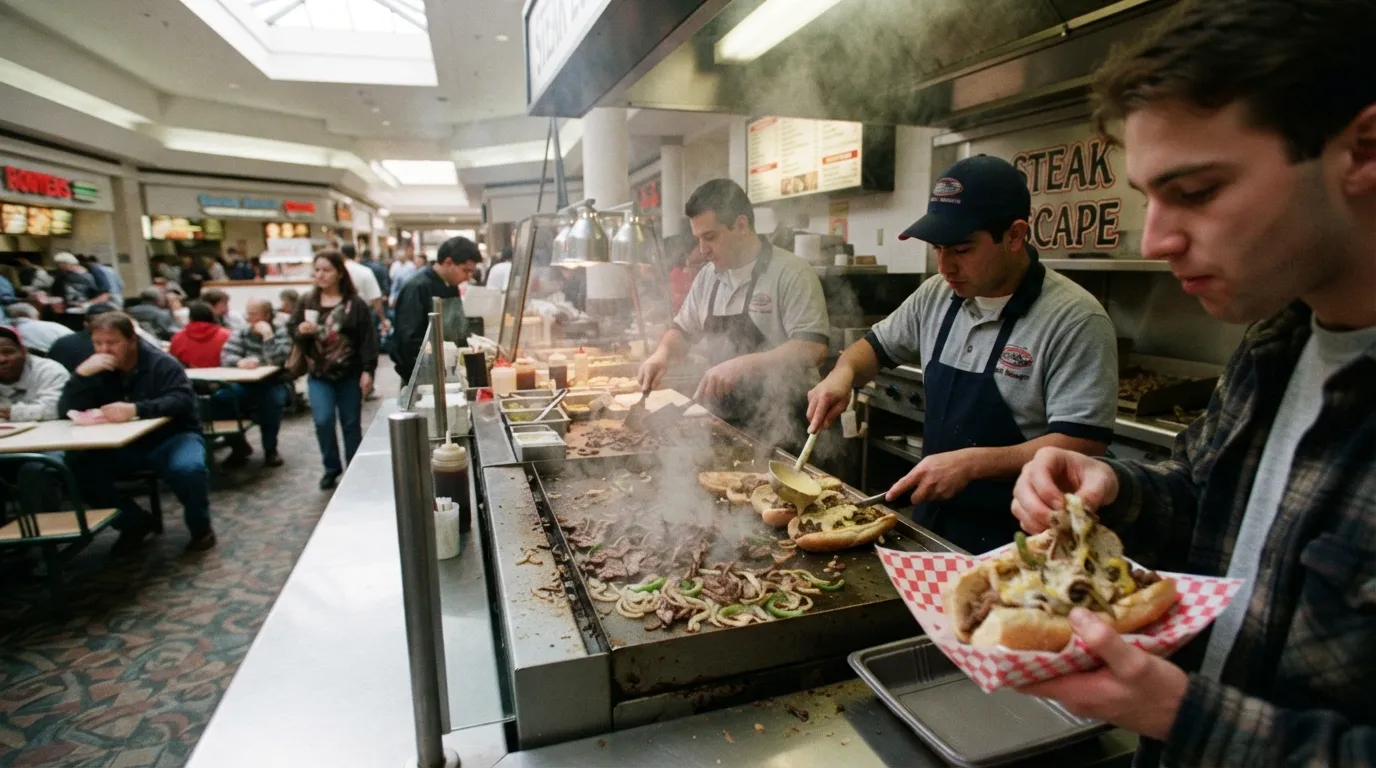
You could smell Steak Escape before you could read the sign. Onions, peppers, and sizzling steak turned the whole corner of the food court into a tiny cookout.
The sandwiches came loaded with melted cheese and grilled toppings, and the show at the flat-top was half the fun. It was a hot, messy lunch that required a fistful of napkins.
The brand still exists, though not at its old mall-court scale, and locations vary. Other cheesesteak names like Charleys and The Great Steak & Potato Company are also still around, which made the competition real.
That grill smell is the detail people remember most. It was the closest a shopping center ever came to making you feel like you’d been invited to dinner.
6. Sarku Japan: The Toothpick Samples You Called Dinner
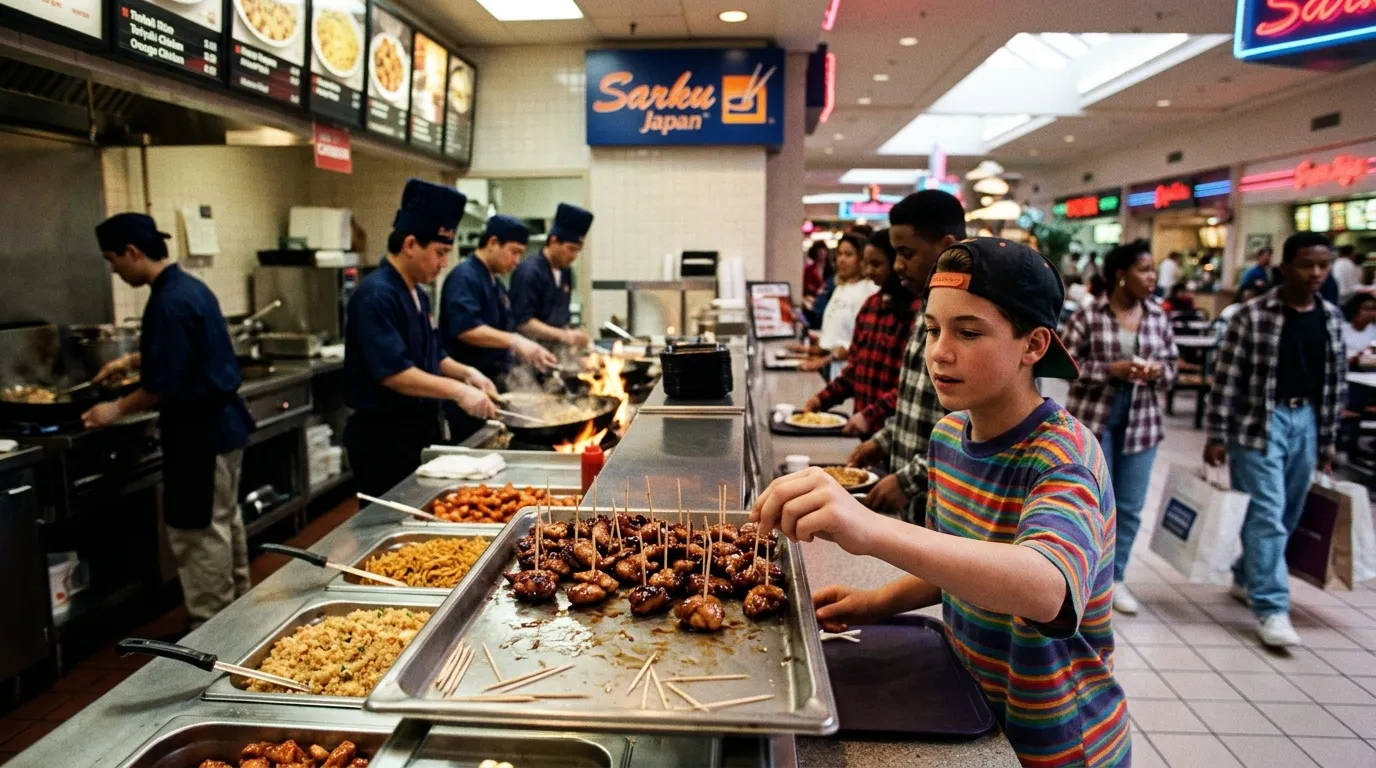
You didn’t have to buy anything to meet Sarku Japan. A tray of teriyaki chicken sat out on toothpicks, and every kid in the mall acted like it was an accident.
One piece turned into a second piece, and then a nervous glance at the line. Somewhere in there, you were either ordering a plate or pretending to read the menu.
The chain still operates in many malls, so this one isn’t gone. It just got quieter as the food court shifted around it.
The sample tray was a masterclass in mall psychology. It was salty, sweet, and perfectly sized to make you hungrier than you were a minute earlier.
7. Manchu Wok: The Wok Counter With Canadian Roots
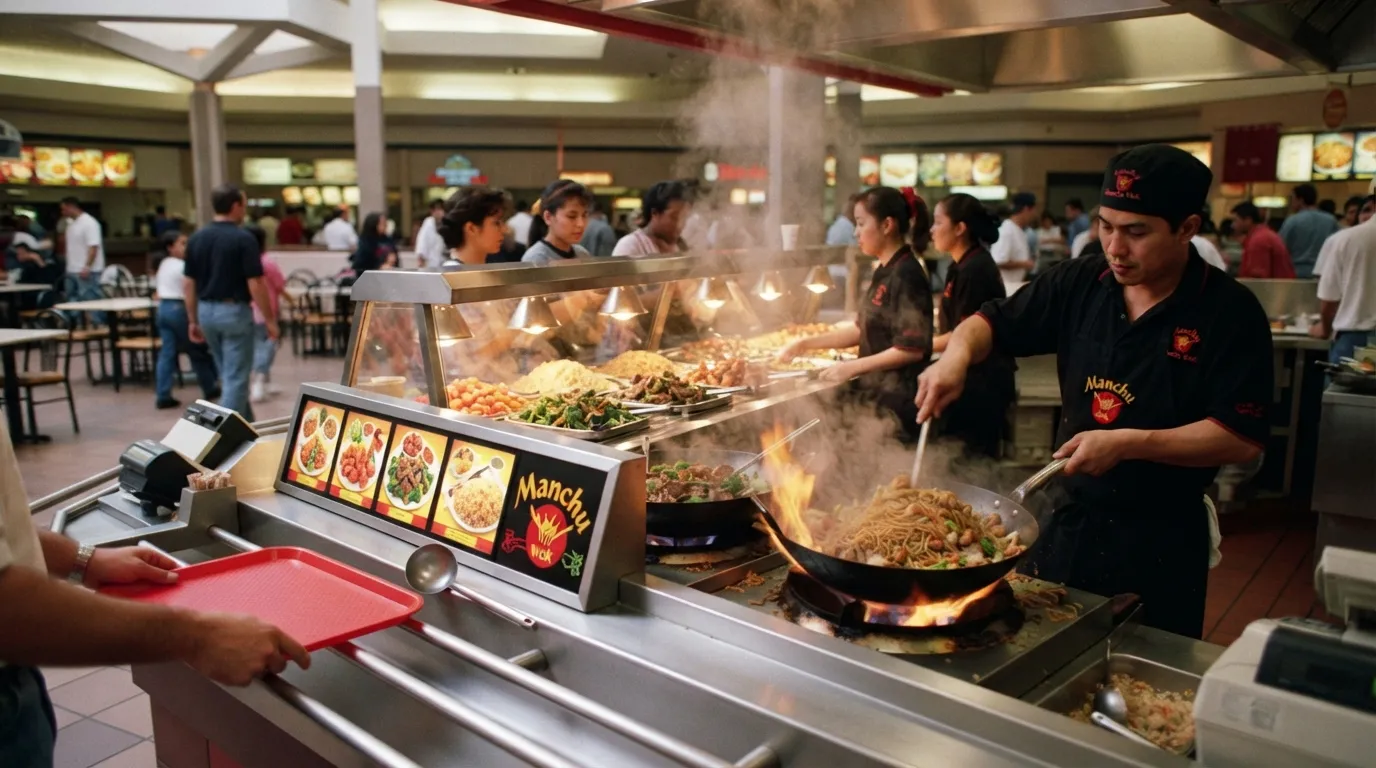
Manchu Wok was the bright, fast counter where sweet-and-sour style chicken, noodles, and fried rice came out in heaps. It was Canadian-born, which surprised plenty of people who assumed every mall chain started in the U.S.2
The counter looked like a quick-service stage. Cooks tossed food in woks while trays slid along, and the whole thing felt faster than any sit-down restaurant.
Worth Knowing
- Manchu Wok began in Canada, not the U.S.2
- Its U.S. footprint is small and shifts from year to year.
- The classic order was a heaped plate of chicken, noodles, and fried rice.
- Panda Express is the Chinese-American food court name most people recall first.
The brand still exists, but you may need to check a store locator to find one. Today, Panda Express is the name most people think of first.
That is what makes Manchu Wok such a forgotten gem. It sat in the same food courts, fed the same crowds, and mostly got left out of the memory.
8. Pretzelmaker: The Other Pretzel in the Mall
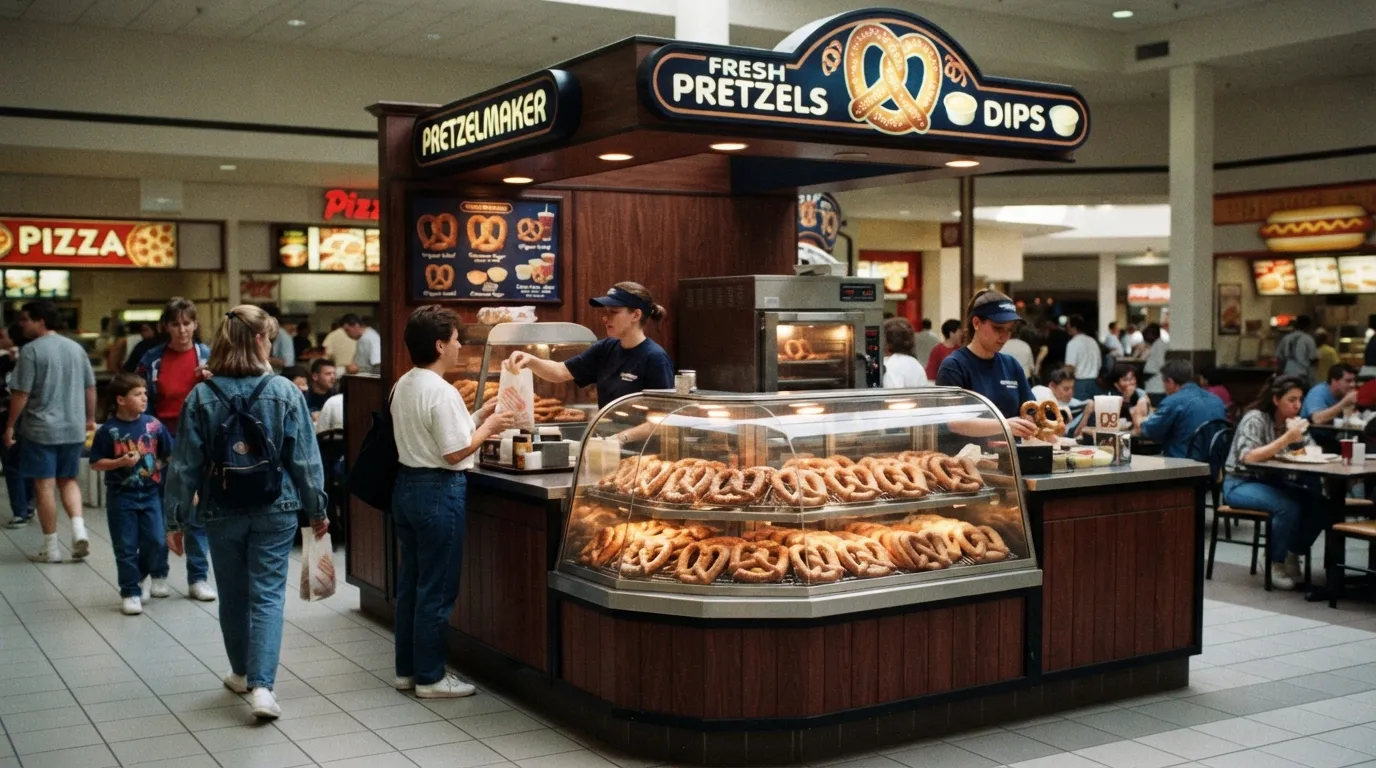
Everyone remembers the pretzel wars, but the story usually stops at Auntie Anne’s, which got its start in a Pennsylvania farmers market in 1988. Pretzelmaker was fighting for the same attention and the same fresh-baked smell.
Warm dough, a brush of butter, and a choice between salt or cinnamon sugar made it hard to walk past. Dips and snacks added extra reasons to join the line.
Pretzelmaker still exists, though like many mall brands it has a smaller reach now. It can still be found in some malls and travel spots, but locations come and go.
The best part of the food court pretzel was never the menu. It was how the smell hit before you saw the stand, and for a second you forgot what you came to buy.
9. Hot Dog on a Stick: The Uniform You Could Spot Across the Mall
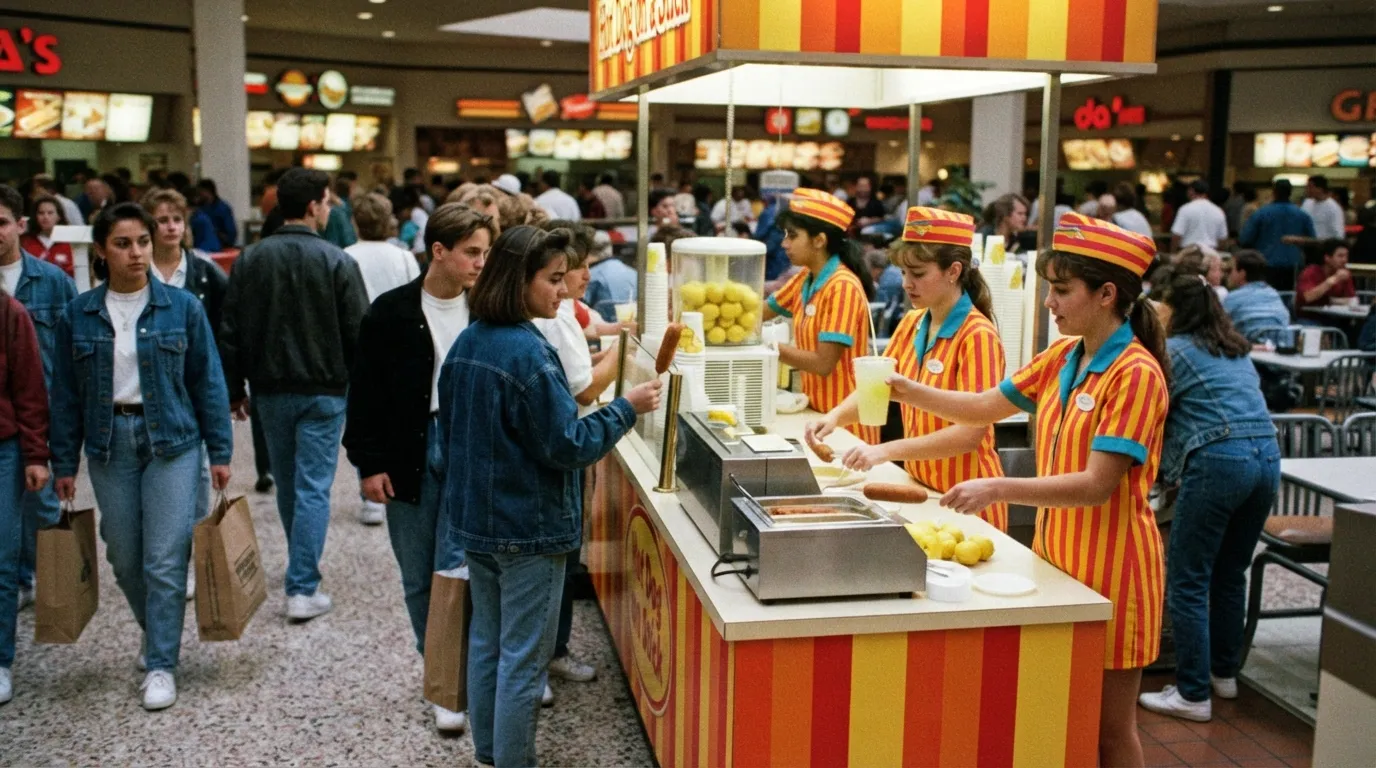
You didn’t need a sign to find Hot Dog on a Stick. The bright striped uniforms and hats did the advertising for them.
The brand got its start in Southern California in the 1940s, and the corn dogs and fresh lemonade became a West Coast mall tradition.3 For many kids, it was the one stop that felt like a little carnival.
It still exists, but mostly in specific regions and often in smaller footprints than it once had. If you grew up elsewhere, you may have never met it at all.
That is why this one divides people. Some remember it as a mall landmark, and others look at the photos and wonder how they missed the party.
10. Mrs. Fields: The Cookie Counter That Handed Out Samples Like a Welcome Mat
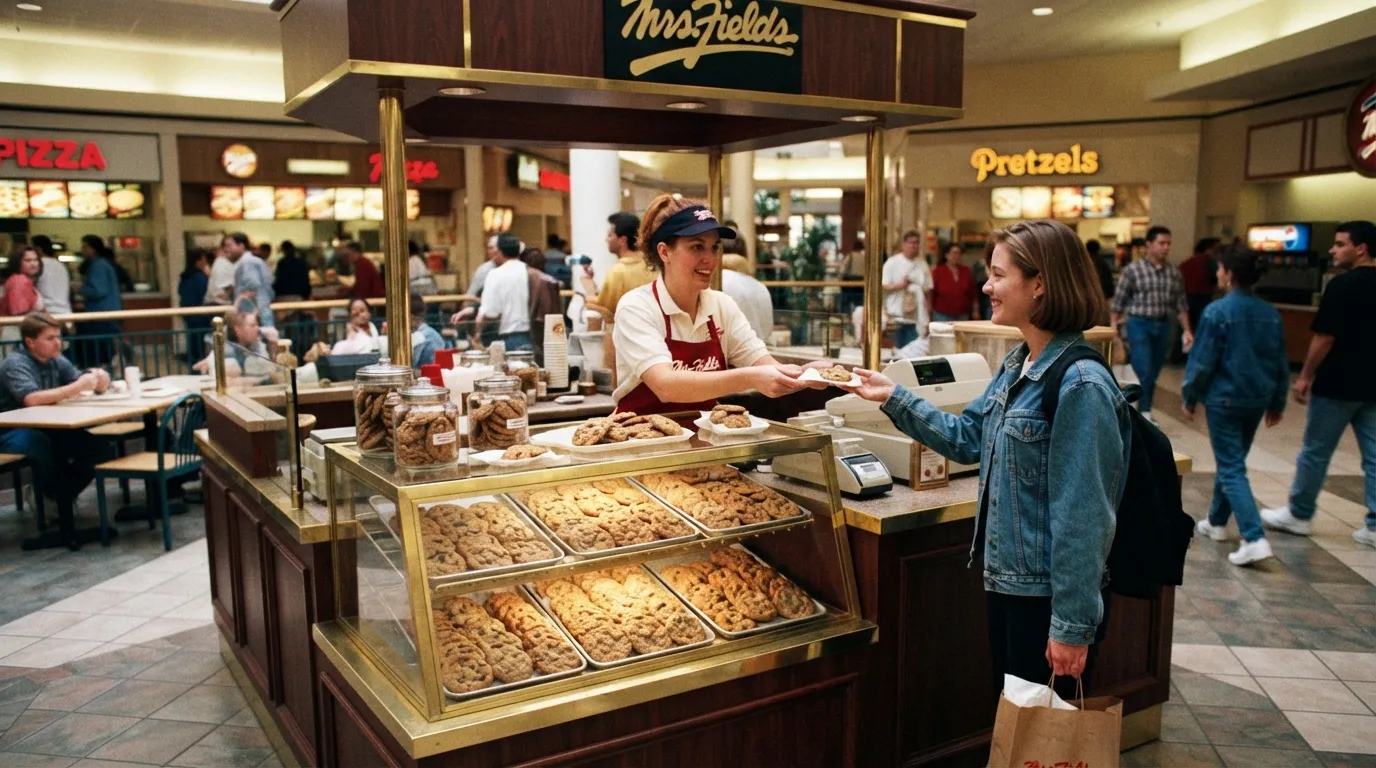
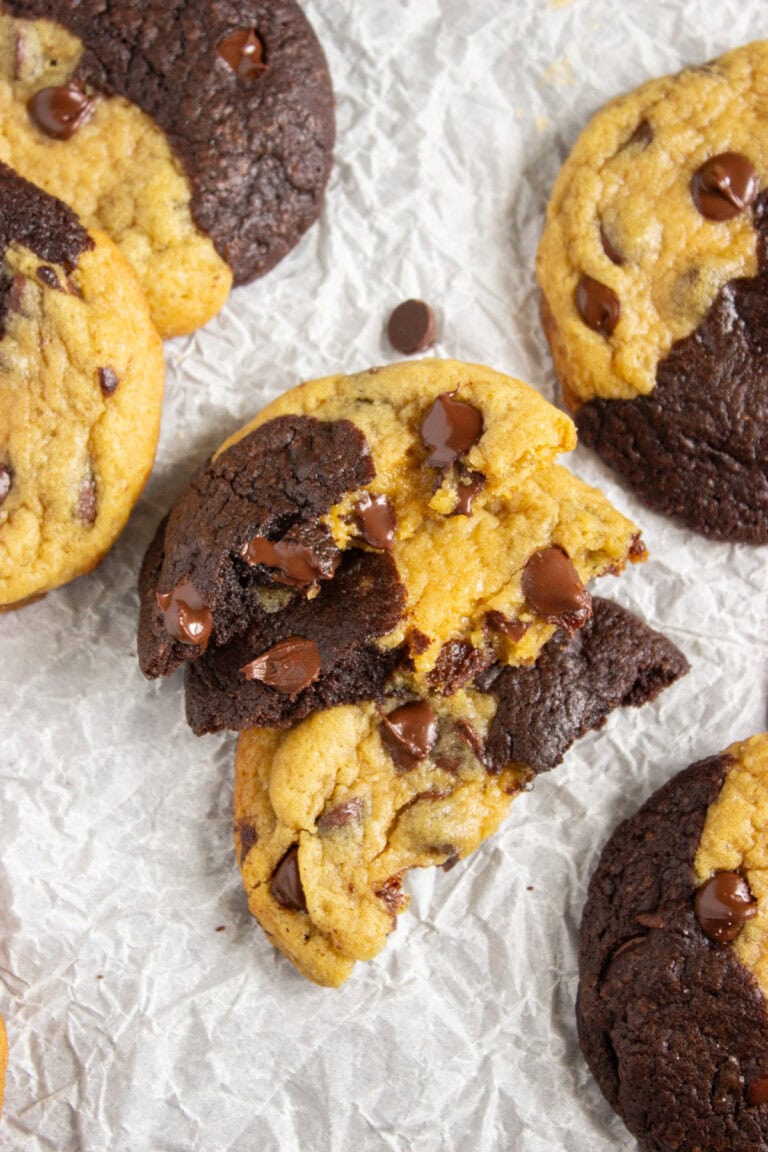
The aroma alone could pull you off course. Mrs. Fields turned warm cookies into a destination, and the free samples made saying no feel almost rude.
Debbi Fields opened her first shop in Palo Alto, California, in 1977 when she was 20.4 That personal story gave a mall cookie counter a surprising bit of underdog charm.
At a Glance
- Founder: Debbi Fields, who was 20 at the start.
- First shop: Palo Alto, California, in 1977.4
- Signature move: Free samples that were hard to refuse.
- Today: Still around, with a smaller mall presence.
The brand still exists, but it has a smaller mall presence than it once did. Where you find one now depends on your local shopping center.
A cookie from Mrs. Fields felt like a reward for finishing errands, even if the errands were just back-to-school shopping. The warm chocolate chip smell is probably the sharpest sensory memory on this list.
11. Orange Julius: The Frothy Drink With a Mall Address
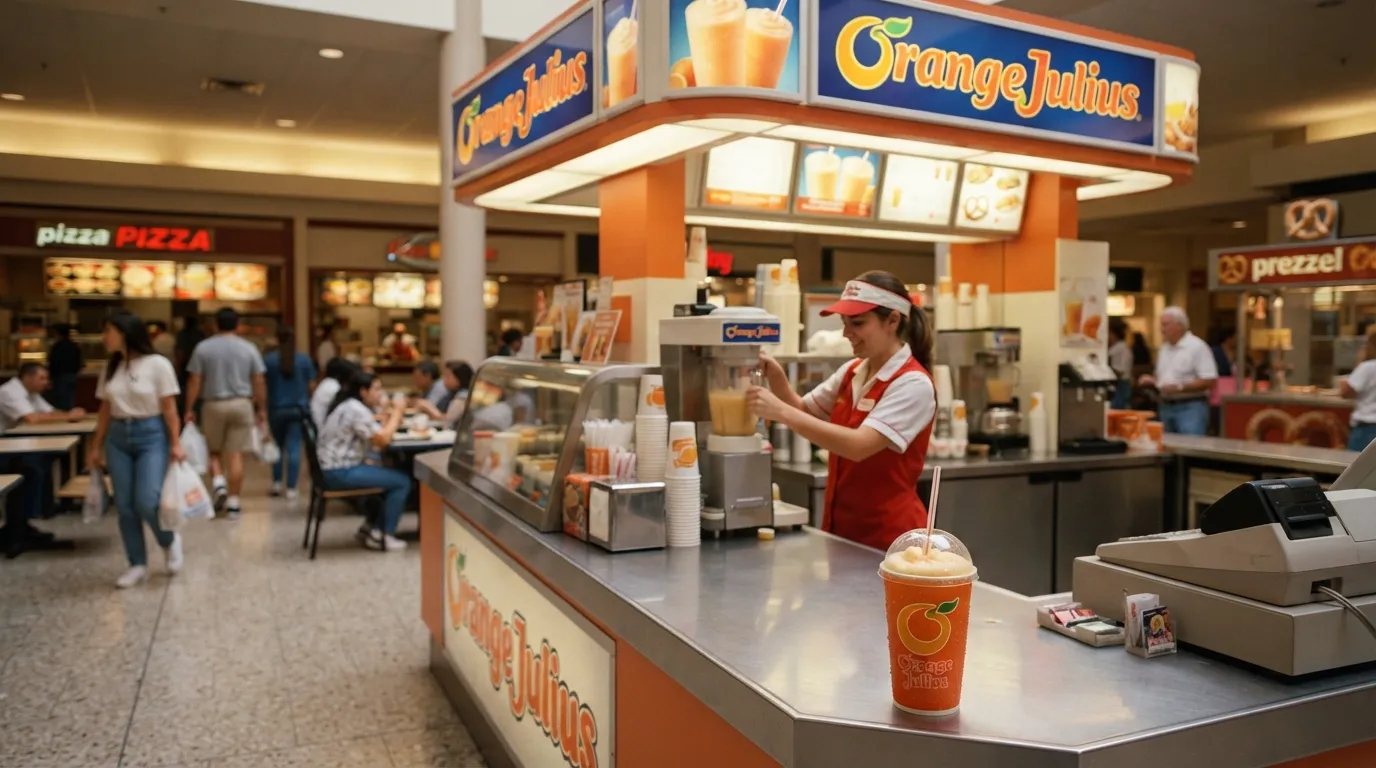
Orange Julius came with its own kind of magic: a cold, foamy orange drink that tasted like a creamsicle had gone to a party. The cups and straws became a mall-day uniform.
The drink dates back to 1926, when Julius Freed started it in Los Angeles. Dairy Queen acquired the brand in 1987, which is why you often saw them under the same roof.5
It still exists, though many remaining locations are paired with Dairy Queen storefronts. Standalone spots are harder to find than they were in the 90s.
For plenty of people, one sip is a time machine. It tastes like a Saturday afternoon, a pocket of allowance money, and nowhere else to be.
[article_quiz]12. Sbarro: The Slice Under the Heat Lamp That Survived Its Own Plot Twist
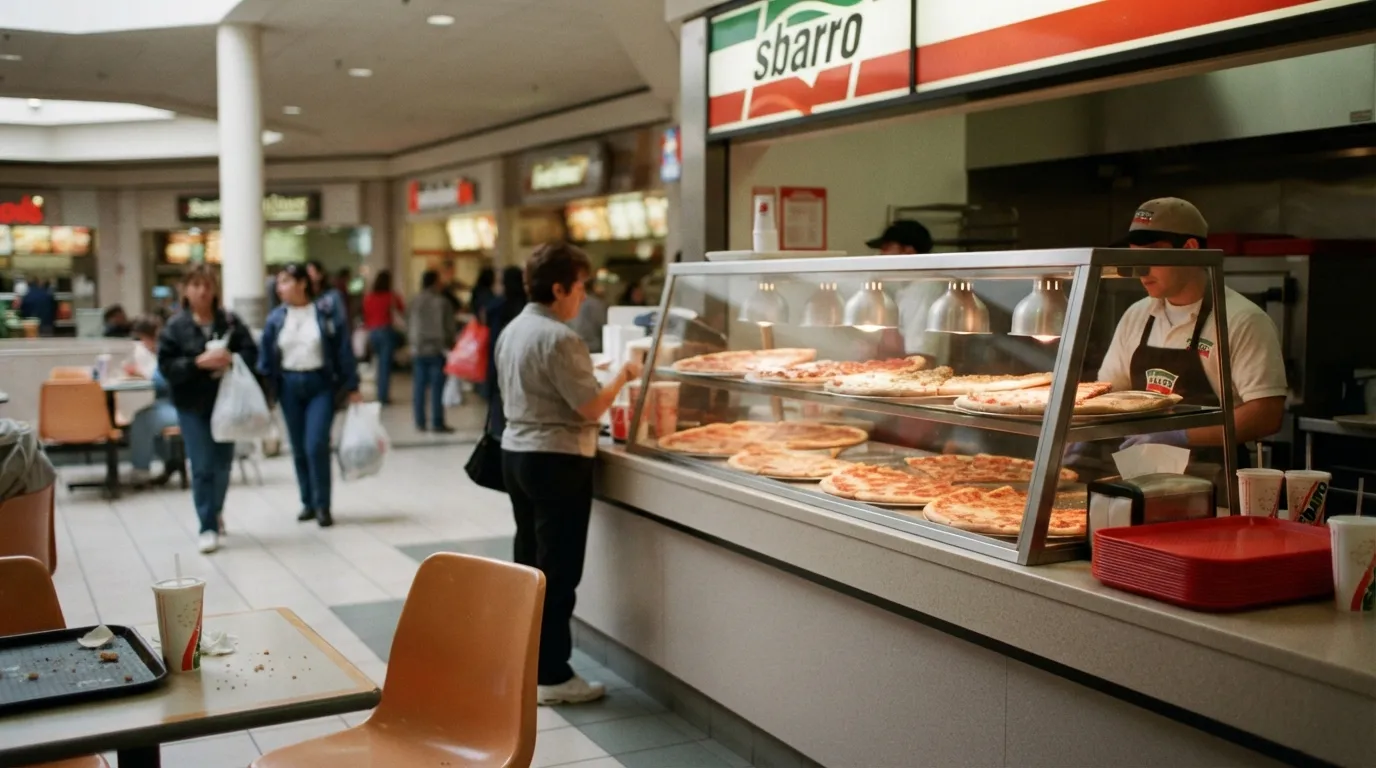
Sbarro is the one almost everyone recognizes once they see the name, but few remember how rough the road got. The company began when Gennaro and Carmela Sbarro opened an Italian grocery in Brooklyn in 1956,6 and it grew into one of the best-known mall pizza names in the country.
Those big triangle slices sat under warm lights and came with a stack of napkins and a plastic cup of soda. It was the easiest decision in the food court, especially if you were in a hurry.
Then came the real twist: the company went through bankruptcy in 2011 and again in 2014.6 7 Even so, Sbarro still operates today, though how many locations remain varies over time.
That is what makes it the strongest memory on the list. The pizza slice you may have eaten on a Saturday had a hard business life behind it, and it is still here.
Fast Facts
- 1956: Gennaro and Carmela Sbarro open an Italian grocery in Brooklyn.
- 2011 and 2014: The company goes through bankruptcy twice.
- Today: Still operating, with a location count that changes over time.
The food court may look different now, but the memories attached to those counters haven’t gone anywhere. The next time you pass an old mall, you might catch yourself smelling cinnamon, sizzling steak, or hot pretzel dough that isn’t there.
Somewhere in your head, the tray is still warm and the allowance is still burning a hole in your pocket. Not bad for a handful of counters you forgot you ever visited.
- Encyclopedia of Arkansas TCBY: https://encyclopediaofarkansas.net/entries/tcby-2137/
- Manchu Wok Overview: https://en.wikipedia.org/wiki/Manchu_Wok
- Hot Dog on a Stick History: https://hotdogonastick.com/our-story/
- Mrs. Fields Origin Story: https://parade.com/food/debbi-fields-mrs-fields-cookies-origin-story
- Orange Julius and Dairy Queen: https://www.orangejulius.com/en-us/about-us/
- Sbarro Company Overview: https://www.nbcnews.com/business/consumer/sbarro-pizza-chain-files-chapter-11-bankruptcy-again-n48936
- Sbarro Bankruptcy History: https://www.tastingtable.com/1933685/sbarro-pizza-chain-survived-bankruptcy-twice/