5 Creative Blocks That Aren’t What They Seem
Most people who’ve ever stared at a blank page, canvas, or screen know the feeling well. Something invisible seems to be in the way. The common response is to label it a creative block and then either push through with frustration or wait it out with guilt. Neither tends to work very well.
What if they’re not mysterious interruptions in our inspiration, but signs of something else entirely – fatigue, fear, emotional overload, or disconnection from meaning? That reframe changes everything. The blocks listed here aren’t necessarily what they look like on the surface, and understanding what’s actually happening is the first real step toward getting unstuck.
1. Perfectionism Disguised as High Standards
As odd as it sounds, perfectionism may not help you be a better creator. In fact, it can be the very reason you can’t produce anything at all. It feels like diligence, like caring about your craft. In reality, at its core, perfectionism is not about striving for excellence but about avoiding fear – the fear of loss, judgment, or shame.
Perfectionism can afflict anyone engaged in a creative pursuit, whether writing, painting, music, or filmmaking. It typically begins with setting excessively high standards for one’s work, seeking approval from others, and fearing the judgment that might arise from any imperfections. This fear of failure becomes so overpowering that even starting a project seems daunting, leading to procrastination and avoidance. The paradox is that the very quality that feels like professional conscientiousness ends up silencing the work entirely. According to decades of research in psychology, perfectionism correlates not with greater achievement but with higher levels of procrastination, anxiety, depression, and even burnout.
2. Fear of Judgment Masquerading as a Lack of Ideas
Many blocks are actually fear in disguise: fear of not being good enough, of wasting time, of being judged. Fear shuts down curiosity because it narrows attention toward perceived threats. This is why a creator can feel completely empty of ideas in one context – say, when a deadline is looming or a client is watching – and then have ideas arrive freely the moment pressure lifts.
Concern over others’ opinions of your work can freeze your creative flow. This fear leads to self-censorship – you might avoid experimenting with bold ideas or new techniques simply because they might not be well-received. This avoidance is a classic creative block symptom, where you stick to tried and tested methods that stifle innovation rather than promote it. The absence of ideas, in these cases, isn’t a supply problem. It’s a safety problem. Creativity flourishes in states of safety and regulation. Neuroscience confirms this: when we feel calm and secure, the brain’s prefrontal cortex – responsible for imagination, problem-solving, and higher thinking – is fully engaged. When we’re stressed, the brain shifts into survival mode, and those higher functions go offline.
3. Burnout Mistaken for Laziness

Creative burnout is a type of mental and emotional exhaustion that leaves you unable to create. Whether it’s music, artwork, or writing, there’s an inability to do what you once loved. From the outside – and often from the inside too – it can look a lot like laziness, apathy, or a loss of passion. That misidentification makes it worse, because the typical response is to push harder, which is precisely the wrong move.
Burnout, whether social exhaustion, occupational burnout, or creative fatigue, stems from chronic excessive stress. When we’re overly stressed for a prolonged period, we feel empty, exhausted, and uninspired. Creatives tend to be highly passionate about their work, often to the point that it becomes part of their identity. A lack of creativity can feel like a loss of self-worth. It then becomes a vicious cycle: creative blocks can lead to burnout, which leads to even further decreased creativity. What looks like reluctance is often the nervous system drawing a hard boundary that the conscious mind hasn’t caught up with yet.
4. Procrastination Confused with Avoidance

The psychology of procrastination often looks like this beneath the surface: fear of failure (“if I don’t try, I can’t fail”), perfectionism (“if it’s not perfect, it’s not worth starting”), low self-worth (“I’m not good enough to finish this”), and overwhelm (“I don’t know where to begin”). Ironically, we procrastinate not because we don’t care, but because we care too much and feel paralyzed. That distinction matters enormously. Plain avoidance and creative procrastination can look identical from a distance.
Research has drawn a useful distinction between passive and active procrastination. Forgetting fixation theory operates on the premise that shelving a fixated problem can be helpful in allowing for incubation effects to take place. Traditional procrastinators do not engage in active incubation – they put away the task without utilizing the time gap to explore different, original, and novel ideas. Rest plays a critical role in problem-solving and creativity. When we rest, our brain continues to work on problems at a subconscious level. This phenomenon, often referred to as the “incubation effect,” allows for the emergence of creative solutions and ideas that may not be accessible during periods of active thinking. In other words, stepping away can be generative – but only when it’s deliberate rather than avoidant.
5. Imposter Syndrome Presenting as a Creative Block
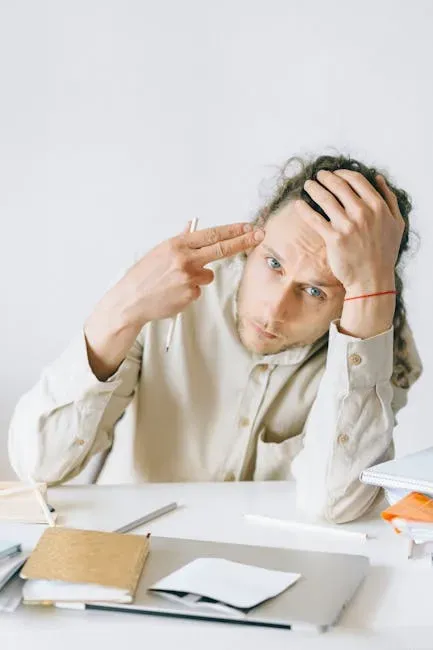
Whether you’re an artist, photographer, filmmaker, musician, or writer, you’ve likely had a nagging little voice in your head at some point telling you to question everything you’ve worked for. That nagging little voice tends to be an unfortunate side effect of success, and its name is imposter syndrome. The feeling that you are not as skilled or qualified as people think you are is not an uncommon one. When it strikes hard, it doesn’t feel like self-doubt. It feels like hitting a wall.
Being in any creative field makes you more susceptible to impostor feelings than say being an accountant or a dentist. One survey found that the creative arts and design industry has the highest rate of imposter syndrome across all sectors, affecting the vast majority of respondents. The block isn’t a lack of skill or vision. Although impostors’ divergent thinking performance is similar to that of non-impostors, they evaluate themselves as being far less creative in everyday, scholarly, performance, and artistic activities compared with their peers. The talent is present. The self-perception is the obstacle. Recognizing that gap is the quiet breakthrough most creatives don’t expect.
What nearly all five of these blocks share is a kind of mislabeling. We call them creative problems when they’re really emotional, psychological, or physiological ones. Naming them accurately doesn’t make them disappear, but it does make them far less mysterious – and far less permanent.