8 Creative Exercises That Feel Simple but Deliver Results
Most people assume creativity is something you either have or you don’t. It feels like a personality trait, not a skill. The truth, though, is that creativity is not a fixed trait. It’s a skill like any other, and it cannot be improved without continued practice and refinement.
The good news is that the practices that work best are rarely complicated. The eight exercises below are all accessible, low-effort to start, and grounded in research. Each one looks almost too simple on the surface. That’s exactly the point.
1. Morning Pages: Write Before the World Wakes Up

Morning pages were first introduced by Julia Cameron in her influential book “The Artist’s Way.” Cameron designed morning pages as a tool to help artists and creatives overcome creative blocks and tap into their inner creativity. The concept quickly gained popularity and has since been adopted by many people from various walks of life. The practice is simple: three pages of longhand, stream-of-consciousness writing done first thing in the morning, before emails, before scrolling, before anyone else gets a say in your morning.
Writing morning pages involves stream-of-consciousness writing, where you write freely without any filters or judgments. This process helps bypass the critical mind, giving the subconscious a chance to express itself. Studies have shown that this type of writing can enhance creativity, boost problem-solving skills, and promote innovative thinking. Research indicates that expressive writing can enhance neural connectivity, particularly in areas of the brain associated with emotional regulation and self-reflection. By allowing thoughts to flow freely onto the page, individuals can achieve greater clarity, fostering improved problem-solving capabilities.
2. The 30 Circles Exercise: Quantity Over Quality

The 30 circles exercise is a creativity exercise where the goal is quantity over quality. You’re given a sheet of paper with 30 identical circles on it. You have a short amount of time, usually 10 minutes at most, to draw something in as many of the 30 circles as possible. Clocks, suns, planets, wheels, eyeballs, happy faces. It doesn’t matter. Nothing has to be original. Nothing has to be good.
The value is in the speed. Your inner critic can’t keep pace when you’re racing to fill circles. When done as a team, the group members compare the completed circles to see if there are any unifying principles or designs. Even alone, it’s surprisingly effective. The exercise trains your brain to generate without evaluating, which is precisely the mental state that precedes genuinely creative breakthroughs.
3. A Short Walk: The Science-Backed Creativity Booster

Walking is almost embarrassingly simple as a creativity technique. Yet the research behind it is strong. Marily Oppezzo and Daniel Schwartz of Stanford University conducted four studies in 2014 that illuminated the creative power of walks. On all four studies, participants were tested as they sat and walked. Sometimes, they were indoors, other times they were outdoors. The series of exercises that they completed were designed to measure creativity.
In the experiments conducted, they discovered that participants who walked were more creative compared to those who were seated. The creative flow continued even after the walking participants stopped and sat down. That last part is worth sitting with. The benefit doesn’t evaporate when you return to your desk. Exercise causes the brain to be flooded with oxygen-rich blood, meaning it has the fuel to work at maximum efficiency. A 20-minute walk before a creative session may be one of the most underused productivity tools available.
4. Mind Mapping: Let Your Brain Branch Out
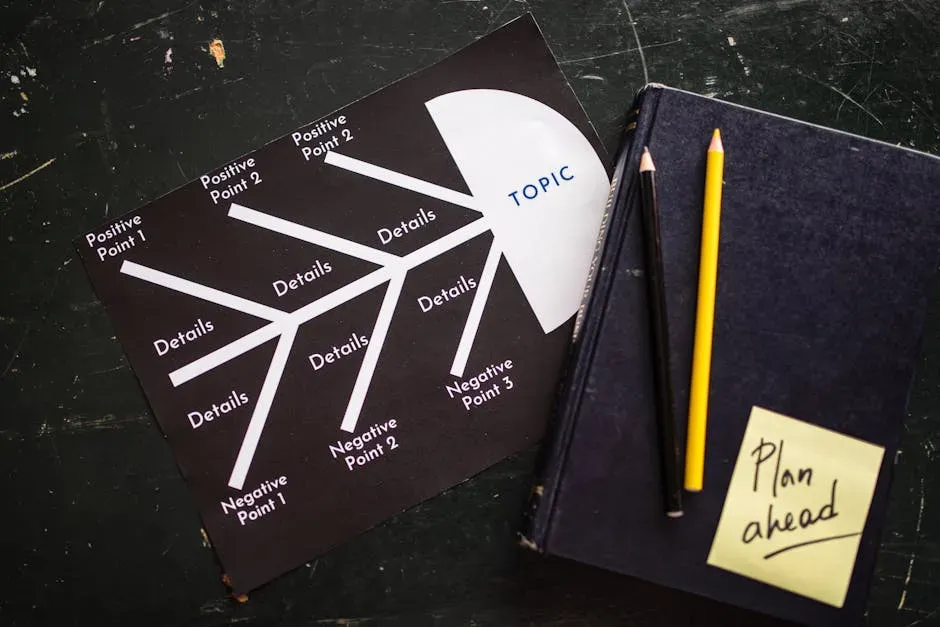
Mind mapping mirrors the brain’s natural way of thinking. It stimulates both logical and creative thinking by combining visuals, keywords, and relationships, which can improve memory, clarity, and idea generation. The structure is straightforward: write a central idea in the middle of a blank page, then let related thoughts branch outward in all directions. No linear order. No hierarchy required at the start.
Mind mapping encourages divergent thinking because ideas and concepts are captured in a non-linear, free-flowing manner. Divergent thinking involves the generation of multiple ideas to explore many possible solutions. Exploring multiple possibilities fosters creativity as you look at various connections and tangents. Mind maps really come into their own when it comes to encouraging creativity and enabling you to generate new ideas in brainstorming sessions. This is because the spatial layout of a mind map helps you gain a better overview, making new connections more visible so you can create an infinite number of thoughts, ideas, links, and associations on any topic.
5. The Six-Word Story: Constraints That Unlock Creativity
It sounds almost too clever to actually work. This one comes courtesy of Ernest Hemingway who famously wrote, “For sale: baby shoes, never worn.” Your own story doesn’t have to be so dark or so big, but try to boil something meaningful to you down to just six words. The limitation is the point. When you can only use six words, every single one has to earn its place.
Research by Ravi Mehta and Meng Zhu found that people often become more inventive when they have fewer resources to work with. When you’re forced to think within limits, it pushes your brain to find unexpected solutions. Imposing limitations around a design exercise or a project can often spark creative problem-solving more effectively than starting with open-ended freedom. A blank page with no constraints is actually harder to start on than one with a firm boundary. Six words proves that.
6. The Incomplete Figure Test: A Scribble Becomes Something

The incomplete figure test is a drawing exercise. You use a small, simple scribble, like a half-circle or loop, to create a full drawing. To do this in a group, several people use the same scribble to work from, and then they compare the drawings. Seeing how others interpret the same small design can expand your creative thinking and give you new ideas.
What makes this exercise so reliable is how it removes the intimidation of the blank page. You’re not being asked to create from nothing. The constraint is also an invitation. You find yourself genuinely curious about where the line wants to go. Divergent thinking may seem to deliver a sudden burst of ideas, but there is no need to wait for creative insights to arrive at random or all on their own. The incomplete figure test is one of the cleanest ways to prove that to yourself.
7. Freewriting on a Prompt: Five Minutes, No Backspace

Freewriting is different from journaling in one key way: you’re not allowed to stop. You pick a prompt, set a timer for five to ten minutes, and write without editing, pausing, or second-guessing. If something has you stumped, grab a piece of paper and write the question down at the top. Be as specific as possible. Then write down any and all potential solutions, no matter how ridiculous or “wrong” they may seem. Do this for five minutes every day as a way to focus, stretch your thinking, and stimulate your subconscious.
Freewriting ignites creative problem-solving by bypassing your inner critic. The act of writing about a specific topic, even something as ordinary as a meal you love, pulls up sensory details and emotional memories that can easily transfer to other creative problems. This practice of stream-of-consciousness writing can unlock new pathways in the brain, fostering a more expansive and imaginative approach to problem-solving and idea generation. The prompt gives you somewhere to start. The five-minute limit makes starting feel manageable.
8. The Association Game: Connecting What Doesn’t Belong Together
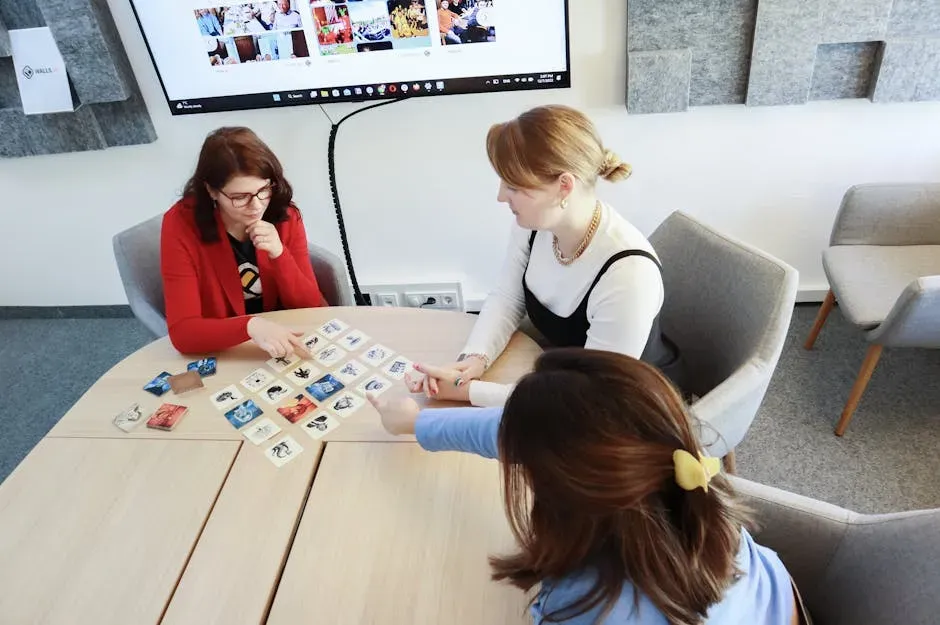
One of the most engaging and effective methods for boosting creative thinking is the game of “associations.” With its simple yet captivating rules, it grabs the attention of participants, challenging them to come up with as many words as possible linked to a chosen starting word. This quest for associations not only enriches the players’ imagination but also taps into their boundless creative potential, improving their quick analysis and synthesis skills.
You can play it alone or with others. Start with any word, “cloud,” say, and branch out rapidly: sky, ceiling, fleece, wool, sheep, farm, harvest, abundance. The goal is speed and volume, not logic. Creativity is commonly defined as the ability to generate original and appropriate ideas or products, with divergent thinking serving as a key and reliable indicator. Divergent thinking involves combining seemingly irrelevant information in novel and meaningful ways. The association game is essentially a workout for exactly that capacity. A few minutes a day of this kind of mental stretching accumulates into something genuinely useful over time.
None of these eight exercises require special talent, expensive tools, or large blocks of time. What they share is a kind of productive friction: each one gently disrupts the brain’s default mode and nudges it toward novel connections. Daily habits can encourage creativity. Remember, this is not strictly spontaneous but rather a way of life. The simplest practices, done consistently, tend to outlast the ambitious ones that never quite get started.