6 Common Phrases Americans Should Avoid Saying Abroad
American English is everywhere. It’s in movies, music, and social media feeds from Tokyo to Toulouse, which creates a deceptive kind of confidence when Americans head overseas. The assumption is that words that work at home will work anywhere. They usually don’t. The United States has one of the most recognizable and globally exported languages on the planet, and young people around the world use American slang to show they’re connected to American pop culture – but that cultural reach creates a false sense of security. Recent survey data from over 1,500 Americans reveals a concerning pattern: roughly a third of Generation Z admits to using slang terms they later discovered were offensive. The problem, as seasoned travelers know well, doesn’t stay at home.
1. “How Are You?” (And Then Walking Away)

Americans greet strangers with “How are you?” and then walk away without expecting any real answer. It’s a social ritual, not an actual question. Back home, everyone understands this unspoken contract. It’s built into the rhythm of daily life, a reflex as automatic as a nod or a wave. Nobody thinks twice about it stateside.
Overseas, particularly in countries like Germany, the Netherlands, or Japan, this can come across as hollow or even disrespectful. When globetrotting, it’s essential to understand that cultural norms can vary dramatically from one country to another, and what may be considered polite or expected behavior in the United States could be perceived as rude or unusual elsewhere. Asking someone how they’re doing and then ignoring their answer is seen as insincere in many cultures, and that insincerity stings. In many European and East Asian cultures, a question is a real question, and a hollow greeting reads less as friendliness and more as performance.
2. “I’m Pissed”

The word “pissed” has very different meanings depending on where you are. In the U.S., it means being angry. However, in the UK, “pissed” means being drunk. This can lead to some amusing misunderstandings if you’re not careful. The confusion isn’t a minor quirk. Tell a British colleague that you’re “so pissed right now” after a stressful meeting, and the reaction you get will tell you everything.
To avoid confusion, it’s best to use “angry” or “upset” when expressing frustration in the UK. The same caution applies in Australia, Ireland, and other English-speaking countries that share the British usage. It’s a small swap that takes almost no effort and saves a lot of awkward backpedaling. Precision in language matters most when you assume everyone already understands you.
3. “Can I Get…” When Ordering
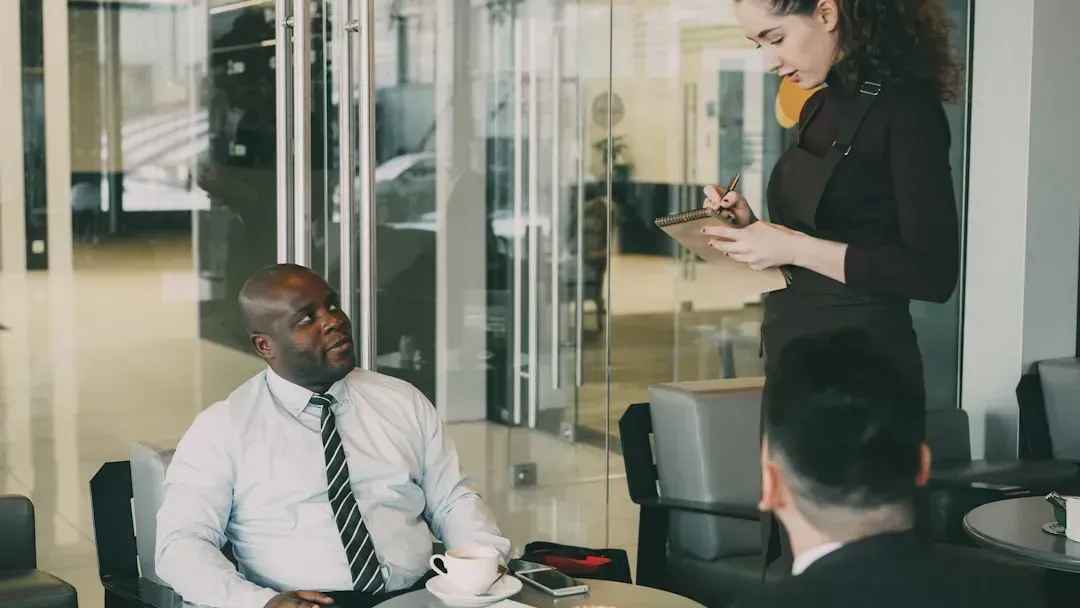
In the United States, it’s common to hear someone say “Can I get a coffee?” or “Can I get the bill?” While this phrase is standard in American English, it can be overly demanding in countries like the UK. The phrasing carries a directness that sounds perfectly normal in a New York diner but can read as impatient or presumptuous in places where service culture is built on more formal exchanges. Context changes everything.
In the United States, asking for the “check” at the end of a meal is standard practice. However, in the UK and many other English-speaking countries, the term “bill” is used instead, and saying “I’ll take the bill” will help you blend in more seamlessly with the local customs and avoid any puzzled looks from the waitstaff. Simple swaps like “Could I have a coffee, please?” or “May I have the bill?” go a long way toward reading as respectful rather than demanding. The words are nearly the same, but the impression they leave is entirely different.
4. “Let’s Have a Quick Powwow”

“Let’s have a quick powwow” is an extremely common way to suggest an informal meeting or chat between colleagues. It sounds breezy and casual, but the cultural weight of the actual word is anything but light. Powwows are social gatherings for ceremonial and celebratory purposes, conducted under strict protocol, and using this phrase to refer to a quick business meeting denigrates the long cultural significance of the powwow. Many Americans use the phrase completely unaware of its origins, which doesn’t make the impact any less real.
In countries with stronger awareness of Indigenous culture and history, including Canada, Australia, and New Zealand, using this word so flippantly is considered genuinely disrespectful and offensive to Indigenous peoples. Awareness around Indigenous language and cultural appropriation has grown significantly in recent years across these nations, and travelers from the U.S. are not immune from local reactions. Replacing “powwow” with “quick chat,” “huddle,” or “check-in” costs nothing and signals real cultural literacy.
5. “That’s So Weird” or “That Seems Backwards”

Americans abroad have a long tradition of reacting to unfamiliar customs with the phrase “that’s so weird” or “that seems kind of backwards.” It feels like light commentary, but it lands like a cultural insult. Calling a country’s culture, lifestyle, or practices “weird” is not okay. Calling a nation or culture “backwards” implies that its customs are behind or beneath the customs of the country you are comparing it to. The phrases feel casual to the speaker and dismissive to the listener, and that gap is where real offense lives.
Some words and phrases have different connotations and meanings in other countries and can therefore be unintentionally offensive. What is considered rude in other countries may be different than what you’re used to. Curiosity is almost always welcomed abroad, but commentary that frames another culture as inferior rarely is. Travelers who replace judgment with genuine questions – “How does this work here?” instead of “That’s so strange” – tend to have far richer and more respectful experiences.
6. “I Was Gypped”

A lot of Americans use “gypped” casually to mean they were cheated or got a bad deal. It’s common, it’s everywhere, and most people have no idea what it actually implies. Saying that you were “gypped” is a phrase to avoid abroad because this word is still rooted in cultural insensitivity and is considered an ethnic slur. The term derives from a deeply derogatory stereotype about the Romani people, and in many European countries where Romani communities have a significant and visible presence, the word carries real weight.
Words like these can carry colonial or ethnically charged undertones that may not be welcome in countries still recovering from or acutely aware of their histories. In places like Romania, Hungary, Slovakia, and across much of Central and Eastern Europe, using this phrase can provoke a reaction that no traveler is prepared for. The fix is simple: say “cheated,” “ripped off,” or “scammed” instead. Each country has its own set of offensive words or mannerisms, and it’s important to educate yourself in order to avoid common cultural misunderstandings.