7 Houseguest Behaviors That Are Quietly Infuriating Your Hosts
There’s something almost poetic about the tension of hosting. You open your home, stock the fridge, fluff the guest pillows, and put on your best welcoming smile. Inside? You may be quietly unraveling. Hosting is one of those social rituals that looks effortless on the outside but costs a surprising amount on the inside.
The truth is, most guests have no idea they’re doing anything wrong. That’s actually the scary part. The offenses that bother hosts the most are rarely dramatic. They’re subtle, repetitive, and almost invisible to the person committing them. Curious which behaviors make it onto the list? Let’s dive in.
1. Not Setting a Departure Date

Honestly, this one tops almost every survey ever conducted on the subject. According to a survey of 2,000 Americans, the two worst houseguest behaviors are failing to set a departure date and going through homeowners’ private belongings. No date means no end in sight. For a host, that is quietly maddening.
A survey of 2,000 general population Americans found that the average host is happy to have a guest stay for up to six days. Any longer than that, and they start to feel overstayed, with roughly a third even beginning to drop hints that it’s time to go.
The tolerance level also varies depending on who the guest is. Hosts tend to give their own children up to ten days and parents around eight days, but in-laws and extended family members are only encouraged to stay for about five days. Think of a departure date like a return ticket on a flight. Nobody boards without one.
From a psychological standpoint, houseguests are stressful to the extent that they disrupt routines and reduce the high degree of control we normally enjoy at home. When their presence restricts our normal uses of our own spaces, stress becomes almost inevitable.
2. Not Cleaning Up After Themselves

A recent survey found that roughly three in five Americans are bothered when guests do not clean up after themselves. That is not a small number. That is the majority of hosts biting their tongues every time a stack of dishes reappears in the sink.
Leaving dirty dishes in the sink, tracking mud through the house, or scattering belongings everywhere can really annoy hosts. It seems obvious, right? Apparently not. The guest who made a mess on Friday and leaves it until Sunday is practically a cultural archetype at this point.
When guests contaminate a host’s territory by leaving their stuff around or not cleaning up after themselves, the host naturally experiences this as a territorial invasion. That might sound dramatic, but environmental psychology research backs it up. Your home is your most personal space. Mess in it feels like a personal offense, even when it isn’t meant that way.
3. Overstaying the Welcome Without Noticing

Here’s the thing about overstaying: it creeps up on everyone. The visit that was supposed to be a weekend turns into a week. The week somehow becomes indefinite. A survey commissioned by Avocado Green Mattress and carried out by OnePoll revealed that two-thirds of Americans have extended the invitation for guests to “feel at home,” only to regret their decision later.
Survey respondents mentioned several reasons for their hosting regrets, including scenarios where guests extended their visits longer than anticipated, which affected nearly half of all respondents. That is a staggering number of hosts silently wishing someone would just leave.
A survey of 2,000 people found that both guests and hosts lose sleep during visits. Researchers found that hosts lose as much as two and a half hours of sleep per night while preparing for and hosting guests. Two and a half hours. Every single night. That adds up fast and explains a lot of forced smiles over morning coffee.
4. Snooping Through Personal Belongings

I know it sounds crazy, but this one happens more than anyone wants to admit. According to survey data, roughly one in four guests admit they would snoop in a nightstand during a stay. Among Gen Z guests, that number climbs even higher, with about three in ten saying they would snoop.
Around one in five self-identified “bad” houseguests confess they have rummaged through their hosts’ personal effects, while only around one in ten “good” guests have done the same. The rationalization is usually curiosity. But for the host, it feels like a genuine violation of trust.
Etiquette experts are clear on this point: just because you are staying in someone’s home does not mean you have the run of the whole house. Guests should keep belongings confined to their room and stick to common areas, avoiding bedrooms, offices, and other private spaces without permission. Simple rule. Surprisingly hard to follow for some people.
5. Ignoring the Household Routine and House Rules

Every home runs on a kind of invisible rhythm. Meals happen at certain times. The household wakes up at a certain hour. There are shoes-off zones, quiet hours, and maybe a no-smoking rule inside. Every home has its own set of rules, whether it is taking off shoes at the door, not smoking inside, or keeping noise down after a certain hour. Guests who ignore these guidelines can really frustrate their hosts, even if the hosts never say so outright.
Every home has its own rhythm, from meal schedules to bedtime habits. When guests ignore these routines, such as staying up loudly late at night or using shared spaces during quiet hours, it disrupts the household’s comfort. Hosts may hesitate to correct these behaviors because they want their guests to feel relaxed. However, the disruption can quietly build frustration over time.
Think of it like this. Joining someone’s home is like joining an orchestra mid-song. You don’t get to suddenly play louder or faster just because you feel like it. Houseguests disrupt routines, reduce feelings of personal control, and make privacy regulation more difficult. They also require significant energy, especially when the relationship isn’t particularly close. Sustaining polite interaction and maintaining a public face in what is normally a private space can be genuinely exhausting for a host.
6. Expecting Meals, Entertainment, and Constant Attention

Let’s be real. Some guests treat a host’s home like a bed and breakfast that comes with a personal tour guide and an around-the-clock chef. Survey respondents highlighted that guests anticipating more meals than initially intended was among the most common reasons for hosting regrets, affecting more than half of all surveyed hosts. More than half. That is not a fringe complaint.
Guests should not expect their host to provide every single thing they need or prefer. If there are medical or dietary restrictions, it is reasonable to communicate them. But for personal preferences, the considerate move is to ask if items can be ordered or delivered, rather than assuming the host will simply provide.
Feeding and entertaining guests, coupled with sharing space and disrupted routines, takes a real toll on hosts. Not getting enough rest is one of the major contributors to host stress during visits. A guest who understands this and brings a bit of self-sufficiency to the visit is the kind of person who will always get a warm welcome back.
7. Showing Up Unannounced or Bringing Extra Guests Without Asking
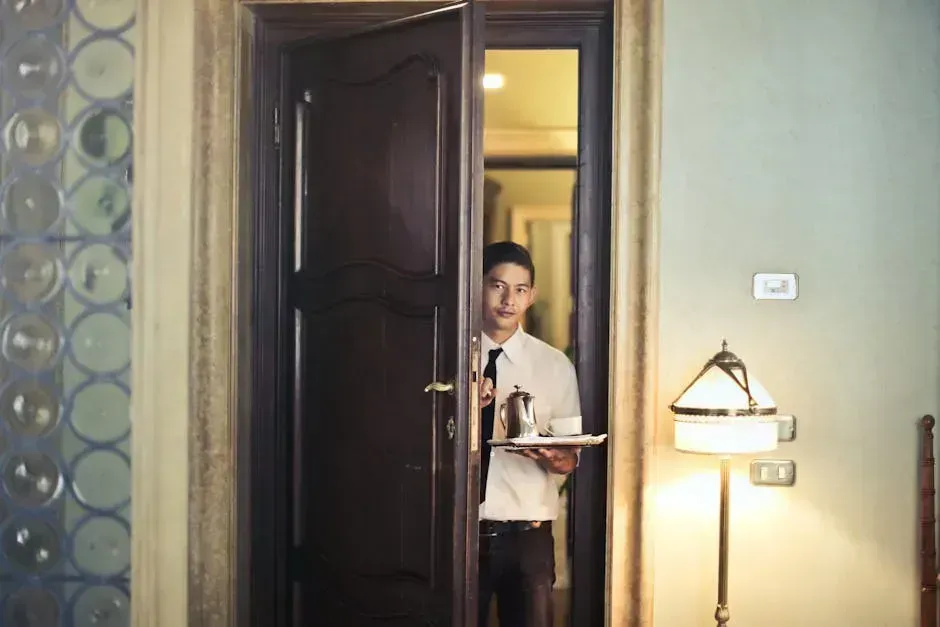
Few things trigger a host’s inner stress response faster than a surprise knock at the door. Or worse, a knock at the door followed by someone they didn’t know was coming. According to a major survey of hosts, two of the worst guest behaviors are failing to set a departure date and showing up unexpectedly. Bringing a guest without checking first also ranked very high on the list of pet peeves.
Also scoring high marks on the list of annoying guest habits were being too demanding with the host, bringing an extra guest without warning, and eating food in the house without asking first. That last one, eating food without asking, is one of those things guests often don’t even register as a problem. Hosts definitely do.
Guests should never assume they can bring an extra person or invite someone to their host’s home without explicit permission. It is a matter of basic respect. A home is not a public venue. These behaviors are often subtle enough that hosts rarely mention them, choosing politeness over confrontation, which means the frustration just quietly accumulates visit after visit, with no one saying a word about it until one day, the invitations simply stop coming.
Being a thoughtful guest is not complicated. It mostly comes down to awareness. Pay attention to your host’s space, their routines, their limits. Ask before you assume. Clean up. And for everyone’s sake, book a return ticket before you arrive. Most hosts genuinely love having people over. They just love it a lot more when their guests make it easy.
What do you think? Did any of these hit a little too close to home? Tell us in the comments.