The Era of the Refill Is Ending: What to Expect as McDonald’s Removes Soda Fountains
Imagine walking into your local McDonald’s, grabbing your drink cup, and filling it up with that perfect mix of Sprite and Hi-C. You linger over your meal, head back for a second pour, maybe even a third. It’s a ritual we’ve taken for granted for decades. That ritual is coming to an end.
The Golden Arches Say Goodbye to Self-Service Drinks
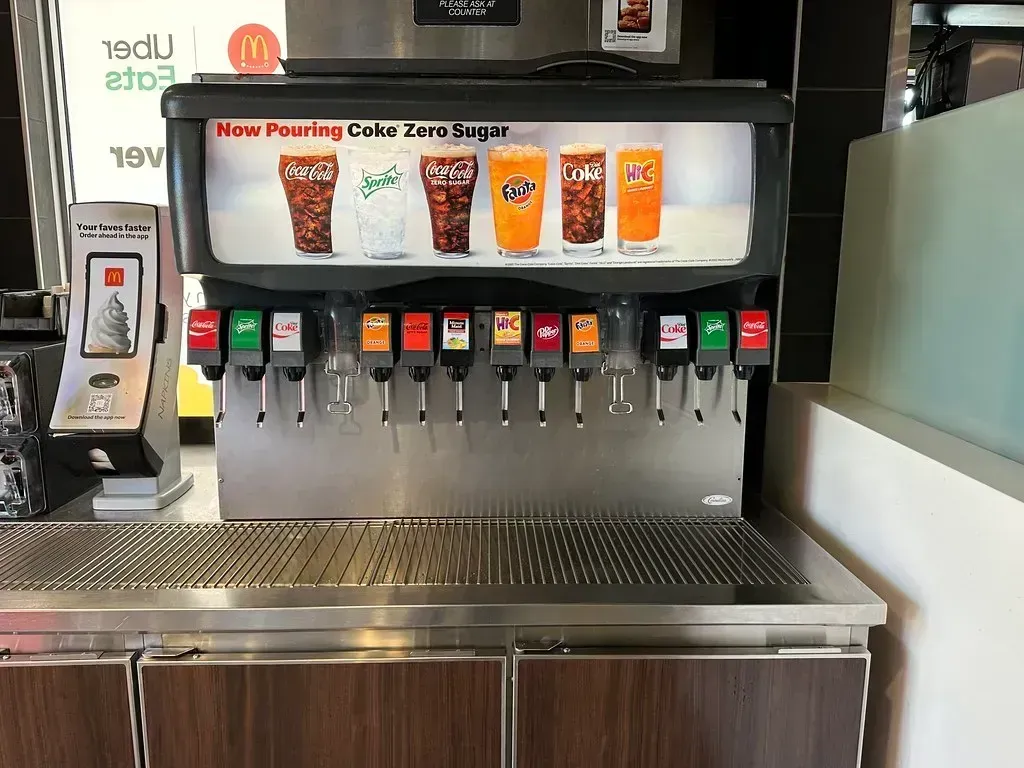
McDonald’s is slowly but surely phasing out self-serve soda fountains by 2032, at which point employees will start pouring beverages, marking a significant shift in how the fast-food giant operates. Over the next 10 years, McDonald’s will remove the self-serve beverage stations that have been a staple of their dining rooms the early 2000s. Several locations in Illinois have already started to phase out self-service soda, with stores in other regions following suit. The transition won’t happen overnight, but the writing’s clearly on the wall for anyone who loves controlling their own ice-to-soda ratio.
Why McDonald’s Is Making This Dramatic Change
The chain says the change is intended to create a consistent experience for both McDonald’s workers and their customers at all ordering points, whether ordering through delivery apps, drive-thrus, or kiosks. Digital sales made up of app, delivery and kiosk purchases accounted for 32% of U.S. sales for the second quarter of 2023. Honestly, with so many people opting for contactless service, maintaining those bulky self-serve stations in increasingly empty dining rooms started to look like a waste of valuable space. Franchise owners mentioned theft prevention, food safety and fewer dine-in customers as contributing factors for getting rid of the stations.
The Real Cost Behind Free Refills
Let’s be real about the money here. If McDonald’s pays 10 cents per beverage, that will cost the company $250,000 a day, which translates to more than $90 million a year, according to estimates by Cornell University professor Alex Susskind. That’s not pocket change, even for a corporation serving millions daily. Other factors playing a role include the possibility of theft, the amount of space these machines take up, and the restaurant’s new emphasis on a relaxed dine-in experience which includes servers bringing meals to the table. It’s hard to say for sure, but the economics of unlimited refills clearly stopped making sense when dining rooms became ghost towns.
Franchisees Have the Power to Charge for Refills
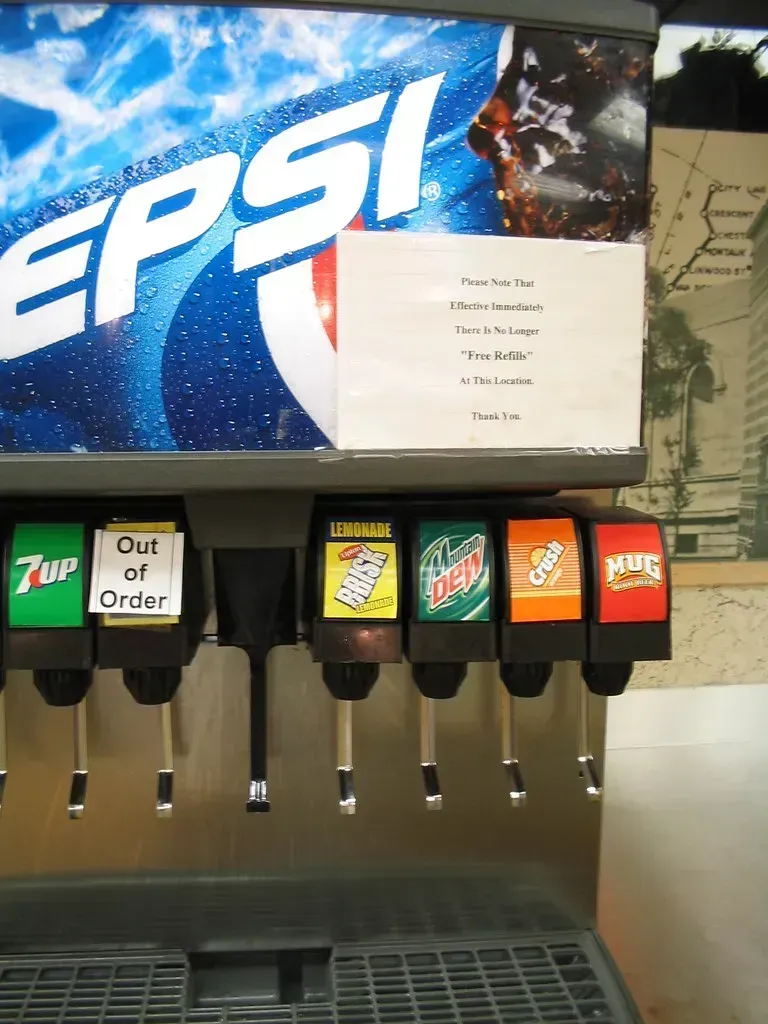
Individual franchises have the power to decide if they will charge for refills, and that’s where things get interesting. An Uber Eats delivery driver recently spotted a McDonald’s location in Pittsburgh, Pennsylvania, that no longer offered self-serve machines and charged customers for refills. Some franchise owners initially stressed that free refills wouldn’t disappear, but the reality on the ground tells a different story. The transition began as early as 2023, and several franchise owners in Central Illinois revealed plans for the drink stations to be completely gone by 2032. Not every location will charge for that second cup, but many already have.
Customer Reactions Are Anything But Neutral
Reaction online has been somewhat mixed, with those in favor of the change concerned with the hygiene of the current system, and those against the switch concerned with personal preference on ice-to-drink ratio and having to ask for refills. Social media erupted with complaints and nostalgic posts about mixing custom soda combinations. A Reddit thread on the matter racked up nearly 350 comments. Some customers lamented the hassle of waiting at the counter for refills that took over five minutes instead of the thirty seconds it would take to pour themselves. Others pointed out the sticky, often poorly maintained condition of those public fountains and actually welcomed the change.
How the Pandemic Changed Everything About Dining In
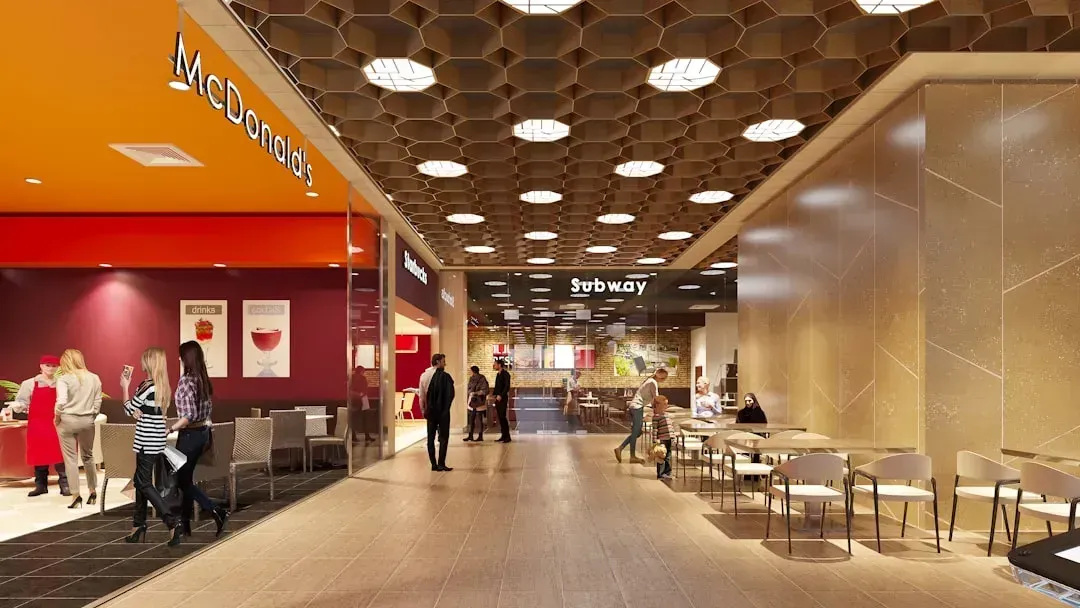
Thanks to the 2020 pandemic, many people now favor making mobile orders and using the chain’s drive-thrus, leaving dining rooms emptier. The shift wasn’t subtle. Self-serve soda machines were largely shut down during the 2020 pandemic, so many crew members are already used to serving beverages from a back-of-house system. What started as a health precaution transformed into a lasting behavioral change among customers. We got used to the convenience of curbside pickup and third-party delivery. Sitting inside a fast-food restaurant started feeling almost quaint, like something from a different era entirely.
The Automated Future Behind the Counter
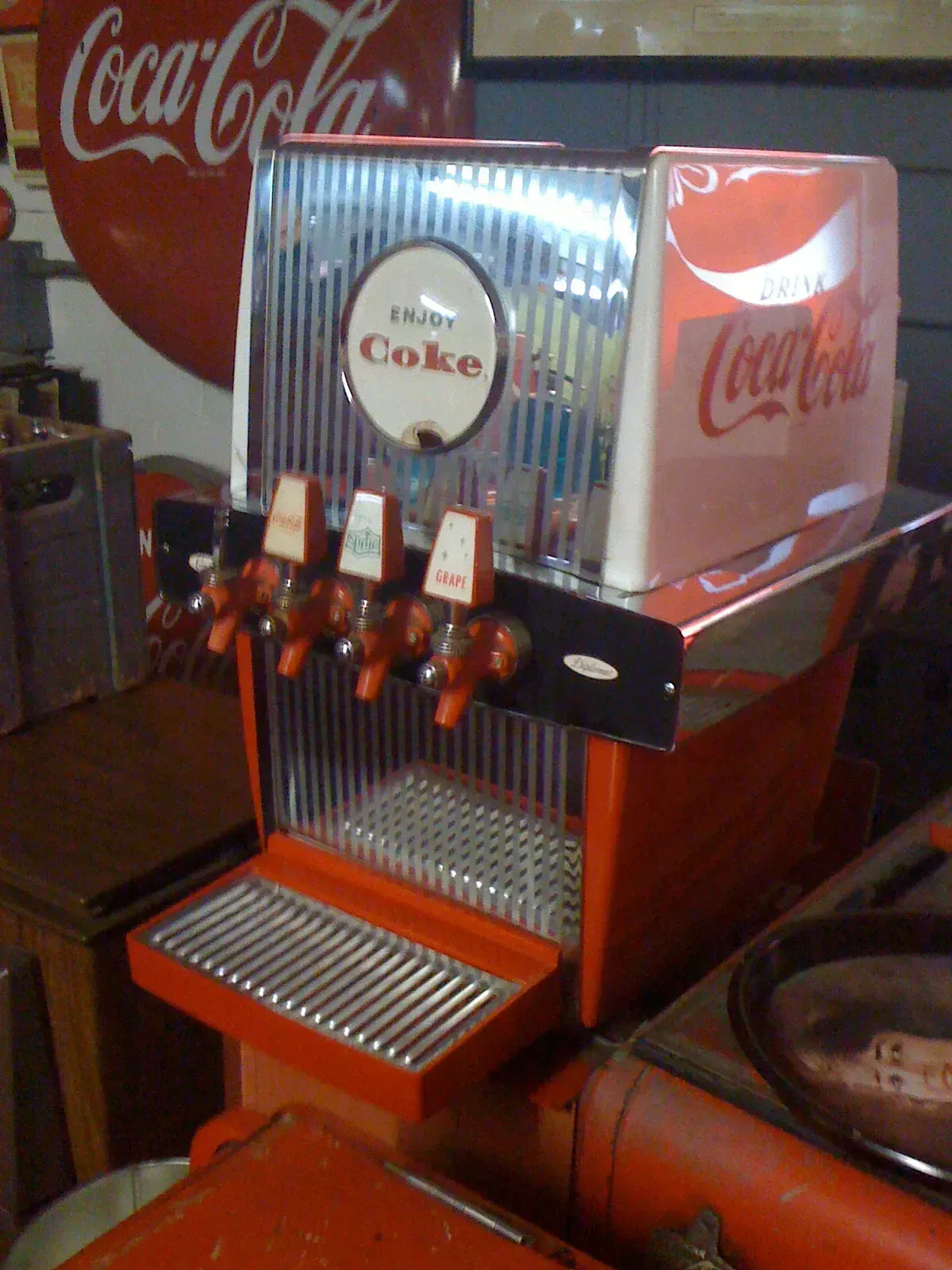
The crew pour system will use automated beverage systems to mechanically fill drink orders and minimizes human contact. These aren’t just employees manually pouring drinks. Technology steps in to standardize the process and speed things up. New automated beverage systems will mechanically fill drink orders, ensuring consistency across all ordering channels. McDonald’s is betting on efficiency here, hoping that automation will streamline operations while simultaneously addressing hygiene concerns that linger from the pandemic era. Some locations have already adopted hybrid systems where staff handle initial orders but customers can still pour their own refills – at least for now.
Other Fast-Food Chains Are Watching Closely
Darren Tristano, CEO of Foodservice Results, said he thinks other fast food chains will follow McDonald’s lead. McDonald’s tends to be a leader in the industry, and very often, when they make big changes, other restaurants follow suit. Customers at other establishments, like Wegmans and Panera Bread, have also noticed that the self-serve machines at some locations have disappeared, and some restaurants at mall food courts in Western New York and Pennsylvania have been putting their soda machines behind the counter. When the biggest player in fast food makes a move this significant, competitors take notice. The industry operates like dominoes sometimes.
The Economic Pressure on Franchise Owners
Franchisees operate on razor-thin margins. The majority of McDonald’s 14,300 restaurants are franchises, and each owner faces mounting costs from labor, rent, food supplies, and corporate fees. The cost of limited-service meals rose 5% over the past 12 months, according to the latest data from the Bureau of Labor Statistics. Free refills represent one of the few remaining areas where franchisees can reclaim some profit. The amount of cleaning and upkeep that’s required for these guest-facing dispensers is pretty significant, including replacing ice, cleaning up messes, and picking up straw fragments. Those maintenance headaches add up, both in time and money.
What This Means for Your Next McDonald’s Visit
Here’s the thing: your experience will depend entirely on which location you visit and who owns it. Some restaurants will maintain free refills through counter service. Others will charge you for that second Diet Coke. In Orange County, one McDonald’s location already removed its self-serve beverage station. You’ll need to approach the counter, wait for staff attention, and specifically request that refill. Free refills aren’t going away entirely – McDonald’s says refills will be allowed for customers who ask – but refilling drinks will be more disruptive with this change. Gone are the days of casually wandering over to the fountain for a quick top-off between bites of your Big Mac. The convenience factor just took a serious hit, and for regular customers who valued that autonomy, it stings.
The removal of self-serve soda fountains represents more than just an operational change. It signals a fundamental transformation in how we interact with fast-food spaces. The golden age of unlimited, self-controlled refills is fading into memory, replaced by a more controlled, automated, and arguably less personal experience. Whether that’s progress or profit-driven pragmatism depends on which side of the counter you’re standing on. What’s your take on losing this bit of fast-food freedom?