The Inheritance Illusion: Why 60% of Millennials Will Receive Nothing
You’ve probably heard the headlines. The Great Wealth Transfer is coming. An estimated $84 trillion is poised to move from older Americans to Gen Xers and millennials, and everyone under forty seems to be holding their breath for their slice of that massive pie. There’s just one problem. The math doesn’t add up. While financial media paints rosy pictures of millennials becoming the wealthiest generation in history, reality tells a starkly different story.
Just 26% of Americans expect to leave behind an inheritance, according to Northwestern Mutual’s 2024 study. Let that sink in. If roughly three quarters of parents aren’t planning to leave anything substantial behind, where exactly is all that wealth going? The uncomfortable truth is that most millennials are banking on money that simply won’t materialize. Let’s explore why this inheritance dream has become one of the biggest financial illusions of our generation.
The Staggering Expectations Gap

One-third of Millennials expect to receive an inheritance, but only 22% each of Gen X and Boomers say they plan to leave a financial gift behind. This isn’t a minor miscalculation. This is a canyon-sized disconnect between what younger generations are counting on and what their parents actually intend to do. 52% of millennials think they’ll get at least $350,000, however, 55% of baby boomers who plan to leave behind an inheritance said they will pass on less than $250,000.
Think about that for a moment. Half of millennials are expecting a check that’s at least one hundred thousand dollars more than what half of boomers are planning to give. 54% of Gen Zers and 59% of Millennials reported that an inheritance is crucial to achieving financial security and retiring in comfort. Yet their parents have entirely different plans for that money. This isn’t just disappointing. For those who’ve built their entire financial future around that windfall, it’s potentially devastating.
Healthcare Costs Are Devouring Inheritances

Here’s something many younger people don’t fully grasp yet. Getting old is expensive. Like, shockingly expensive. A single 65-year-old could need about $157,500 after taxes to cover their health care expenses in retirement, and a couple could need $315,000, according to Fidelity’s estimates. That’s before we even talk about long-term care.
The overwhelming cost of health care for older people means most people in those later generations won’t inherit much, even if their elders seem well-off today. Your parents might have a nice house and a decent retirement account now, but one extended illness or a few years in assisted living can drain those resources faster than anyone imagines. Tack on inflation, high health-care costs and longer life expectancies, and boomers suddenly may be feeling less secure about their financial standing and less generous when it comes to giving money away. They’re not being selfish. They’re being realistic about needing money to live longer than previous generations.
The Wealth Is Concentrated at the Very Top
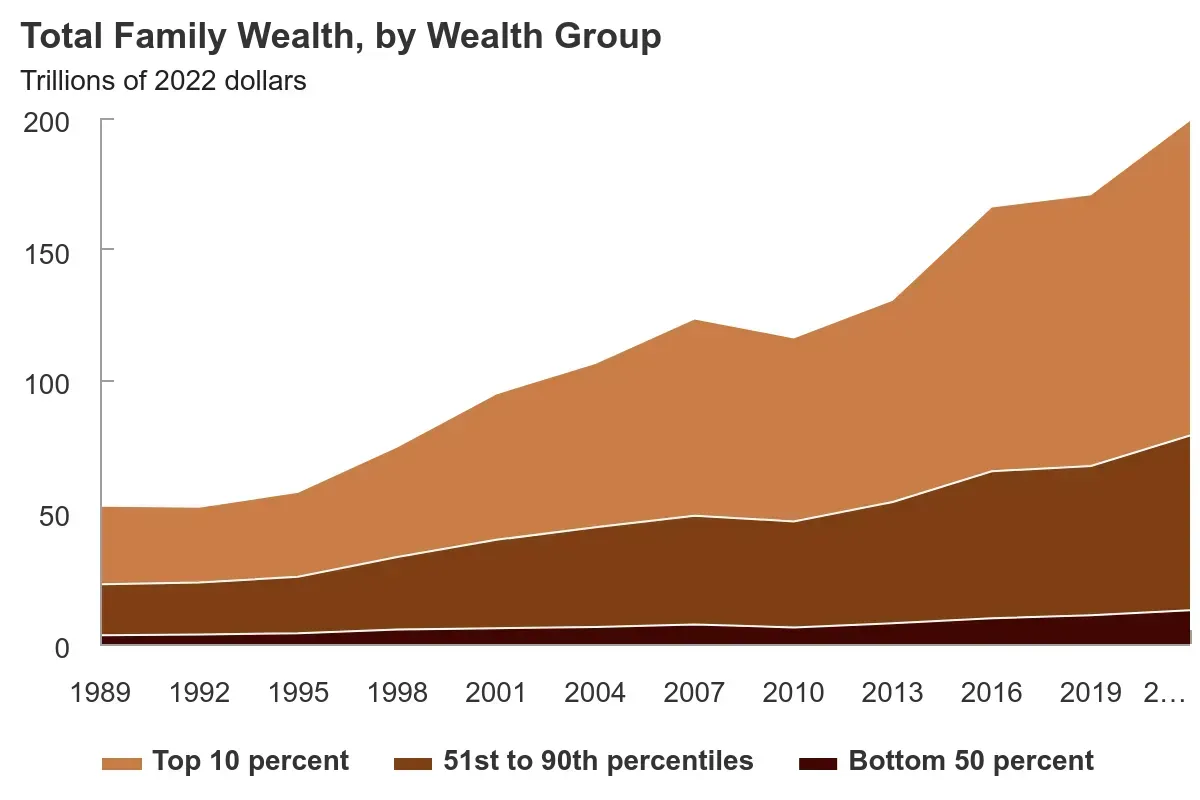
Let’s be real about who’s actually getting this Great Wealth Transfer. 68% of the wealth transferred between 2020 and 2045 will come from U.S. households with at least $1 million in investable assets, and only 6.9% of households have that kind of wealth to begin with. Translation? The rich are leaving money to the already rich.
Wealthy individuals make up 1.5% of all households but constitute 42% of the expected transfers through 2045, approximately $35.8 trillion. Meanwhile, just one-third of white families and about one in every 10 Black families receive any inheritance at all, and more than half of those inheritances will amount to less than $50,000 according to Federal Reserve research. If your family isn’t already in the top financial tier, you’re statistically unlikely to receive anything that will fundamentally change your economic situation. The wealth transfer everyone’s talking about? It’s not trickling down. It’s staying pooled at the top.
Parents Aren’t Communicating Their Plans

This might be the most frustrating part. 90% of parents intend to leave an inheritance to their children but 48% do not have a specific plan in place. Nearly half of parents who say they want to leave something behind haven’t actually figured out how or how much. Nearly half of Boomers who expect to leave an inheritance or gift have not talked to family about their financial plans.
This communication breakdown explains why so many millennials have wildly inaccurate expectations. Parents are just not communicating well with their adult children about financial topics, according to financial planners. Without honest conversations, adult children make assumptions based on their parents’ lifestyle or home value, not understanding the full financial picture. Maybe your parents own a beautiful home, but it’s also carrying a reverse mortgage or earmarked for their own care expenses. You won’t know unless you ask, and most families find talking about money and death incredibly uncomfortable.
Boomers Are Choosing to Spend It Themselves

Here’s a mindset shift that catches many younger people off guard. 44 percent of Boomers don’t have a will, and over half don’t expect to have money left to pass on, whereas another 35 percent plan to spend whatever money that’s left on themselves. Yes, you read that correctly. More than a third of boomers are actively planning to spend their remaining wealth on themselves rather than save it for heirs.
This isn’t necessarily malicious. Many boomers feel they’ve already done enough by raising their children and perhaps helping with college costs. Only 11% of Boomers said leaving something for the kids is their top financial goal. The mentality has shifted from automatically preserving wealth for the next generation to enjoying their retirement years after decades of work. Some view it as teaching their children self-reliance. Others simply feel they earned this money and want to enjoy it. Either way, that inheritance you’re expecting might be funding your parents’ retirement travel and hobbies instead.
Millennials Are Financially Struggling Without It

The cruel irony is that millennials desperately need this money in ways previous generations didn’t. In addition to soaring food and housing costs, today’s young adults face other financial challenges their parents did not at that age. Not only are their wages lower than their parents’ earnings when they were in their 20s and 30s, after adjusting for inflation, but they are also carrying larger student loan balances.
Millennials on average had fewer prestigious careers, such as law and medicine, and were more likely to pursue lower-earning careers like teaching and social work. Millennials also had lower levels of homeownership, and were more likely to have a negative net worth than boomers when they reached the same age, according to University of Cambridge research. Many millennials entered the workforce during the 2008 recession, then faced another economic crisis with 2020 pandemic. They’re behind on virtually every financial milestone compared to where their parents were at the same age, making an inheritance feel less like a bonus and more like a necessity to catch up.
The Racial Wealth Gap Is Widening

We need to talk about how inheritance patterns are deepening racial inequality. Just one-third of white families and about 1 in every 10 Black families receive any inheritance at all, and more than half of those inheritances will amount to less than $50,000, according to the Federal Reserve Bank of Boston. This isn’t just a gap. It’s a chasm.
Inheritance has historically been one of the key mechanisms for building and transferring generational wealth. When only roughly ten percent of Black families receive anything compared to a third of white families, and those amounts are typically smaller, the Great Wealth Transfer isn’t bridging the racial wealth gap. It’s making it worse. Wealthier boomers are more than two times as likely to leave inheritances to their children than poorer Americans, according to Resolution Foundation research. Families that already had wealth are passing it down to children who will then have even more advantages, while families without wealth continue that pattern as well.
What This Means for Your Financial Future

So what should millennials do with this information? First, stop building your financial plan around money that probably won’t come. It’s advisable not to depend on an inheritance for financial security and instead focus on building wealth through thoughtful financial planning and long-term investing. That means maxing out retirement contributions, creating emergency funds, and building assets on your own timeline.
72% of Americans don’t feel confident in their ability to manage a financial windfall anyway, according to Citizens Bank research. Even if you do receive something, you’ll need financial literacy to manage it properly. Focus on developing those skills now rather than waiting for a theoretical future payout. Build your wealth as if no inheritance is coming, because statistically speaking, that’s the most likely scenario for the majority of millennials.
The inheritance illusion has created unrealistic expectations that are setting up millions of people for disappointment. Understanding the reality behind those trillion-dollar headlines is the first step toward taking control of your own financial destiny rather than waiting for wealth that may never arrive.
The Hidden Costs Eating Away at Inheritances

Here’s something most people don’t realize when they’re dreaming about that future windfall: inheritances don’t just magically shrink because of healthcare costs. There are actually several financial vampires draining these estates before anything reaches the next generation. Long-term care facilities can cost upwards of $100,000 per year, and Medicare doesn’t cover most of it. Your parents might have a nice nest egg today, but just three years in a nursing home can completely wipe out a $300,000 retirement account. Then there’s the stuff nobody talks about at family dinners. Elder financial abuse costs seniors $3 billion annually, according to the Consumer Financial Protection Bureau. Scammers, predatory financial advisors, and yes, sometimes even other family members can drain accounts long before you’d ever know there was a problem. Add in divorce among older Americans (which has doubled since 1990), remarriage with new beneficiaries, and estate taxes in certain states, and suddenly that inheritance looks less like a sure thing and more like a lottery ticket. The money’s disappearing faster than most millennials realize, and by the time they find out, it’s already too late to do anything about it.