8 Countries That Eat the Most Cheese and 2 That Rarely Do
Americans put cheese on burgers, pizza, nachos and mac and cheese, so it is easy to assume we sit near the top of the world’s cheese rankings. We don’t. The United States lands at about 17 to 18 kilograms per person in recent tallies, while the countries below run from roughly 19 to 30 kilograms, a gap that can reach a pound or two a month.
Every figure here is a per-person average, and sources count different years and define cheese differently, so treat the order as approximate. The country in first place also serves its cheese at a point in the meal that many American dinners skip, and the countdown starts in a place where a wheel of Gouda is close to a national symbol.
#8 – The Netherlands and Its Wheels of Gouda

The Netherlands turns up at 19.3 kilograms per person in a 2022/23 tally, 19.4 in an older table and 21.6 in a third ranking.1 2 That is roughly 42 to 48 pounds a year, a little under a pound a week.
The same 2022/23 tally gives the United States 16.6 kilograms, so even at the bottom of this group the Dutch eat about six pounds more per person than Americans do. Closing that gap would take only an extra slice or two of cheese a week.
Gouda and Edam are the Dutch names most American shoppers know, and both are semi-firm cheeses that slice cleanly. Towns such as Alkmaar still stage traditional cheese markets with wheels stacked in the square, which is why Dutch cheese looks less like a food and more like a national emblem.3
Dutch cheese is mostly built for slicing and snacking. Next comes a country where cheese often vanishes into the cooking before anyone sees it.
#7 – Italy, Where Cheese Goes Into the Cooking

Italy is listed at 21.7 kilograms in a 2022/23 tally, 21.8 in a 2011 table and 21.5 in a WorldAtlas ranking.2 Those three sit within a few tenths of a kilogram of one another, a steadier picture than most countries here offer.
The Italian cheese list is long: hard grating cheeses such as Parmigiano Reggiano and Pecorino, fresh mozzarella and ricotta, and blue-veined Gorgonzola. Each has its own job in the kitchen, so one household may use several in a week without ever setting out a cheese plate.
Much of that cheese disappears into cooking, grated over pasta, melted on pizza or baked into lasagna. If you cook Italian food, a wedge of Parmigiano Reggiano grated at the stove beats a shaker can, since the flavor is stronger and the rind has a second use.
Italian cheese mostly goes into the pot or onto the pasta. The best-known Swiss cheeses take the opposite route, melted in the middle of the table for everyone to dip into.
[article_quiz]#6 – Switzerland and the Shared Pot of Melted Cheese

Switzerland appears at 22.1 kilograms in a 2022/23 list, 20.8 in the 2011 table and 22.48 in a 2023 figure based on OECD-FAO data. The newer numbers sit above the old one, so a fair summary is somewhere between 21 and 22.5 kilograms.
Gruyère and Emmental are the Swiss cheeses most Americans have met, and both are firm, mountain-style cheeses that melt well. Fondue and raclette put them at the center of dinner, with the cheese warmed at the table and eaten with bread, boiled potatoes or pickles.4
Fast Facts
- Reported range: about 20.8 to 22.48 kilograms per person.
- In pounds, a fair middle estimate is roughly 46 to 50 a year.
- Signature cheeses: Gruyère and Emmental.
- Signature dishes: fondue and raclette, both served warm at the table.
Those dishes use cheese by the potful rather than the sprinkle, which is a reasonable partial explanation for the high yearly average. One pot shared by four people holds far more cheese than any sandwich or taco ever would.
If a fondue set from decades past sits on a high shelf in your kitchen, a winter dinner is a good excuse to bring it down. A heavy saucepan on low heat can melt the cheese just as well, though it won’t stay warm at the table the way a real set does.
#5 – Finland and Its Squeaky Bread Cheese
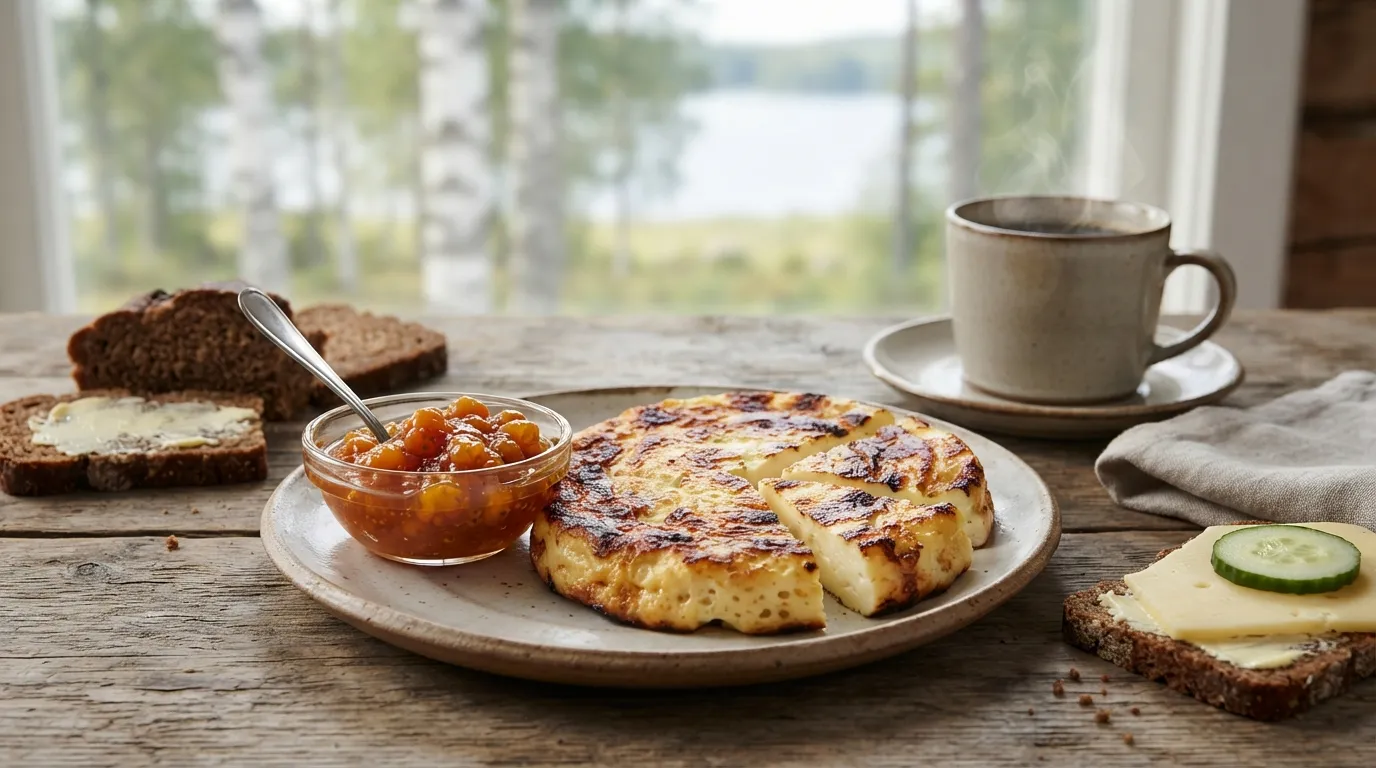
Finland is listed at 22.4 kilograms in a 2022/23 tally and 22.5 in a 2011 table, yet an older WorldAtlas ranking puts it at 27.3.1 2 A gap of nearly five kilograms, roughly ten pounds a year, shows how much the answer depends on where you look.
Leipäjuusto, often called Finnish bread cheese, is a baked fresh cheese with a squeaky bite and a lightly browned surface. It is traditionally served warm, often with berry jam such as cloudberry.
Mild sliced cheese on dark rye bread is a common breakfast across the Nordic countries, which makes a steady daily habit easy to build. A thin slice on every piece of morning bread adds up over a year faster than a cheese plate at a holiday party.
Finland’s number swings with the source. Germany’s raises a different question: how do you count a soft fresh cheese like quark?
#4 – Germany and the Cold Supper Table

Germany is shown at 22.9 kilograms in the 2011 table and 24.7 in the WorldAtlas ranking.1 2 That works out to roughly 50 to 54 pounds of cheese per person each year.
Abendbrot, the traditional German evening meal, is built from bread, cold cuts and sliced cheese, with no cooking required. A meal like that, repeated through the week, gives cheese a steady place on the table without any special occasion.
Quark is a soft, tangy fresh dairy product that Germans eat with fruit or herbs and bake into cheesecake. Whether a statistic counts it as cheese depends on how that source defines the word, so Germany’s number should not be read down to the decimal.
Worth Knowing
- Abendbrot means a no-cook supper of bread, cold cuts and cheese.
- Quark is eaten with fruit or herbs and baked into cheesecake.
- Whether quark counts as cheese changes from one source to another.
- The two figures here, 22.9 and 24.7 kilograms, come from different years and rankings.
Counting rules matter even more in a country as small as Iceland, whose figure moves by several kilograms from one ranking to another.
#3 – Iceland, a Small Country With a Big Range

Iceland is shown at 24.1 kilograms per person in the 2011 table and 27.7 in the WorldAtlas ranking. In a 2013 comparison of 154 countries it ranked highest, at 30.8, with Greece and France following.5
Iceland has a population of about 381,900,6 so its per-person averages rest on small totals compared with a country like Germany. A modest change in the amount of cheese sold moves the average more visibly there.
Skyr, the thick Icelandic dairy product now sold in many American supermarkets, is often described as a fresh cheese even though it is eaten like strained yogurt. Because it goes into breakfast bowls by the spoonful, it shows how far the definition of cheese stretches in some countries.
For a home cook, the safe takeaway is that Iceland sits at or near the top of the lists that include it, with the exact kilograms left open.
#2 – Greece and the Block of Feta in Brine

Greece is listed at 23.4 kilograms in the 2011 table, and in the 2013 comparison it ranked just behind Iceland and ahead of France. The 2011 table flips that picture, with France first and Greece third.1
Feta is a brined white cheese made from sheep’s milk or a mix of sheep’s and goat’s milk, and within the European Union the name is reserved for cheese made in specified parts of Greece by the traditional method.7 American stores often sell feta made elsewhere, which is why the country of origin on the label is worth reading.
Feta goes into salads, into spinach and cheese pies, and onto plates with olive oil and oregano. If you buy it, a block packed in brine beats the pre-crumbled kind, since it stays moister and tastes more like cheese.
France has its own system of protected cheese names, and a very different habit at the dinner table.
#1 – France and the Cheese Course Before Dessert

France is shown at 26.3 kilograms in the 2011 table, 26.2 in a 2022/23 tally and 27.2 in the WorldAtlas ranking.1 2 That is roughly 57 to 60 pounds of cheese per person a year, about 20 pounds more than the American figures near the start of this list.
France is not first in every source, since the 2013 comparison put Iceland on top and WorldAtlas lists Denmark first. It is first in two of the lists and in the top three or four of the others, which makes it the most consistent country in the group.
Why It Stands Out
- Its three figures here sit within about one kilogram of each other, from 26.2 to 27.2.
- It is first in two lists and near the top of the rest.
- Cheese gets its own course instead of being a topping or a filling.
- That course usually features several cheeses served together.
The French cheese course is the likely missing piece. In a traditional meal it arrives after the main dish and before dessert, as a plate of several cheeses with bread and sometimes fruit.8
Eating cheese as its own course changes how you taste it, since there is no pasta or bun in the way. The countries at the top of this list give cheese its own turn at the table, and that may be the biggest difference of all.
Two Countries Where Cheese Is Rare

Japan’s figure is about 2.35 kilograms per person by one OECD-based number, and another list runs as high as 3.77. At the low end that is roughly five pounds a year, about what the average French person gets through in a month by the numbers above.
Japan’s mountainous island setting makes raising cattle difficult, a common explanation for why cheese stayed a small part of the diet. It is a reminder that geography can shape a pantry as much as taste does.
China sits lower still, between 0.1 and 0.4 kilograms depending on the source, which is somewhere between a few ounces and under a pound a year. Reliable figures there are hard to get, and almost all the cheese eaten is processed and mostly imported, while historically the biggest consumers were ethnic minorities such as Mongolians.
Quick Compare
- Japan: about 2.35 to 3.77 kilograms a year, roughly 5 to 8 pounds.
- China: about 0.1 to 0.4 kilograms a year, from a few ounces to under a pound.
- France: about 26 kilograms in the 2011 and 2022/23 tallies, or roughly 57 pounds.
Set beside those two, the leaders show that cheese habits follow kitchens and history more than appetite. Which cheese does your family still refuse to leave off a holiday table, and who first brought it into your kitchen?
- NationMaster Cheese Consumption 2011: https://www.nationmaster.com/country-info/stats/Culture/Food-and-drink/Cheese-consumption-per-capita-per-year
- WorldAtlas Top Cheese Consumers: https://www.worldatlas.com/articles/countries-who-consume-the-most-cheese.html
- Mariners’ Museum Alkmaar Market: https://www.marinersmuseum.org/2023/04/dutch-treat-the-alkmaar-cheese-market/
- Swiss Cheeses and Dairy Products: https://en.wikipedia.org/wiki/Swiss_cheeses_and_dairy_products
- Helgi Library Cheese Consumption: https://www.helgilibrary.com/indicators/cheese-consumption-per-capita/
- Per Capita Cheese Consumption Top 25: https://finance.yahoo.com/news/per-capita-cheese-consumption-country-074650980.html
- Feta PDO Heritage: https://academyofcheese.org/feta-pdo/
- Taste of France Cheese Course: https://tasteoffrancemag.com/featured/understanding-the-cheese-course-when-and-how-to-serve-it/