A Short History of the Drive-Thru Revolution, Report Finds
The drive-thru revolution began nearly a century ago and has transformed into one of America’s most significant dining phenomena. The percentage of total QSR orders coming through the drive-thru has decreased from 83% in 2020 to 65% this year, yet the Drive Thru currently accounts for roughly 70% of our U.S. business at major chains. Today’s fast-paced innovations are redefining what we thought we knew about car-service dining. From vertical food lifts to artificial intelligence voice assistants, the modern drive-thru landscape bears little resemblance to its humble origins at roadside hamburger stands.
The Forgotten Pioneer That Started It All
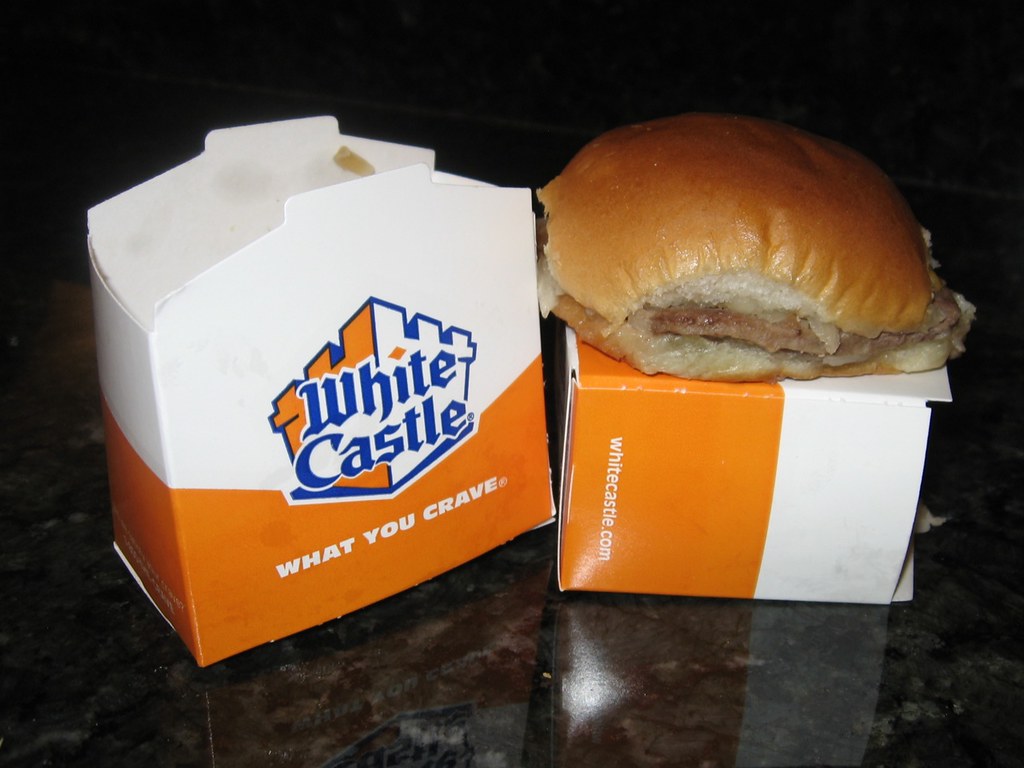
White Castle is widely considered America’s first fast-food chain, but Hogan thinks its legacy has been bulldozed in history because of McDonald’s, which became a household name after businessman Ray Kroc took the brand national in 1955. This slider-based burger chain opened its first location in 1921, while the history of McDonald’s began in 1940. Founded by Walt Anderson and Billy Ingram in Wichita, Kansas, White Castle created the blueprint that every fast-food chain would eventually follow. The company pioneered mass production techniques, standardized operations, and uniform restaurant designs that remain industry standards today.
Two years later, in response to changes in the fast-food industry, the company opened its first drive-through establishment, in Indianapolis in 1979. However, Red’s Giant Hamburg, located along Route 66 in Springfield, Missouri, opened the world’s first fast food drive-thru in 1947, beating White Castle to this particular innovation by more than three decades.
McDonald’s Reluctant Entry Into Drive-Thru Service
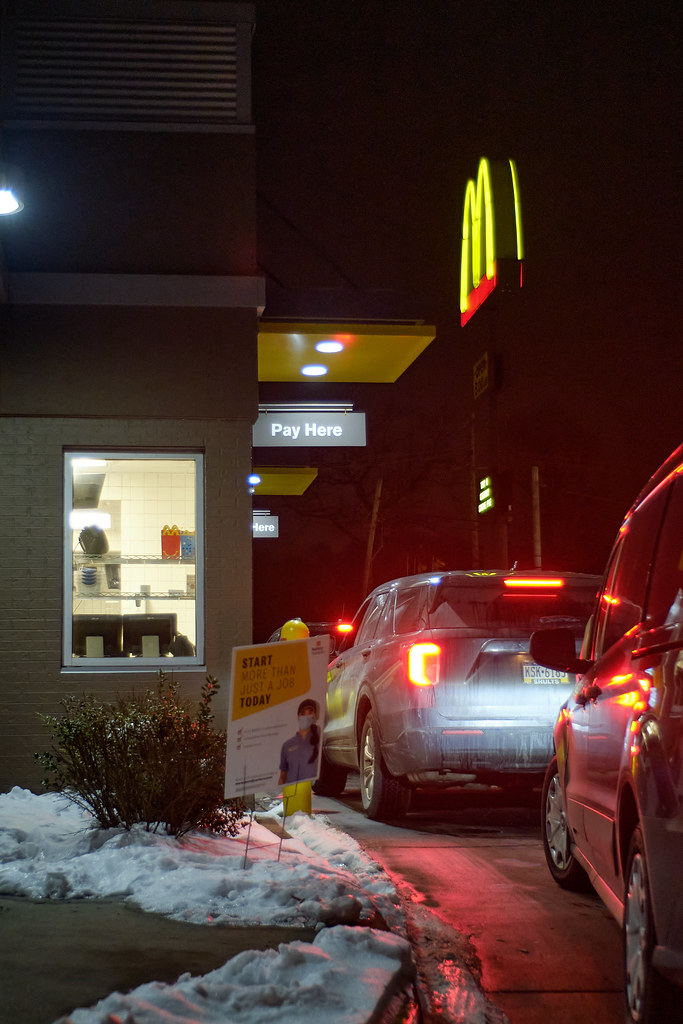
It’s hard to imagine a McDonald’s restaurant without a drive-thru window, but before 1975 that was the reality. Similarly, McDonald’s was late to the game when it came to giving customers the opportunity to order food from the comfort of their car. The golden arches chain had already opened thousands of locations worldwide before embracing this concept. In the early 1970s, McDonald’s red and white tiled stores were being remodeled but rival fast-food chains on the West Coast had already incorporated the Drive Thru into their dining experience. In 1974 the McDonald’s Dallas regional manager brought up the idea to the vice president at the time, Brent Cameron, to add the Drive Thru to our very own McDonald’s restaurants.
The inspiration to move forward stemmed from soldiers located at Fort Huachuca Army Base. The restaurant was experiencing a decline in sales because soldiers had to follow the rule of staying in their vehicles when wearing fatigues or also known as Army uniforms, when off base. This military connection led to The drive-thru opened on January 24, 1975, and quickly increased business. Other locations followed suit, and like ripples in a vat of fry oil, the idea spread across the country.
The Speed Revolution of the Modern Era
Drive-thru performance metrics have become increasingly sophisticated, with brands competing fiercely on service times. The average total time in 2023 was ≈5 minutes 49 seconds (349.3 seconds) – under 6 minutes. From 2022 to 2024, total time dropped from 6:19 to 5:29 as brands optimized processes. The fastest chains now operate with remarkable efficiency. The fastest chains – Taco Bell, KFC, and Arby’s – now take 4–4.5 minutes to complete.
A 30-second reduction per car (from voice-AI) can save 10% of total service time, which is significant when multiplied by hundreds of vehicles daily. These improvements have real financial impacts, as every second saved translates to increased customer throughput during peak hours.
Order Accuracy Becomes Critical Differentiator
While speed matters enormously, accuracy has emerged as equally important for customer satisfaction. In this year’s Report, order accuracy overall hiked to 89 percent, a 3 percent rise from 2023 as operators continue to understand perception can’t always be clocked by a drive-thru timer. However, recent data shows challenges remain. Our research found that order accuracy dropped by 2 percentage points compared to last year, with dinner times proving the biggest challenge. Afternoon visits, on the other hand, achieved the best accuracy rate at 90%.
The connection between service quality and accuracy is becoming clearer through research. Order accuracy was 18 percent higher when there was friendly service compared to not friendly service. This finding suggests that human factors remain crucial even as technology advances.
The Rise of Artificial Intelligence Voice Ordering
AI voice assistants represent the newest frontier in drive-thru technology. Only 4–19% of customers have experienced AI voice takeovers, but data from voice-AI interactions show they are ~29 seconds faster than traditional human operators. Accuracy jumps to ~95% with voice-AI, compared to ~89% average human error rate. Major chains are rapidly expanding these systems. Taco Bell, Wendy’s, and KFC are scaling AI voice ordering across hundreds of lanes in 2024–2025. However, McDonald’s and some locations experienced issues, leading to temporary rollbacks of voice-AI pilots.
Service times were faster at AI-enabled lanes. Upselling was more frequent, opening new paths to revenue. Overall satisfaction was 6 percentage points higher than traditional drive-thrus, even though friendliness scored lower. Still, challenges persist with these systems. 62% of incorrect AI orders were tied to one recurring struggle that often required an employee to step in and complete the order.
Chick-fil-A’s Unique High-Volume Strategy
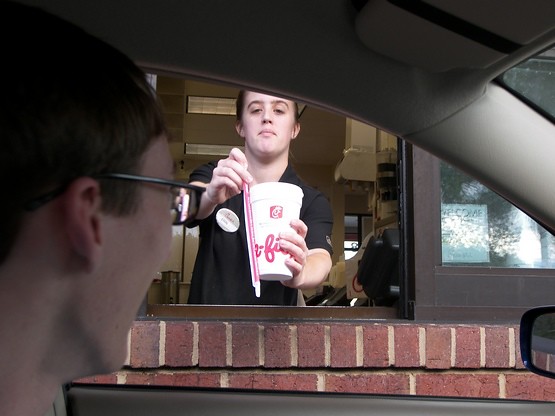
Chick-fil-A operates under completely different principles than other drive-thru chains. In 2024, Chick‑fil‑A averaged 3.44–5.45 cars per lane, depending on the source. McDonald’s averaged 1.48 to 3.13 cars, while Wendy’s ranged from 1.01 to 2.67. This apparent disadvantage masks exceptional performance. A sign of Chick-fil-A’s undeniable busy restaurants – the brand’s standalone drive-thrus pushed average-unit volumes in excess of $9.3 million in 2023. Nearly 1,000 of the 2,049 stores counted were at that number or above.
Freestanding or drive-thru-only units averaged median sales of $9.227 million in 2024. More than 1,000 of the 2,179 Chick-fil-As measured, or 49 percent, beat the average sales volume of $9.317 million. One was at $19.319 million. The brand achieves this through innovative approaches including face-to-face ordering and specialized pickup lanes.
The Two-Story Drive-Thru Revolution Begins
Taco Bell launched the most ambitious drive-thru concept in fast-food history with its “Defy” location. The 3,000 square-foot, two-story pickup spot aims to reduce the challenges of traditional drive-thrus with a system that keeps delivery time down to two minutes or less. The fast-food chain is redefining the drive-thru experience with four lanes, two stories and a food delivery chute. The first of its kind two-story model delivers innovative technology and design, including a proprietary vertical lift to transport food orders items straight from the kitchen to guests. The goal: to deliver orders to hungry guests in two minutes or less.
But here’s the coolest part: food will be delivered by a custom lift system from the kitchen above to the cars down below, with six seconds of travel time each way. The Englers partnered with Minneapolis-based firm Vertical Works to design the lift, alongside Workshop, PD Instore and Engelsma Construction. This innovation addresses the fundamental bottleneck problem that plagues traditional drive-thru operations.
Competition Drives Architectural Innovation
Chick-fil-A responded to Taco Bell’s innovation with its own vertical concept. Chick-fil-A, too, has a double-decker asset it calls the Elevated Drive-Thru concept. Introduced in late summer 2024, the store separates its kitchen above from four lanes below, with a proprietary conveyor system to deliver meals to consumers in their cars. It was built to house 75 vehicles at once. The concept represents a dramatic departure from traditional restaurant design. In some markets, digital orders comprise more than half of sales at Chick-fil-A. “So we know,” she said then, “our customers have an appetite for convenience.” · The headliner of Chick-fil-A’s rendering was the detail it could house 75 cars at once. The kitchen is built above the drive-thru lanes. Meals are expedited to employees who then deliver orders directly to guests in a space protected by the upper level. This way, human interaction remains at the heart of Chick-fil-A’s core experience.
Technology integration extends beyond physical design. Additionally, at select stores, Chick-fil-A says it’s deploying drone technology to take a sky-high approach to studying drive-thru operations. “With the help of drone footage and our teams’ analysis, the operator can use the ‘game film’ to study their restaurant’s drive-thru traffic patterns and improve efficiency during peak times,” Birkeli says.
The Economic Impact of Drive-Thru Dominance
Drive-thru revenue represents a massive portion of the quick-service restaurant economy. In the United States alone, the QSR industry was valued at $289.68 billion in 2024, with over 50% of that revenue coming from drive-thru sales. The global market shows tremendous growth potential. As per Cognitive Market Research’s latest published report, the Global Drive Thru Food market size was $626.16 billion in 2022 and it is forecasted to reach $1120.34 billion by 2030. Drive Thru Food Industry’s Compound Annual Growth Rate will be 5.62% from 2023 to 2030.
According to a recent report by Revenue Management Systems (RMS), the drive-through leads performance by channel, accounting for two-thirds of quick-service restaurant (QSR) revenue. RMS reports that net drive-through sales were up 25% in the first half of 2023, compared to the same period in 2019. Over the same four-year stretch, dine-in traffic declined by nearly 50%.
Emerging Challenges and Traffic Decline
Despite continued innovation, drive-thru traffic faces headwinds. Declines have eased, from -11.9% YOY in 2024 to -5.8% YOY in 2025, but RMS’ recent consumer research found that 1 in 3 consumers plan to reduce their drive-thru visits. Once the star of pandemic dining, the drive-thru is facing a steady traffic decline. Despite new lanes, upgraded tech and faster service times, Revenue Management Solutions (RMS) drive-thru data shows drive-thru visits are down 5%–8% year-over-year in 2025.
The reasons for decline are multifaceted. Our experts point to several factors impacting drive-thru traffic in 2025: Economic pressure: Inflation and higher menu prices have reduced overall restaurant visits, shifting consumer spending. Additionally, consumer preferences are evolving beyond just convenience toward more diverse dining experiences.
Drive-thru technology continues advancing at breakneck speed, from AI voice assistants to vertical food lifts that seemed like science fiction just years ago. The industry that began with Walt Anderson flipping burgers in Wichita has become a sophisticated, data-driven ecosystem worth hundreds of billions globally. Still, the core promise remains unchanged: fast, convenient food service without leaving your car. Whether through underground tube systems or drone-monitored traffic patterns, the drive-thru revolution shows no signs of slowing down.