Countries Running Out of People: The Baby Bust Few Are Discussing – and Why It Matters
South Korea’s Staggering Demographic Collapse

South Korea’s fertility rate plunged to a record low of 0.72 children per woman in 2023, making it the lowest in the world. Think about that for a second. Less than one child per woman means the next generation will be roughly half the size of the current one.
Seoul, with its sky-high housing costs, had the lowest fertility rate of 0.55 last year. The government has spent more than 360 trillion won (roughly $270 billion) on areas such as childcare subsidies since 2006, yet the numbers keep falling. Unless changes are made, South Korea’s population could dwindle from 51.7 million to just 22 million by the end of the century.
A combination of institutional, structural and cultural factors contributes to South Korea’s ultra-low fertility, such as labour market inequality, a family-unfriendly work culture and the high costs of raising children. Young people are caught between demanding work schedules and insufficient wages, making the prospect of starting a family seem impossible.
Japan’s Eighteen Consecutive Years of Birth Declines

The number of babies born in Japan in 2024 fell to 686,061, a 5.7 percent drop from the previous year, marking the first time since 1899 that annual births fell below 700,000. For the 18th consecutive year, deaths outpaced births, resulting in a net population loss of 919,237.
Here’s the thing: Japan has tried everything. The government has unveiled measures such as an expansion of child allowance and free high school education, and a guarantee that couples will receive 100 per cent of their pay when they take parental leave simultaneously. Still, none of it has reversed the trend.
If current trends continue, Japan’s population of around 124 million is set to fall to 87 million by 2070, when 40 per cent of the population will be 65 or over. High living costs, stagnant wages and a strong work culture all deter many young people from starting families. Schools are closing, businesses that cater to children are struggling, and entire communities are vanishing.
China’s Population Freefall After Decades of Growth
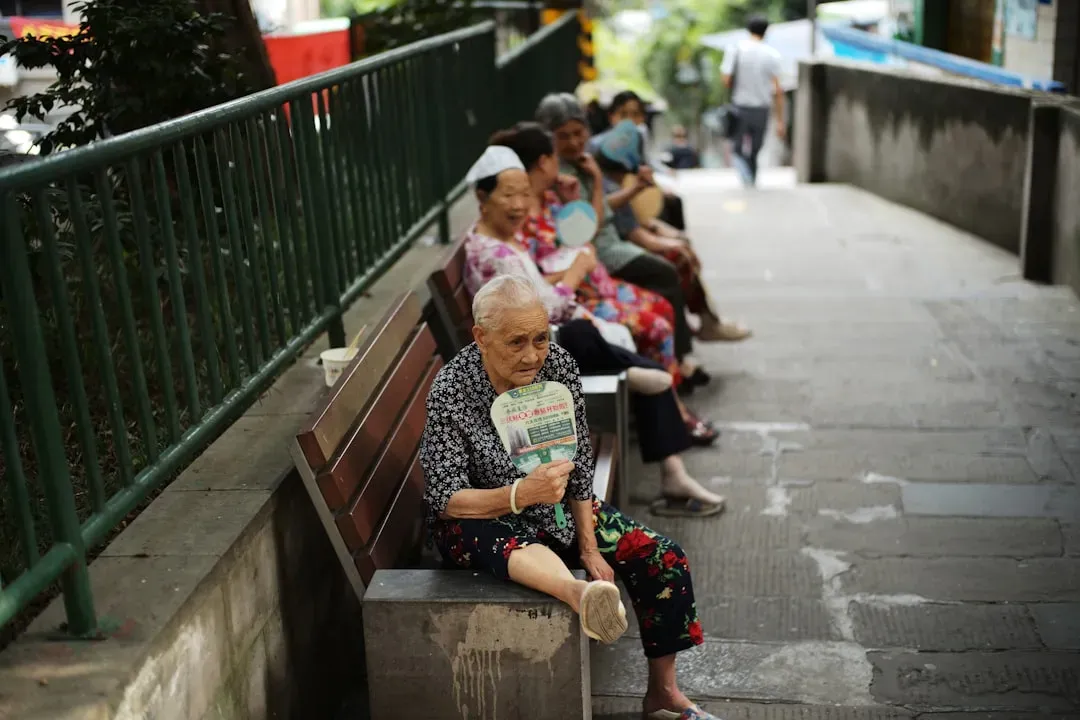
China’s total natural population dropped by more than 2 million in 2023, with the country recording 9.0 million births and 11.1 million deaths. In 2025, China’s population decreased by 3.39 million, with 7.92 million births outpaced by 11.31 million deaths, and the birth rate fell to 5.63 births per 1,000 people.
This is staggering when you consider China was the world’s most populous country for decades. A birth number of about 9 million translates roughly into a total fertility rate of about 1.0, meaning China is heading in the direction of South Korea and facing a far worse population drop than Japan.
The dramatic post-2016 decline in births in China – about 50 percent in the last seven or eight years – is virtually unheard of in peacetime. The decline mirrors patterns seen in countries like Japan and South Korea, where rising education levels, changing attitudes toward marriage, urbanization, and high child-rearing costs contribute to falling birth rates. China’s working-age population is shrinking while the elderly population explodes.
Italy and Europe’s Demographic Winter

There were 369,944 babies born in Italy in 2024, a 2.6 per cent decrease from 2023, marking the lowest number since records began in 1861, after Italian unification, and the 16th year in a row of decline. The fertility rate fell to a record low of 1.18 last year.
Honestly, calling it a demographic winter doesn’t feel like an exaggeration. Italy is the oldest country in Europe with an average age of 48.4 years, with some of the lowest birth rates and fertility rates, and birth rates have declined by 34.2% since 2008, with 379,000 births and 661,000 deaths in 2023. Italy ranks third-last in Europe in terms of fertility rate at 1.2 children per woman in 2023, above Spain (1.16) and Malta (1.01).
Economic and social factors – such as costs incurred for child support or fear of losing a job – hinder couples from having more children. Employment insecurity, particularly the prevalence of temporary work contracts, and low wages also have a heavy impact. Meanwhile, the share of the population over 80 has risen from 3.8 percent in 2004 to 6.1 percent in 2024, while the proportion of children under 15 has dropped to 14.6 percent, with Italy ranking last at just 12.2 percent.
Why This Global Baby Bust Threatens Economic Stability

Let’s be real. In the 1960s, there were six people of working age for every retired person; today, the ratio is closer to three-to-one, and by 2035, it’s expected to be two-to-one. That’s a profound shift.
The new fertility forecasts underscore enormous challenges to economic growth in many middle- and high-income countries with a dwindling workforce and the growing burden on health and social security systems of an aging population. Fewer workers means less economic dynamism, shrinking tax bases, and strained pension systems that were designed for a completely different demographic reality.
A reduction in the share of workers can lead to labor shortages, which may raise the bargaining power of employees and lift wages – all of which is ultimately inflationary. A labor force contraction becomes inevitable when fertility rates remain below replacement levels for extended periods, and countries face shrinking working-age populations unable to support growing numbers of retirees and elderly dependents. Some experts hope artificial intelligence and automation might ease these pressures, though it’s hard to say for sure.
Over the coming decades, global fertility is predicted to decline even further, reaching a TFR of around 1.8 in 2050, and 1.6 in 2100, and by 2100, only six of 204 countries are expected to have fertility rates exceeding 2.1 births per female. What do you think that means for our kids’ generation? We’re entering uncharted territory here, and the consequences will ripple through every aspect of society – from how we care for the elderly to how entire cities are designed.