Hotel Blacklists Explained: 7 Small Mistakes That Can Get You Permanently Banned
Think hotel stays are all about fluffy towels and room service? Not exactly. Hotels operate with a quiet but powerful tool called a Do Not Rent list, sometimes referred to as a blacklist. This internal registry tracks guests who caused trouble during previous visits. The consequences are real and lasting. Once your name lands on this list, getting a room at that property or even its sister locations becomes nearly impossible. Most travelers never give a second thought to the seemingly minor rules they might bend during their stay. Here’s the thing, though: small infractions add up faster than you’d imagine.
Excessive Noise Complaints
Nearly nine out of ten people are less likely to recommend a hotel if they’ve had a bad experience related to noise, according to hospitality management research. Hotels take noise disturbances seriously because they directly impact guest satisfaction scores and online reviews. Six out of ten guests are more likely to leave a negative online review rather than complaining to staff, which means hotels often implement strict noise policies to prevent reputation damage.
Many hotels follow a policy where on the first complaint, you get a copy of the notice and a warning, and on the second complaint, you are evicted with no refund. What counts as excessive noise? It’s not just loud parties. Yelling, persistent loud music, banging on walls, or moving furniture around during quiet hours can all trigger complaints from neighboring guests. Most hotels ask that guests respect quiet hours between 11 PM and 6 AM. Even a seemingly normal phone conversation on speakerphone can carry through thin walls and generate complaints from adjacent rooms.
Smoking in Non-Smoking Rooms
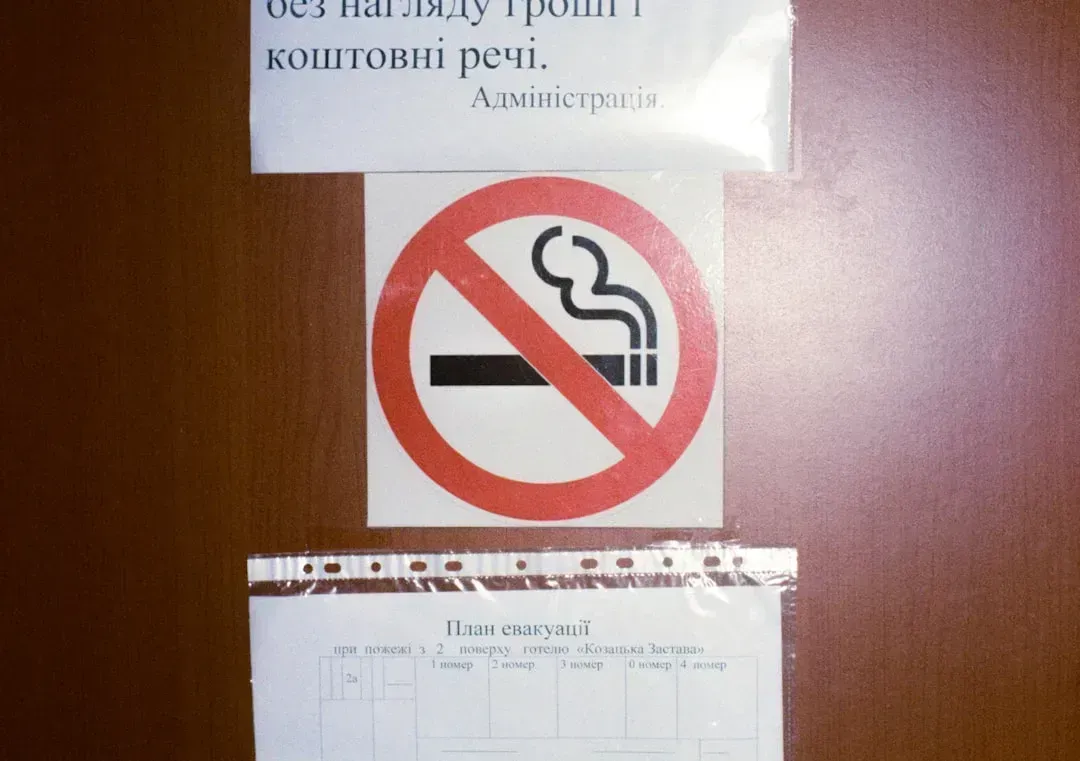
California law required all hotel and motel rooms to be completely smoke-free starting January 1, 2024, reflecting a broader trend nationwide. Eight states require that all hotel and motel rooms be completely smoke-free: California, Colorado, Connecticut, Indiana, Michigan, North Dakota, Vermont, and Wisconsin. Still, the vast majority of hotels maintain strict non-smoking policies even where not legally mandated.
Why such harsh consequences? The answer is economic. Hotels must convert smoking rooms with extensive cleaning, because once you smoke in there, you’ve violated that entire environment and the hotel has to clean it all over again. This involves professional odor removal, deep carpet cleaning, upholstery treatment, and sometimes even repainting walls. Some hotel chains tack on a $200 charge to anyone caught violating the no-smoking policy. Repeat offenders don’t just get charged, they get blacklisted. Hotels can’t afford to keep dealing with the same person damaging their inventory.
Property Damage Beyond Normal Wear

Non-payment, major property damage, theft, threats or violence, or repeated violation of hotel policies are all valid criteria for placement on a Do Not Rent list, according to hotel security experts. Property damage extends beyond obvious vandalism. Breaking furniture, causing water leaks, staining carpets with substances that require professional treatment, or damaging electronics all count.
Some hotels have incurred damages requiring downtime for rooms for repairs or airing out, as well as the need for hazmat removal of items such as hypodermic needles, methamphetamine, used condoms, blood and other bodily fluids, according to reports from Nevada properties that instituted local bans. Hotels document everything meticulously. Housekeeping teams photograph damage immediately after checkout, create incident reports, and forward them to management. The documentation serves as evidence if a guest disputes charges or if the property needs to defend adding someone to their blacklist.
Non-Payment or Chargebacks
Non-payment is a common reason for guests ending up on the do not rent list. This includes leaving without paying, disputing legitimate charges through credit card chargebacks, or providing invalid payment information at booking. Hotels operate on tight margins, and unpaid bills directly hit their bottom line. Chargebacks have become particularly problematic for the industry in recent years.
What surprises many travelers is that disputing a legitimate charge can land you on the blacklist just as quickly as skipping out on payment entirely. Hotels track guests who file frivolous chargebacks claiming services weren’t rendered when they clearly were. Issues can range from non-payment and property damage to disruptive behavior, and hotels maintain these lists as protective measures. Once flagged for payment issues, your reservation attempts at affiliated properties may be automatically declined even if you’re willing to pay upfront.
Violating Occupancy Limits
Hotels ask how many guests will occupy a room for several important reasons. This practice ensures compliance with fire codes and occupancy limits, safeguarding the well-being of guests and staff by avoiding overcrowding. Sneaking extra people into your room isn’t just against policy, it’s a safety violation that hotels take extremely seriously.
Fire marshals set strict occupancy limits based on room size, available exits, and building codes. Exceeding these limits puts everyone at risk during emergencies. Hotels also price rooms based on occupancy because more people means more wear on linens, higher utility costs, and increased housekeeping labor. Guests who repeatedly book for two but bring five create operational headaches. Security footage and housekeeping reports make these violations easy to document. The pattern of deception, more than the act itself, often triggers blacklist placement.
Abusive Behavior Toward Staff

Bad behaviour, such as swearing at restaurant staff or other guests, racism, physical violence, and sexual exhibitionism, can result in you being banned, according to industry publications. Valid reasons include a guest’s disruptive behavior, involvement in illegal activities, or any action that interferes with the operation of the hotel or the safety of other guests. Hotels have zero tolerance for guests who verbally abuse, threaten, or physically assault employees.
Front desk workers, housekeepers, and restaurant staff document incidents of aggressive behavior immediately. Management reviews these reports and makes swift decisions about eviction and blacklisting. Here’s what many don’t realize: you don’t need to hit someone to get banned. Sustained verbal abuse, sexual harassment, racist comments, or threatening language toward any employee can be enough. If a guest is behaving in an obnoxious manner such to alienate other guests or cause a disturbance, wise innkeepers will not risk danger to employees but will simply utilize local police as necessary. Hotels would rather lose your business permanently than expose their staff to hostile treatment.
Fraudulent Bookings or Identity Issues
Hotels may refuse service for non-payment, lack of valid identification, disruptive behavior, health and safety risks, and violations of hotel policies such as smoking in non-smoking rooms. Using fake names, providing fraudulent identification, booking with stolen credit cards, or creating reservations under false pretenses will get you blacklisted immediately. Hotels verify identities for legal compliance, safety, and fraud prevention.
Modern platforms can instantly check a guest’s ID against a shared database of banned individuals and alert staff in real time if there’s a match, according to hotel technology systems. Some properties use ID scanning technology at check-in that flags suspicious documents or compares guest information against their internal Do Not Rent databases. Attempting to circumvent a ban by using alternate names or booking through third parties rarely works. There’s no law preventing hotels from sharing their do not rent list with other properties, and many chains maintain unified databases across all locations.
The mistakes that land travelers on hotel blacklists aren’t always dramatic. Sometimes it’s the accumulation of smaller infractions, the pattern of disregard for policies, or a single serious violation. The duration a person stays on the do not rent list varies from hotel to hotel, with some removing guests after a certain period while others keep them indefinitely. Your best strategy remains straightforward: respect property, follow posted rules, treat staff courteously, and pay your bills on time. Those basics will keep you off the list and ensure smooth check-ins for years to come. Have you ever witnessed someone getting kicked out of a hotel?