10 Phrases Restaurant Staff Use to Quickly Identify a Low-Spending Customer
There’s a whole secret language happening right under your nose every time you sit down at a restaurant. Servers, hosts, and bartenders have developed an unspoken vocabulary over decades – a set of coded phrases that move like invisible signals across the floor. You order your meal, you sip your water, and you have no idea that someone behind the scenes has already sized you up.
It’s not malicious, honestly. It’s survival. Restaurant employees continue to rely heavily on gratuities, and in 2024, the average full-service worker earned about $23.88 per hour, with base pay accounting for roughly 43% of total income. Every table represents real income. So let’s pull back the curtain and look at the ten phrases that quietly signal one thing: this table probably won’t spend much. Be prepared to be surprised.
1. “They Asked for Just Water”

This one is perhaps the most universally understood signal in the restaurant world. The moment a table declines a beverage menu and requests only tap water, seasoned servers immediately recalibrate their expectations for that check. It’s not judgmental per se – it’s just a pattern staff see dozens of times a shift.
Beverages are one of the highest-margin items on any menu, so a “just water” table removes a significant revenue stream before the appetizers are even discussed. Brands like Texas Roadhouse and The Cheesecake Factory have noted that diners are managing checks closer than previously, whether that means forgoing an alcoholic drink or exploring more price-conscious tiers of the menu. Servers know this. They see it play out daily.
In December 2024, full-service restaurant average ticket size declined by 7.4% year-over-year, suggesting that while more people may be dining out or visiting, they’re often trading down to affordable items or skipping extras. Skipping the drink order is one of the first and clearest signs of that trade-down behavior.
2. “Table’s Been Scanning the Left Side of the Menu”
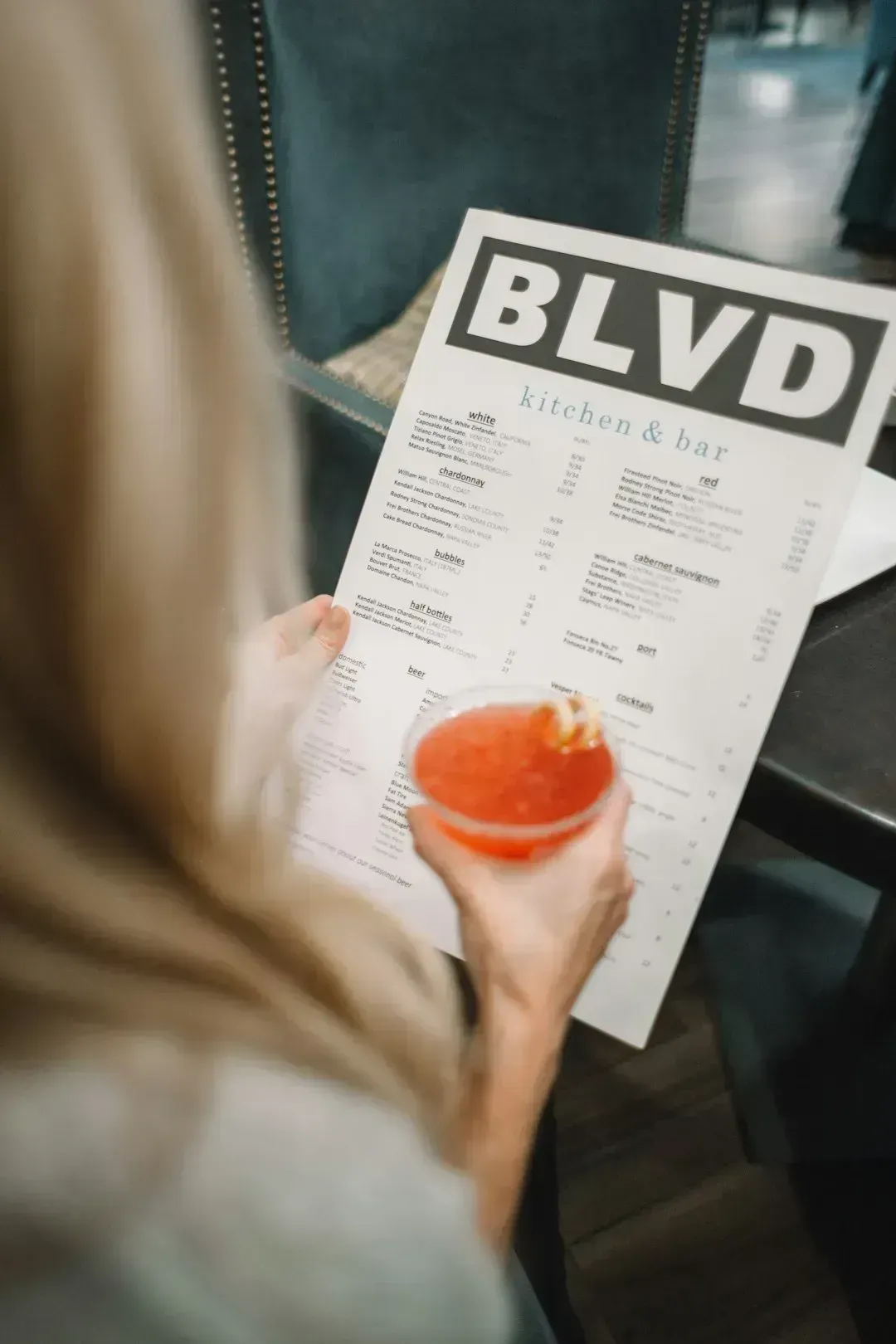
Here’s the thing most diners don’t realize: trained servers watch your eyes. When guests consistently scan the right column of a menu – the prices – instead of lingering on descriptions, it’s a tell. But when eyes drift almost exclusively to the left side, staff read it as someone building a meal around the cheapest options available.
This isn’t guesswork. One of the most common types of restaurant customers is the Value Seeker. These diners are careful about how much they spend and want to feel like they are getting a good deal. They are drawn to promotions, combo meals, discounts, and specials. For them, the price is often just as important as the food itself.
Forty-three percent of restaurant operators say consumers were more focused on price in 2025 compared to 2024. So that menu-scanning behavior has only become more common. Servers aren’t wrong to notice it – they’re simply reading a very real trend.
3. “They’re Sharing a Plate”
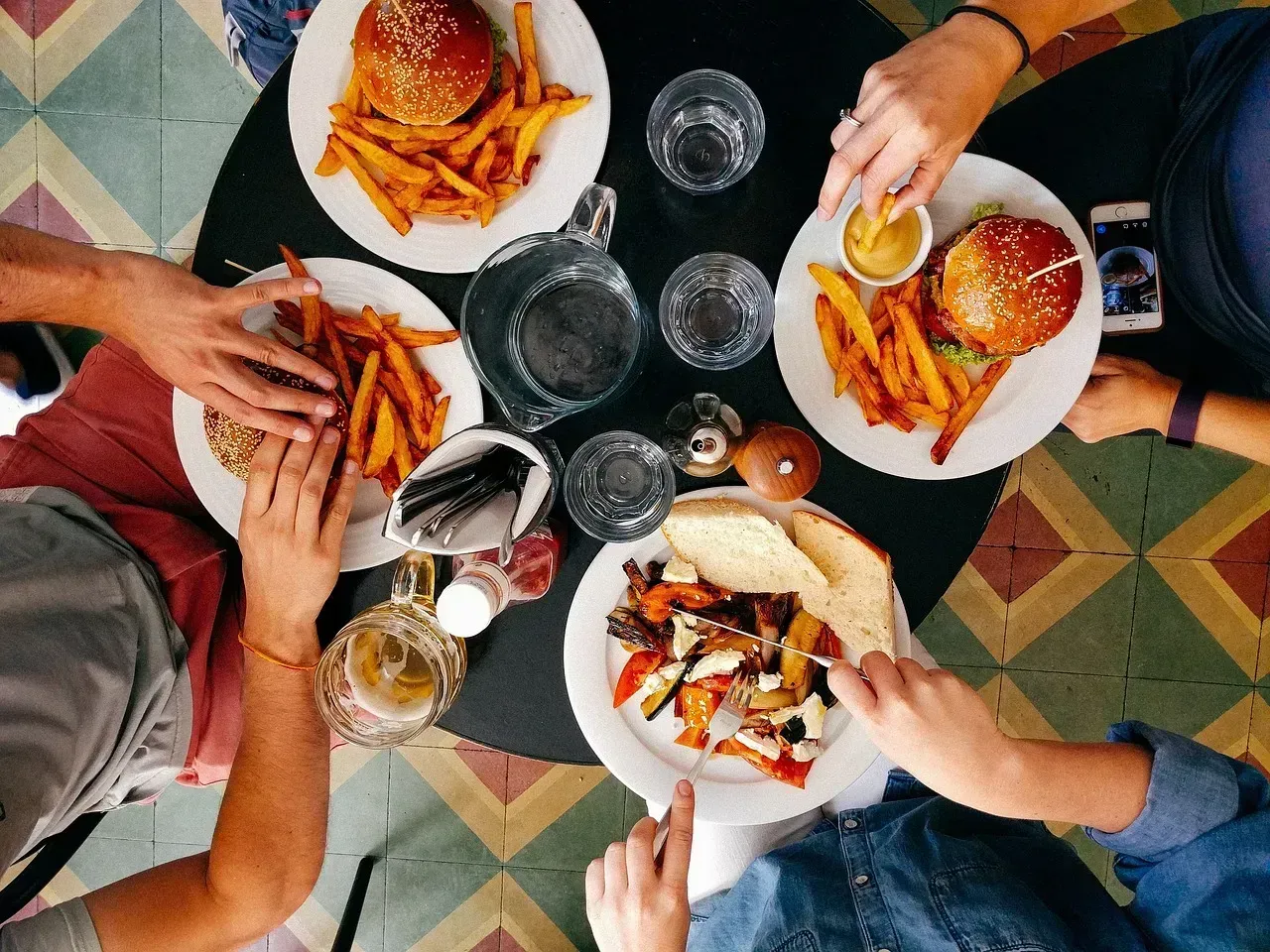
Two adults, one entree. It happens more than you might think, and it’s become noticeably more common in recent years. When a server reports back to the host stand or kitchen that a table is splitting a single dish, it immediately signals a low-spend table that will likely occupy a seat for the same amount of time as a full-spend customer.
Twelve percent of restaurant operators report customers shared meals more frequently in 2025. That number is small in percentage terms but enormous in real-world impact across thousands of covers per week. Think of it like two people taking up a parking spot with one compact car – technically fine, but it costs the lot revenue.
The economics of table turnover make this phrase particularly loaded. A shared plate means a halved ticket, often no extra drinks, and frequently no dessert. Experienced front-of-house staff will mention it quietly to their manager, not to discriminate, but to manage floor expectations for the evening.
4. “They Asked About the Happy Hour Special”
Nothing wrong with hunting for a deal – honestly, most of us do it. But in restaurant staff language, a table that opens with questions about specials, discount windows, or promotional pricing is flagged as unlikely to order freely from the full menu. It signals the customer came in with a ceiling already set in their mind.
If a customer regularly uses coupons, buys items during happy hours, or picks value combos, they likely belong to the Value Seeker group. According to a study by the National Restaurant Association, about 60% of consumers say they are influenced by promotions when deciding where to eat. That’s a massive portion of the dining public, so servers aren’t surprised – they’re just prepped.
Yelp’s 2025 State of the Restaurant Industry Report found that searches for “cheap eats,” “value meal” and “meal deal” have spiked year over year, 21%, 22% and 117% respectively. Customers are increasingly deal-focused heading into a visit. The server asking about specials is essentially the live, in-person version of that Yelp search.
5. “Verbal Tipper at Table Six”

“Verbal tipper” is a real piece of restaurant slang, and it stings. A “verbal tipper” is a very enthusiastic guest who will praise you to the skies in lieu of tipping you actual money. They tell you it’s the best meal they’ve had in years, they rave about the service, they promise to come back and ask for you personally. Then they leave less than ten percent – or nothing at all.
Servers learn to identify these customers early in the meal. Excessive complimenting mid-service is one red flag. Another is the customer who bonds intensely with the server as if building a friendship rather than engaging in a service transaction. It sounds cynical, I know. But it’s a pattern that repeats itself with enough frequency to have its own industry term.
Just 35% of Americans now say they typically leave a 20% tip, down from 37% last year, reflecting tighter budgets and rising menu prices. With tipping already declining broadly, verbal tippers have become an even more frustrating reality for service workers who depend on gratuity for their income.
6. “They’re Camping”
When staff say a table is “camping,” it’s one of the more colorful bits of restaurant shorthand – and it carries a clear financial subtext. Campers are customers who have paid their check but are not leaving, making it impossible to make new money until they leave. Campers can also be people who want to sit at a table but don’t plan on ordering anything other than their free water, or maybe they already got one drink and are ‘fine.’
In a busy restaurant where table turnover directly determines nightly revenue, a camping table is a real financial loss. Low-spending customers tend to camp longer, partly because there’s less social pressure to leave when you haven’t ordered much, and partly because they may feel they’ve “earned” the seat with a minimal order. Think of it like renting a hotel room and using every single amenity – except the room only cost them eight dollars.
Customers shorten their dwell times when they feel uncomfortable. For example, if other diners are loud or disrespectful, or service is poor or slow, customers will eat and run and likely avoid returning. Interestingly, low spenders who are camping tend to be impervious to those subtle cues. Staff know it, and that phrase gets whispered across the floor regularly.
7. “They Already Asked for Separate Checks Before Ordering”
Asking for separate checks isn’t inherently a low-spend signal. But asking for them before a single item has been ordered – before anyone has even looked at the menu – tells staff something specific. It often means everyone at the table is operating under their own strict budget, which means no one is buying a round for the group, no one is suggesting a shared appetizer, and the server will be processing three or four small bills instead of one healthy one.
It’s hard to say for sure, but experienced servers report this as one of the earliest and most reliable predictors of a modest check. Many diners are dining out less and when they do, they’re proving more sensitive to price hikes. They’re also seeking ways to save, from direct ordering to basket managing. Pre-emptive separate check requests are a live manifestation of that basket management.
Despite caution around money, consumers are in a position to spend right now – but only for the right experience. When a table enters with financial guardrails already up, the server’s job of creating that “right experience” for upselling becomes significantly harder. And they feel it.
8. “That’s a Coupon Table”
Arriving with a printed coupon, a Groupon deal, or a third-party discount voucher is one of the most direct and unmistakable signals in the entire restaurant economy. Staff know before the meal begins exactly what the ceiling of that check will be, and they know tipping will often be calculated on the post-discount total rather than the full bill – which is already going to be low.
You can identify Value Seekers by looking at sales data. If a customer regularly uses coupons, buys items during happy hours, or picks value combos, they likely belong to this group. In practice, servers identify these customers the instant the coupon hits the table, not through a POS report but through direct observation.
Consumers continue to seek value when choosing to spend their dining-out dollars, and that trend will likely last into the foreseeable future. Yelp’s 2025 State of the Restaurant Industry Report found that searches for “cheap eats,” “value meal” and “meal deal” have spiked year over year. The coupon table isn’t going away anytime soon – in fact, it’s growing. Servers have simply gotten better at spotting it early.
9. “They Ordered Off the Kids’ Menu Without Kids”
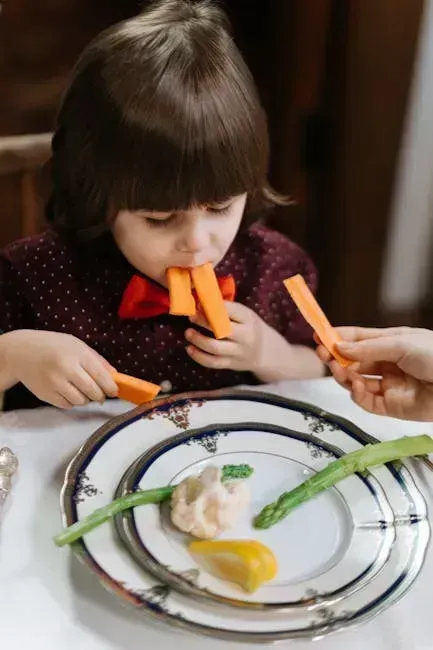
Let’s be real – ordering a kids’ meal when you’re an adult is technically allowed at most establishments. Nobody is going to throw you out. But it is a phrase that circulates quietly among service staff, and for good reason. Kids’ menu items are priced for small appetites and even smaller wallets, and an adult ordering one signals a deliberate effort to minimize spend.
Ten percent of restaurants say customers are choosing cheaper menu items more often. That behavior isn’t limited to scanning value sections of the adult menu – it extends to ordering from entirely different price tiers of the establishment. The kids’ menu at a mid-range restaurant might top out at six or seven dollars. An adult occupying a four-top for ninety minutes on a seven-dollar ticket is a math problem for any server.
It’s not necessarily a moral failing on the customer’s part – people have budgets, and that’s fine. But within the internal language of a restaurant floor, the phrase travels fast, and it shapes how that table is approached for upsells like dessert or a second round of drinks.
10. “Table Asked to ‘Just Split the Dessert'”
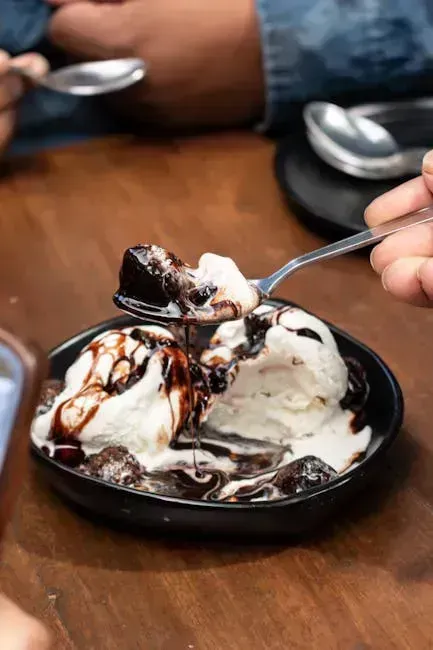
You made it all the way through the meal, and now the server offers dessert. A table that immediately responds with “we’ll just split one” has given the staff a final, conclusive data point: this is a low-spend experience from start to finish. It signals price consciousness maintained consistently across every course, from water to the last shared spoonful of tiramisu.
Dessert prices at restaurants rose by 3.2% between 2023 and 2024, leading to fewer customers ordering sweets. That broader statistical reality gives context to the behavior – people are genuinely more reluctant to add a dessert at full price. Splitting one is a middle-ground compromise that staff recognize immediately as the low-revenue finale of a low-revenue meal.
About 53% of diners believe a small tip is a way to reprimand an employee for poor service, and 69% believe the practice of tipping leads to better overall service. From the server’s perspective, a table that managed every dollar carefully throughout the meal is also unlikely to tip generously at the end – which is the piece of this equation that matters most to the person who just spent an hour serving them. It’s a full-circle moment that the phrase “they just split the dessert” captures perfectly.
The restaurant floor operates on a language most diners never hear. These ten phrases aren’t born of cruelty – they’re born of economic reality, experience, and the very human need to read a room. When customers choose a restaurant, they are doing so in a calculated and fiscally reasonable manner. Understanding this and respecting customer dollar capture is key to getting customers to return. Servers understand that too – they’re just doing the same calculation from the other side of the table. What do you think? Did any of these surprise you? Tell us in the comments.