3 Well-Known Explorers Who Vanished Without a Trace
Throughout history, a handful of explorers have captured the world’s imagination not just through their achievements, but through their final, unexplained disappearances. These were not reckless amateurs. They were seasoned adventurers, national heroes, and celebrated figures who one day simply ceased to exist, leaving behind mysteries that researchers, governments, and archaeologists are still actively trying to solve. Their stories refuse to go away.
1. Percy Fawcett – Lost in the Amazon Chasing a Phantom City
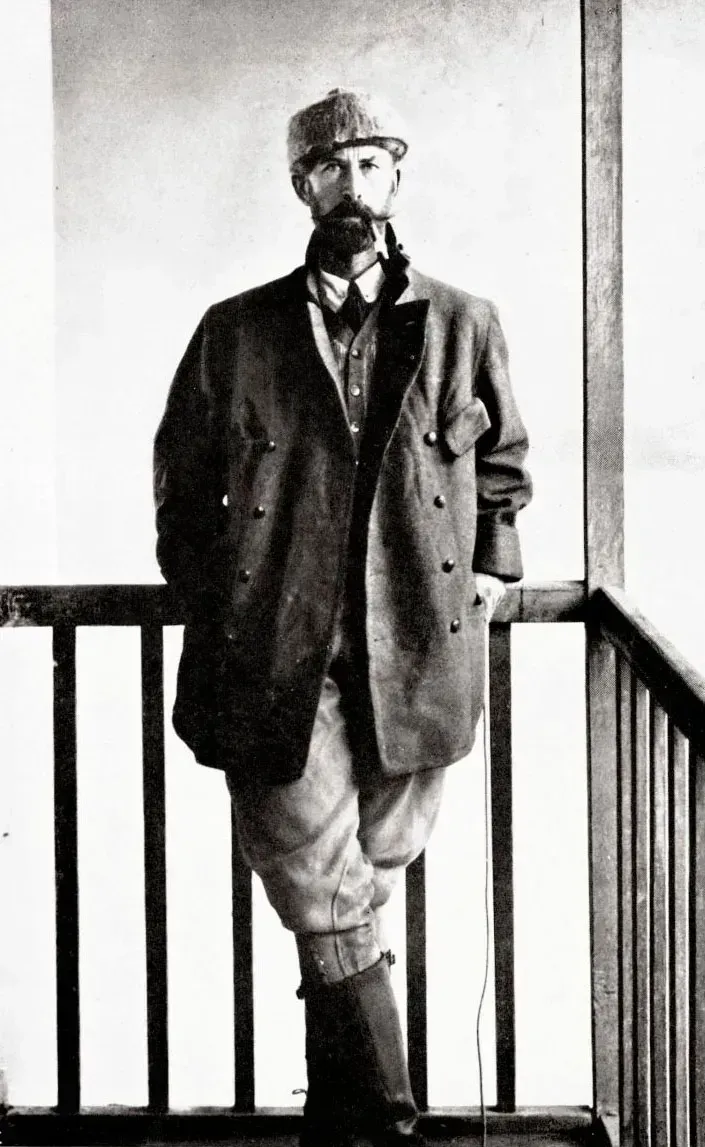
Percy Harrison Fawcett, born August 18, 1867, was a British geographer, artillery officer, cartographer, and explorer of South America. He disappeared in 1925, along with his eldest son Jack and Jack’s friend Raleigh Rimell, during an expedition to find an ancient lost city he believed existed in the Amazon rainforest. Fawcett had led seven successful expeditions to the Amazon between 1906 and 1924, initially funded by the Royal Geographical Society, with later trips sponsored by newspapers and other businesses. His reputation was legendary, and the public hung on every dispatch he sent from the jungle.
After one last message on May 29, 1925, in which Fawcett told of preparing to enter uncharted territory, the three men disappeared . In the years after Fawcett vanished, thousands of would-be adventurers mounted rescue missions, and as many as 100 people eventually died while searching for some sign of him in the darkness of the Amazon. In 1951, Orlando Villas-Bôas, activist for indigenous peoples, received what were claimed to be the actual skeletal bones of Fawcett and had them analyzed scientifically. The analysis supposedly confirmed the bones were Fawcett’s, but his son Brian refused to accept this. Later scientific analysis confirmed that the bones were not Fawcett’s.
The oral account of the Kalapalo tribe said that Fawcett and his party had stayed at their village and then left, heading eastward. The Kalapalos warned Fawcett and his companions that if they went that way they would be killed by the “fierce Indians” who occupied that territory, but Fawcett insisted upon going. The Kalapalos observed smoke from the expedition’s campfire each evening for five days before it disappeared, and were sure the fierce natives had killed them. Fawcett’s fate may never be known for sure, but in recent years, evidence has shown that his theory about a sophisticated jungle city was not a total fantasy. Many archaeologists now believe the Amazon was home to dozens of bustling settlements in the centuries before the arrival of Europeans. Excavations have revealed the ruins of garden cities with earthen defensive walls, complex road networks, and enough space for thousands of inhabitants.
Renowned British neurologist Dr. Andrew Lees, author of “Brazil That Never Was,” had a lengthy exchange with playwright Misha Williams, who obtained access to all of Fawcett’s papers. Lees’s research of the Fawcett archive corroborates Williams’s assertions that Percy Fawcett had intended to pursue the “grand scheme” of setting up a cult in the wilderness. His exploits in the Amazon inspired books and Hollywood movies – Indiana Jones is even purportedly based on Fawcett. His disappearance remains one of exploration’s most enduring unsolved riddles.
2. Amelia Earhart – The Aviator Who Vanished Over the Pacific
front
back, Public domain)
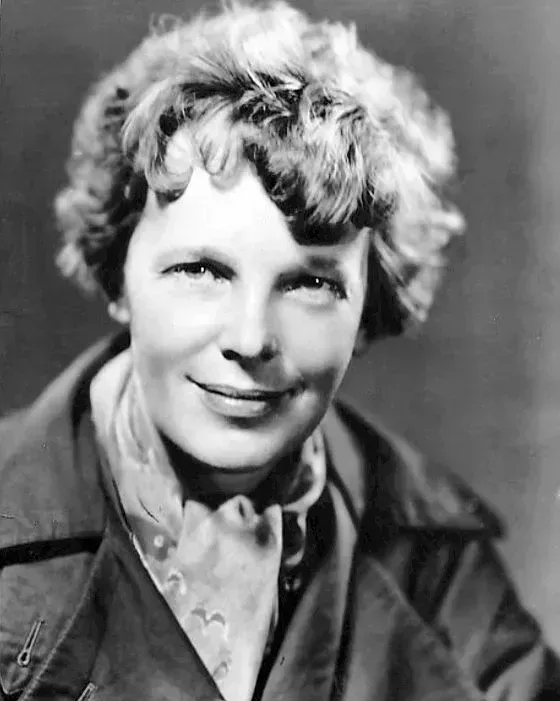
Earhart was attempting to become the first female pilot to circle the world when she and navigator Fred Noonan disappeared over the Pacific Ocean on July 2, 1937. As the first female pilot to fly solo across the Atlantic Ocean, she had already become a symbol of perseverance and courage in aviation. Earhart set numerous records before vanishing during her attempt to circumnavigate the globe. Her disappearance remains one of the greatest unsolved mysteries of aviation, sparking decades of research and speculation about what really happened to her and her navigator.
The official determination made following the massive US government-led search conducted immediately after they disappeared suggested that Earhart and Noonan ran out of fuel and their Lockheed 10E Electra crashed into the Pacific Ocean near their intended destination. This theory has already informed several searches over the years, including a 2024 attempt by ocean exploration company Deep Sea Vision. In November 2024, however, it was confirmed that the object discovered by Deep Sea Vision was merely a rock which resembled a plane.
On the 88th anniversary of her mysterious disappearance, July 2, 2025, officials with the Purdue Research Foundation and Archaeological Legacy Institute revealed they are joining forces to locate Amelia Earhart’s lost aircraft. The search, named the Taraia Object Expedition, was planned to have a field team visit the Pacific island Nikumaroro to confirm whether a visual anomaly known as the Taraia Object, seen in satellite and other imagery in the island’s lagoon, is what remains of Earhart’s plane. The hypothesis is based on documentary records, photographs and satellite images, physical evidence, and personal testimony – including a 2017 analysis of human bones discovered on the island in 1940, which determined Earhart’s bone lengths were more similar to the discovered bones than 99% of individuals.
Director of National Intelligence Tulsi Gabbard announced the initial release of declassified government records related to Amelia Earhart, her final trip, and everything else about her, per President Donald J. Trump’s September 26, 2025 directive. The first batch – more than 4,600 pages – includes a picture of Earhart, radio logs, weather reports, search-and-rescue documents, and decades of memos and newspaper clippings focused on Earhart’s final hours and the hunt that followed. Thousands of pages of documents related to Earhart’s disappearance are now public, but experts say the release is unlikely to solve one of aviation’s most famous mysteries.
3. Michael Rockefeller – The Heir Who Swam Into the Unknown

Michael Clark Rockefeller, born May 18, 1938, was an American anthropologist and art collector and member of the Rockefeller family. He was a son of New York Governor and later U.S. Vice President Nelson Rockefeller, a grandson of American financier John D. Rockefeller Jr., and a great-grandson of Standard Oil co-founder John D. Rockefeller Sr. The great-grandson of John D. Rockefeller, aspiring explorer and ethnographer Michael Rockefeller had no interest in managing his family’s empire upon graduating from Harvard in 1960. Instead, he set out for the remote wilds of Dutch New Guinea to collect art made by the largely uncontacted Asmat people. His personal fortune meant nothing in a jungle that obeyed no worldly hierarchy.
On November 19, their small boat encountered sudden rough weather. Heavy winds and crosscurrents overturned the craft, leaving Michael and his companion Wassing clinging to the upturned hull. They were about 12 miles from shore. After hours in the water, Michael made a decision that would become infamous: “I think I can make it,” he reportedly told Wassing before slipping into the sea and swimming toward land. What followed was an unprecedented search effort: ships, planes, and helicopters scoured the region, and Nelson Rockefeller flew to New Guinea to oversee operations. Despite these efforts, no trace of Michael was found. Nine days into the search, the Dutch interior minister announced there was no hope of finding him alive.
His body was never found, and he was declared legally dead in 1964. A paper trail discovered by journalist Carl Hoffman showed that within two weeks of Michael’s disappearance, two priests on the ground who were Asmat-speaking people heard rumors that Michael had swum ashore, encountered men from the village of Otsjanep, and had been killed by them. Those priests looked further into it and wrote detailed reports naming names – who had Michael’s head, who had other parts of his skeleton – and filed those reports both to their superiors in the church and to the Dutch government.
In 2014, Carl Hoffman published the book “Savage Harvest: A Tale of Cannibals, Colonialism, and Michael Rockefeller’s Tragic Quest for Primitive Art,” in which he discussed researching Rockefeller’s disappearance and presumed death. During multiple visits to the villages in the area, Hoffman heard several stories about men from Otsjanep killing Rockefeller after he had swum to shore. The stories, which were similar to testimonials collected in the 1960s, center around a handful of men arguing and eventually deciding to kill Rockefeller in revenge for a 1958 incident. Today, no one knows where the bone fragments are, and the skulls found in the 1960s were never tested for Rockefeller’s DNA. The Rockefeller family doesn’t seem interested in reopening the case. There are 200 artifacts currently on display in the Metropolitan Museum of Art in New York, in a wing named after him.