Looking for Budget Eats? McDonald’s Reportedly Rolling Out $3 Menu Items
McDonald’s is making a serious push to win back the customers it lost during years of post-pandemic price hikes. The fast-food giant is doubling down on its “McValue” menu, acknowledging that years of price increases have left many Americans feeling priced out, announcing a sweeping “McValue 2.0” initiative set to launch in April with $3 items and $4 meal deals designed to lure back lower-income consumers. It’s a significant strategic shift for the world’s most recognizable fast-food brand, and the timing says plenty about both the company’s struggles and the state of the American wallet.
What Is McValue 2.0 and What Does It Include?
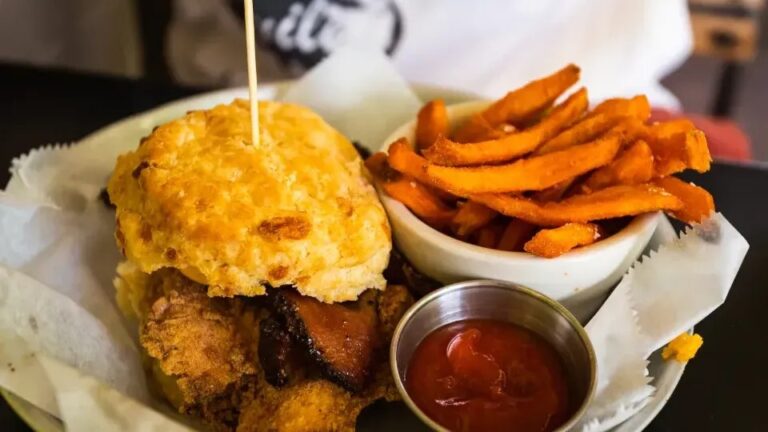
The $3-and-less menu will include items like a sausage biscuit or a 4-piece Chicken McNuggets, replacing the buy-one, add-one-for-a-dollar menu introduced in 2025. It’s a simpler, more direct approach to affordability, one that puts standalone low prices front and center rather than requiring customers to first purchase something full-priced.
The chain is also revealing a $4 breakfast bundle that includes a McMuffin, hash brown, and a coffee, among other options, as reported by The Wall Street Journal. McDonald’s said in a message to franchisees that the 2026 McValue update was approved by franchisee groups with “unanimous alignment,” and it plans to start training restaurants on the new deals and meals in the coming weeks. For budget-conscious diners, that kind of coordinated buy-in across thousands of locations could make a real difference in consistency.
A Timeline of McDonald’s Value Menu Efforts
Back in November 2024, McDonald’s announced it would give customers more ways to enjoy the food they love for less, introducing its McValue platform in U.S. restaurants starting January 7, 2025. That new menu category was McDonald’s largest value-minded effort since 2018, when it priced some items between $1 to $3. The Buy One, Add One for $1 deal became the centerpiece of that first McValue rollout.
That previous iteration focused on an “add-on” model, allowing customers to snag a second item for $1 with a full-priced purchase, but the upcoming April menu shifts the focus back to standalone, rock-bottom entry prices. A string of other value programs also emerged throughout 2025, including the $5 Meal Deal, the launch of the McValue platform in early 2025, and the return of Extra Value Meals later in the year.
How Post-Pandemic Price Hikes Drove Customers Away
The average price of a McDonald’s menu item increased 40 percent from 2019 to 2024, according to data the company says tracks with its rising costs. The Big Mac sandwich alone rose 21 percent during that time. McDonald’s prices rising sharply post-pandemic made millennials especially vocal on social media about how much menu costs had increased since their childhoods.
In its first quarter of 2025, McDonald’s saw its worst year-over-year revenue drop since the height of the 2020 pandemic, as U.S. same-store sales tumbled 3.6 percent. Visits from low- and middle-income consumers plunged by nearly 10 percent, according to CEO Chris Kempczinski. The company has been pushing for nearly two years to cement itself as an affordable destination after surveys showed that many fast-food customers no longer considered it to be one, with videos of customers complaining about high costs going viral on social media.
The Numbers That Turned Things Around in Late 2025
According to its 2025 fourth quarter and full year results, McDonald’s global comparative sales increased in the fourth quarter by 5.7%, with global systemwide sales increasing to over $139 billion for the year. U.S. sales rose 6.8% in the fourth quarter, the biggest jump in about two years, as lower-priced offers and aggressive promotions drove traffic back into restaurants. Analysts had expected a gain of only 4.9%.
In an appeal to budget-conscious consumers, McDonald’s brought back its Snack Wraps for the first time in nine years and priced them at $2.99. According to CFO Ian Borden, it was one of the most popular chicken launches in recent U.S. history, with nearly 1 in 5 customers purchasing a Snack Wrap in the first four weeks. Same-store sales jumped back into positive territory in the second half of 2025, and McDonald’s price changes in 2026 reflect a continued focus on repairing its value to customers.
The Bigger Economic Picture Behind the $3 Menu
Even as sales rose for the quarter, executives at McDonald’s acknowledged in their February earnings call that the fast-food environment would “remain challenging” in 2026. Despite the company’s own progress attracting lower-income customers in the fourth quarter, this tier of consumers, dealing with stubborn inflation for years, is broadly pulling back on spending. A Pew Research survey found that roughly three in four Americans rate economic conditions as fair or poor, and nearly 40% believe conditions will be worse a year from now, compared to 31% who think they will improve.
About three quarters of consumers now view fast food as a luxury because it has become increasingly expensive, and roughly half of Americans say they view fast food as a luxury because they are struggling financially. McDonald’s newest value menu fits squarely into the trend of the K-shaped economy, where high-income people have fared well during a multi-year stock bull run while lower-income people have been hit by higher prices and stagnating wages.
How McDonald’s Stacks Up Against Fast-Food Rivals
Rivals such as Burger King are also intensifying efforts with more economical menu options, and the broader value war among fast-food chains has been heating up for months. Burger King focuses on budget-conscious diners, offering aggressively priced value meals and emphasizing customization, though this simpler strategy could impact profit margins. The pressure to compete on price is real across the entire sector.
In 2024, McDonald’s posted an Average Unit Volume of $3.96 million per location, compared to Wendy’s at $2.1 million and Burger King at $1.63 million. McDonald’s locations generate nearly twice the revenue of Wendy’s and more than double that of Burger King. Gas prices are climbing, wallets are tight, and nearly every fast-food chain is battling for diners who are more price-sensitive than ever. McDonald’s hasn’t officially confirmed the new pricing yet, but the reported memo to franchisees signals that the company is continuing to evolve its value strategy as consumer habits shift.