The Net Worth Number That Counts as “Affluent” in 2025
Financial security feels like a moving target these days. One year you think you’re doing fine, the next you’re wondering if your portfolio is enough to qualify as truly comfortable. For many of us navigating a world of soaring home prices, unpredictable markets, and shifting economic tides, the question has become sharper than ever: what does it actually take to be considered affluent anymore?
The numbers might surprise you. They’re higher than you’d imagine, but not entirely out of reach. Whether you’re building your wealth or simply curious where you stand, understanding these benchmarks reveals just how much the wealth landscape has evolved in recent years.
The Magic Number to Join the Top 10 Percent

To crack into the wealthiest 10 percent of American households, you’ll need a net worth of roughly $1.8 million or an annual income of approximately $210,000, according to Visa’s analysis of recent Census data. Think about that for a moment. Nearly two million dollars separates the comfortable from the genuinely affluent, a threshold that’s climbed dramatically over the past five years.
Between 2020 and 2024, the net worth threshold for the top 10 percent grew about 40 percent, compared with about 23 percent for income. That gap tells you something important: wealth accumulated faster than paychecks grew. Rising home values and stock prices have pushed both numbers higher, while wage growth added further momentum.
Here’s the thing that really stands out. A net worth of at least $1.8 million or an annual income of $210,000 defines “affluent” households, placing them above 90 percent of U.S. households. About 12.2 million U.S. households qualify under that definition, and Gen X makes up 57 percent of them, while baby boomers surprisingly account for only 12 percent.
What Americans Think Makes You Wealthy

Americans now think it takes an average of $2.3 million to be considered “wealthy,” which is a slight drop year over year but is consistent with the five-year trend, according to Charles Schwab’s 2025 Modern Wealth Survey. That’s a fascinating number because it doesn’t match reality for most households. Americans think it takes an average of $2.5 million to be considered wealthy – which is up slightly from 2023 and 2022 ($2.2 million), though the 2025 data shows a modest pullback.
There’s a pretty substantial gap between feeling wealthy and feeling comfortable, though. Americans believe it takes $839,000 to be “financially comfortable,” up from $778,000 reported last year, but down from the $1 million Americans cited in 2023. So roughly about 800 thousand gets you to comfortable, while two and a half million puts you firmly in wealthy territory in people’s minds.
Geographic location drastically changes these perceptions. In San Francisco, residents say you need a net worth of $4.4 million to be considered wealthy – the highest among 12 major cities surveyed. In California, where prices are 13 percent higher than the national average, you’ll need an income of about $236,000 per year and a net worth of about $2 million to be considered affluent.
How Millionaires Are Being Minted Daily

Every day in 2024 an estimated 1,000 Americans achieved a net worth of $1 million, driven by a booming stock market and strong real estate values. That’s not a typo. One thousand new millionaires per day. The U.S. gained roughly 379,000 millionaires in a single year, which translates to over a thousand new millionaires each day.
Still, here’s where things get interesting. A net worth of one million dollars no longer makes you “affluent,” defined as being in the top 10 percent of U.S. households, which now requires a net worth of at least $1.8 million or an annual income of $210,000. Of 23 million Americans who are millionaires, only 12.2 million qualify as “affluent”. Let that sink in – having a million dollars in net worth puts you in a decent position, but it doesn’t automatically make you affluent anymore.
According to Swiss bank UBS’s 2025 Global Wealth Report, there were 23,831,000 millionaires in the United States in 2024, representing nearly 40 percent of millionaires worldwide. The wealth creation machine hasn’t stopped, even as economic uncertainty swirls around us.
The Growing Gap Between Wealth and Income
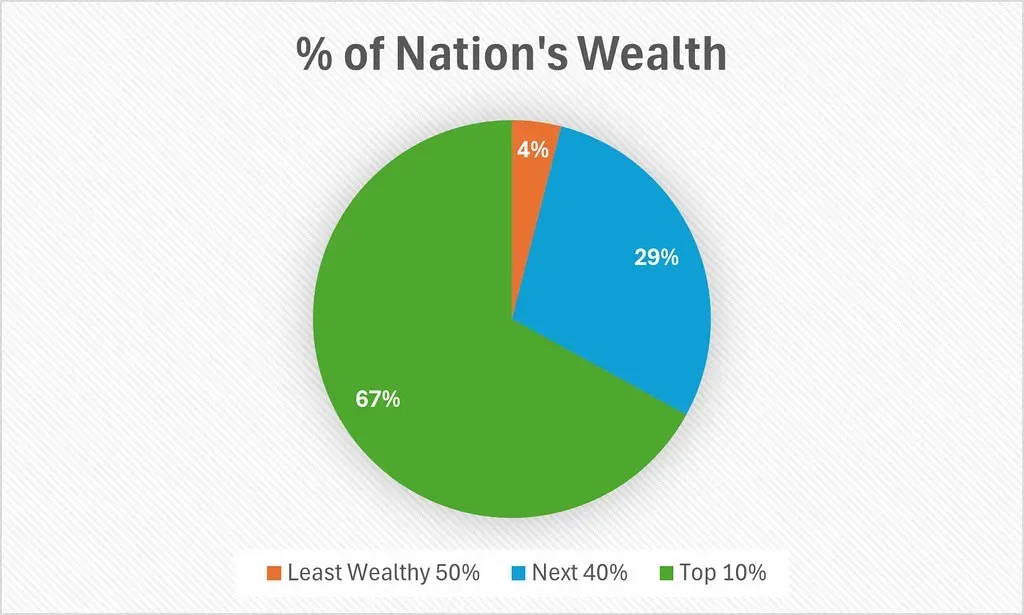
There’s a difference between high income and high net worth – and there’s a growing gap between the two, according to Visa’s November 2025 Economic Insight report. This distinction matters because it shows how asset appreciation has outpaced salary growth. The U.S. median home price rose about 25 percent over the last five years, and the S&P 500 gained roughly 109 percent.
Think about what that means practically. Someone earning a solid six-figure salary might still struggle to accumulate wealth if they’re not investing or don’t own property. Meanwhile, households that already owned homes and had money in the market before this surge saw their net worth skyrocket, even if their salaries stayed relatively flat.
The bar to enter the realm of the affluent has risen significantly over the past five years as wages and asset prices rise, meaning those who already own homes and stocks are at an advantage. It’s honestly creating a situation where timing and asset ownership matter as much as – or more than – your actual paycheck.
What It Takes to Reach the Top 1 Percent

To be top 1 percent in 2023, a household needed a net worth of $13,666,778. More recent estimates suggest that number has climbed even higher. The top 1 percent of Americans – those with a minimum net worth of $11.2 million – now command a record $52 trillion in combined assets, according to Federal Reserve data from 2025.
The wealthiest Americans – who own 87 percent of all U.S. corporate equities and mutual fund shares, worth roughly $44 trillion – were the direct beneficiaries of the stock market rally in recent years. This is wealth on a scale that most households will never approach, yet it’s grown substantially faster than wealth in any other bracket.
Regional Variations in Affluence Thresholds
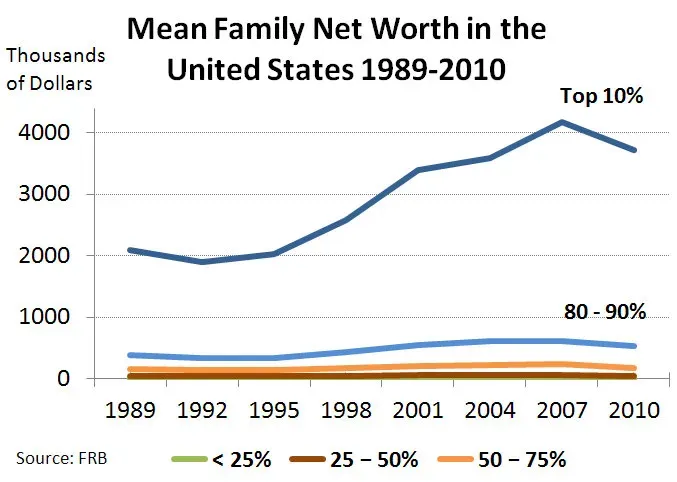
The income and net worth thresholds have increased since 2020, when the income needed to reach the top 10 percent was about $170,000 and the wealth cutoff sat around $1.3 million nationally. However, these national averages mask significant regional variation. You need the highest net worth to be considered rich in Western states, including California, Washington and Colorado, given the region’s high cost of living – especially in California, where major cities like San Francisco and Los Angeles are among the most expensive places in the country.
On the flip side, in Arkansas, where prices are 13 percent lower than the national average, you’d need an income of $182,000 and a net worth of $1.6 million to be considered affluent. It makes sense when you consider housing costs and general expenses vary so dramatically across the country.
The Everyday Millionaire Phenomenon

There’s a category of wealth that often gets overlooked in discussions about the super-rich. The number of individuals with $1 million to $5 million, whom UBS dubs “everyday millionaires,” has more than quadrupled since 2000 to about 52 million. “They have more wealth collectively than all the billionaires in the world”, according to UBS analysts.
These are the folks who built wealth through consistent retirement contributions, smart real estate purchases, and long-term investing rather than founding tech companies or inheriting fortunes. Americans in their 50s have an average net worth of around $1.3 million, while retirement millionaires have an average of $2.4 million saved, according to Empower data. The average age? The average age of a millionaire in the U.S. is 61.
How Asset Appreciation Changed the Game

Households already in the top 10 percent by net worth saw their wealth grow more than any other cohort over the last five years, according to Federal Reserve data. This isn’t just about earning more money – it’s fundamentally about owning appreciating assets. The last five years were unusually good for households that already owned a home or had money in the market, as the job market stayed strong and consumers kept spending, keeping the economy on solid footing, while home prices surged beginning in 2020.
What this means for the average person is sobering. If you weren’t already invested in stocks or real estate before this surge, you’ve likely fallen further behind relative to those who were. The top 20 percent of the wealthiest U.S. households owned 71 percent of the country’s total wealth at the end of September 2024, with an average net worth of $3.8 million among those households.
Why Financial Comfort Feels More Expensive

77 percent of Americans don’t feel financially secure and 26 percent believe they need to make $150,000 to live comfortably – more than double the median 2023 income of $60,070 for a full-time worker. That disconnect between earning and feeling secure helps explain why the affluence threshold matters so much. The real median household income in the U.S. was around $83,730 in 2024, according to Census Bureau data.
Nearly two-thirds of respondents say it feels harder to reach the wealth benchmark, with inflation, high interest rates and broader economic uncertainty cited as the most common reasons. Honestly, it’s hard to blame them. Even households with decent incomes are feeling squeezed by costs that have climbed faster than their paychecks.
The Path Forward for Aspiring Affluent Americans

So where does this leave everyone else? Achieving financial comfort and wealth are significantly more attainable for people who identify as savers, investors, and planners, according to the Schwab survey. Nearly half of respondents say they’re already financially comfortable or on the path to get there, while another 25 percent say it’s possible, but only with lifestyle changes, which could include reducing spending or increasing income.
The data suggests getting to affluent status isn’t primarily about luck or inheritance for most people. It’s about consistent behavior over decades. The more time you have on your side, the easier it is to become a millionaire, because compound interest allows your investments to grow exponentially over time, and the earlier you start investing, the less you need to put away.
The numbers paint a clear picture: affluence in 2025 starts around $1.8 million in net worth or $210,000 in annual income to join the top 10 percent. Wealth perception begins at $2.3 million. These aren’t impossible figures, but they require strategic planning, asset ownership, and time to let compound growth work its magic. Did you think the bar would be higher or lower?