I Asked AI Where Living Could Become Hardest by 2050 – The Results Were Sobering
The question seemed simple enough: ask an AI to map out the places on Earth where human life will become most difficult by 2050. The answer was anything but simple. Drawing on hundreds of peer-reviewed studies, climate models, and agency reports, the picture that emerged was one of converging crises – heat, water, food, and rising seas – threatening regions home to billions of people. What follows is a tour through six of the most alarming findings, backed by science, not speculation.
South Asia and the Persian Gulf: Where the Heat Becomes Lethal
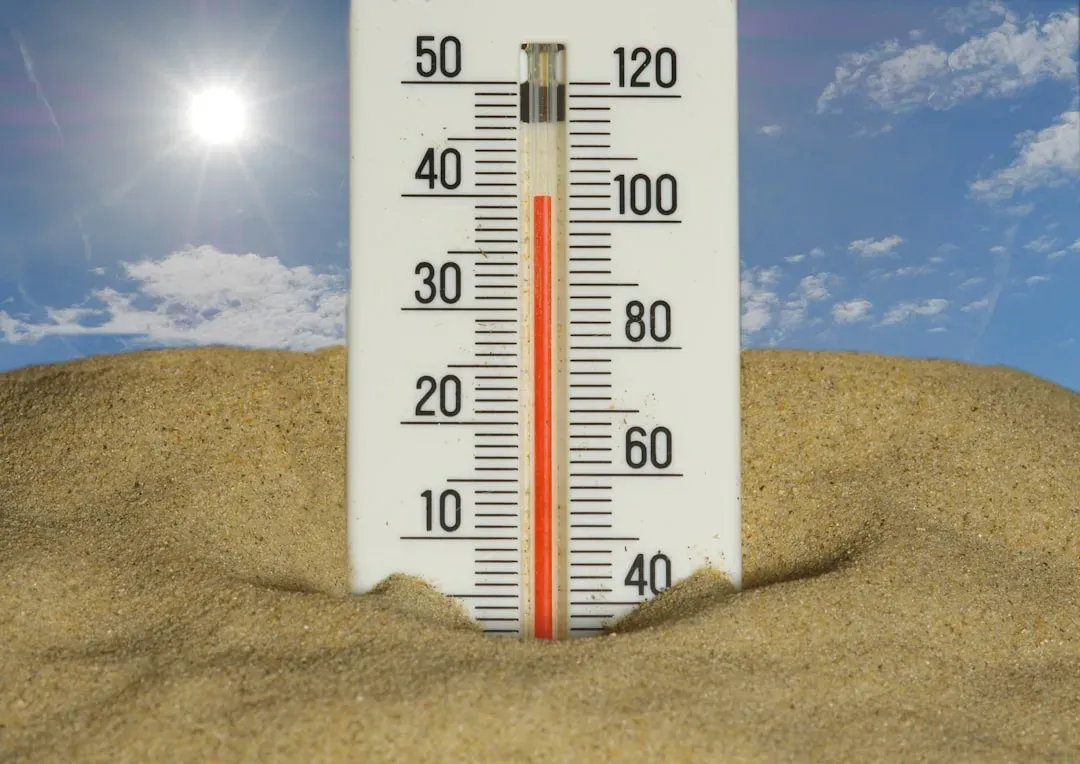
According to NASA climate research, the most vulnerable areas for extreme, potentially unsurvivable heat include South Asia, the Persian Gulf, and the Red Sea by around 2050. The mechanism behind this threat is something called wet-bulb temperature – a combined measure of heat and humidity that determines the human body’s ability to cool itself through sweating. The “Future We Don’t Want” report identifies these same regions as the most vulnerable to extreme heat, based on an assumed temperature limit of 35°C for six consecutive hours, after which humans can no longer regulate their own body temperatures.
In 2050, scientists estimate that it will be very difficult to live in South Asia and the Persian Gulf, in countries such as Iran, Kuwait and Oman, and that climatic conditions will also be very difficult to bear in the countries bordering the Red Sea: Egypt, Saudi Arabia, Sudan, Ethiopia, Somalia and Yemen. A temperature increase of just 4.5°F could subject more than four billion individuals in countries like India, Pakistan, eastern China, and sub-Saharan Africa to extended periods of unbearable heat. The numbers are hard to absorb, but they represent real communities, real cities, and real lives.
Sub-Saharan Africa: A Food and Water Catastrophe in Motion
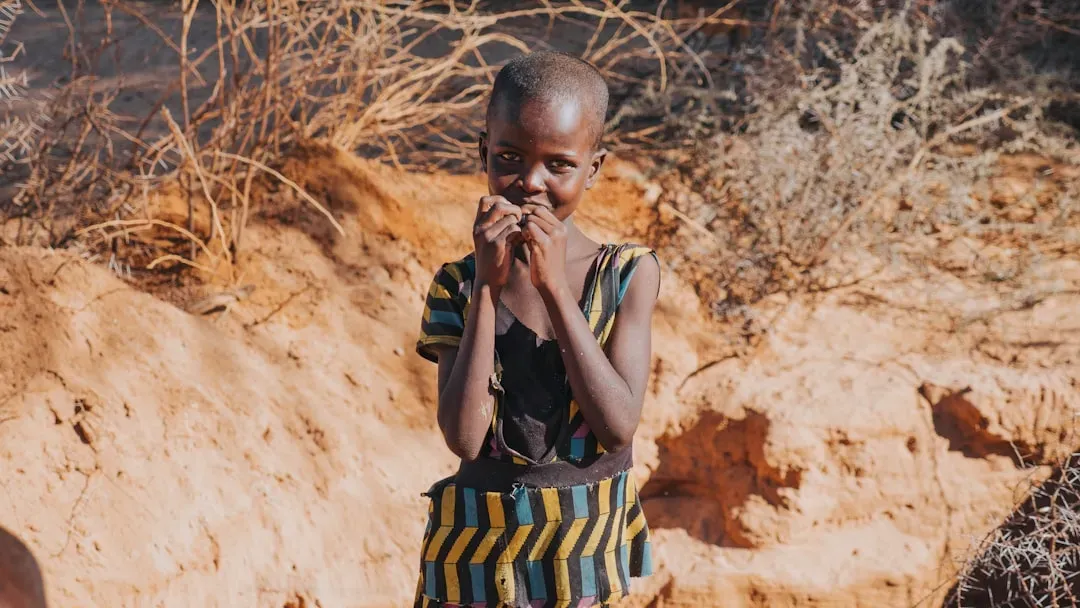
In 2024, Southern Africa faced its worst drought in a century, affecting approximately 27 million people and leading five countries to declare national disasters. This is not a future projection – it is already happening. The UN World Meteorological Organization has stated that extreme weather and climate change impacts are hitting every single aspect of socio-economic development in Africa and exacerbating hunger, insecurity and displacement, and noted that the average surface temperature across Africa in 2024 was approximately 0.86°C above the 1991–2020 average.
The Food and Agriculture Organization warns that by 2050, climate change could reduce mean yields for 11 main world crops by 15% in Sub-Saharan Africa. The situation is particularly dire in the Sahel, a semi-arid region stretching across Africa just south of the Sahara, where temperatures are rising 1.5 times faster than the global average, resulting in desertification, where fertile land turns to desert, making farming nearly impossible. For a region where rain-fed agriculture supports the majority of rural livelihoods, the trajectory is deeply alarming.
Low-Lying Coastal Cities: A Billion People in the Flood Zone
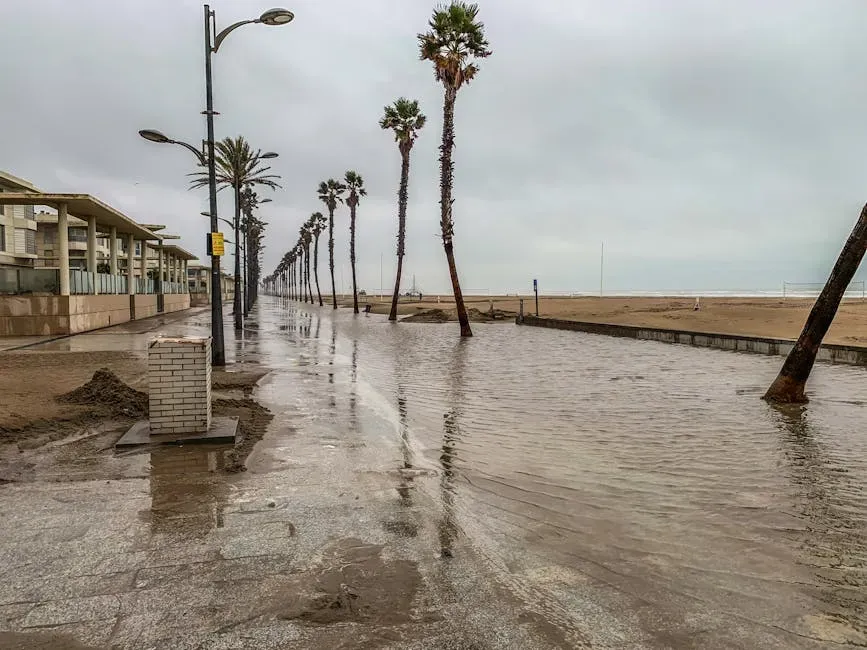
By 2050, a billion people will face coastal flooding risk from rising seas, and more people will be forced out of their homes from weather disasters, especially flooding, sea level rise and tropical cyclones. The pace of this threat is accelerating. In 2024, NASA-led analysis found an unexpectedly fast rising of the global sea level – scientists were anticipating a rise of 0.43 centimetres, but instead recorded a rate of 0.59cm.
According to C40 Cities’ “The Future We Don’t Want” analysis, the total urban population at risk from sea level rise, if emissions don’t go down, could number over 800 million people, living in 570 cities, by 2050. Estimates suggest that the global economic costs to cities from rising seas and inland flooding could amount to $1 trillion by mid-century. Cities like Bangkok, Jakarta, and Ho Chi Minh City sit at the sharpest edge of this crisis, with millions of residents in districts that may simply no longer exist as dry land.
The Middle East and North Africa: Too Hot for Human Life

Scientists believe that by 2050 temperatures will be 4 degrees Celsius higher in the MENA region than the benchmark of 1.5 degrees above pre-industrial levels, as set by the Paris Climate Agreement. That gap between where the region is heading and where global climate targets sit is enormous – and widening. Average summer temperatures in the UAE’s desert climate are already known to hit up to 50°C, and experts at MIT believe that the country’s current record temperatures will become commonplace by 2070, with a “regional hotspot” forming in its capital, Abu Dhabi.
Scientists have warned that if the trend of rising temperatures in the region continues, it could become too hot to sustain human life by the end of the century – a region currently home to around 547 million people, a figure expected to rise to 724 million by 2050. The UN has confirmed that 2024 was the hottest year on record in the Arab region, with temperatures rising at twice the global average, and extreme weather events affected nearly 3.8 million people with more than 300 deaths, mainly from heatwaves and floods. The collision of population growth and extreme climate is one of the most urgent human stories of this century.
The Tropical World: Pushed Outside Humanity’s Climate Niche

The optimum climate for human productivity – the best conditions for both agricultural and non-agricultural output – is an average temperature of 11°C to 15°C, according to a 2020 study. This global niche is where human populations have concentrated for millennia, including for the entirety of human civilization, so it is unsurprising that crops, livestock and other economic practices are ideally adapted to these conditions. Climate change is now pushing vast tropical populations out of that niche entirely. Researchers show that, depending on scenarios of population growth and warming, “1 to 3 billion people are projected to be left outside the climate conditions that have served humanity well over the past 6,000 years,” and that in the absence of migration, one third of the global population is projected to experience mean average temperatures currently found mostly in the Sahara.
According to research, 50 years from now, if greenhouse gas emissions continue unabated and as Earth’s land surface continues to warm, the area of uninhabitable land will expand drastically. In under 50 years, large swaths of northern South America, central Africa, India and northern Australia will become too hot to allow human life – and the acceleration of global warming suggests this deadline is being moved forward. The tropics, which contain some of the world’s poorest and most densely populated regions, face the most profound disruption.
The Cascading Crisis: Migration, Conflict, and the Climate Refugee Wave
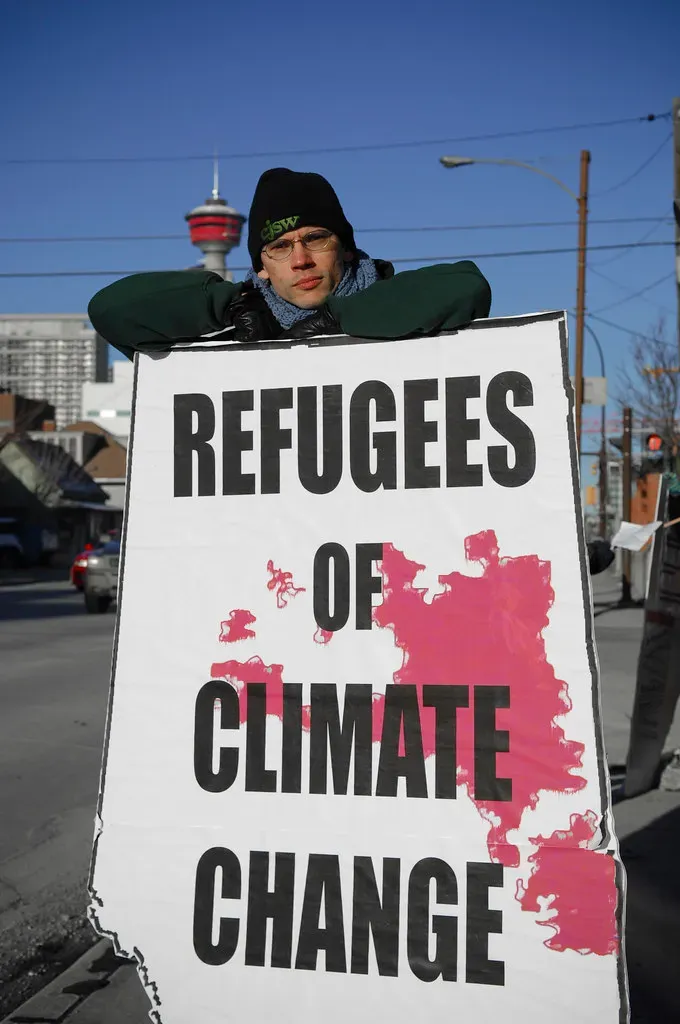
For large portions of the world, local conditions are becoming too extreme and there is no way to adapt – people will have to move to survive. According to a UNHCR report titled “No Escape,” by 2040 the number of countries facing extreme climate-related hazards is expected to rise from 3 to 65, and most refugee settlements and camps are projected to experience twice as many days of dangerous heat by 2050.
Once these regions become too hot for human life, an estimated 3 billion people will be forced to abandon their homes in the largest migration the world has ever seen, which will play out over the next three decades. Researchers note that each degree of warming above present levels corresponds to roughly one billion people falling outside of the climate niche. The math is unforgiving – and the window to change the outcome narrows with each passing year of inaction.