7 Musicians Who Were Also Gifted Scientists
Most people draw a hard line between art and science. Two separate worlds, two separate brains. Yet history keeps handing us proof that the line isn’t quite so firm. Some of the most remarkable minds to ever walk this earth picked up a guitar or sat behind a piano and then, almost as a side project, discovered planets, rewrote evolutionary biology, or reshaped how particle physics gets done.
Honestly, it makes a strange kind of sense. Both music and science demand obsessive curiosity, pattern recognition, and a tolerance for long nights with no guaranteed outcome. The real surprise isn’t that a few musicians crossed over into science. It’s how deep some of them went. Let’s dive in.
1. Brian May – Astrophysicist and Lead Guitarist of Queen
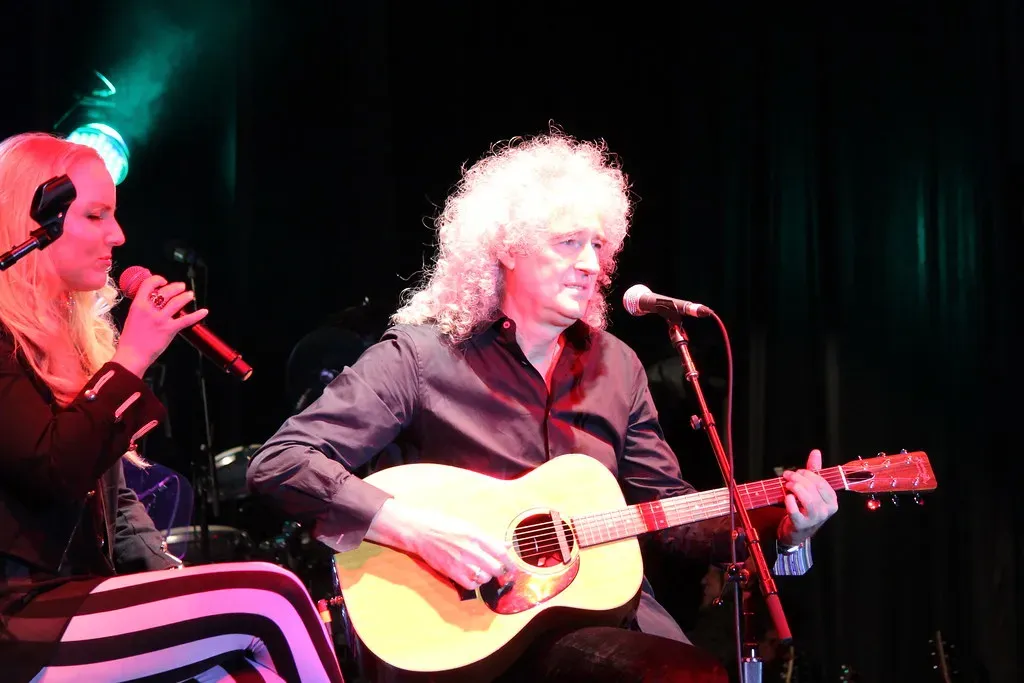
Here’s a name that belongs in every single conversation about this topic. Sir Brian Harold May is an English musician, animal welfare activist, and astrophysicist who achieved global fame as the lead guitarist and backing vocalist of the rock band Queen, which he co-founded with singer Freddie Mercury and drummer Roger Taylor. What many fans don’t realize is that his love for the cosmos was equally profound.
May studied astrophysics at Imperial College London and then embarked on a PhD, suspending his studies in 1974 to take what turned out to be a 33-year hiatus as the lead guitarist for Queen, one of Britain’s most successful rock groups. That is, I think, the most extraordinary academic pause in recorded history. Thirty-three years. Most people would have just let it go.
May earned a PhD degree in astrophysics from Imperial College London in 2007, and was Chancellor of Liverpool John Moores University from 2008 to 2013. His scientific work didn’t stop at the diploma either. In 2023, May contributed to NASA’s OSIRIS-REx mission, the agency’s first successful collection and earth delivery of samples directly from an asteroid, the asteroid Bennu.
He is also a co-founder of the awareness campaign Asteroid Day, and asteroid 52665 Brianmay was named after him. Not many rock stars have a chunk of space rock bearing their name. Then again, not many rock stars earn a doctorate in astrophysics between world tours.
2. William Herschel – Astronomer Who Discovered Uranus
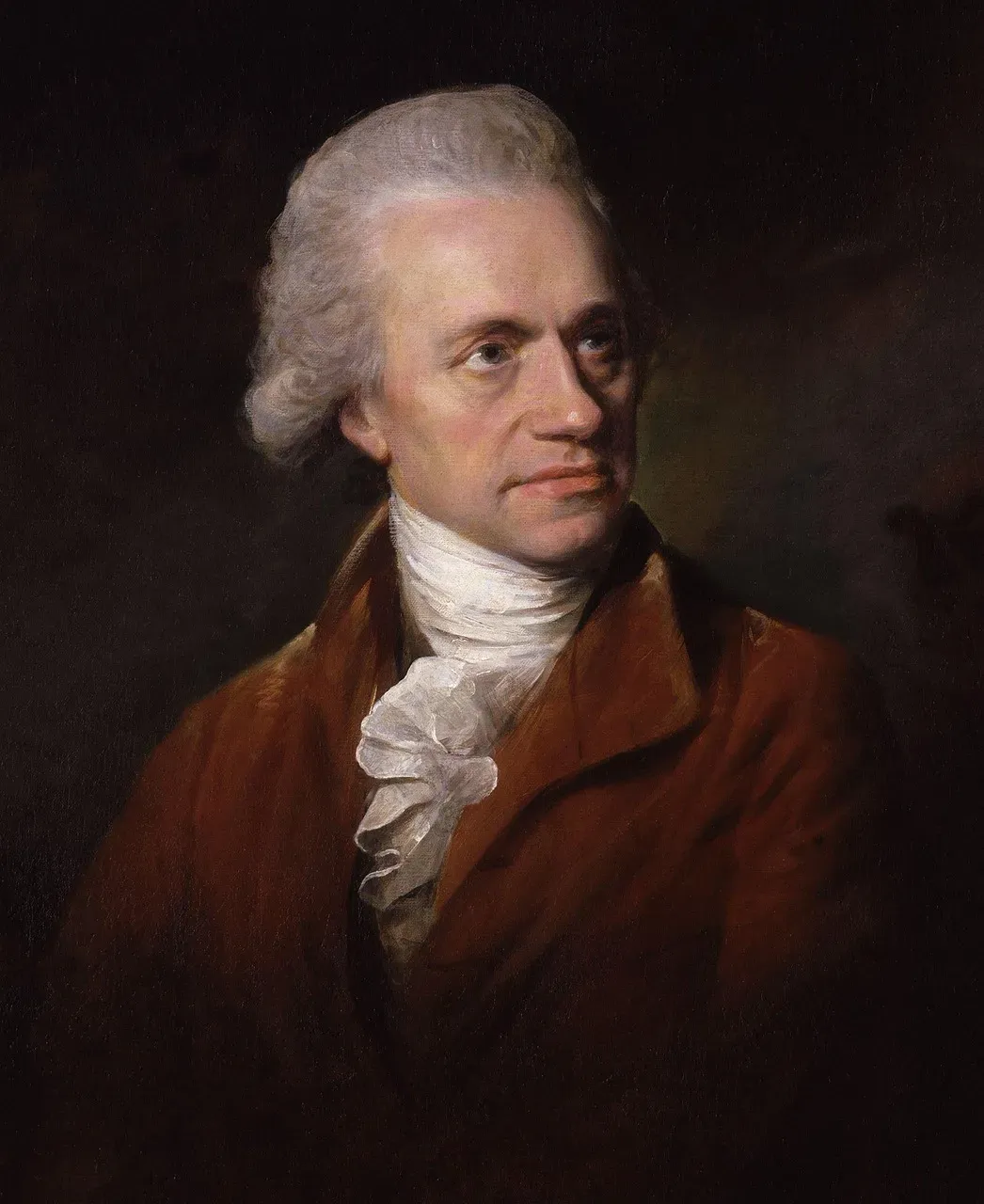
Let’s go back to the 18th century for a moment, because this story is nothing short of extraordinary. One of the most intriguing of these musician-scientists was William Herschel (1738-1822), who is considered to be the “father of modern astronomy,” and whose first career was as a musician, serving as an oboist, violinist, harpsichordist, organist, and composer. Music wasn’t a hobby for Herschel. It was his livelihood.
He moved to England in 1755 and initially pursued a successful career as a musician, eventually becoming an organist in Bath. His interest in astronomy intensified after acquiring a small telescope, prompting him to build larger telescopes for observation, including an impressive 20-foot model.
On 13 March 1781 while making observations he made note of a new object in the constellation of Gemini. This would, after several weeks of verification and consultation with other astronomers, be confirmed to be a new planet, eventually given the name of Uranus. This was the first planet to be discovered since antiquity, and Herschel became famous overnight. As a result of this discovery, George III appointed him Court Astronomer.
Herschel pioneered the use of astronomical spectrophotometry, using prisms and temperature measuring equipment to measure the wavelength distribution of stellar spectra. In the course of these investigations, Herschel discovered infrared radiation. From playing the organ in Bath to discovering infrared light. Not a bad career trajectory.
3. Brian Cox – Particle Physicist and Keyboard Player for D:Ream
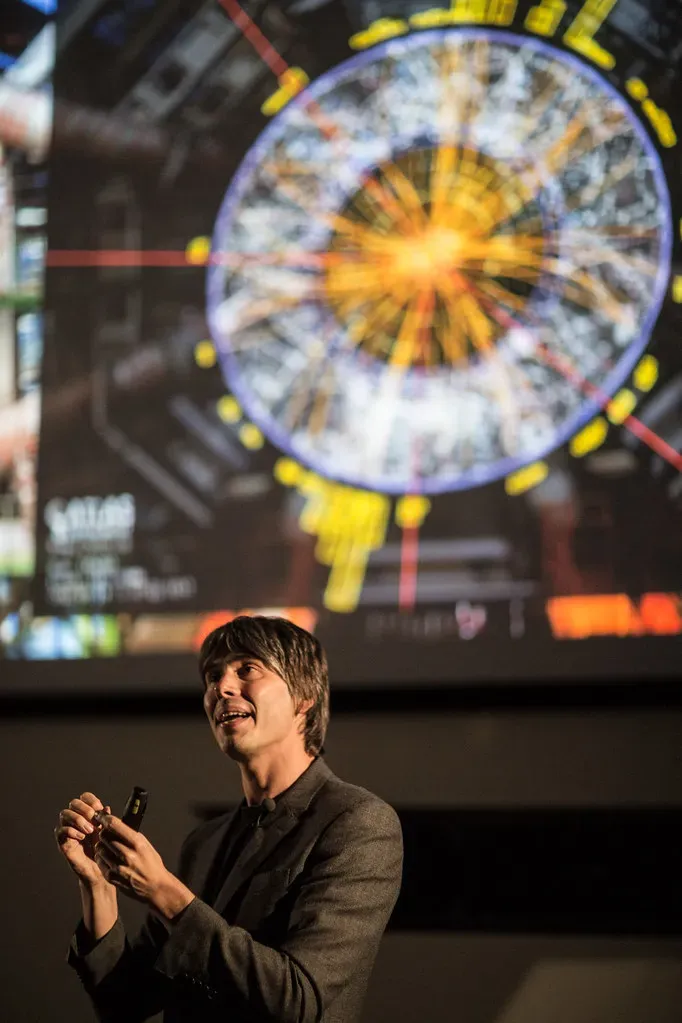
Before Brian Cox became Britain’s most beloved science communicator, he was playing keyboards in pop bands. Brian Edward Cox is an English physicist and musician, and a professor of particle physics in the Department of Physics and Astronomy at the University of Manchester and the Royal Society Professor for Public Engagement in Science.
Before his academic career, he was a keyboard player for the bands Dare and D:Ream. D:Ream scored a genuine chart hit in the UK in the early 1990s, the kind of pop success most musicians dream about their entire lives. Cox then, somewhat improbably, pivoted to CERN.
Cox studied physics at the University of Manchester during his music career. In 1991, he earned a Bachelor of Science degree with first-class honours in physics. After D:Ream disbanded in 1997, he completed his Doctor of Philosophy degree in high-energy particle physics at the University of Manchester in 1998.
He worked on the ATLAS experiment at the Large Hadron Collider at CERN near Geneva, Switzerland. On 29 June 2024, Cox appeared at the Glastonbury Festival with D:Ream to perform “Things Can Only Get Better.” From the Large Hadron Collider to Glastonbury in the same career arc. That’s simply not supposed to be possible.
4. Dan Snaith (Caribou) – Pure Mathematician

Dan Snaith is better known to music fans as Caribou, the architect of deeply hypnotic electronic and psychedelic pop. What most listeners don’t know is that the man behind those dreamlike soundscapes has one of the most formidable academic backgrounds on this entire list. Dan Snaith is better known as the musician with the stage name Caribou, and his music would seem a natural fit with his PhD in mathematics from Imperial College London, with his thesis titled “Overconvergent Siegel Modular Symbols.”
That title alone is enough to make most people’s brains quietly shut down. It’s hard to say for sure what exactly Overconvergent Siegel Modular Symbols involves at the research level, but it sits at the intersection of number theory and algebraic geometry – territory that only a handful of people on Earth navigate with real fluency.
What’s particularly interesting is that Snaith himself resists the easy narrative of “music and math go together.” He will not stand for the music and math stereotype, saying that with pure mathematics at research level it is not about sums but flowers into a whole creative subject, and that if there’s any real similarity between maths and music, it’s that with both you’re fumbling around and using your intuition to try to fit things together. That’s a surprisingly honest and nuanced take from a man juggling two genuinely world-class careers.
5. Mira Aroyo – Geneticist and Voice of Ladytron

Ladytron built their reputation on a cold, synthetic, almost clinical sound. It turns out, that aesthetic wasn’t accidental. One of the vocalists and synthesizer players for the English electronic band Ladytron, Mira Aroyo is also a geneticist. Born in Bulgaria, Aroyo has a PhD from Oxford and was a postgraduate research geneticist there.
Aroyo is best known for her cool, haunting vocals in the electro-pop band Ladytron, but her roots are firmly planted in science. She started on a DPhil, the British equivalent of a PhD, in genetics at Oxford University, studying the mysteries of DNA before switching gears to music full-time. Aroyo’s scientific background still influences her music, as she often explores themes of artificial intelligence, identity, and the intersection of technology and humanity.
She has spoken about how her training in genetics taught her discipline and analytical thinking, qualities that help her as a musician. There’s something almost poetic about a geneticist who decodes the architecture of DNA and then translates that same precision into electronic music. The connection between structure and expression runs through both pursuits at the deepest level.
6. Max Planck – Quantum Physics Pioneer and Accomplished Composer
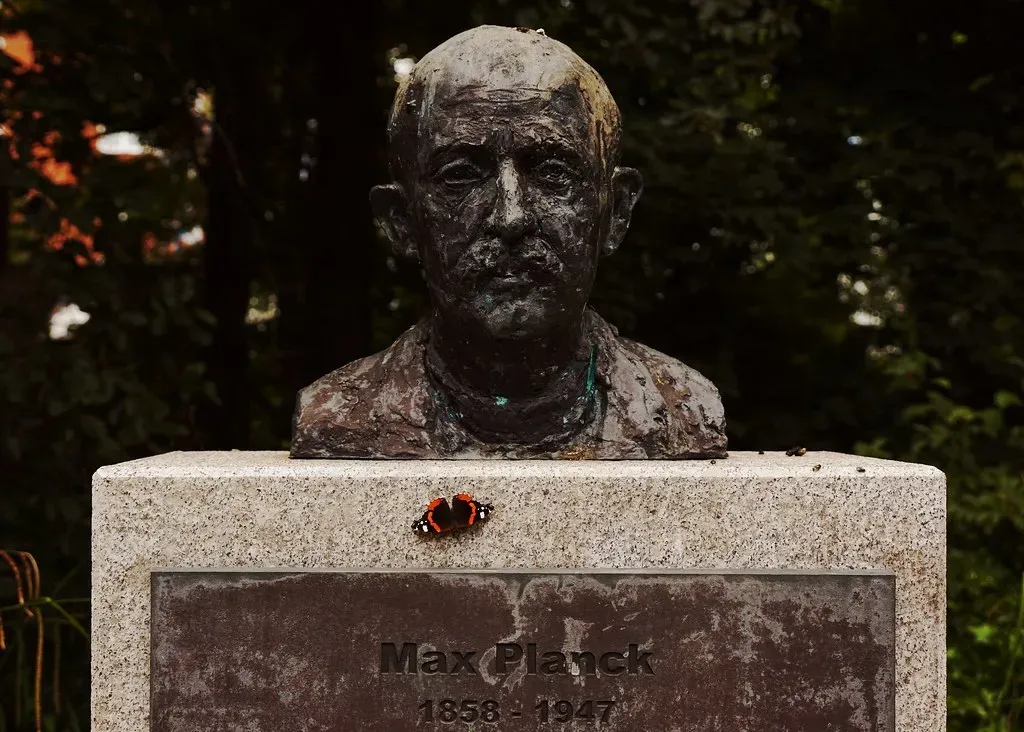
The founding father of quantum theory is on this list, and I think that fact deserves a moment of appreciation. Max Planck played various musical instruments including piano, organ and cello, and he also composed his own songs and operas. The man who changed the entire framework of modern physics was also writing original music in his spare time.
Planck sang as well as played the piano and organ, and Einstein and Planck supposedly used to play together, finding not only a shared love for science but also music. The mental image of two of the most influential minds in scientific history trading bars at the piano is both delightful and slightly surreal.
The Nobel Prize organization has documented the profound role music played in Planck’s intellectual life. Fellow physics laureate Max Planck was similarly a very gifted physicist and musician. For many Nobel Prize-awarded scientists, music seems to be very important. Music works as a way to think about logical problems in a new way, practice discipline and creativity, as well as teamwork.
Planck’s dual mastery of music and quantum theory suggests something deeper than coincidence. Both demand an almost uncomfortable relationship with abstraction, and a willingness to sit with complexity until meaning emerges. Whether Planck consciously drew on his musical training or not, the two parts of his life clearly shaped one extraordinary whole.
7. Alexander Borodin – Chemist Who Discovered the Aldol Reaction

Alexander Borodin might be the single most extraordinary example on this entire list, because his achievements in both fields were genuinely world-class at the same time. Borodin was a nineteenth century Russian chemist who discovered one of the more important reactions in organic chemistry, the Aldol reaction. He also composed three works that are well known today: the opera Prince Igor, the tone poem In The Steppes Of Central Asia, and his String Quartet No. 2 in D major.
Let that sink in for a second. The Aldol reaction is a fundamental tool in organic chemistry, taught in undergraduate programs around the world to this day. Prince Igor is a full-scale opera. Borodin didn’t dabble in either field. He mastered both, simultaneously, under considerable personal and professional pressure.
Melodies from his string quartet have been used in a Broadway musical and in two popular songs. His compositions have survived nearly two centuries in concert halls and theaters worldwide, while his chemical discoveries remain a cornerstone of organic synthesis education. That is a legacy so rare it almost defies categorization.
Borodin stands as perhaps the purest proof that creative and analytical brilliance don’t just coexist in rare individuals. Sometimes, they feed each other so completely that separating one from the other becomes impossible. The discipline of scientific method sharpened his compositional structure. The emotional freedom of music gave his scientific thinking a kind of fearless imagination. Few lives in the history of human achievement illustrate the unity of art and science more completely.
—
What’s genuinely striking about all nine of these figures is that none of them appear to have experienced their two worlds as a conflict. For Herschel, music and astronomy both required the same rigorous attention to pattern and structure. For Brian May, the guitar and the cosmos were extensions of the same restless curiosity. For Graffin, punk rock and evolutionary biology were, at their core, both ways of asking uncomfortable questions about why things are the way they are.
The real takeaway here isn’t that scientists sometimes dabble in music, or that musicians occasionally take a college course. These were people operating at the very highest levels of two completely different disciplines, simultaneously. Which makes you wonder: how many other brilliant people have we quietly sorted into a single box when they deserved room for so much more?
What would you have guessed was the more impressive achievement: writing “We Will Rock You” or completing a PhD thesis on the zodiacal dust cloud? Tell us in the comments.