12 Popular Breakfast Cereals Ranked From Least to Most Sugar
Pour a bowl of original Cheerios and you get about 1 gram of sugar. Pour a bowl from the other end of this list and that number climbs well into the double digits, from a box that looks just as innocent on the shelf.
This countdown ranks 12 popular US cereals by sugar per labeled serving, using recent labels and published tables. The middle is where it gets strange, because some of the friendliest mascots and the healthiest-sounding names land closer together than you’d expect. The figures are approximate, labels change, and serving sizes differ from box to box. The number at the very top comes from a box with a surprisingly long history.
#12 – Original Cheerios and Their Single Gram of Sugar
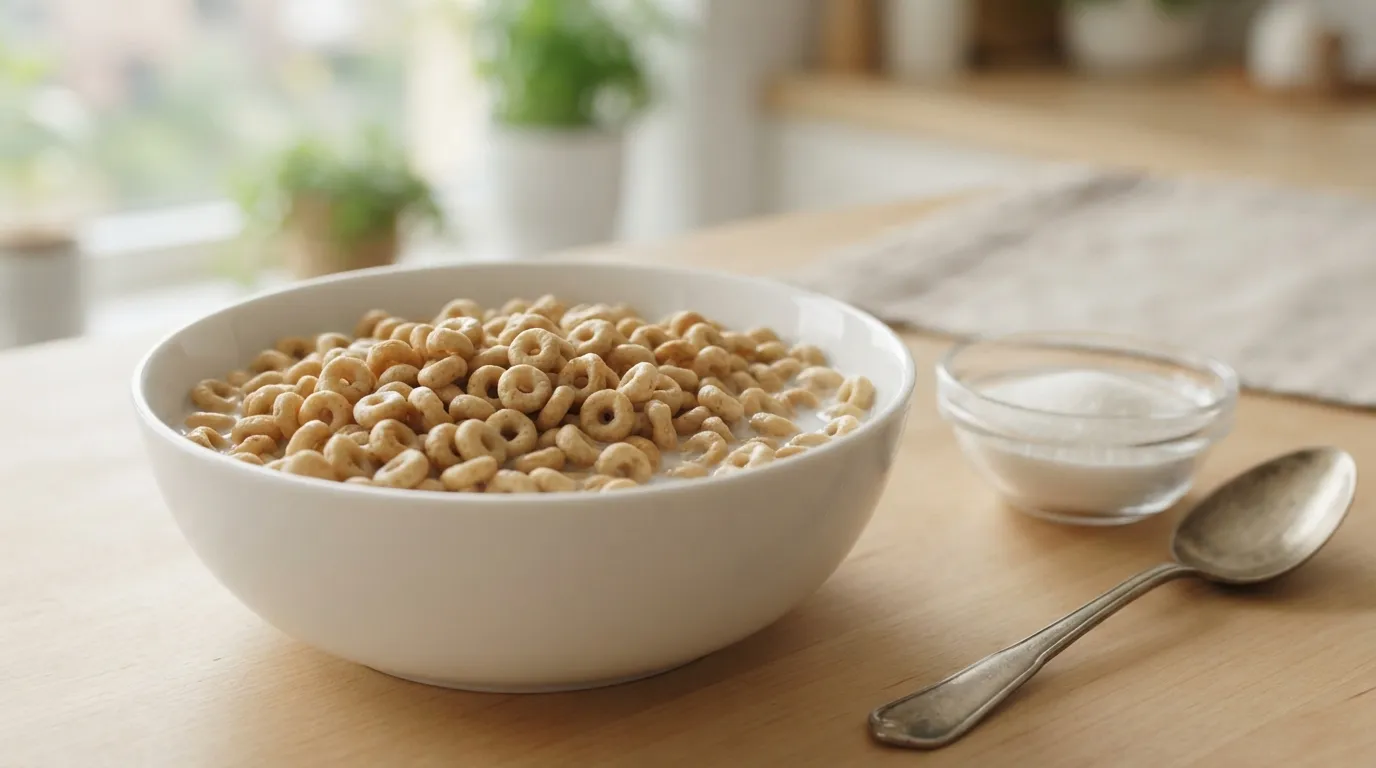
Original Cheerios sit at the bottom of this ranking with about 1 gram of sugar per serving. The label serving is a generous 1½ cups, or 39 grams.
That makes a plain bowl the yardstick for the eleven cereals that follow. The cereal is built mostly from oats, so the flavor comes from the grain with very little help from sweetener.
If a plain bowl tastes flat to you, a level teaspoon of sugar is about 4 grams.1 Sprinkling one on top still leaves you far below a frosted cereal, and you decide how much goes on.
That 1 gram belongs to the plain ring alone. The toasted corn flakes beside it on the shelf carry a few grams more.
#11 – Corn Flakes and Their Two to Four Grams
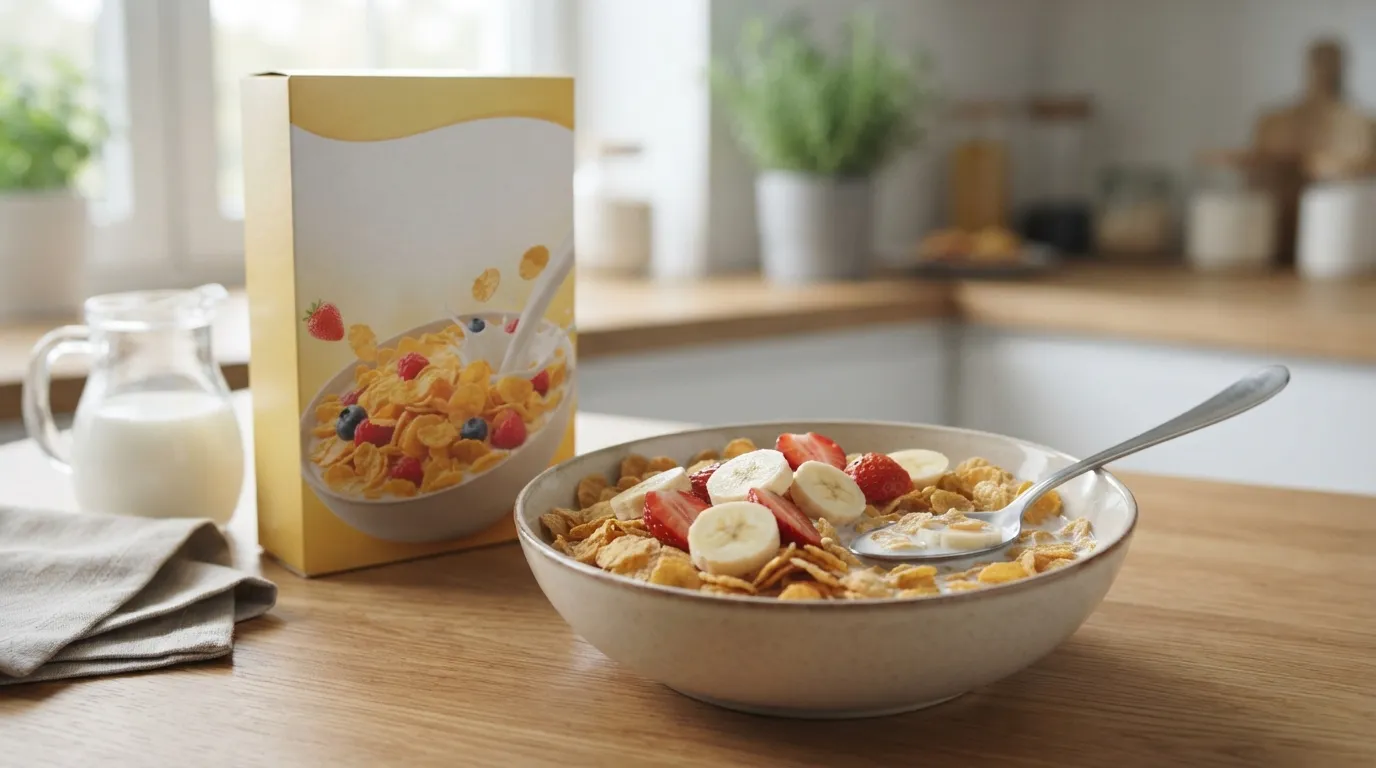
Kellogg’s Toasted Corn Flakes trace back to the early 1900s, which makes the box one of the oldest still sitting in a modern pantry. It has stayed low in sugar through all those decades.
The exact number depends on which source you read, because servings and formulas have changed over time:
- Kellogg’s puts Corn Flakes, Rice Krispies, Crispix and Special K Original at 1 to 4 grams per serving.
- A dietitian roundup gives Corn Flakes 4 grams per serving.
- One table based on a 30-gram serving lists about 1.8 grams.
My own view is that a bowl of plain flakes with sliced fruit beats the frosted version of the same cereal. You control the sweetness bowl by bowl, and the plain box stays useful for other things, such as crushing over a casserole.
That 1 to 4 gram band also holds a crisped-rice cereal that hit shelves in 1928.
#10 – Rice Krispies and Their Light Little Bowl
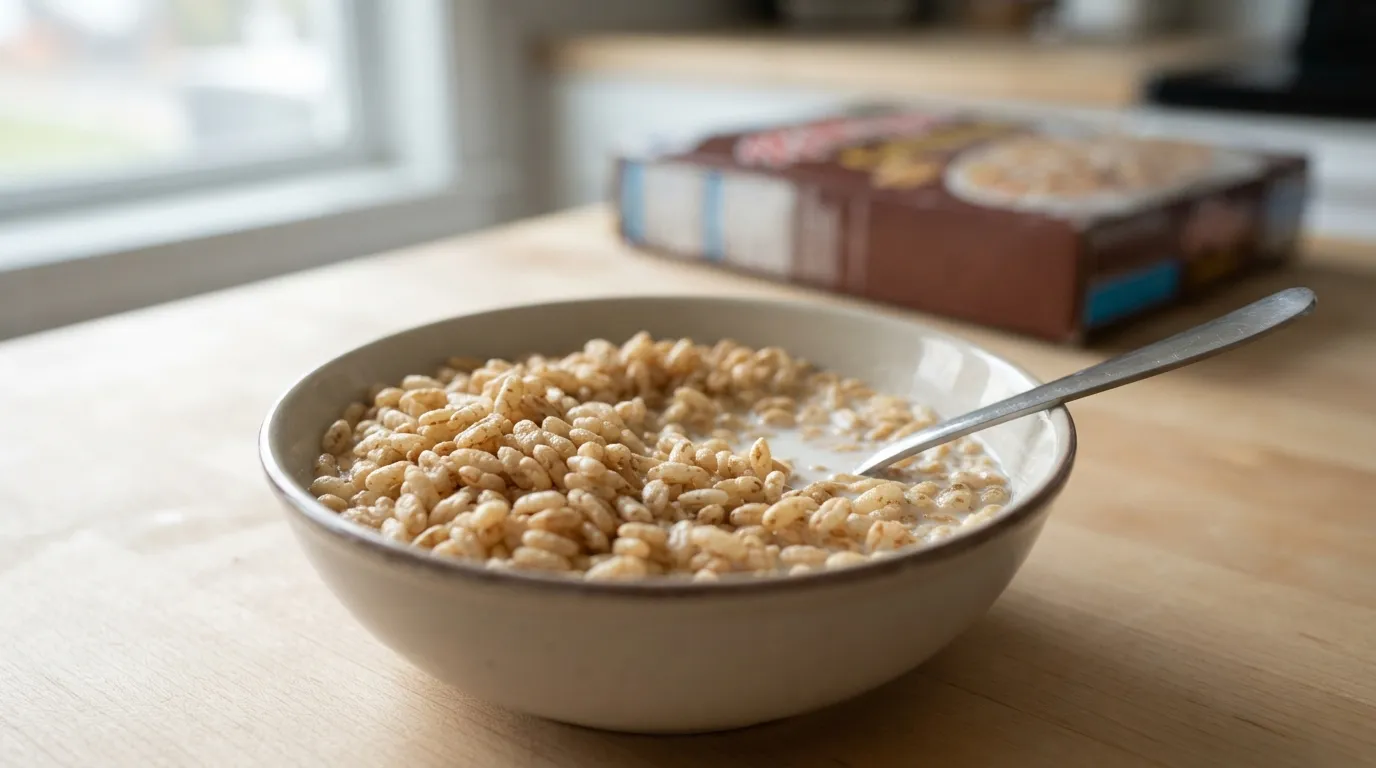
Rice Krispies first went on sale in 1928, and the Kellogg’s box lists about 4 grams of added sugar per serving. For a cereal that old, the number has stayed modest.
Crisped rice is airy, so a cup of it weighs far less than a cup of a dense cereal. That is why comparing sugar per cup across boxes misleads you. The gram weight printed beside the cup is the better figure to check.
Special K Original and Crispix land in the same neighborhood. Several lists give each of them about 4 grams, so choosing among those three comes down to texture rather than sugar.
#9 – Honey Bunches of Oats and Its Wide Range
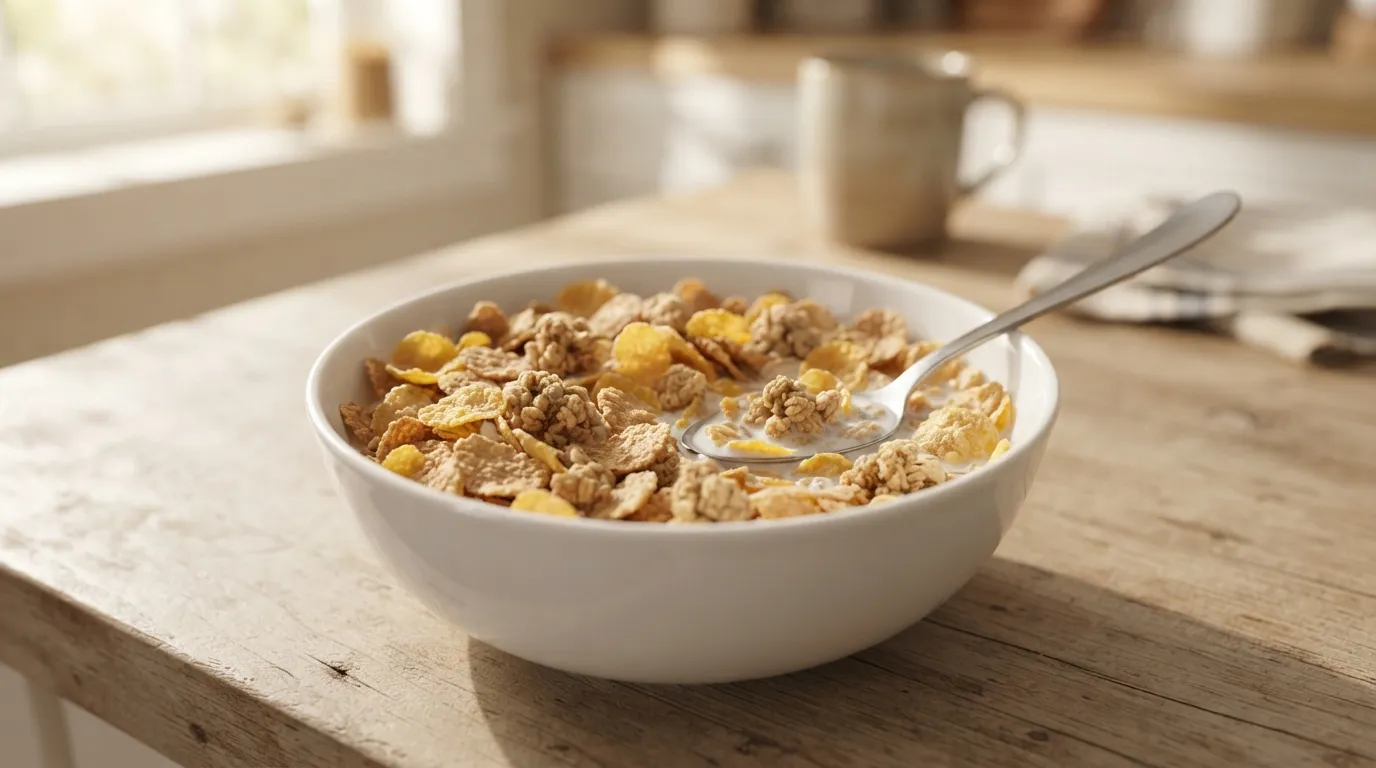
Post’s Honey Bunches of Oats combines flakes with granola clusters. One table lists about 6 grams of sugar per serving.
Newer tables run higher. One 2026 table shows 9 grams of total sugar, 8 of them added, for a 32-gram serving. So the realistic range is about 6 to 9 grams, depending on the flavor and the box in your hand.
I think this is the best bridge cereal on the shelf for someone leaving sweeter boxes behind. The clusters give you a sweet crunch for a number that stays under the 12-gram line crossed by the cereals still to come.
At a Glance
- Realistic sugar range: about 6 to 9 grams per serving
- One 2026 table: 9 grams total, 8 added
- Serving in that table: 32 grams
- Style: flakes plus granola clusters
That 6 to 9 gram range looks small next to the honey-flavored oat ring from General Mills, which sits around 9 to 12 depending on whose table you read.
[article_quiz]#8 – Honey Nut Cheerios, the 1979 Best Seller
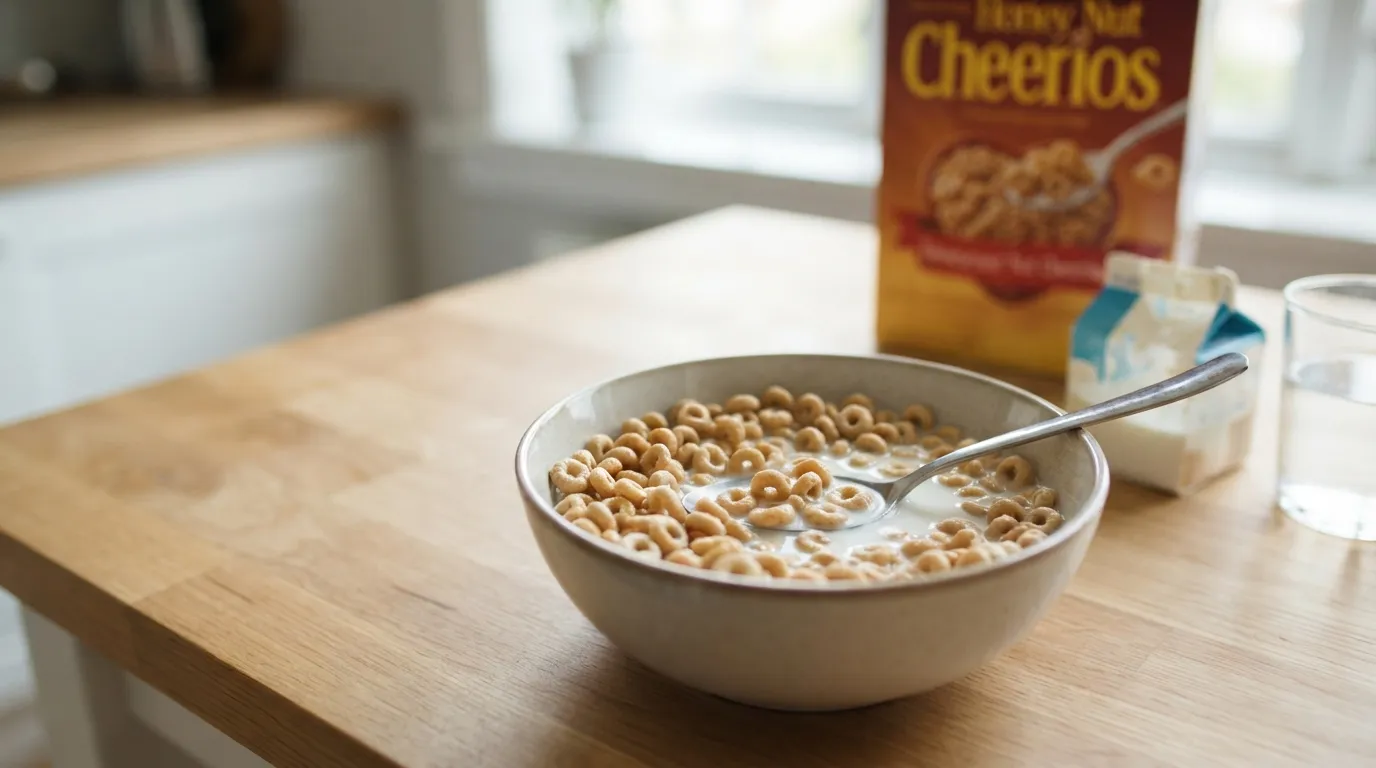
Honey Nut Cheerios were introduced in 1979, and in 2011 they were the best-selling breakfast cereal in the United States.2 A lot of American kitchens have kept a box of them in the cupboard.
Label-based tables show about 12 grams of added sugar in a 1-cup, 37-gram serving. One 2026 ranking lists 9 grams for a larger serving, so check the Nutrition Facts panel on the box you own.
By weight, the cereal is nearly a third sugar. That is about twelve times the sugar of the plain ring it came from.
Honey sounds gentler than frosting, yet this sugar number is close to that of a cereal whose box leads with fiber.
#7 – Frosted Mini-Wheats With Fiber and Frosting
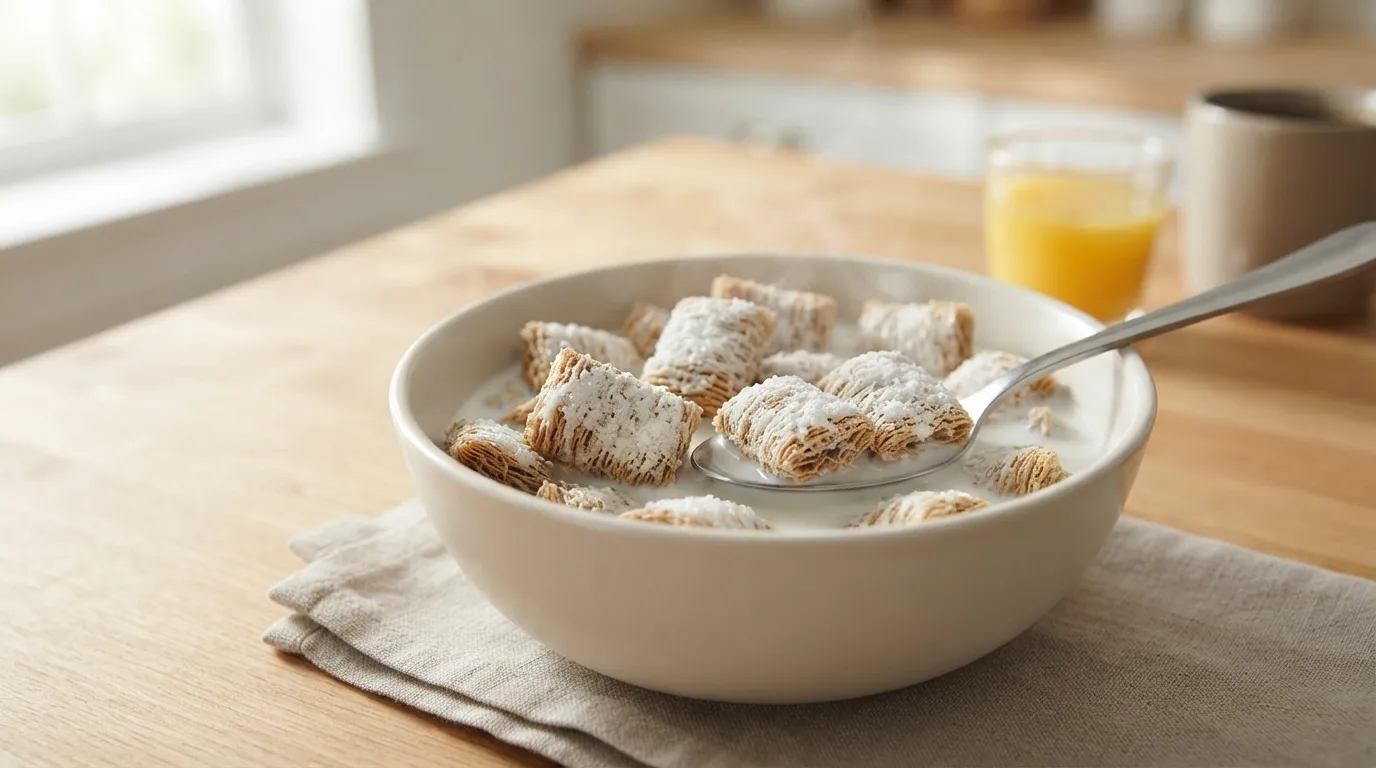
Frosted Mini-Wheats are one of the few sweetened cereals that bring real fiber to the bowl. Kellogg’s lists about 6 grams of fiber alongside 12 grams of added sugar per serving.
Other tables put the sugar a little lower, so the figures vary by source:
- One 2026 table lists 11 grams of added sugar for a 54-gram serving.
- Another gives about 10 grams of sugar with 5 grams of fiber.
Among the sweetened cereals, this is the one whose sugar comes with something extra. The sugar lands in the same range as the frosted cereals still to come, but the fiber is a real difference.
Fiber changes the case for this box, and it does not carry over to the cinnamon cereal that lands on the same 12-gram line.
#6 – Cinnamon Toast Crunch on the 12-Gram Line
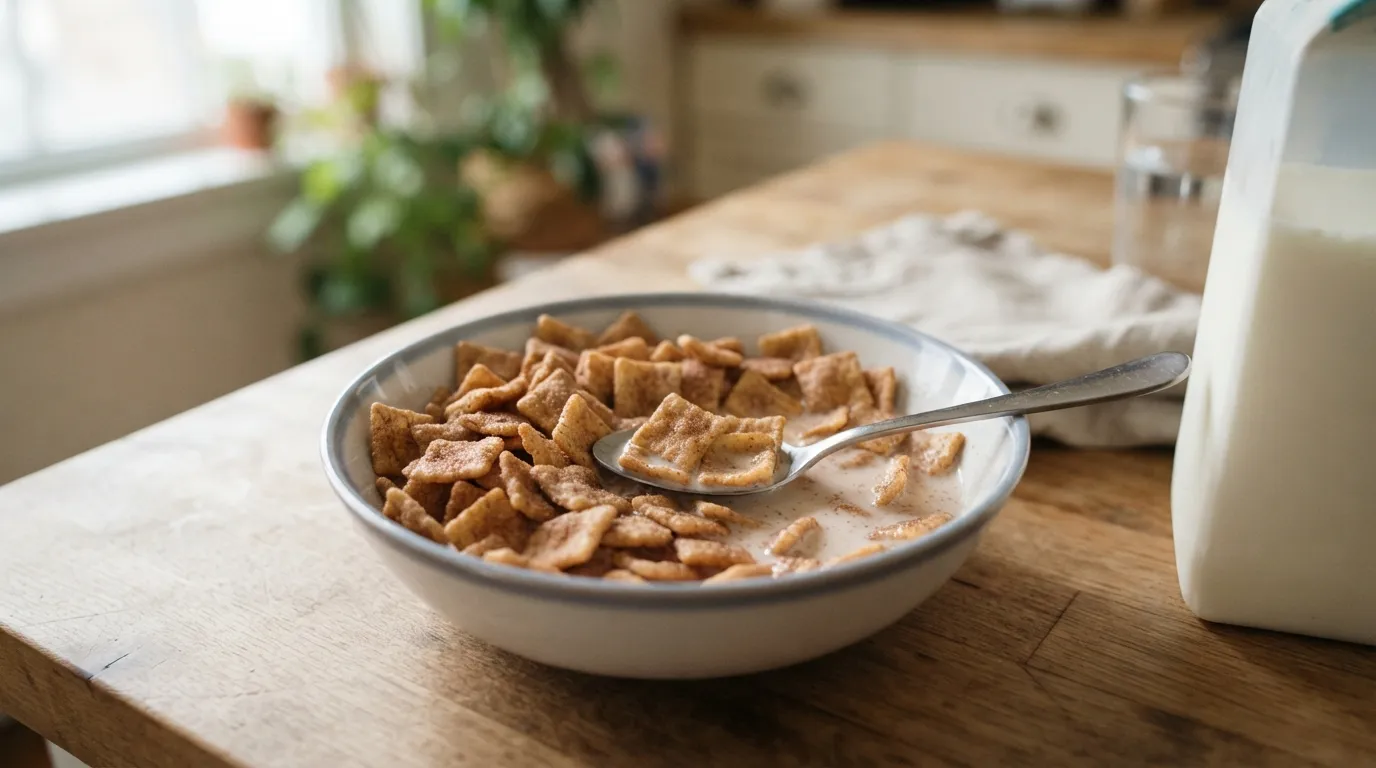
A published report on cereal nutrition listed six well-known cereals at 12 grams of added sugar per serving. Cinnamon Toast Crunch is among them, along with Lucky Charms, Frosted Flakes, Froot Loops, Reese’s Puffs and Fruity Pebbles.
The serving size shifts how that 12 reads. One table uses a 41-gram cup, which makes the cereal about 29 percent sugar by weight, while another uses a 36-gram serving, which comes to about a third.
This is the line you cross when you step into the sweet-cereal aisle proper, and a few quick figures show how it reads.
Fast Facts
- Added sugar on this line: 12 grams per serving
- In teaspoons: about 3, at roughly 4 grams each
- Share by weight: about 29 percent in a 41-gram cup
- Share by weight: about a third in a 36-gram serving
Twelve grams is also the figure on a rainbow-colored cereal with a different serving size, and that changes the math.
#5 – Froot Loops and the 1⅓ Cup Serving
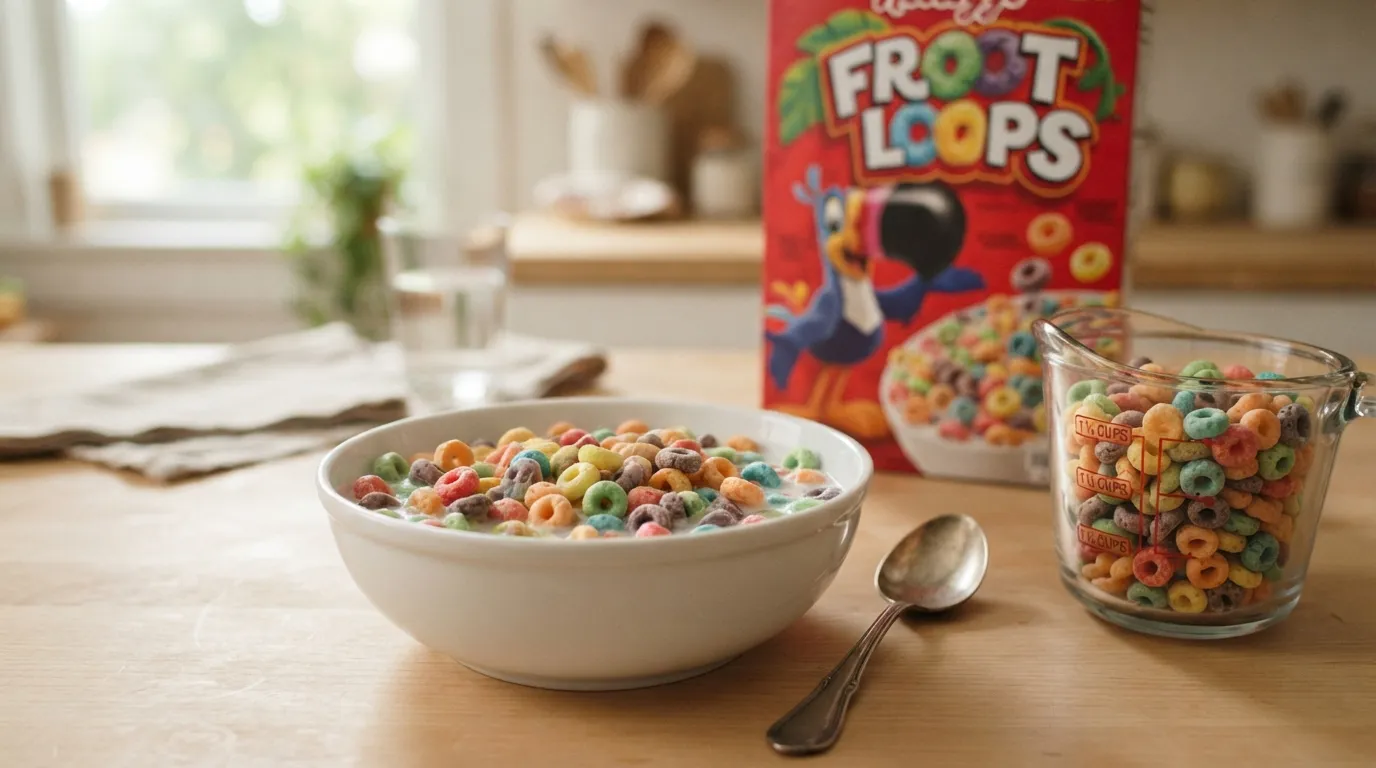
Kellogg’s introduced Froot Loops in 1963. The box has changed in many small ways since then, so an old box in your collection may carry different numbers.
Recent labels in the dietitian roundups give these figures:
- Serving: 1⅓ cups
- Sugar: 12 grams, with 2 grams of fiber
That serving is a third of a cup larger than the 1-cup servings on several neighboring boxes. The same 12 grams is spread over more cereal, so the sugar share by weight is about 31 percent, against 32 percent for Frosted Flakes.
The extra third of a cup flatters Froot Loops, though a bowl poured bigger than the serving erases that advantage. The frosted corn flakes next in line run into the same problem.
#4 – Frosted Flakes and the Bowl You Pour
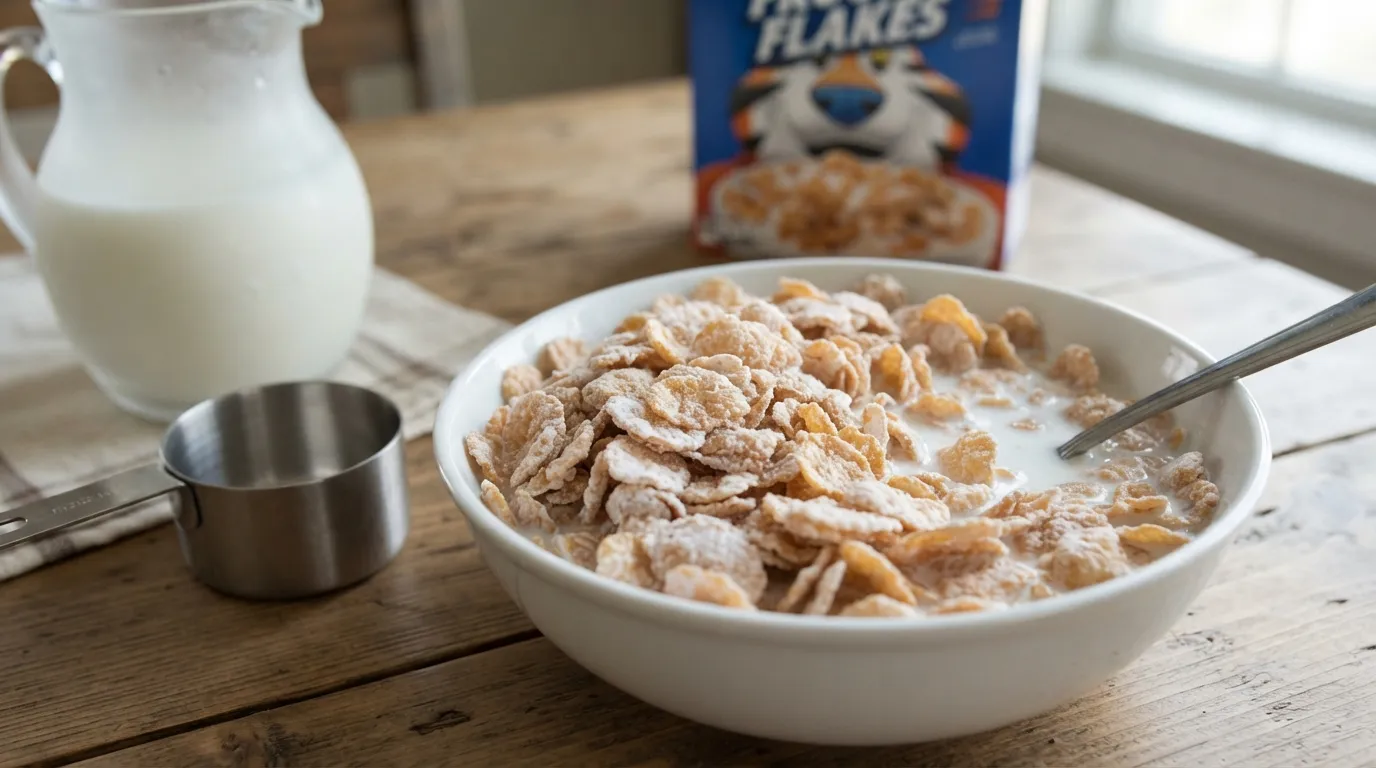
Tony the Tiger has been on Frosted Flakes boxes since 1952. The recent label shows 12 grams of sugar per 1-cup serving.
That is the serving, and the bowl is a separate matter. In a 2008 test, Consumer Reports watched 91 children aged 6 to 16 pour their own cereal, and they served themselves about 50 to 65 percent more than suggested for three of four cereals.3
For Frosted Flakes, that bowl would have held about 18 grams of sugar, against the 11 grams listed on the box at the time. The label figure has since moved up to 12, which shows how much these numbers change from year to year.
I would take a measuring cup out for sweet cereals like this one. It is not worth the trouble for plain Cheerios, where even a heaping bowl stays low.
#3 – Lucky Charms, a Third Sugar by Weight
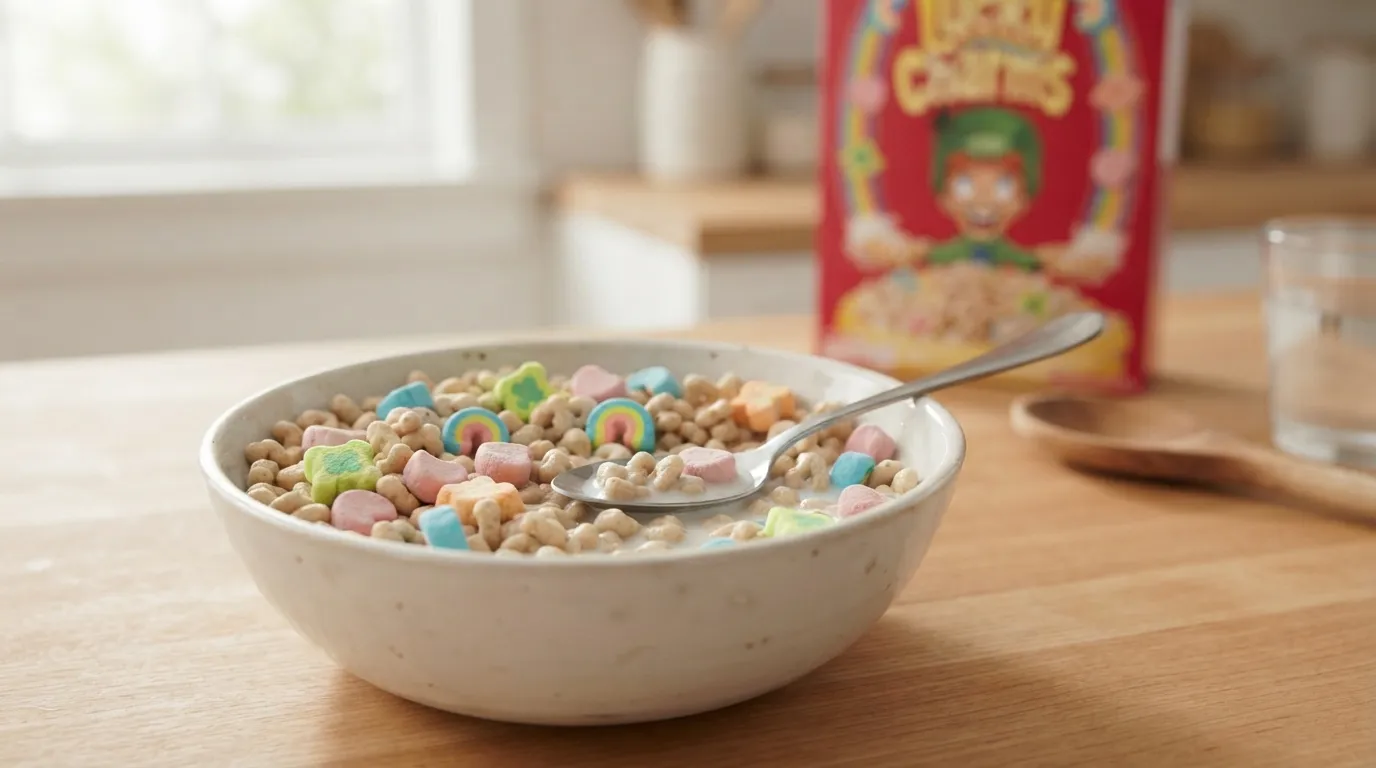
Lucky Charms list 12 grams of added sugar in a 1-cup, 36-gram serving. That is the same sugar number as Frosted Flakes, in a slightly smaller serving.
The smaller serving matters, because 12 grams in 36 grams works out to about 33 percent sugar by weight. Among the cereals that share the 12-gram line, that is one of the higher shares.
Marshmallow pieces are light and puffy, so a bowl can look full at well under the weight on the label. A measuring cup or kitchen scale removes the guesswork.
Twelve grams is where the frosted and marshmallow cereals cluster. The first box to rise above it comes from the Quaker side of the aisle.
#2 – Cap’n Crunch Matched by a Whole-Grain Rival
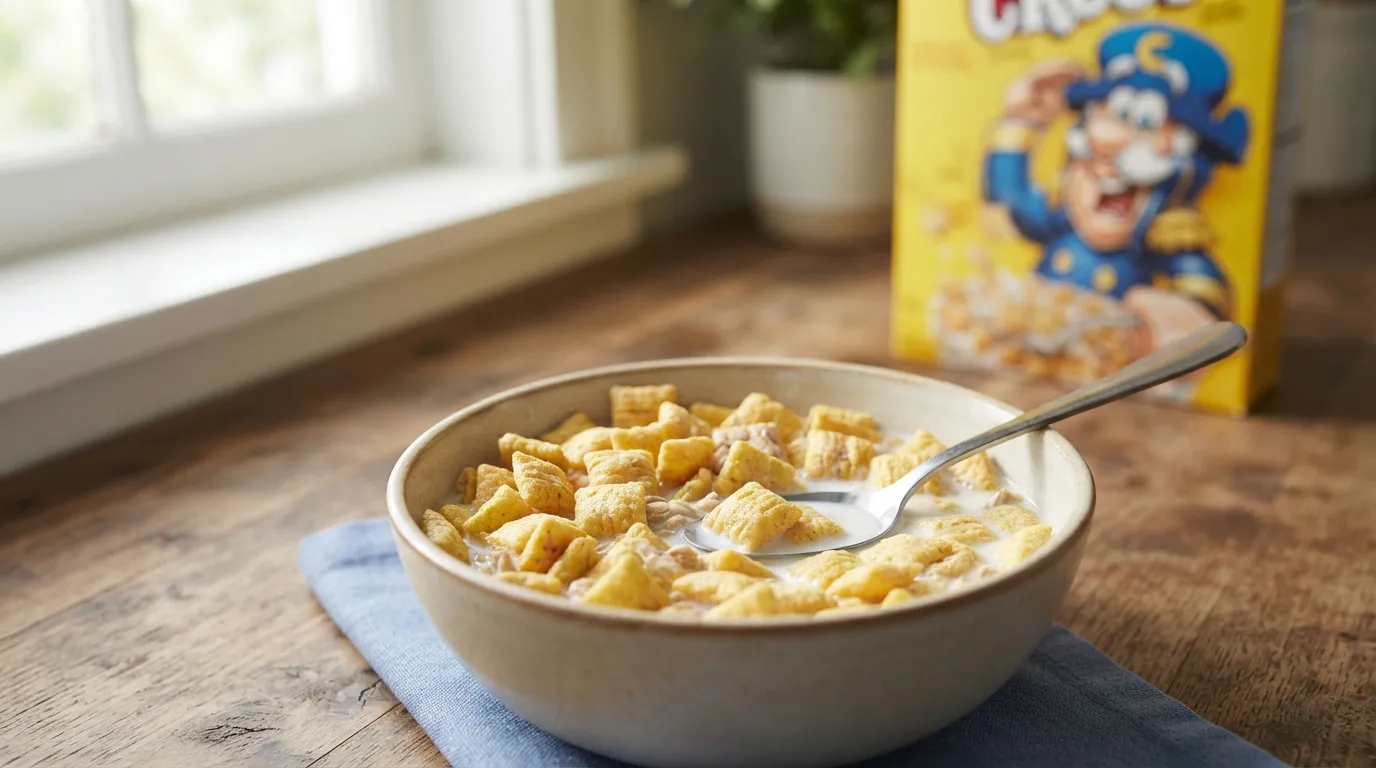
Cap’n Crunch has been in American cupboards since the 1960s. One 2026 table lists 17 grams of total sugar, 16 of them added, in a 36-gram serving.
At 16 or 17 grams, it carries about 4 or 5 grams more than the 12-gram cereals just before it on this list. The yellow box with the captain on the front is not the only one in the aisle with that much sugar.
Quick Compare
- Cap’n Crunch: 16 grams added in a 36-gram serving, roughly 44 to 47 percent sugar by weight depending on whether you count added or total.
- The 12-gram cereals before it: about a third sugar by weight at a 36-gram serving.
- The gap: about one extra teaspoon of sugar or a bit more, at roughly 4 grams a teaspoon.
Consumer Reports found that a serving of the healthy-sounding Smart Start has about the same added sugar, 4½ teaspoons, as a serving of Cap’n Crunch.4 A whole-grain claim on the front tells you about the grain and says nothing about the sugar, so read the label even on the boxes that sound virtuous.
#1 – Honey Smacks, Half Sugar Since the Fifties
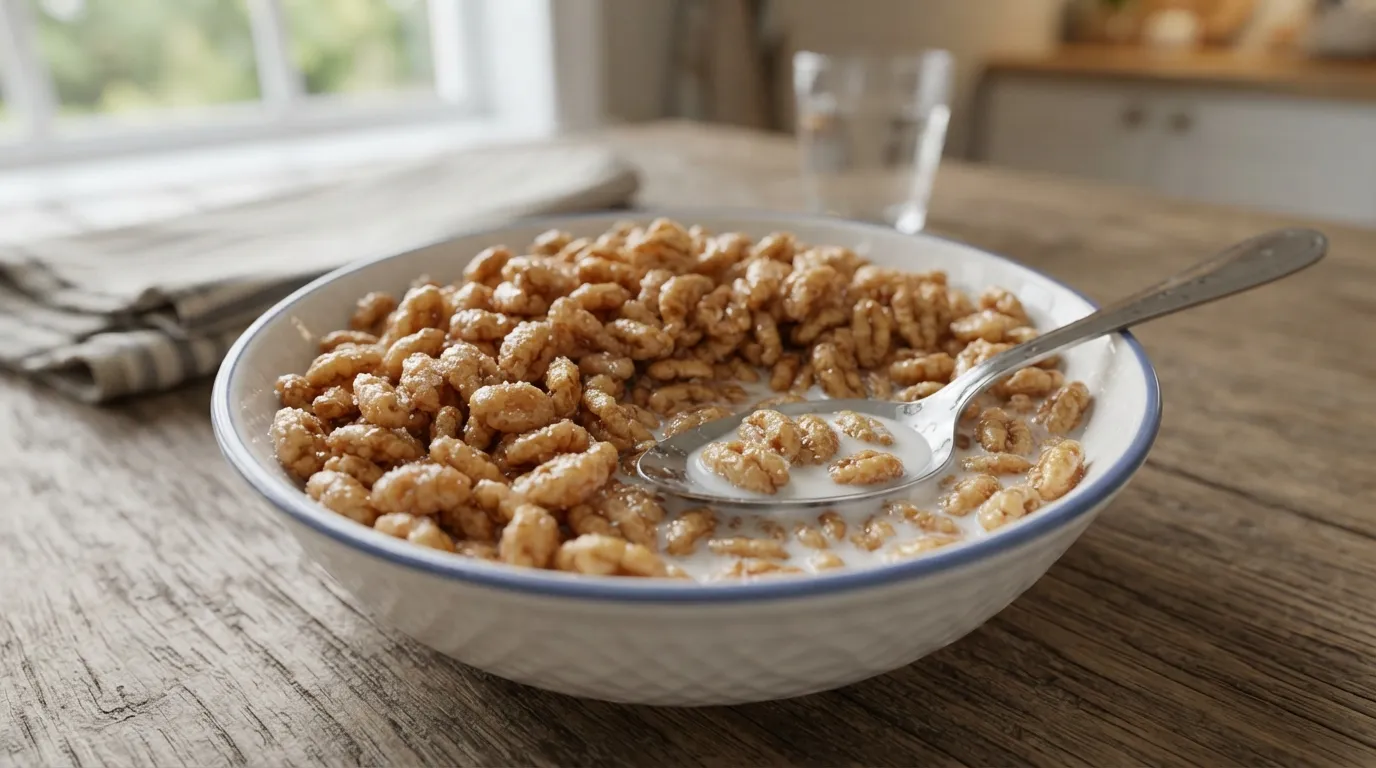
Honey Smacks has the highest sugar per serving of any cereal on this list, at about 18 grams. The label serving is 36 grams, which makes the cereal about 50 percent sugar by weight.
It has held this spot for a long time. The cereal launched in 1953 as Sugar Smacks, and Consumer Reports found in 2008 that Honey Smacks and Post Golden Crisp were the two cereals above 50 percent sugar.5 6
Consumer Reports also noted that a serving has at least as much sugar as the 12 grams in a Dunkin’ glazed doughnut.5 At 18 grams, the cereal comfortably clears that bar.
Here is how the label serving compares with a bigger bowl:
- A 36-gram label serving: about 18 grams of sugar.
- A 60-gram bowl at the same ratio: about 30 grams.
- The American Heart Association recommends no more than 25 grams of added sugar a day for women and 36 grams for men.1
Set against those limits, one label serving covers 72 percent of the daily limit for women and 50 percent for men. This is the clearest case on the list of a label serving falling short of the bowl people actually pour, because a serving of a cereal this dense looks small in a big bowl.
[article_quiz]A Measuring Cup and One Minute With the Label
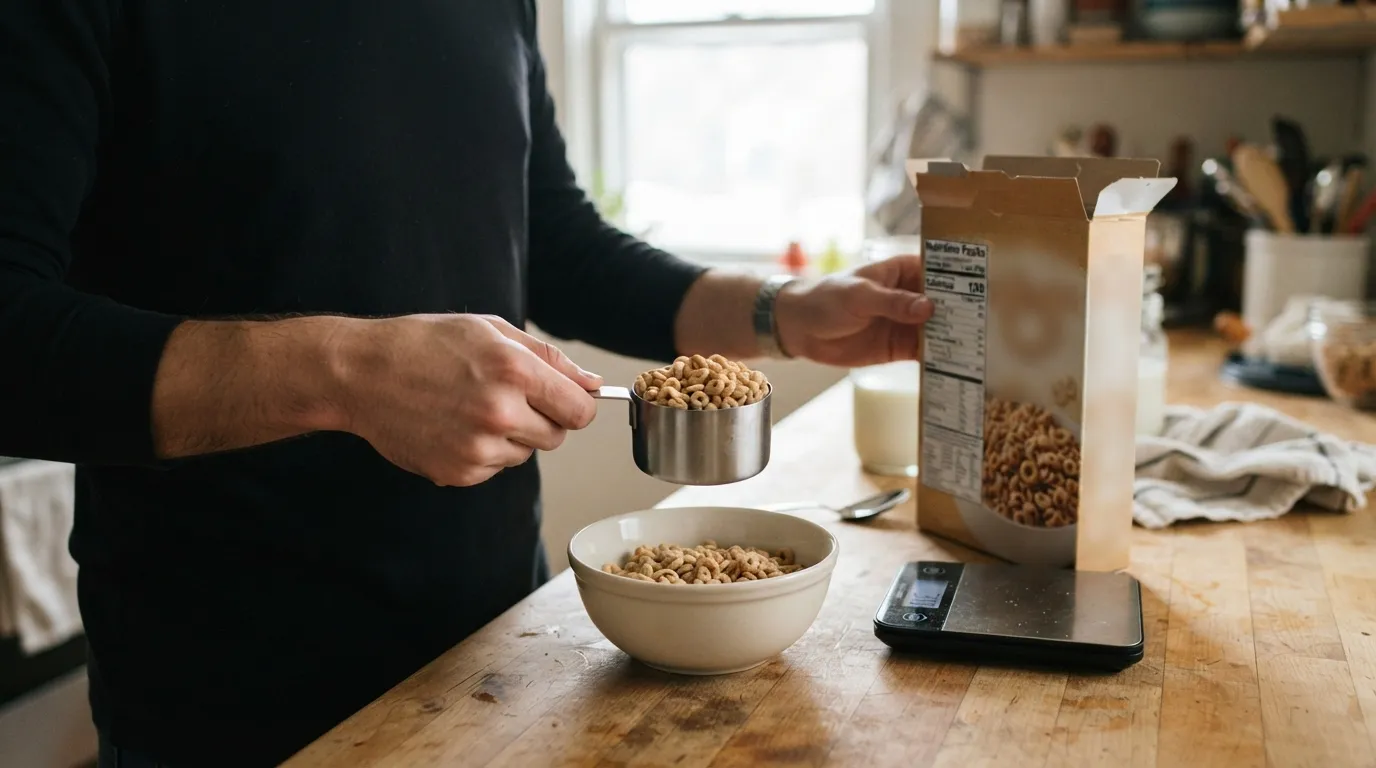
The useful number is the one for your own bowl, and you can find it in a minute. Weigh or measure what you pour once, then read the grams of sugar and the serving size on the box and scale to match.
After that, the ranking above is less a verdict on any box than a way to decide where it belongs in your week. A cereal near the top can still be an occasional bowl, and one near the bottom can still take a spoonful of sugar or a handful of berries.
Worth Knowing
- Compare serving size in grams, not cups, because cups hold different weights of cereal.
- Check the added sugars line, since fruit can inflate the total.
- Divide sugar grams by serving grams for a quick percent by weight.
- Labels change, so the box in your hand beats any table.
Which cereal did you grow up with, and how much of it does your usual bowl hold now?
- AHA Healthy Food Facts: https://www.heart.org/en/healthy-living/healthy-eating/healthy-food-facts
- Honey Nut Cheerios History: https://en.wikipedia.org/wiki/Honey_Nut_Cheerios
- Today Show Cereal Study: https://www.today.com/health/study-some-cereals-more-50-sugar-1c9404937
- Consumer Reports Cereal Review: https://finance.yahoo.com/news/best-breakfast-cereals-consumer-reports-110005911.html
- Consumer Reports 2008 Press Release: https://www.consumerreports.org/media-room/press-releases/2008/10/consumer-reports-some-breakfast-cereals-marketed-to-children-are-more-than-50-percent-sugar/
- Honey Smacks Overview: https://en.wikipedia.org/wiki/Sugar_Smacks