9 Air Fryer Mistakes That Are Making Your Food Soggy
You waited, the kitchen smelled promising, and then the basket came out with fries that bend, wings with rubbery skin and a crust like a damp sponge. An air fryer is a small oven with a strong fan inside, and that fan is the only reason food comes out crisp. When something blocks the moving air or adds water to the basket, the same machine steams your dinner instead.
The odd part is that most of these mistakes feel like good kitchen habits. The cheapest fix in this countdown costs only a few extra minutes, and it explains why several of the others fail. We start with the water your food carries in before it ever meets the heat.
#9 – Marinade and Ice Left on the Food
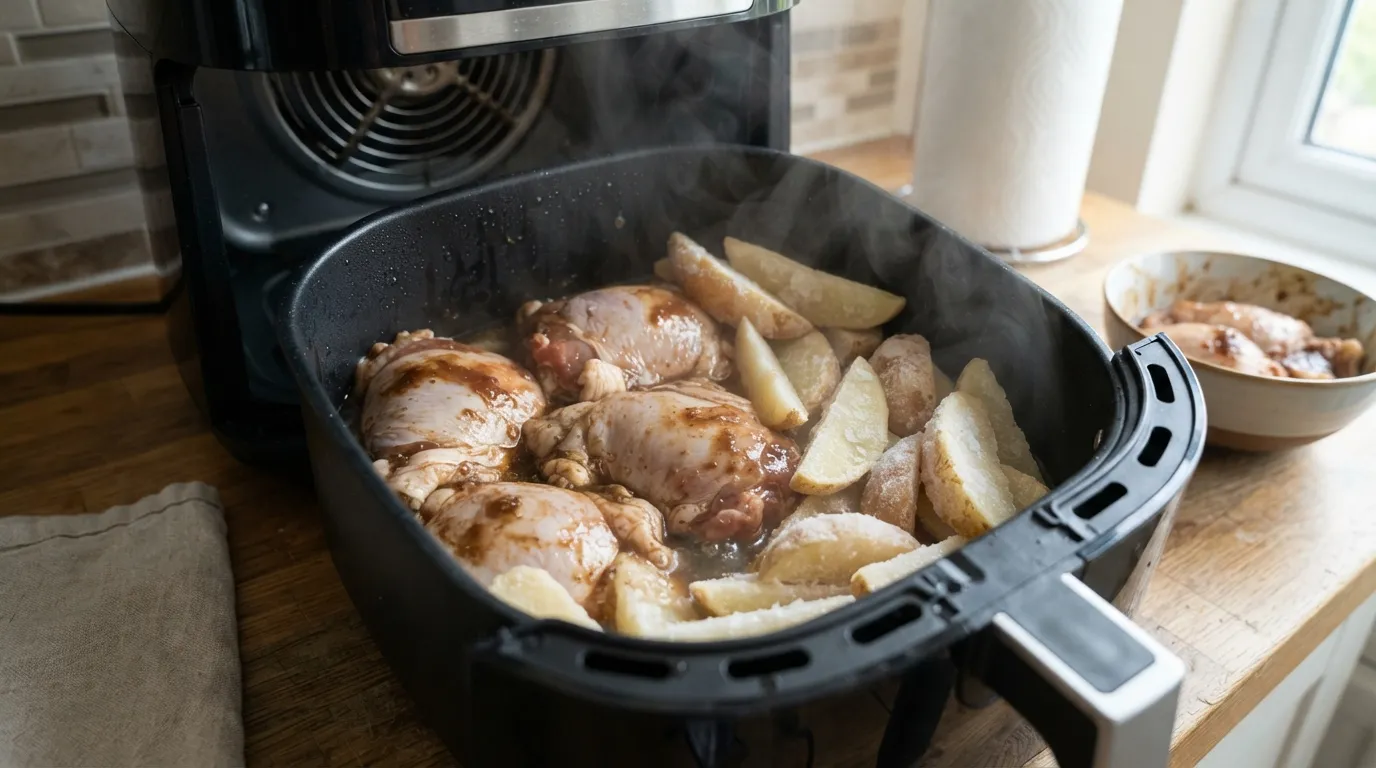
Crisping means driving water off the surface of the food, so any water that arrives with it has to leave before browning can begin. A marinated chicken thigh or a handful of frozen potatoes can steam in the basket for minutes before it takes on any color.
Drain marinated food and blot it before it goes in. Frozen pieces that come out soggy often carry too much ice, so let them sit a few minutes and pat them dry with a towel first.
Breading brings its own trouble. The moving air can blow breading around the basket, particularly when you breaded the food yourself instead of buying a breaded frozen product.
- Liquid left from a marinade or from thawing
- Ice crystals clinging to frozen pieces
- Washed vegetables that are still damp
Dry food still needs a little fat to brown well, and the amount is smaller than the habit of pouring suggests.
#8 – More Oil Than the Food Needs
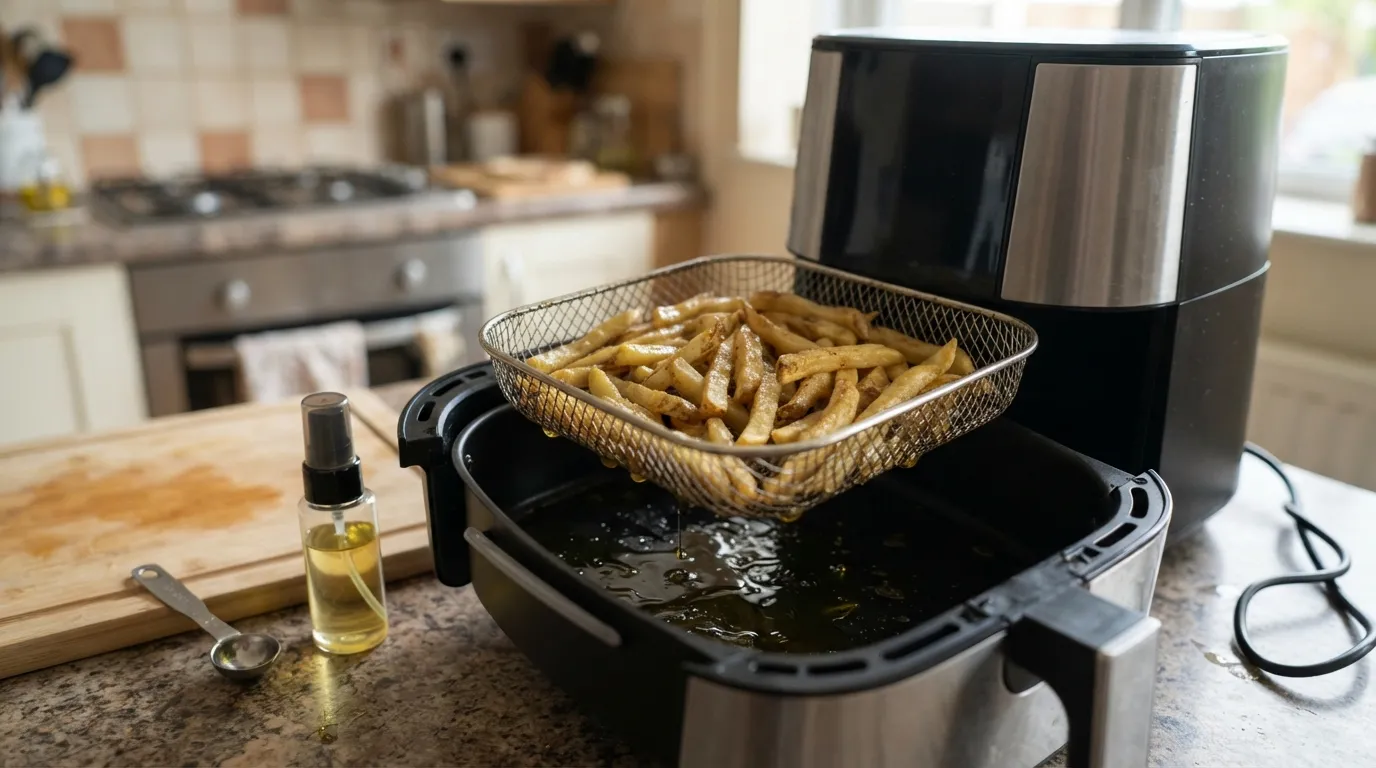
Too much oil makes food greasy and soggy, and the excess can drip into the drawer and cause smoke. An air fryer has no pool of hot oil to carry heat to the food, so the oil’s only job is to help the surface brown.
According to one guide, a light spray or a quick toss with a teaspoon or two is usually plenty. That is a small amount, and tossing the food in a bowl spreads it more evenly than drizzling it over the basket.
Quick Compare: Getting Oil onto Food
- Tossing in a bowl: thin, even film, best for cut vegetables and potatoes
- Pump mister: a light touch that suits breaded or flat foods
- Drizzling over the basket: uneven coverage, and oil can pool underneath
Read the package before you add any. Many frozen foods already have oil in their coating, so a bag of fries or nuggets may need very little extra, which is one way the freezer aisle ends up giving you a greasy result.
How the oil gets onto the food matters as well, because the aerosol can in many kitchens carries more than oil.
[article_quiz]#7 – Aerosol Cooking Spray Inside the Basket
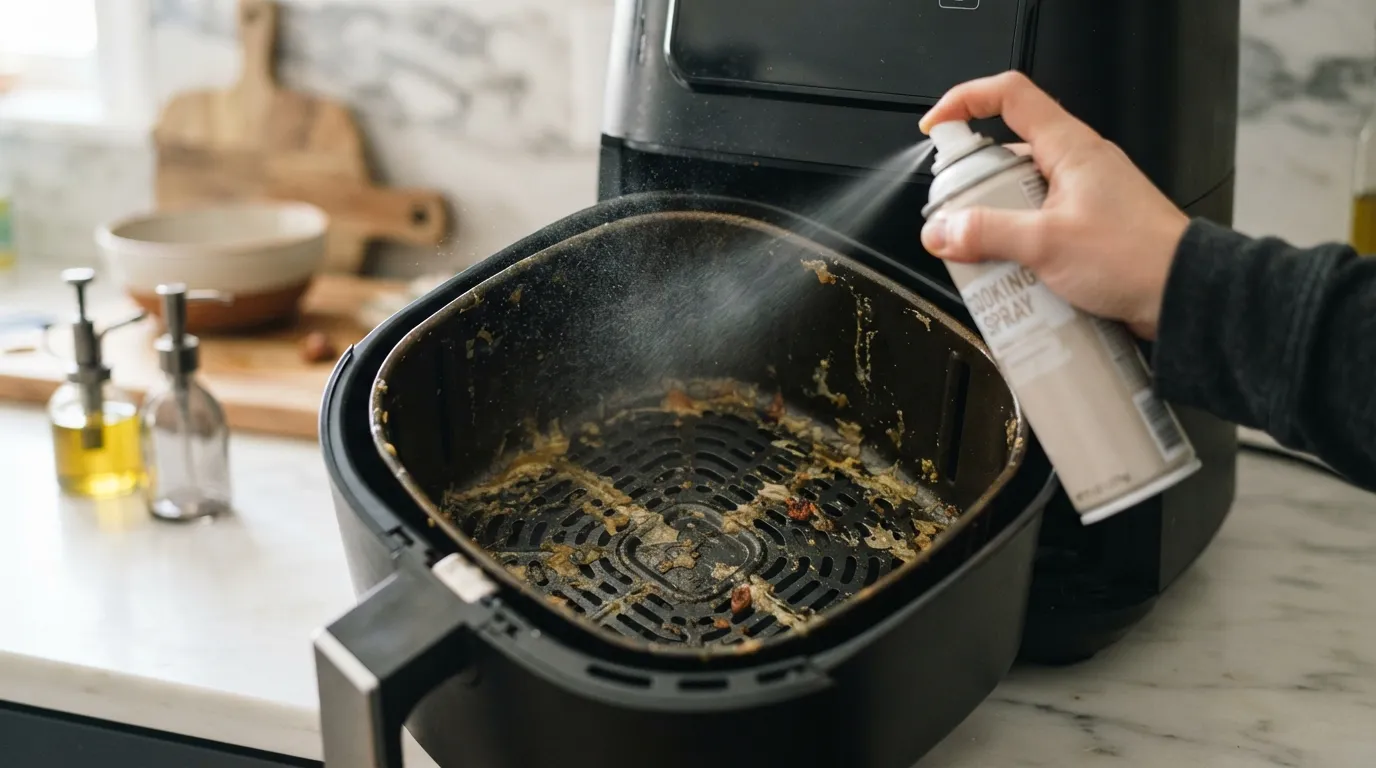
Propellants such as butane or propane in aerosol sprays can damage a nonstick coating and leave a sticky residue that builds up over time.1 A tacky basket grips food, so a spray meant to prevent sticking can end up causing it.
Instant Pot says sprays with propellants can damage the finish on its cooking trays, and its guide recommends an oil spray bottle or a propellant-free spray. A refillable pump mister filled with plain oil does the same job without the additives.
The fine mist can also drift onto the heating element when you spray food while it sits inside the machine. Spraying the food before it goes in keeps most of the mist off the appliance.
If your basket is nonstick, the aerosol can belongs in the pantry. Once the pump bottle is filled, it costs you nothing in convenience.
Even a lightly oiled batch browns unevenly when it never moves, so what you do with the basket partway through the cook matters too.
#6 – Shaking the Basket Too Little or Too Often
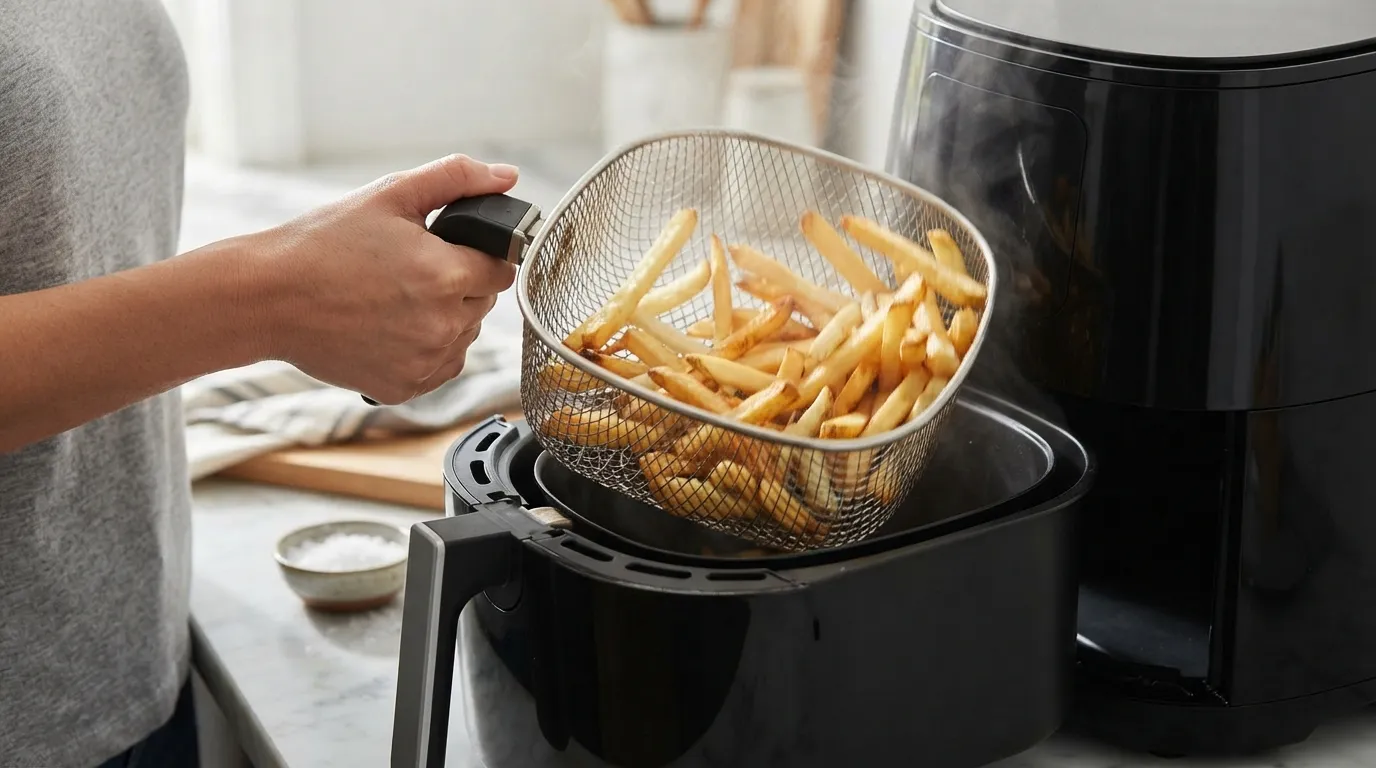
Fries, onion rings and vegetables cook more evenly when you shake the basket or turn the food partway through. Pieces lying against the basket floor sweat in their own steam while the tops dry out, so a shake gives each side a turn in the moving air.
Every time you pull the basket out, the machine loses heat, so shaking too often works against you. One shake near the halfway point is the usual advice, and a long cook may earn a second.
Shaking can remedy some of the effects of overcrowding, but not all of them. It is a good habit and a poor rescue, because if you cannot shake the food freely, the basket is already too full.
Shaking works only as well as the room you shake in, and that depends on the basket you own.
#5 – A Basket That Does Not Fit the Food
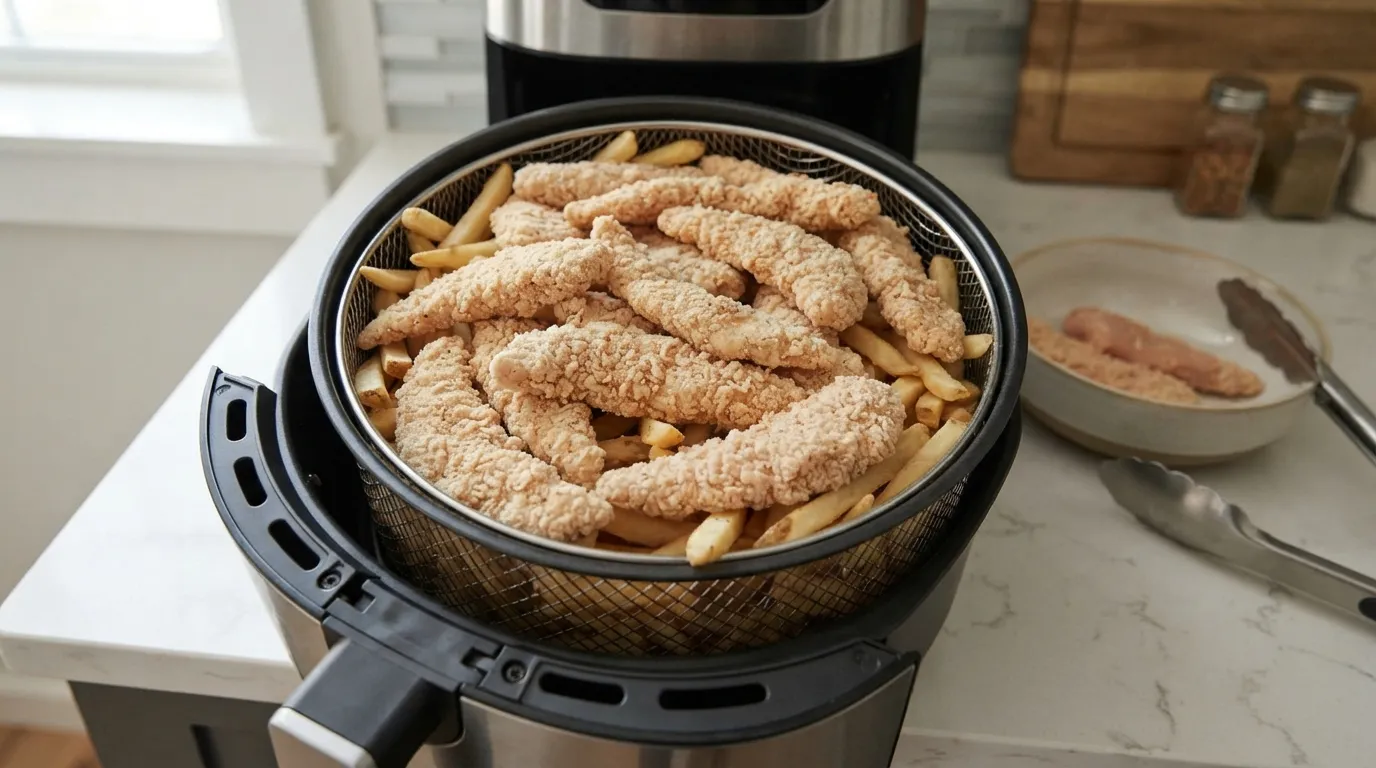
The average air fryer is said to hold around six quarts, enough to cook for about four people at a time. Capacity varies by model, so a smaller basket will hold less, and it is worth knowing which size you have before you plan a meal.
Shape matters along with size, since a round basket offers less cooking area than a square one. Two baskets with similar stated capacity can therefore fit different amounts of food in a single layer.
Fast Facts
- Stated capacity varies by model, so check the number for yours
- A round basket gives less cooking area than a square one
- Food cooks best in a single layer with air around it
- A raised rack can let air reach the underside
If your basket has a flat solid floor, a small raised rack lifts the food off the bottom and lets air circulate underneath. Check that any rack you buy fits your model, because the wrong size can crowd the food all over again.
If you often cook for a crowd, a bigger or squarer basket is the honest fix. A second batch in the basket you already own is the cheaper one.
#4 – Skipping the Preheat on Thin Crisp Foods
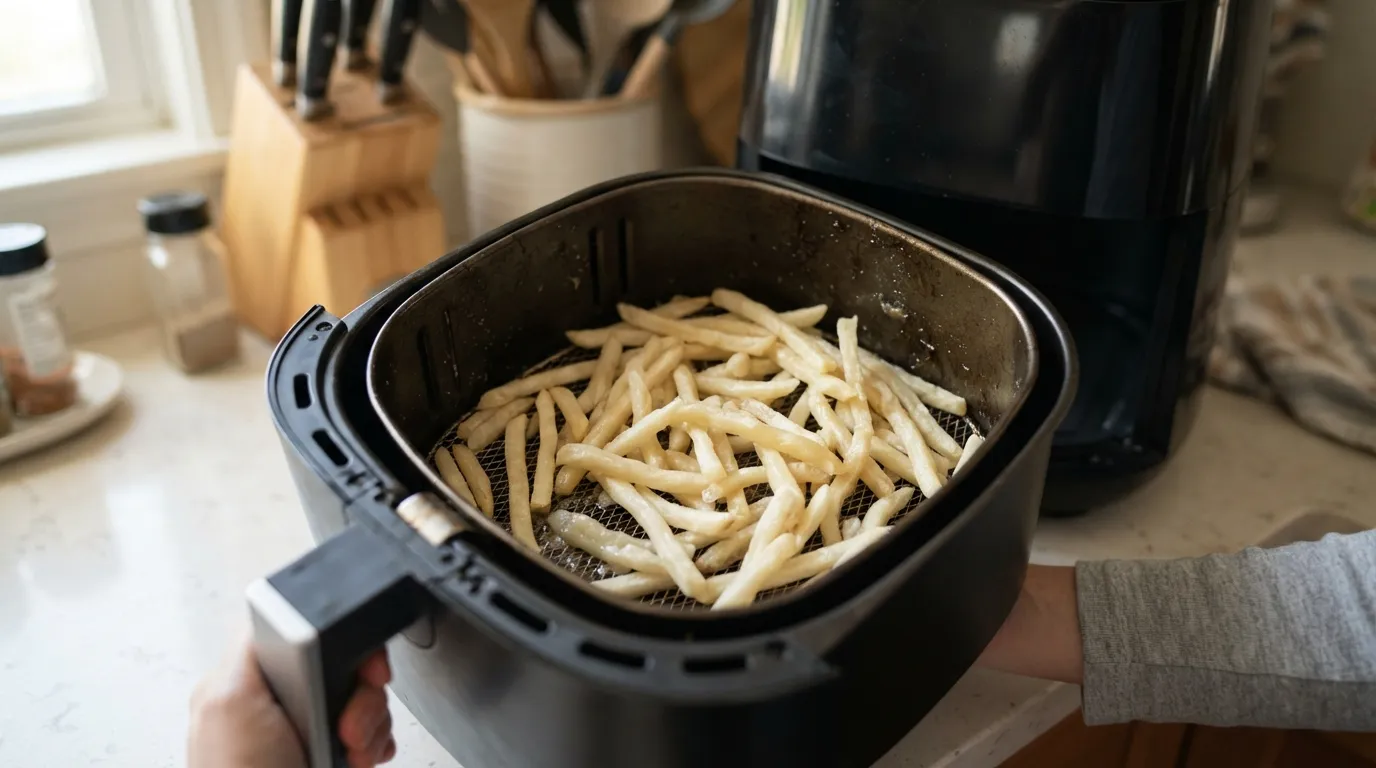
The Kitchn advises preheating every time, because without it the machine can steam food instead of giving you the crunch you expect.2 Not everyone agrees, and the answer depends on both the food and the recipe.
Air Fryer World’s testing across multiple brands and models found that preheating helps foods thin enough to cook through and crisp, such as thin cuts of meat and precooked frozen foods.2 3 Thicker foods can burn on the outside before they cook through.
- Preheat for fries, nuggets, thin steaks and anything meant to be crisp
- Skip it for long roasts and thick cuts that need slow cooking
Most air fryers reach temperature within about three to five minutes, depending on size.4 For anything small and crisp, that wait is worth paying, and for a long roast it usually is not.
A hot, empty basket is also the wrong place for loose paper, which brings us to the liner many cooks add for easy cleanup.3
#3 – Solid Paper or Foil Across the Basket Floor
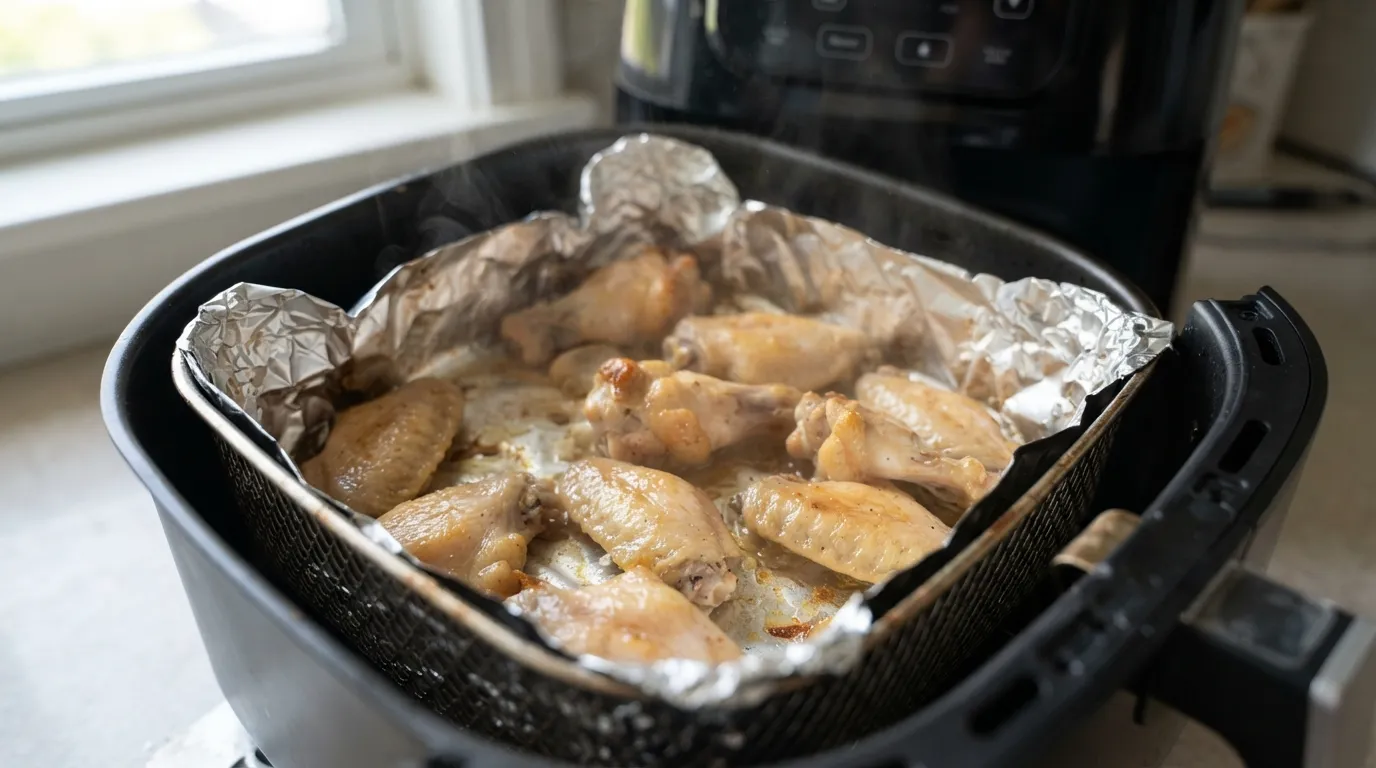
Perforated parchment lets air circulate under the food, while a solid sheet covering the whole basket floor causes soggy results. Foil can do the same, since it may block the air from flowing around the food.
Philips says paper in the grease-collection pan disrupts airflow, and Instant Pot says not to use parchment or paper liners in its air fryers. Your manual settles whether your model allows a liner at all.
Never run a loose liner through an empty machine, because the fan can lift it toward the heating element. Put the food on the liner so its weight holds the paper down, and cut the sheet to lie flat inside the basket.
- Perforated parchment, if your manual allows paper
- No liner at all for dry foods like fries and nuggets
For dry foods, I would leave the liner out entirely. The bare basket often gives better airflow and browning, and the cleanup you save is not worth a pale underside.
#2 – Cook Times Written for Another Machine
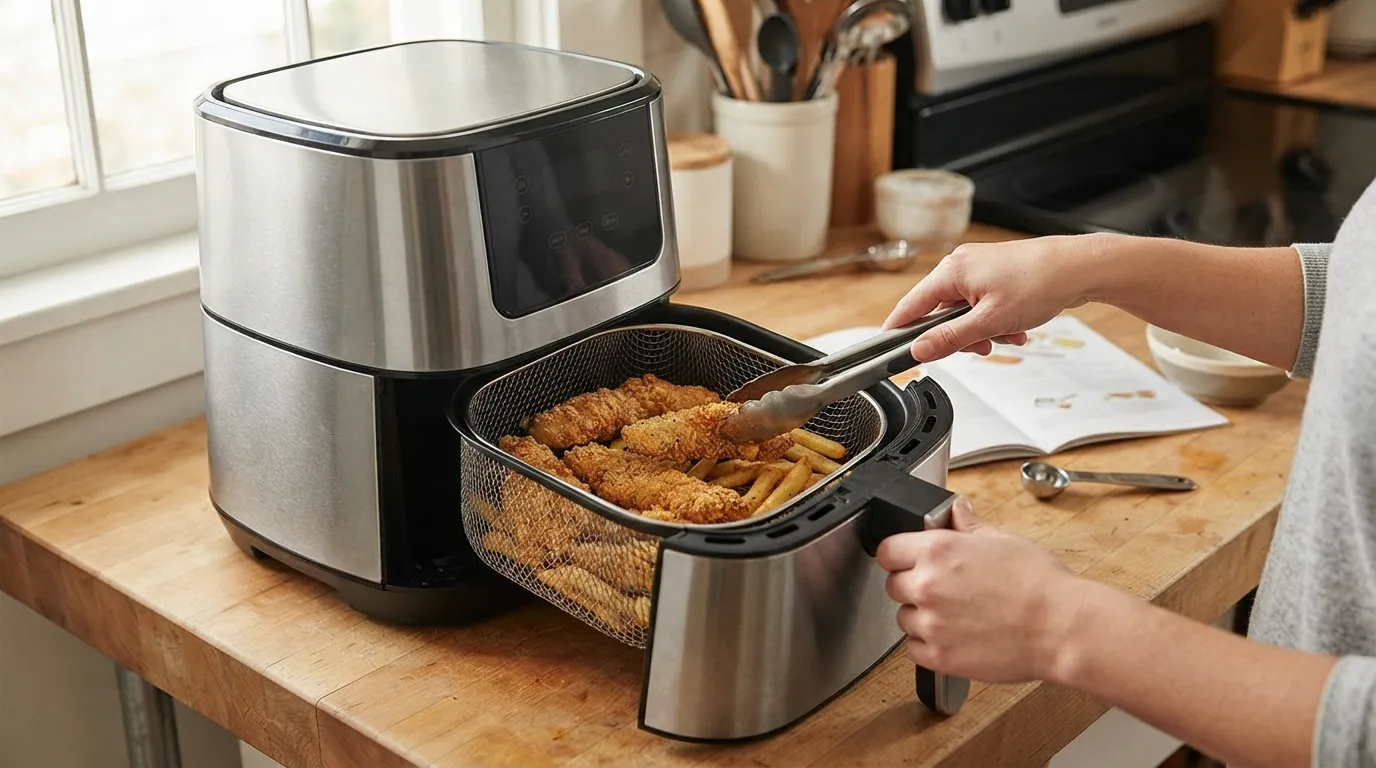
The manual is the best guide to whether you should preheat, and if it says nothing, the recipe directions come next. Air fryers differ in size, shape and fan power, so a time from one machine is only a starting point on another.
Good recipes often say what size of air fryer they were developed in, and that note is worth reading. A time range, instead of one fixed number, is a polite way of telling you to judge the food by how it looks and not by the clock alone.
Worth Knowing
- Your manual comes first, and the recipe directions come second
- Look for the air fryer size a recipe was developed in
- A time range means check the food, not just the timer
- Start checking early on a new machine
Food also does not need to be perfectly spaced for air to reach it. A single layer can include pieces that lightly overlap, while a heap leaves the middle with no airflow at all.
Those weights bring up the biggest question of all: how much food a basket can hold at one time.
#1 – A Basket Packed Too Full
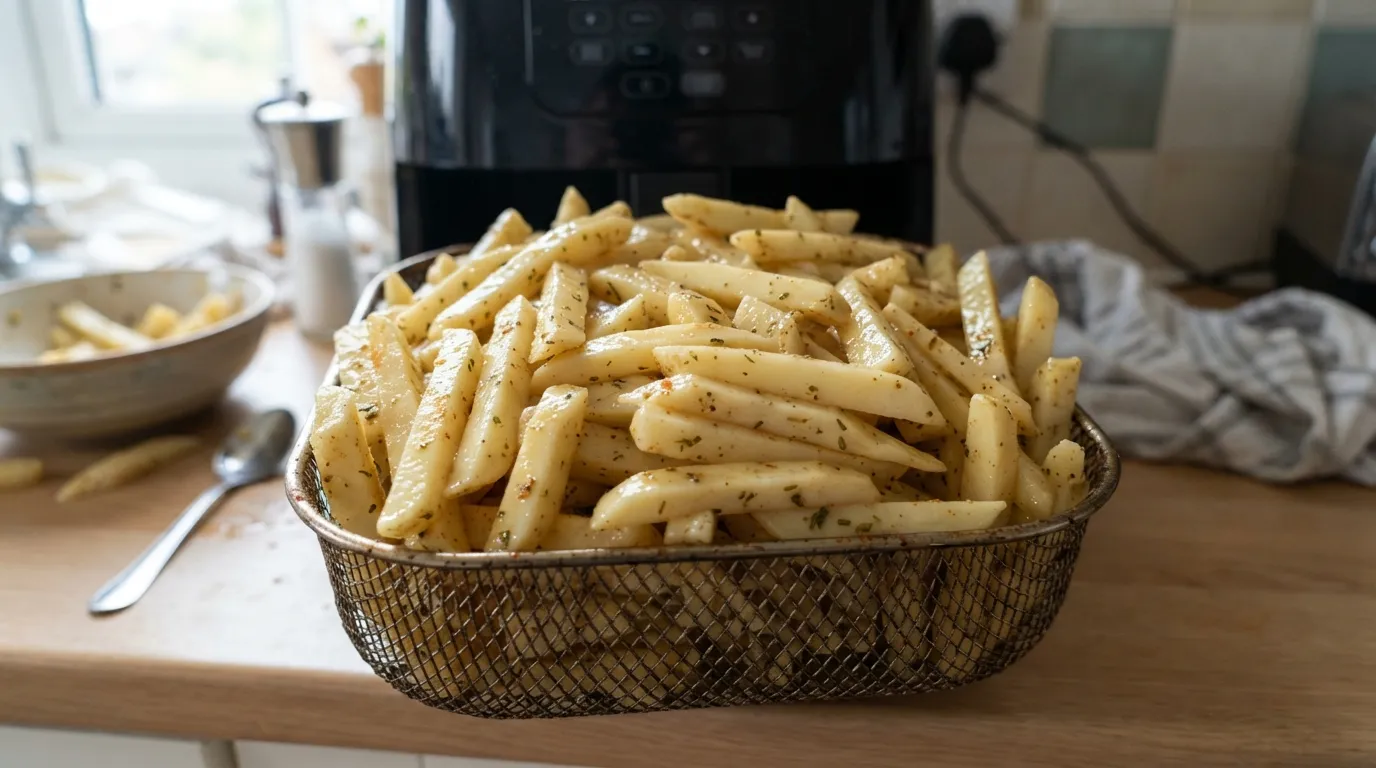
Of all the causes of soggy air-fried food, overcrowding is the one that turns up in nearly every guide. It ties the rest of this list together, because wet marinade, extra oil and a solid liner each add moisture or block air, and a packed basket does both at once.5
An oversized batch can also keep the air fryer from reaching the required temperature, which leaves you with soggy textures. That is the same trouble a skipped preheat causes, except you created it after the machine was already hot.
- Food sticking together
- Uneven browning
- Some pieces still undercooked
The fix is to cook in batches, since a shake only helps with part of the problem. Two smaller batches cost you more minutes at the counter, which is the only price, and you can keep the first batch warm in a low oven while the second cooks.
It is the one change here that costs no money and removes steam at its source. That is also why a rack, a preheat or a shake can only do so much when the basket is full.
[article_quiz]Where the Steam Goes
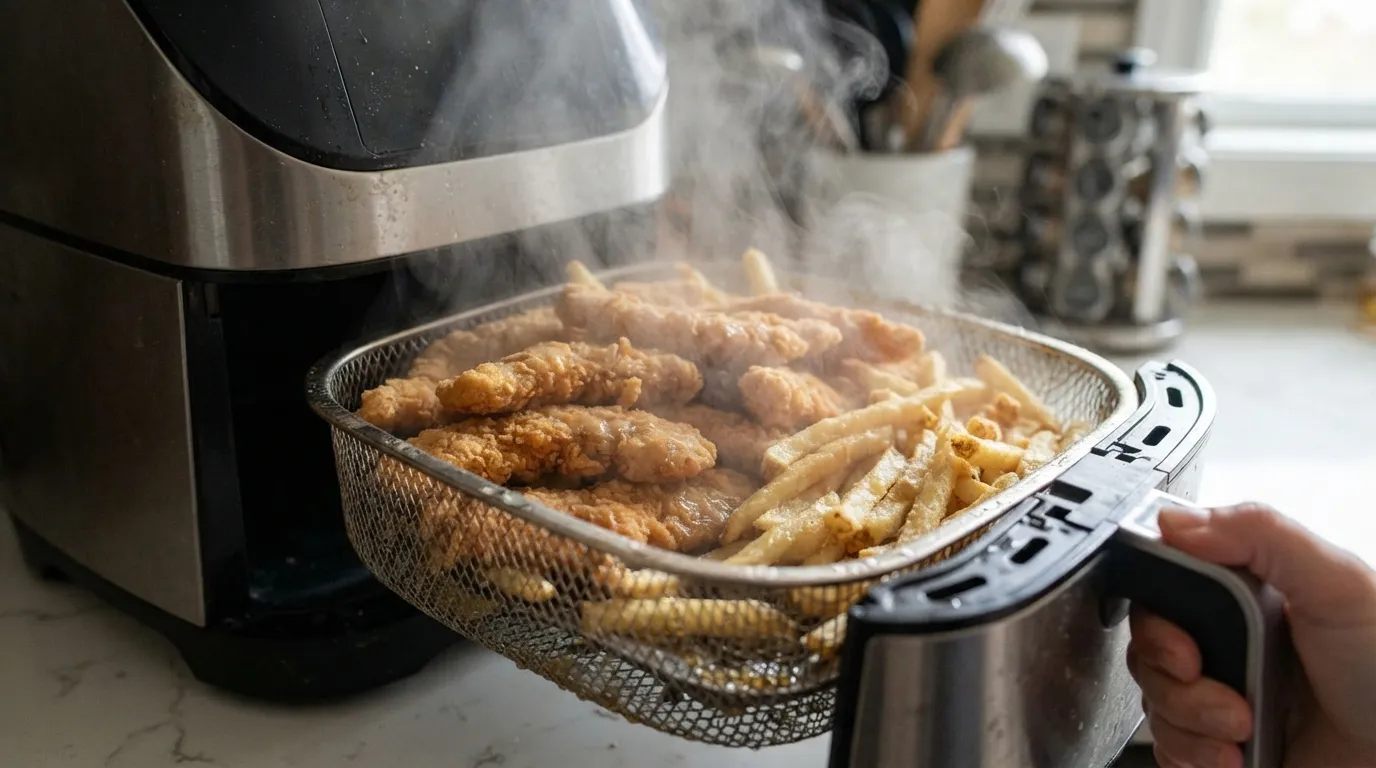
Every item above comes down to the same question: can the moisture in the basket get out? Before you start a batch, look at what you are adding, whether that is a marinade, oil, paper or one more handful of food, and ask whether it helps the air move or gets in its way.
At a Glance: Before You Press Start
- Blot marinade, ice and wash water off the food
- Use a thin film of oil, not a pour
- Keep aerosol cans away from a nonstick basket
- Preheat thin, crisp foods and shake once near halfway
- Leave room for air, and cook in batches when in doubt
Your own machine is the best reference, so keep the manual within reach and treat any recipe as a starting point.
Which food have you never managed to get crisp in your air fryer, and which of these nine habits do you suspect is the cause?
- Food Republic Cooking Spray: https://www.foodrepublic.com/1353994/how-cooking-spray-messing-with-your-air-fryer-what-to-do/
- Tasting Table Preheating Guide: https://www.tastingtable.com/797417/should-you-be-preheating-your-air-fryer/
- Air Fryer World Preheating: https://airfryerworld.com/preheat-air-fryer/
- Air Fryer Preheat Times: https://airfryhub.com/how-long-to-preheat-air-fryer
- Why Air Fryer Food Soggy: https://toastera.com/air-fryer-leaving-food-soggy-on-the-bottom-heres-exactly-why-it-happens-and-how-to-fix-it/