Customers React As McDonald’s Confirms Update To Coin Policy
McDonald’s restaurants across the nation are implementing a significant change that’s catching customers off guard during their regular visits. The fast-food giant has confirmed a new rounding policy for cash transactions, forcing many loyal patrons to adapt to an entirely different payment experience. Due to reported coin circulation challenges, the fast-food chain will now be rounding cash change to the nearest 5 cents.
This shift comes as some locations report coin circulation challenges that has left retailers scrambling for solutions. Let’s dive into how customers are responding to this unprecedented change and what it means for your next McDonald’s visit.
The Rounding Policy Breakdown
This was first brought to customers’ attention on Oct. 25, when a photo of a memo about the change at a Bear Family Restaurants franchise location in Chicago was posted on subreddits r/McDonalds and r/mildyinteresting. The policy operates on a straightforward mathematical system that affects only cash-paying customers.
If a customer’s total ends in 1 cent or 2 cents, round down to 0 cents. If a customer’s total ends in 3 cents or 4 cents, round up to 5 cents. If a customer’s total ends in 5 cents or 0 cents, exact change is given. If a customer’s total ends in 6 cents or 7 cents, round down to 5 cents.
Non-cash transactions are not affected, so if you pay with a credit or debit card, or electronic payment system, your total will be exactly what you owe, right down to the penny. The rounding system ensures that customers sometimes save money while other times paying slightly more, creating a balanced approach that theoretically evens out over multiple visits.
Social Media Eruption Over Legal Concerns

Customer reactions on social media platforms have been swift and polarizing. One Redditor asked “Is this legal in the U.S.? Telling someone you’re not giving them full change in return?” Another commented “Not sure how this is legal because a penny owed is still a penny owed…”
One Reddit user wrote “But the cent will still be in circulation. They’re just not making new ones. You can still use the old ones in circulation. The same way you can use buffalo nickels, large dollar coins, and 20¢ coins at any store/bank today”.
The legal confusion stems from customers’ unfamiliarity with rounding policies, though a number of Redditors point out that this has been the way it’s been done in other parts of the world for a while now. These international comparisons have provided some context for the heated debates occurring across various social platforms.
Customer Suspicion About Corporate Motives

Many customers express deep skepticism about McDonald’s true intentions behind the policy change. One user under the Reddit post wrote: “I guess it’s okay and not a big deal but knowing how these companies work, I can see them pricing everything so they can pocket an extra two cents from every sale”.
A Redditor commented “I guess it’s OK and not a big deal, but knowing how these companies work, I can see them pricing everything so they can pocket an extra 2 cents from every sale”. This sentiment reflects broader consumer distrust toward large corporations implementing policies that could potentially increase profits.
Some customers have called for menu price adjustments instead of transaction rounding. Another said: “Just change the d— prices. You say the prices stay unchanged but then charge more or less at the end of the transaction”.
The Penny Production Crisis Behind the Change
The policy change appears to be based on some franchise locations’ response to perceived coin availability issues. Some social media posts have claimed that penny production was halted, though these claims have been debunked by fact-checkers, as the US Mint continues to produce pennies.
According to US Mint data, the production cost of pennies has fluctuated over the years, with recent figures showing costs around 2.7 cents per penny. The Mint said reported losing $85.3 million on the nearly 3.2 billion pennies it produced in the 2024 fiscal year.
Ending production will save the Treasury about $56 million annually. This substantial cost-saving measure has created ripple effects throughout the retail industry, forcing businesses like McDonald’s to adapt their payment systems rapidly.
McDonald’s Official Response to Customer Concerns
The fast-food giant has acknowledged the challenges while emphasizing their commitment to finding better solutions. “Following the discontinuation of pennies nationwide, some McDonald’s locations may not be able to provide exact change,” a spokesperson tells TODAY.com. “We have a team actively working on long-term solutions to keep things simple and fair for customers. This is an issue affecting all retailers across the country, and we will continue to work with the federal government to obtain guidance on this matter going forward”.
The company has been transparent about the temporary nature of this solution while highlighting the broader industry impact. “We have a team actively working on long-term solutions to keep things simple and fair for customers,” the company told Reader’s Digest. “This is an issue affecting all retailers across the country, and we will continue to work with the federal government to obtain guidance on this matter going forward”.
The company notes that restaurants may ask customers to use exact change or cashless payment options like credit/debit or its app, where they can unlock a variety of national and local deals. This guidance suggests McDonald’s is actively encouraging alternatives to cash transactions during this transitional period.
Mixed International Perspectives from Customers

Customers from countries that previously eliminated low-value coins have offered valuable perspective to the ongoing debate. Several Canadian commenters shared their opinions, as Canada discontinued its penny coin equivalent in 2012, causing businesses to enact similar price-rounding rules. “It’s confusing for the first few months, then you just kind of forget about it,” one Redditor wrote.
Other countries have instituted similar rounding policies after getting rid of low-tender coins. After eliminating 1- and 2-cent coins in 1992, Australia enacted a rounding policy. Canada did the same after halting penny production in 2012.
These international experiences provide a roadmap for what American consumers might expect as the policy becomes more widespread. The Canadian example particularly resonates since their economic and retail structures closely mirror those in the United States.
Customers Advocating for Complete Coin Elimination

Interestingly, some customers have used this opportunity to call for more dramatic monetary reforms. On the same Reddit thread, another commenter is simply fed up with pennies altogether: “We should [do] this anyway, retire the penny. In fact, also retire the nickel. Hell, the last time the U.S. retired its lowest coin was the half-cent, and back then it was worth more than what a dime is worth today. Why are we even using pennies and nickels?”
One person wrote: “We should go this anyway, retire the penny. In fact, also retire the nickel. “H—, the last time the US retired it’s lowest coin was the half-cent and back then it was worth more than what a dime is worth today”.
These customers are taking a long-term economic view, suggesting that inflation has made these small denominations practically worthless. Their perspective reflects broader economic discussions about modernizing the American monetary system to match contemporary spending patterns.
Charity Donation Concerns Raised by Patrons

Some customers have raised concerns about how the penny shortage affects charitable giving at McDonald’s locations. One customer asked “How am I suppose to donate my [pennies] to Ronald McDonald house?” referring to the donation boxes near some McDonald’s cash registers.
This concern highlights an overlooked consequence of the penny shortage that extends beyond simple transaction convenience. Many customers regularly donate their change to charitable causes, and the elimination of pennies could potentially impact these small but collectively significant contributions.
The Ronald McDonald House Charities specifically benefits from these small donations, making this a legitimate concern for socially conscious customers who want to continue supporting charitable causes through their daily purchases.
Customer Strategies for Avoiding Extra Costs
Savvy customers have quickly developed strategies to minimize the impact of the rounding policy on their wallets. If you need to pay in cash at McDonald’s, it’s probably worth digging through your couch cushions or sorting through your piggy bank for pennies in order to provide them with exact change and avoid your total being rounded up.
Only those who are paying with cash will encounter the rounding policy. If you’re paying with a credit card (“the majority of transactions here in the U.S.,” McDonald’s told us), your total will remain the same, so you’ll still pay $6.03 or $8.02, for instance.
These customer-driven solutions demonstrate the adaptability of consumers when faced with policy changes. The emphasis on exact change and digital payments shows how quickly customers can adjust their behavior to maintain control over their spending.
Widespread Industry Impact Beyond McDonald’s

Customers are discovering that McDonald’s is far from alone in implementing these changes, as the penny shortage affects retailers nationwide. Giant Eagle is holding a “Penny Exchange Day” Nov. 1, giving shoppers double-value gift cards for turning in up to $100 in pennies. Kroger and Home Depot stores in parts of the Midwest are asking shoppers to pay with exact change, while Kwik Trip and Love’s are rounding cash totals in customers’ favor, USA TODAY reports. Sheetz is encouraging mobile payments and asking customers to round up their purchases for charity, according to Scripps News.
At Sheetz, signs are up saying, “The U.S. Mint will no longer produce pennies, so we are short on change.” Sheetz is asking consumers to either pay electronically, round up or even bring in a dollars worth of pennies and receive a free fountain drink. At Home Depot, you will see signs saying, “Penny shortage. If possible, please use exact change for cash transactions”.
This widespread industry response helps customers understand that McDonald’s policy change is part of a larger economic shift rather than an isolated corporate decision. The various approaches different retailers are taking provides customers with multiple options for managing the transition.
McDonald’s penny rounding policy represents more than just a simple payment change. It reflects a broader economic transformation that’s forcing both businesses and consumers to adapt to new realities. While customer reactions range from skepticism to acceptance, the policy appears to be here to stay until longer-term solutions emerge. What do you think about McDonald’s approach to handling the penny shortage? Tell us in the comments.
What Happens When the Penny Shortage Actually Ends
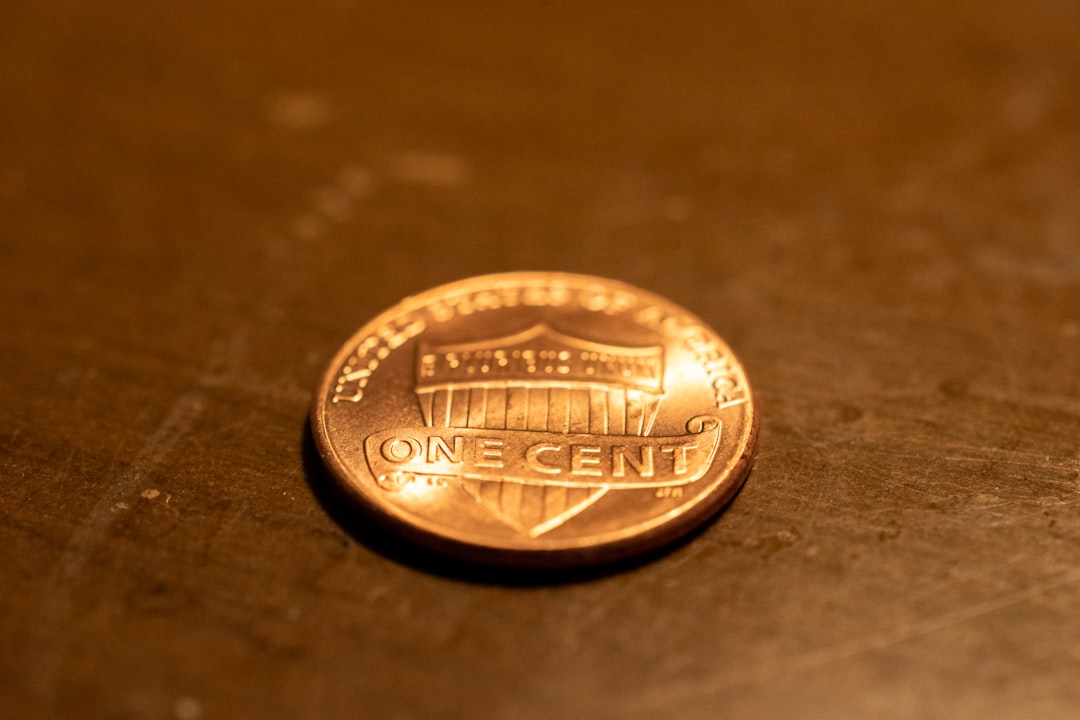
Here’s the million-dollar question nobody’s really talking about: what comes next when the U.S. Mint ramps up penny production again? McDonald’s and other retailers haven’t exactly spelled out their exit strategy for these rounding policies. Some financial experts are warning that these “temporary” measures might become surprisingly permanent, especially if companies discover they’re saving money on cash handling and accounting. Think about it – once businesses adjust their systems and customers get used to the new normal, there’s little incentive to go back to the old way. Industry insiders are quietly suggesting that this shortage could be the convenient excuse retailers needed to push customers toward digital payments for good. The real test will come in six months or a year when pennies are supposedly back in circulation. Will McDonald’s make a big announcement about returning to exact change, or will they just quietly keep the rounding policy in place and hope nobody notices? Consumer advocacy groups are already preparing to monitor whether these policies actually disappear once the shortage ends, because let’s be honest – temporary corporate policies have a funny way of becoming permanent fixtures.