Don’t Retire in Florida – Try One of These 8 States Instead
Florida has long been the poster child of American retirement. Warm winters, beach towns, golfing communities, no state income tax – it sounds like a dream. Honestly, for a long time, it kind of was. But something has shifted, and the numbers are starting to tell a different story.
While Florida used to sit comfortably at the top of retirement destination lists, its cost of living has increased quickly over the last five years. Rising insurance premiums, hurricane risks, and congested metros are pushing many retirees to look elsewhere – and they’re finding some genuinely compelling alternatives. So if you’ve been taking it for granted that Florida is your best bet, you might want to keep reading.
Why Florida Isn’t the Retirement Paradise It Once Was

Let’s be real: Florida still has its charms. But the financial picture has grown complicated. Florida landed at 41st in Bankrate’s 2025 Best and Worst States to Retire study, due to poor healthcare rankings, high insurance costs, and natural disaster risks – despite strong scores in taxes and its large retiree population.
The insurance situation alone is enough to give anyone pause. Property insurance rates average $6,225 a year in Miami and $3,602 in Tampa, compared to a national average of $2,290, according to financial data firm Intercontinental Exchange (ICE).
Property taxes are relatively low at 0.79%, but rising living costs mean retirees need about $685,000 in savings to live comfortably in Florida. That’s a hefty bar for anyone on a fixed income. And the weather-related costs keep piling up – homes built before modern hurricane codes may require additional investments in storm-proofing measures, and storm preparation costs such as hurricane shutters, emergency supplies, and evacuation plans can add significantly to the overall housing expense.
1. New Hampshire – The Surprising New King of Retirement

I know what you’re thinking. New Hampshire? Cold, gray, full of snow? Hear me out. According to Bankrate’s 2025 Best and Worst States to Retire Study, New Hampshire is the best state to retire, unseating last year’s top scorer, Delaware, which fell to 11th overall.
Despite a low ranking for weather, New Hampshire excelled in nearly every other category, ranking first for neighborhood safety, fifth for healthcare, sixth for taxes, and seventh for having a large community of similar-aged residents.
Nine states have no state income tax, and New Hampshire joined that list in 2025 when it repealed its tax on dividend and interest income. That means your Social Security, pension, and retirement distributions are essentially shielded from state taxation. New Hampshire also has no state or local sales taxes, which stretches a retiree’s budget further than almost anywhere else on the map.
2. Wyoming – Big Sky Freedom for Your Wallet

Wyoming is the kind of place that quietly wins every financial comparison and then shrugs about it. A tax-friendly haven with no state income tax, Wyoming topped the taxes category in Bankrate’s 2025 study and ranked fourth for affordability. Think about what that means in practice – no tax on Social Security, no tax on your 401(k), no tax on your pension.
Wyoming stands out as one of the most affordable states to retire in, with retirees needing approximately $574,000 in savings to live comfortably, thanks to no state income tax and one of the lowest property tax rates in the country at just 0.58%.
Wyoming ranks second in overall quality of life, thanks to a combination of low violent crime, easy access to parks, and access to healthcare facilities, making it a strong choice for retirees who love the outdoors, prefer a slower pace, or want to stay active. Think of it like trading the humidity of Florida for mountains, open roads, and genuinely lower bills every month.
3. South Carolina – Coastal Charm Without the Florida Price Tag

If it’s beaches and warm weather you’re really after, South Carolina deserves a long, serious look. Retiring in South Carolina provides an affordable alternative to Florida and North Carolina, with a $15,000 retirement income deduction for those 65 and older, no Social Security tax, and a cost of living that is 11% below the national average.
South Carolina partially taxes retirement income, but retirees 65 and older can claim up to $10,000 in deductions from retirement accounts. The state is also known for its beautiful beaches, picturesque mountains, and scenic marshes, with historic cities like Charleston and coastal towns like Hilton Head and Myrtle Beach offering rich experiences.
Here’s the thing – you get similar Gulf-adjacent vibes, a slower Southern pace of life, and real financial relief. The insurance crisis battering Florida hasn’t hit South Carolina with anywhere near the same force. South Carolina provides coastal charm with financial advantages, and that combination is genuinely hard to beat for retirees looking for a warmer-climate alternative.
4. Georgia – Warm Winters and a $65,000 Tax Break

Georgia often flies under the radar, but once you dig into the numbers, it starts looking like one of the smartest moves a retiree can make. Georgia allows residents 62 and older to exclude up to $35,000 of their retirement income from state taxes, increasing to $65,000 for those 65 and older. That’s a massive annual deduction that few other states can match.
Retiring in Georgia offers warm weather without the same extreme heat and humidity that most of Florida has, plus up to $65,000 in retirement income deduction for those 65 and older, and 676 retirement communities across the state.
Georgia is considered one of the best places to retire due to its affordability, tax benefits, mild climate, outdoor recreation options, rich cultural attractions, and quality healthcare facilities. Retirees appreciate Georgia’s diverse landscapes and vibrant cities like Atlanta, Macon, and Gainesville, along with numerous retirement communities. It’s the kind of place where your money goes further and your lifestyle doesn’t suffer for it.
5. Delaware – The Tax-Free Hidden Gem
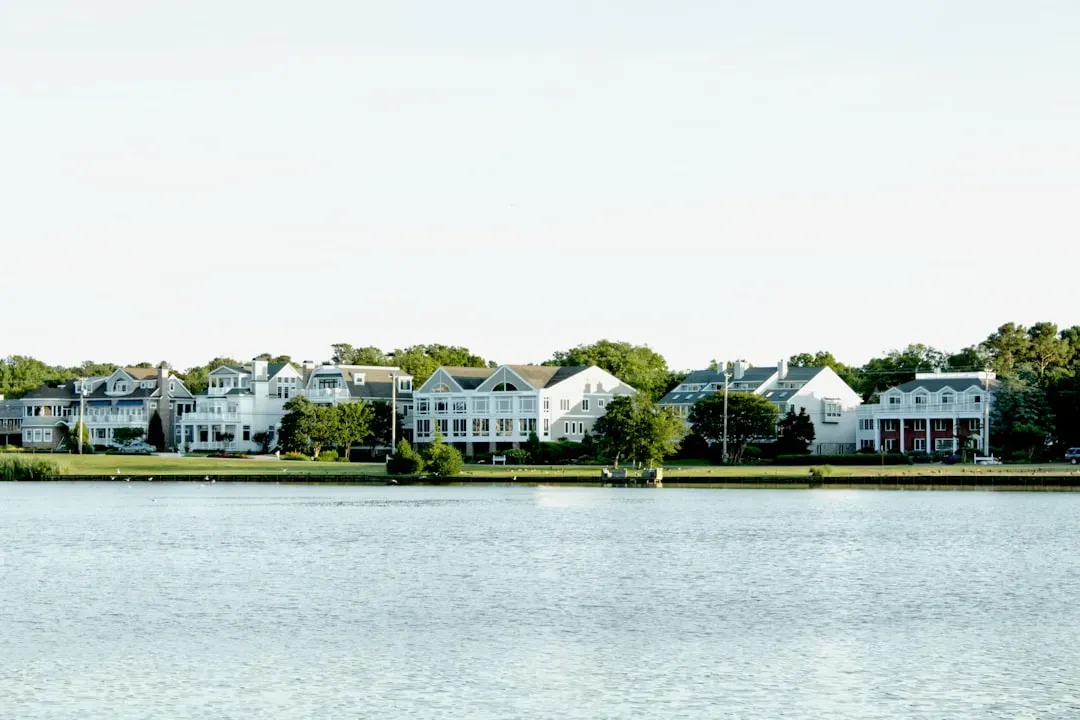
Delaware is the state people drive through without ever stopping, and that’s a real shame – especially for retirees. Delaware is still a bit of a hidden gem for retirees, with many overlooking the stunning coastal scenery, miles of pristine beaches, and proximity to major cities like Philadelphia, Baltimore, and Washington, D.C.
Delaware has no state or local sales taxes, which is one of only four states in the entire country that can claim that. Think of it like a permanent discount on everything you buy. The state also consistently ranks as one of the safest states in the nation, providing retirees with peace of mind in their retirement years.
The proximity angle alone is worth considering. You’re within easy driving distance of world-class hospitals, major airports, and cultural hubs – without paying the price tags of New York or Washington D.C. suburbs. Delaware is known for its favorable tax environment, especially for retirees, who also enjoy a low cost of living, particularly in housing, healthcare, and everyday expenses, allowing them to stretch their savings further.
6. Pennsylvania – Where Retirement Income Stays Yours

Pennsylvania surprises a lot of people. You might picture it as expensive or industrial, but for retirees, it’s one of the most financially friendly states in the country. Pennsylvania does not tax Social Security or retirement income from accounts like 401(k)s, IRAs, and pensions, and it also has the lowest flat income tax rate in the country, at just 3.07%.
Pennsylvania’s Property Tax/Rent Rebate Program gives eligible homeowners and renters up to $1,000 in rebates, which is an extra layer of relief for retirees on fixed incomes. Healthcare access is another serious strength. Pennsylvania is steeped in history with attractions like the Independence National Historical Park and the Gettysburg Battlefield, offers diverse natural landscapes including the Pocono Mountains and the Allegheny National Forest, and provides access to some of the best medical centers in the country.
It’s hard to say for sure what the “perfect” retirement looks like, but for someone who wants low taxes on their nest egg, accessible healthcare, and actual four-season culture and nature – Pennsylvania makes a very convincing case.
7. Virginia – Growing Tax Breaks and Thriving Communities

Virginia has been quietly climbing the retirement rankings for years, and the reasons are getting harder to ignore. Virginia offers up to $65,000 in retirement income deduction for those 65 and older, mild winters, and 676 retirement communities, and the state ranked third nationally by WalletHub for retirement destinations.
Military retirees in particular should pay close attention here. Virginia’s deductions for military retirees have kept growing – $20,000 in 2023, $30,000 in 2024, and $40,000 from 2025 onward. That trajectory shows a state actively trying to attract and support retirees rather than simply benefiting from historical reputation.
Colorado and Virginia both offer four-season climates with outdoor recreation, and Virginia adds to that the cultural richness of a state steeped in American history. From the Blue Ridge Mountains to the Chesapeake Bay, the variety of landscapes and lifestyle options available means retirees rarely feel boxed in – a very different experience from, say, a Florida retirement community where every week looks suspiciously like the last.
8. Colorado – Mountains, Mild Tax Breaks, and Active Living

Colorado won’t be for everyone – it’s not cheap, and the altitude takes some getting used to – but for the right retiree, it’s genuinely outstanding. Colorado allows a retirement income deduction of up to $20,000 for taxpayers 55 and older, and retirees 65 and older may deduct up to $24,000.
Colorado now allows residents between 55 and 64 to avoid paying taxes on Social Security benefits if their adjusted gross income stays under $75,000 for single filers or $95,000 for joint filers. That’s a significant carve-out for the majority of retirees who fall within those income ranges.
Think of Colorado as the outdoorsy antidote to Florida’s beach-resort model. There are ski towns, hiking trails, vibrant arts scenes in Denver and Boulder, and a healthcare infrastructure that ranks among the best in the nation. Colorado ranks as one of the top states for retirees, and although Colorado residents face high sales tax, property taxes are lower than in other states. For active retirees who want more from their daily life than a golf cart and a pool, Colorado delivers something Florida simply cannot.