I Used to Love Cruising, But New Industry Policies Are Making Me Rethink My Trips
For years, cruising represented the perfect vacation. You’d book a sailing, pack your bags, and head off on an adventure where everything was supposedly included in one tidy price. Yet somewhere along the way, that simplicity started to fade. Recently I caught myself doing something I never thought I’d do: reconsidering whether my next cruise was really worth it. It’s not that I suddenly hate the ocean or dislike the ships themselves. It’s something else entirely.
The truth is, the industry has quietly rolled out policy after policy that’s chipping away at what made cruising so appealing in the first place. From surprise fee increases to stricter cancellation rules, the changes are piling up faster than I can keep track. Let’s dive into what’s actually happening behind the scenes.
Daily Gratuities Keep Climbing Higher
Royal Caribbean increased its automatic gratuity fees in November 2024, with suite rates rising from $20.50 to $21 per person and all other staterooms increasing from $18 to $18.50. That might sound like pocket change, right? Think again. A family of four staying in mini-suites on Princess Cruises now pays $18 per person instead of $17, while all other staterooms increased from $16 to $17 per person. When you multiply that across an entire week, it adds up fast.
What really gets under my skin is how these increases happen with little fanfare. Royal Caribbean announced a second gratuity increase within a year, though the November 2024 hike was not as steep as the $2 increase in 2023. Some cruisers have started questioning whether these fees are actually going to crew members at all. Many passengers are frustrated with the lack of transparency about where the gratuities go, with some stating they have heard the fees don’t always reach the crew. At what point does a mandatory fee stop being a tip and start being a sneaky way to hide the true cost?
Transparency About Pricing Just Got Real
Here’s one change that actually benefits passengers, even if it initially looks like a price hike. California’s new consumer protection law altered how Carnival advertises its cruise fares, requiring the price to include taxes, fees, and port expenses starting July 1, 2024. Operators including Royal Caribbean, Carnival, Celebrity Cruises and Princess Cruises began including port expenses, taxes and other fees in advertised prices starting July 1. Finally, what you see is actually what you pay.
These additional mandatory fees could add hundreds of dollars to the overall trip cost depending on the itinerary. Before this law, you’d see an attractive fare only to watch it balloon at checkout. Rather than maintain one set of prices for California, cruise lines decided to make the change nationwide to avoid confusion and unnecessary complexity. While this doesn’t lower the actual cost, at least now I can budget accurately from the start.
Cancellation Policies Became Much Less Forgiving
Let’s talk about something that’s been quietly tightening its grip: cancellation policies. Cruise lines implement tiered cancellation penalties that increase as the departure date approaches, with some allowing cancellations up to three months before sailing with minimal penalty, while others impose fees immediately upon booking, sometimes reaching up to 100% of the booking cost if canceled within 30 days. Life happens. Emergencies arise. Yet the cruise industry seems increasingly unwilling to show flexibility.
Norwegian Cruise Line’s cancellation fee schedule is more stringent for bookings made after February 14, 2024, particularly for higher-priced cruises which often have higher penalties. Honestly, I find myself hesitating before putting down a deposit these days. Carnival’s Pack & Go cruises forfeit the full fare at any point after booking, and Super Saver fares with nonrefundable deposits lose that deposit regardless of cancellation date. Travel insurance has become less of an option and more of a necessity, which is just another added cost.
Beverage Packages Are Getting Absurdly Expensive
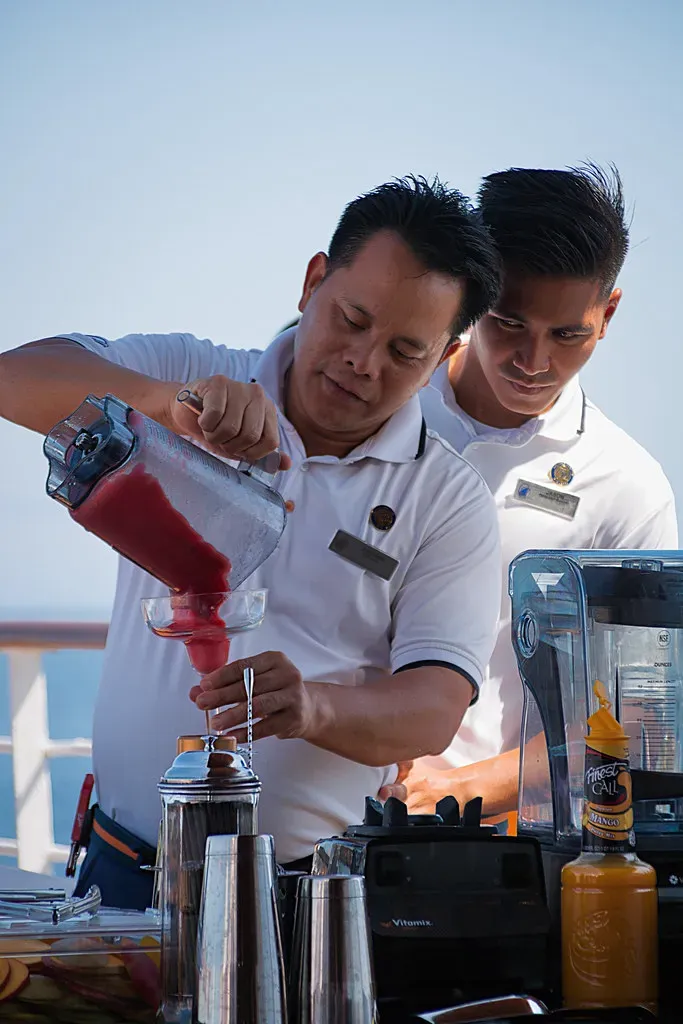
If you enjoy a few cocktails while sailing, prepare to feel the sting. Carnival Cruise Line raised the price of its drink package without warning, with the lowest price for all sailings now $82.54 if purchased in advance. Royal Caribbean’s unlimited drink package that includes alcohol is now priced regularly at least $100 per person, per day when purchased onboard. That’s over $700 per person for a week’s worth of drinks before you factor in the mandatory gratuity.
This change represents a roughly 16% per day increase for travelers on longer sailings, and on a 7-night cruise guests will now pay $82.60 more per person for the drink package. The lack of advance notice particularly stung. No warning was given for Carnival’s price increase, preventing booked guests from locking in savings, unlike in late 2023 when travelers were notified several days before the change. It feels like the cruise lines know exactly what they’re doing when they skip the courtesy heads-up.
New Restrictions on What You Can Bring Aboard

One of the most noticeable changes cruise lines are enforcing in 2025 is the ban on bringing entire cases of bottled water onboard. Sure, sustainability matters. This policy not only helps reduce plastic waste but also addresses concerns about passengers using bottled water to smuggle alcohol onto ships, aligning with the cruise industry’s increasing focus on sustainability. Still, it’s hard not to feel like another convenient option just vanished.
Cruise lines are tightening their security policies and expanding their list of prohibited items, including banning items like Bluetooth speakers and popular mini internet routers. In 2025, cruise lines have enforced new restrictions on bringing drinks into pool and hot tub areas, with passengers no longer permitted to bring beverages into the water due to safety concerns about broken glass. I get it, safety first. Yet with each new rule, the experience feels a bit less relaxed and a lot more regulated.
Specialty Dining Costs Continue Their Upward March

Remember when specialty dining felt like an affordable splurge? Those days seem to be fading fast. Princess Cruises increased the price of several specialty restaurants by about $10 per person over the last year or two, while Holland America increased their specialty dining fees by $5-10 per person. It doesn’t sound dramatic until you’re feeding a family of four and realize you just spent an extra $40 or more for a single meal.
The main dining rooms are still included, thankfully. However, if you want something beyond the standard offerings, you’re digging deeper into your wallet than before. I used to consider specialty dining a nice treat maybe once or twice per cruise. Now I find myself calculating whether it’s really worth it or if I should just stick to the buffet.
Base Cruise Fares Have Surged Dramatically
Perhaps the most obvious change is the one staring us right in the face: cruise prices themselves have skyrocketed. Due to pent-up demand for travel and inflation, cruise fares have gone up in 2024, with cruises more expensive than in 2022 and 2023 as cruise lines offer less promotions. It’s not uncommon for cruise prices to be 30-50% or more higher than the same sailing just a year or two ago. That’s not a typo.
Cruise lines saw record profits and ticket prices in 2024 that reflected unparalleled demand continuing into 2025. I understand that demand drives prices. Yet when you’re a loyal repeat cruiser watching your favorite itinerary double in cost, it’s hard not to feel a bit betrayed. With many cruise ships sailing at or over 100% capacity, lower prices don’t seem likely. Basic economics, sure. Still frustrating.
Internet Access Fees Have Jumped Significantly

Staying connected while at sea used to be a luxury. Now it feels like a necessity for many travelers who need to check in with work or family. Carnival’s Social Wi-Fi Plan now costs $18.70 when bought in advance and $22 onboard, reflecting a 22% increase, with this basic package only including access to select social media sites and apps. That’s a massive jump for what amounts to scrolling through Instagram.
Carnival’s Value Wi-Fi Plan starts at $22.10 when purchased before sailing, while the Premium Wi-Fi Plan increased from $21.25 to $23.80 per day pre-cruise, with onboard purchases reaching $28 daily. For a family trying to stay online, these costs multiply quickly. I’ve started questioning whether I really need internet access or if I should embrace a digital detox by default.
Port Fees and Destination Charges Are Rising
Even the destinations themselves are getting into the fee game. One popular U.S. East Coast port approved a new $15 passenger fee to fund port improvements, with one of America’s oldest cities implementing this cruise passenger fee as it welcomes larger ships and more passengers. Haines, Alaska recently approved a $9 per-passenger charge for 2025 to fund port improvements, increasing to $12 in 2027 and $13 in 2029, with Juneau also charging a similar head tax.
These aren’t cruise line decisions, true. Local governments need infrastructure funding. However, from a passenger perspective, it’s just another line item eating into your vacation budget. When you add up all these port charges across multiple stops, you’re looking at a substantial chunk of change that wasn’t there before.
The Psychology Behind All These Changes
Here’s where things get interesting. The cruise industry has mastered the art of making prices appear lower than they actually are. If cruise lines can arbitrarily raise gratuities, it’s not really a gratuity but rather a fee. Critics see automatic service charges as a sneaky way for cruise lines to make their fares appear lower than they really are, essentially breaking out a good chunk of onboard labor costs as a separate line item.
I think the frustration comes from feeling misled. You book what looks like an affordable vacation, then watch as the charges pile up: gratuities, drink packages, specialty dining, WiFi, port fees, excursions. Suddenly that $500 per person cruise has doubled or tripled. Sky-high service charges are increasingly a sore point for cruisers who see them as a veiled way for lines to hide the true cost of sailings when posting prices. Transparency would go a long way toward rebuilding trust.
So where does this leave someone like me who genuinely used to love cruising? I’m not ready to give up on it entirely. The convenience and value proposition still exist, especially compared to booking separate hotels and flights to multiple destinations. The global cruise industry welcomed 34.6 million cruise passengers in 2024, with 37.7 million expected in 2025, while North America saw a 13% increase in 2024 over 2023. Clearly millions of people still find cruising worthwhile.
Yet I’m approaching future bookings with a much more critical eye. I’m reading the fine print, calculating every potential cost, and asking myself whether the total package justifies the expense. The days of booking impulsively based on an attractive base fare are over. Maybe that’s not entirely a bad thing. Perhaps we all need to be more informed consumers. Still, I can’t help but miss when cruising felt less complicated and more genuinely inclusive. What’s your take? Are these industry changes pushing you away or do you still see cruising as the ultimate vacation value?