Tax-Friendly Living: States That Don’t Tax Your Retirement Income or Social Security
Nine States With No Income Tax at All
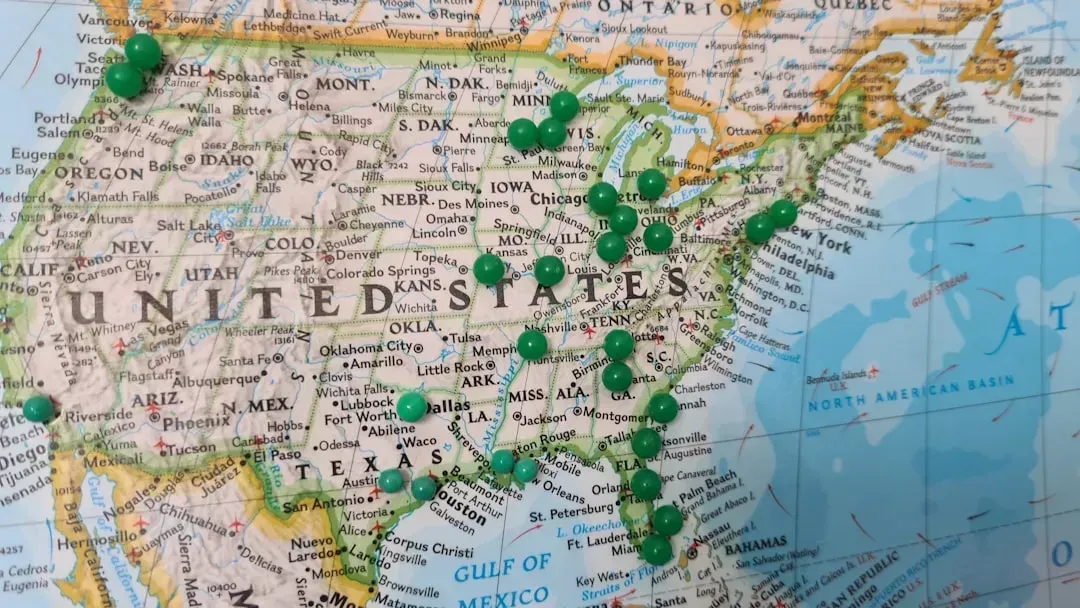
Nine states levy no general state income tax at all, meaning they won’t tax your retirement income or pension: Alaska, Florida, Nevada, New Hampshire (effective 2025), South Dakota, Tennessee, Texas, Washington, and Wyoming. Additionally, 12 states provide full or partial exemptions on pension income, and over 15 states offer military retirement tax benefits. Living in a state without a state income tax simplifies your tax filing and can lower your overall tax bill, especially compared to other states with high income tax rates or extra taxes on retirement income. According to the Tax Foundation, retirees in high-tax states like New York (15.9% total tax burden) and Connecticut (15.4% total tax burden) can achieve substantial savings by relocating to tax-friendly states.
Four Additional States That Exempt All Retirement Income

In addition to the nine states above that don’t have an income tax at all, four states do not tax retirement income: Illinois, Iowa, Mississippi and Pennsylvania. Illinois charges a flat state income tax of 4.95 percent, but all retirement income is exempt from paying the tax, including pension payments, as well as distributions from retirement plans such as 401(k)s and IRAs, and Social Security payments are also exempt. As of 2023, Iowa residents over the age of 55 are no longer taxed on their retirement income thanks to a 2022 law. Mississippi state income tax rates are 0 percent on the first $10,000 of taxable income and 4.4 percent on income above that level for the 2025 tax year, but retirement income is not taxed as long as you’ve met the plan requirements, meaning that early distributions from retirement plans may not qualify as retirement income and could be subject to tax and a penalty.
Recent Changes: States That Stopped Taxing Social Security

Three states – Kansas, Missouri, and Nebraska – had all passed laws to stop taxing Social Security benefits starting in the 2024 tax year, meaning by 2025, retirees in those states would not owe any state tax on their benefits. In 2025, a total of 41 states plus Washington, D.C., did not tax Social Security benefits at all, representing a major change from the past that helped retirees keep more of their monthly check. In Missouri, the total savings for all retirees could be about $309 million a year, while in Nebraska, that number was around $17 million. For the 2025 tax year, nine states taxed Social Security benefits: Colorado, Connecticut, Minnesota, Montana, New Mexico, Rhode Island, Utah, Vermont and West Virginia, with all other states and the District of Columbia not taxing the payments, though West Virginia has started phasing out the tax on Social Security benefits and will eliminate it starting in 2026.
States With Partial Exemptions and Deductions
Colorado taxpayers who are 65 and older as of Dec. 31 of the tax year can subtract the full amount of their Social Security benefits from their Colorado tax return, while Colorado also allows a retirement income deduction of up to $20,000 for taxpayers 55 and older, with retirees 65 and older able to deduct up to $24,000. Beginning in 2025, individuals ages 55–64 in Colorado would be able to deduct all federally taxable Social Security income if their AGI was $75,000 or less for an individual and $95,000 or less for a couple filing jointly, with $20,000 of federally taxable Social Security income able to be excluded above those thresholds. In Kansas, starting at age 62, seniors could exclude $35,000 of their taxable retirement income, with that exclusion jumping up to $65,000 at age 65, and up to $5,000 of earned income could be included within these amounts as of 2025.
Broader Tax Picture: Beyond Income Tax Considerations

High sales taxes in states like California and Tennessee could significantly affect retirement budgets. The highest state sales taxes in 2025 were in California (7.25%) and in Indiana, Mississippi, Rhode Island, and Tennessee (7.0% each). The median New Jersey homeowner pays $9,358 annually in property taxes according to Census Bureau data, while in Alabama, homeowners usually spend much less at just $890 a year. The national average effective property tax rate remains near 1%, with New Jersey continuing to have among the highest fees (roughly 2.1 to 2.2 percent), while states like Alabama remain among the lowest (roughly 0.3 to 0.4 percent), though many states and localities still provide property tax relief for seniors via exemptions, credits, abatements, or deferrals subject to age and income limits.