The $10,000 Dime: Why This Tiny Mint Mark Makes Such a Big Difference
Most people toss their dimes into a jar without a second thought. It’s ten cents – what could it possibly be worth? Quite a lot, as it turns out. A small letter stamped onto a coin’s surface, known as a mint mark, can be the single detail that separates a coin worth face value from one that sells for thousands of dollars at auction. The world of numismatics is full of these jaw-dropping moments, and the humble American dime has produced more than its fair share of them.
What Is a Mint Mark and Why Does It Matter So Much?
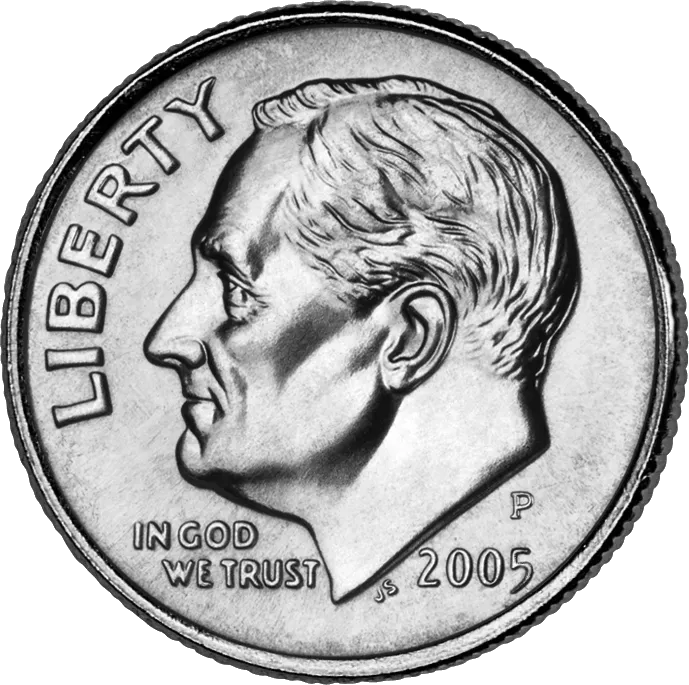
Dimes might seem like small change, but some rare and valuable examples could be worth up to $10,000 or more, and in the world of coin collecting, the value of a dime often depends on specific factors like rare mint marks, errors, or high-grade condition. A mint mark is simply a small letter indicating which U.S. Mint facility struck the coin. The mint mark appears above the date on the obverse of modern Roosevelt dimes, with “P” denoting Philadelphia, “D” for Denver, and “S” for San Francisco proof issues.
In the world of numismatics, small differences in mint marks – or the lack thereof – can mean the difference between a coin being worth just ten cents or thousands of dollars. That’s not an exaggeration. The presence, absence, or unusual form of a single letter has made otherwise ordinary dimes into some of the most coveted coins in American history. Collectors spend years searching for these tiny distinctions, and for good reason.
The 1916-D Mercury Dime: A “D” Worth a Fortune
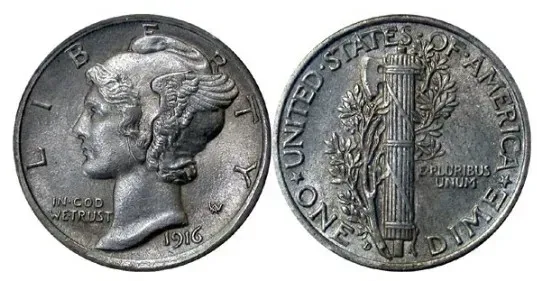
The 1916-D Mercury dime was minted in Denver with the distinctive “D” mint mark on the reverse. It is the rarest in the Mercury dime series due to a low mintage of just 264,000 coins, and high-grade examples of this coin can sell for $10,000 or more, making it a highly sought-after piece for collectors. To understand just how dramatic that mintage difference is, consider that Philadelphia struck over 22 million Mercury dimes that same year. The Denver output was a statistical accident of history.
PCGS CoinFacts estimates that only around 10,000 or so 1916-D Mercury dimes survive across all grades – far scarcer than the coin’s original mintage of 264,000 pieces may suggest. Prices begin at around $900 to $1,000 for examples even in Good-4 condition, and uncirculated examples are five-figure coins, with a typical MS-63 commanding $13,500 to $15,000. Top-population MS-67 Full Bands specimens consistently command six-figure prices, including documented sales at $207,000, $195,500, and $204,000.
The No-S Proof Error: When a Missing Letter Commands Half a Million Dollars
One of the most valuable modern United States coins isn’t a Lincoln cent, a Washington quarter, or a gold coin from the American Eagle series – it’s a 1975 Roosevelt dime. This dime, struck at the San Francisco Mint for inclusion in that year’s proof sets, is missing one important detail: its “S” mintmark. The 1975 No-S Proof Roosevelt dime would go on to hammer for more than $500,000 at auction.
The 1975 No-S Proof Roosevelt dime is one of the most extraordinary rarities in American numismatics, representing a legendary mint error that has achieved near-mythical status among collectors. This coin’s exceptional value stems from its extreme scarcity – only two examples are known to exist in all grades. The “No S” designation indicates a critical mint error where the San Francisco mintmark was accidentally omitted from the proof die. This error occurred due to the way proof dies were handled beginning in 1968, when all proof dies were prepared at the Philadelphia Mint before being sent to San Francisco. During this process, the mintmark was accidentally left off this particular die, creating one of the rarest modern American coins.
The 1968 No-S and 1982 No-P: A Pattern of Profitable Errors
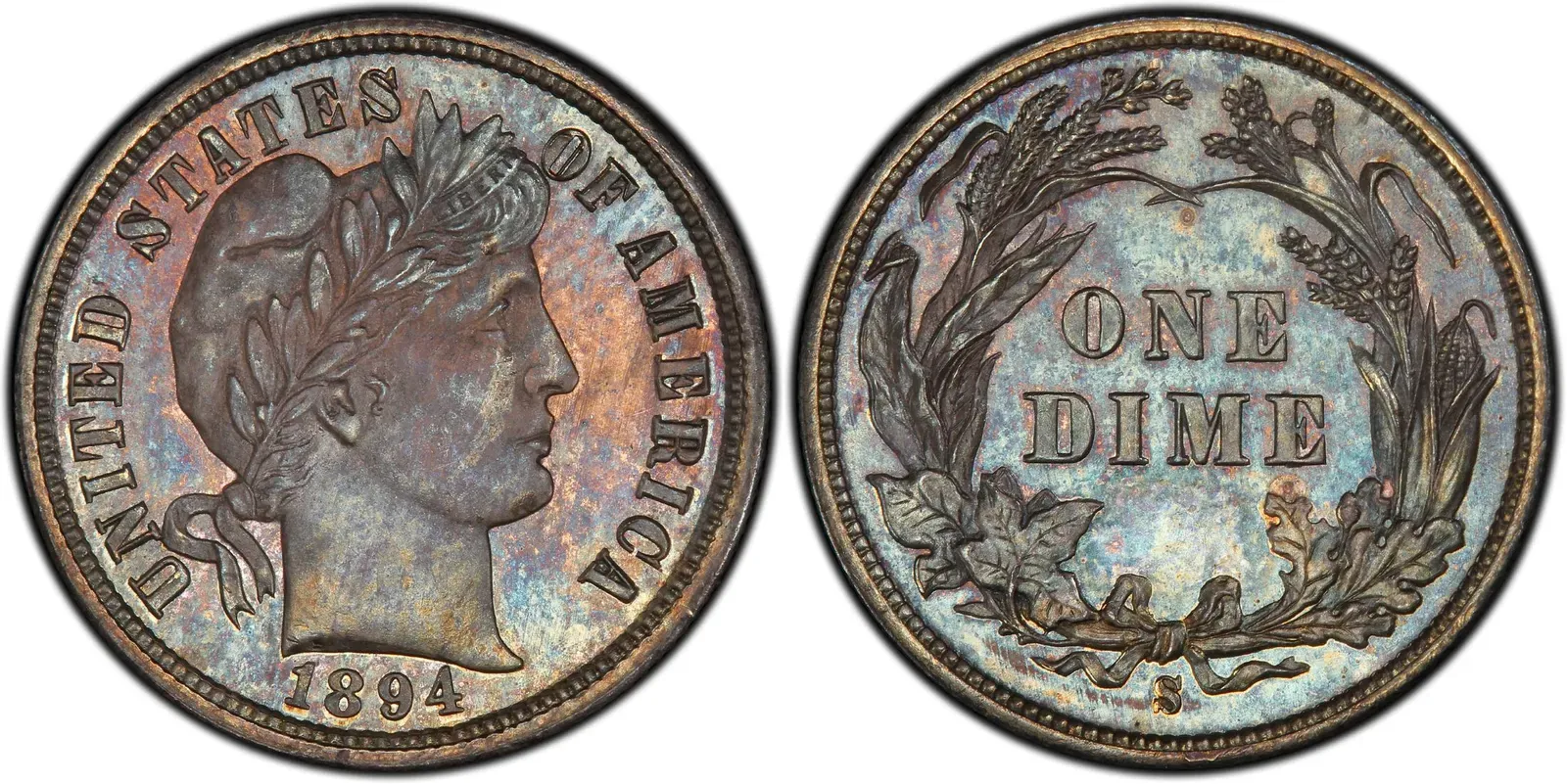
The 1968 No-S Proof Roosevelt dime is one of the rarest of the No-S Proof Roosevelt dimes. It’s the type of error variety that one might expect during a transitional period, and it’s one that San Francisco Mint officials must have caught on to rather early, as very few 1968 No-S Proof dimes are known. In fact, beyond the 1975 No-S Proof Dime, the 1968 No-S Proof is the rarest of these modern dime varieties. Only a few dozen examples of the 1968 No-S Proof are known. Values for the 1968 No-S Proof hover around $12,500 for an example in PR65, with prices closer to $22,000 for one of the handful of examples in PR68. Examples graded PR68CAM trade in the neighborhood of $35,000, while the all-time price record was realized in 2006 for a PCGS PR68CAM that fetched $48,875.
The 1982-P missing mint mark is considered to be the most valuable Roosevelt dime ever to be released directly into circulation. With only 15,000 believed to have escaped the mint, values for these dimes can sometimes exceed $500 for specimens in mint state condition. The U.S. Mint started putting a “P” mint mark on all Philadelphia-struck coins higher than one cent in 1980. However, it was still a relatively new practice, and the U.S. Mint was still hand-punching mint marks into the dies, which left a lot of room for error, resulting in two varieties of no-mint mark dimes in 1982. The more valuable variety, the strong strike, is rare, with fewer than 75,000 strong strikes ever created.
The 1965 Transitional Error: Wrong Silver, Right Price
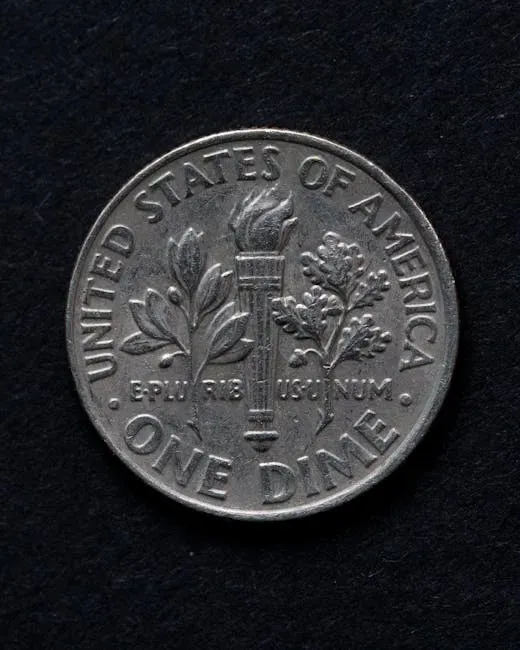
One particularly fascinating error occurred in 1965 or early 1966, when the Philadelphia Mint simultaneously produced dimes in two different compositions: the outgoing 90% silver alloy and the incoming copper-nickel clad composition. Silver planchets were intended exclusively for 1964-dated dies, while the new clad blanks received 1965 dates, but a few silver planchets mistakenly entered presses fitted with 1965 dies. The error reportedly occurred when planchets became lodged in bin or hopper crevices and were later freed by subsequent waves of blanks.
Cataloged as Breen-3761 and considered extremely rare by numismatic authority Walter Breen, this transitional error belongs to the same category as the famous 1943 bronze cents and 1944 steel cents – wrong planchet errors occurring during major compositional changes. The coin displays light iridescent gold toning across lustrous satin surfaces with a bold strike. In March 2024, the coin was successfully auctioned for $12,600. That result confirms that even non-proof transitional errors from the modern era can cross five figures when the right buyers are in the room.
The Growing Market Behind the Hunt for Rare Dimes
In 2024, the numismatic market surpassed $6 billion in annual total volume. On a global scale, the coin collecting market was valued at $18.1 billion and is projected to climb to $43.9 billion by 2034, with an 8.5% annual growth rate. The appetite for rare coins is not a niche hobby – it’s a serious and expanding global market. Stack’s Bowers Galleries recently announced a banner year in 2024, with their auctions realizing $275.6 million – the highest value the company has ever achieved. Between February and December, the business sold five coins at more than $1 million each, the only company to sell any coins for at least that value during that time period.
The error coin segment is projected to be the fastest-growing in the entire collector market at a CAGR of roughly 20.9% from 2025 to 2032, as rare minting mistakes significantly increase the rarity and value of coins in secondary markets. Series and year collections also remain popular among hobbyists looking for continuity and completeness, but error coins are becoming the prized gems that push market growth overall. In 2026, the market for Roosevelt dime errors remains strong, with online auctions and coin shows continuing to attract buyers, while younger collectors are drawn to the accessibility of modern coinage. Prices for rare varieties have shown steady growth, particularly for high-grade examples and well-documented errors.