8 Grocery Brands That Disappeared So Quietly Most People Missed It
There’s something strangely unsettling about walking up to a grocery store you’ve visited dozens of times, only to find the doors locked, the shelves stripped bare, and a paper sign taped to the glass. No fanfare. No farewell sale. Just gone. It happens more than most of us realize, and the pace has only quickened in recent years.
The grocery industry has always been brutal. Razor-thin margins, fickle consumers, and giants like Walmart swallowing up market share have created an environment where even beloved, decades-old brands can vanish almost overnight. Roughly 8,200 retail locations shut their doors in 2025 alone, about 12% more than 2024, according to Coresight Research, as slumping consumer sentiment, poor finances, and years of shifting shopping habits left many aging chains in a lurch. Some of the stories behind these closures are shocking, some are sad, and honestly, a few are downright bizarre. Let’s dive in.
1. Foxtrot Market and Dom’s Kitchen and Market: The Merger That Imploded in Hours
This one still feels surreal. In November 2023, Dom’s, a pair of upscale grocery stores, and Foxtrot, a high-end convenience store chain, announced they were merging under a new entity called Outfox Hospitality. Then, every single Dom’s and Foxtrot store closed at once, delivery was halted, mobile apps went dark, and store credit cards were cut off. It happened on April 23, 2024, less than six months after the merger was announced.
The closure affected 33 Foxtrots and two Dom’s grocery stores in Illinois, Texas, and the Washington, D.C. area, with Outfox reportedly terminating corporate employees without severance, and Dom’s failing to make routine purchase orders in the week leading up to the closure. Foxtrot had raised more than $160 million in funding before its all-stock merger with Dom’s. That makes it all the more shocking. Hundreds of millions raised, ambitious expansion plans, and then nothing. The lights went out at noon.
Stores were ordered to shut by noon, with employees and customers mostly in the dark, and suppliers were caught off guard, with one actually filing a lawsuit against Outfox for the complete lack of notice. Analysts noted that Dom’s and Foxtrot were facing economic headwinds amid ongoing food price inflation, with value-oriented, low-price retailers like Walmart and Costco doing far better in the grocery space at the time.
2. BI-LO: A Southern Staple That Slowly Faded Away
For shoppers across the American Southeast, BI-LO was more than a grocery store. It was just “the store.” Founded decades ago, it became a deeply woven part of communities from the Carolinas to Georgia. Southeastern Grocers, the owner of BI-LO, Harveys, Winn-Dixie, and Fresco y Más, filed for Chapter 11 bankruptcy on March 15, 2018, and the BI-LO brand eventually ceased operation in 2021 with all of its stores sold, rebranded, or outright closed.
The chain didn’t go in a blaze of headlines. It drained away store by store, conversion by conversion, until one day shoppers realized the name had simply ceased to exist. A 2024 study from the National Grocers’ Association noted that traditional grocery continues to lose share to mass, supercenter, and club stores while the market continues to be splintered among discount grocery, dollar, drug, and specialty channels. That splintering is precisely what gutted BI-LO. It occupied a middle ground with no real escape route.
3. Winn-Dixie: A Brand Being Erased One Store at a Time
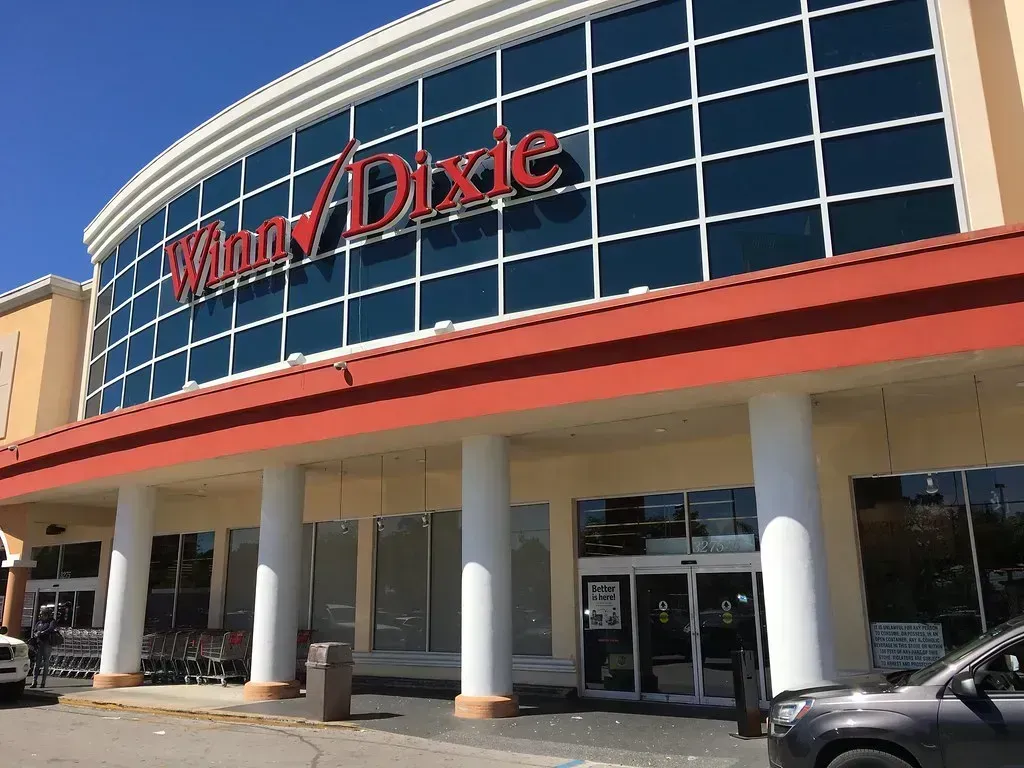
Winn-Dixie didn’t disappear in a single crash. It’s been a slow erosion, a brand losing its identity piece by piece. In 2023, Winn-Dixie was acquired by Aldi, giving the German retailer the ability to make big moves across the Southeastern market, and Aldi also acquired Harveys, another Southeastern favorite that may soon disappear from view completely.
Reports of Winn-Dixie stores closing or being converted sprang up regularly throughout 2025, with two stores in Columbus and Phenix City announcing closures in April and May, while others in Fort Lauderdale, Jackson, and Orlando began the conversion process into Aldis. Southeastern Grocers also planned to sell 32 Winn-Dixie stores and eight Harveys Supermarkets across four states as it prepared to rebrand as The Winn-Dixie Company in early 2026. Honestly, at this rate, the name “Winn-Dixie” may just become a nostalgic footnote within a few years.
4. A&P: America’s Once-Biggest Grocery Chain That Nobody Noticed Dying
Here’s a stat that blows my mind every time I think about it. At its peak, A&P had more than 15,000 stores, but by 2006 that number had dwindled to less than 400, and in 2015 the chain closed for good. Fifteen thousand stores. That’s not a grocery chain, that’s basically a national institution. Operating between the late 1850s and 2016, A&P grocery stores were, until 1969, the largest and most popular grocery chain in the United States, especially in the Northeast.
Despite laying the foundation for the American grocery store experience and offering exceptionally low prices, A&P couldn’t keep up with the expectations of the modern customer, and by November 2016, the last A&P store in the United States had closed its doors. A&P filed for bankruptcy in 2015, and by 2018, all of the company’s stores had been closed and their locations sold. A brand that helped invent the modern supermarket concept simply couldn’t reinvent itself fast enough.
5. Stop & Shop: The Quiet Retreat of a 100-Year-Old Northeast Icon
For generations of Northeast shoppers, Stop & Shop was the weekly ritual. The circular in the mailbox, the loyalty card, the familiar aisles. Then came 2024. In July 2024, Stop & Shop announced the next steps in its plans to position the company for growth, closing 32 underperforming stores by year-end, after which it would continue with more than 350 stores across its five-state footprint.
The closures spanned ten stores in New Jersey, eight in Massachusetts, seven in New York, five in Connecticut, and two stores in Rhode Island. The company had struggled to compete with discount retailers including Walmart, Costco, Aldi, and Lidl, especially as Stop & Shop had gone in reverse by closing its fresh meat and seafood counters in many stores. Cutting the specialty counters to save money may have been the move that killed its reason for being. Shoppers who want discount grocery now go elsewhere, and those who want premium service also go elsewhere. There was no longer a middle.
6. Dominick’s Finer Foods: Chicago’s Beloved Grocer That Vanished Overnight
If you’re a Chicago native of a certain age, the name Dominick’s probably brings a rush of very specific memories. The Dominick’s chain was originally founded in 1918 by Sicilian Dominick DiMatteo and opened its first supermarket at 14,000 square feet in 1950. Shoppers remember state-of-the-art details including exposed piping and ducts on ceilings, bulk groceries, specialty bakeries, and upscale meat and produce departments, but closer to the turn of the century, the company’s well of fresh ideas began to run dry, and Dominick’s struggled to keep up with new competitors. The chain’s 116 stores were purchased by Safeway in 1998, and by 2013, the winds of change blew the Dominick’s name out of the Windy City for good.
It’s a pattern that keeps repeating: a beloved regional brand gets swallowed by a national chain, loses its identity in the process, and then gets quietly eliminated when profits don’t pan out. Independent and regional grocery chains have been in decline for decades, with the number of U.S. independents dropping 39% between 1990 and 2015, down to 2,648, with an average of 30 store closings per year, according to a 2021 government report. Dominick’s was just one of many casualties in that long, slow decline.
7. Price Chopper: The Quiet Retreat of a 93-Year-Old Brand
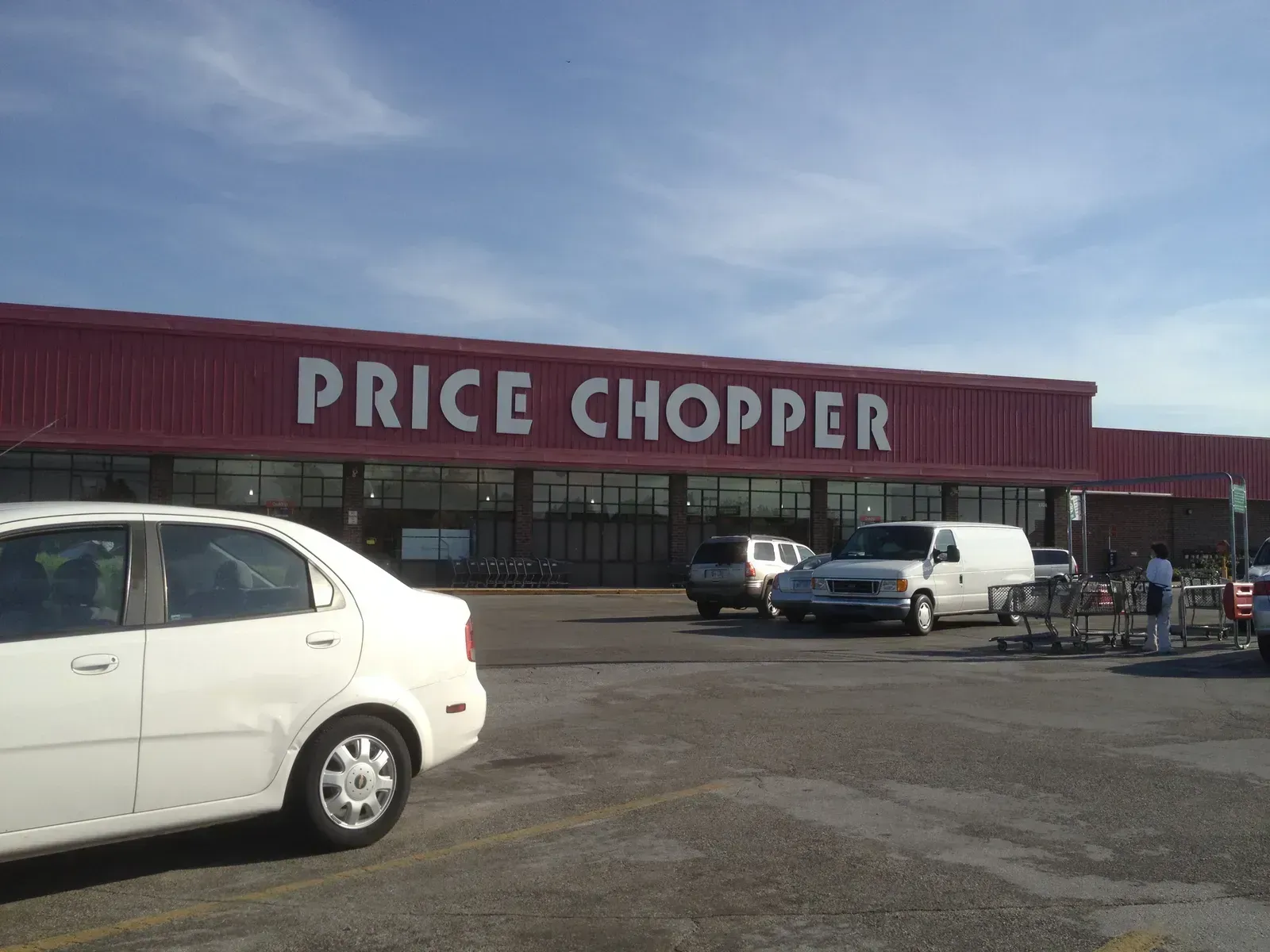
Price Chopper doesn’t get much national coverage, and that’s sort of the point. Founded in 1932, Price Chopper is owned by The Golub Corporation, which also operates supermarkets under the Market 32 and Market Bistro banners, running 131 stores across six states including Connecticut, Massachusetts, New Hampshire, New York, Pennsylvania, and Vermont. For communities in those states, this brand is deeply personal. So the closures have stung quietly.
In recent years, the chain has quietly shuttered several underperforming locations across multiple states, including the Price Chopper at 50 Cambridge Street in Worcester, Massachusetts, which closed in January 2025, affecting 76 employees, all of whom were offered transfers to nearby stores. Price Chopper also permanently closed its store at 358 North Main Street in Gloversville, New York, on January 10, 2026. The Food Industry Association CEO described an industry long accustomed to operating on narrow margins being economically squeezed, with a sharp rise in costs associated with regulatory actions at the federal and state levels driving the pressure.
8. Haven’s Kitchen: The Refrigerated Grocery Brand That Quietly Called It Quits
This one is a little different from the others, and I think it deserves attention. Haven’s Kitchen wasn’t a chain of supermarkets. It was a refrigerated grocery brand, the kind you’d find in the sauces and condiments section of your Whole Foods. In January 2025, condiments brand Haven’s Kitchen shut its doors after years of growing in the refrigerated grocery section, at a time when the company was actually planning to expand to additional Whole Foods Market regions and launch at new retailers, but those plans came to a halt when founder Alison Cayne had to make the difficult decision of cutting her losses, which came after pivoting the business from a cooking school to a grocery line in 2018.
It’s a reminder that “grocery brand” doesn’t always mean a store with a parking lot. Thousands of smaller CPG brands live and die on shelf space, and when the economics shift, they disappear just as quietly. Over the last few years, grocery chains and brands have had to battle a perfect storm of post-pandemic changes in customer behavior, rising prices from the cost of living crisis, and advances in technology which have left physical stores increasingly obsolete, with 2024 seeing the highest number of grocery store closings since 2020. Haven’s Kitchen was simply caught in that wave, a victim not of bad products but of a market moving faster than a small brand could keep up with.