The $2 Bill Mystery: Why Collectors Are Paying Thousands for This Specific Serial Number
Most people tuck a $2 bill away in a drawer the moment they receive one, treating it as a quirky curiosity rather than actual money. That instinct, it turns out, may have been financially smart all along – just not for the reasons people assume. Many people think $2 bills are rare, but in reality, there are millions still in circulation, and they continue to be printed. However, while most $2 bills are only worth their face value, certain ones can fetch thousands of dollars on the collectors market. The secret to their value isn’t necessarily age or condition alone. It comes down to one specific thing: the serial number printed on the front.
What Makes a Serial Number “Fancy” – and Why Collectors Obsess Over It
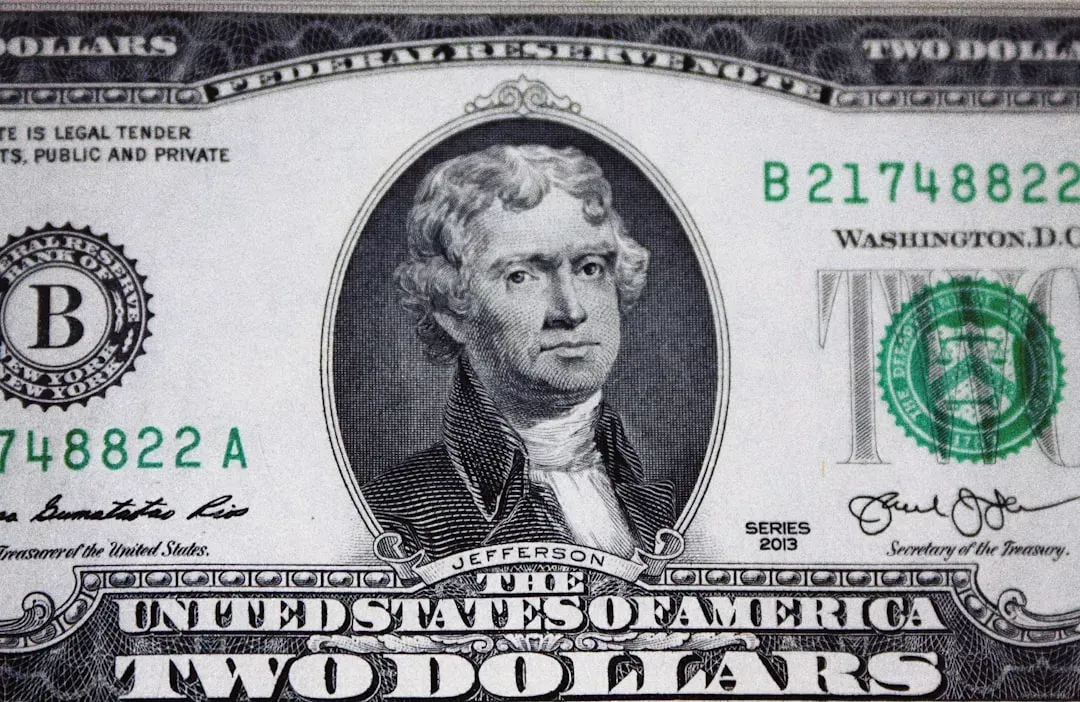
Every U.S. banknote includes a serial number printed twice on the front of the bill. This number identifies each note individually and follows specific printing rules set by the Treasury. Most serial numbers appear random, but some follow patterns or contain unusual characteristics. These uncommon serial numbers are known in the collecting world as “fancy serial numbers,” and their rarity makes them attractive to collectors. This isn’t a fringe hobby – it’s a well-documented market with real auction results and a growing base of enthusiasts who track every sale.
The demand for fancy serial numbers is well-documented in currency auctions and collector marketplaces. Prices vary widely depending on rarity, condition, and overall demand at the time of sale. Certain serial number patterns are far rarer than others and can significantly increase a bill’s value. Collectors actively seek these patterns because they are difficult to find in circulation. When you combine a fancy serial number with an older series and pristine condition, you get a bill that belongs at an auction house, not in a tip jar.
The Ladder Note: The Serial Number Collectors Will Pay Anything For
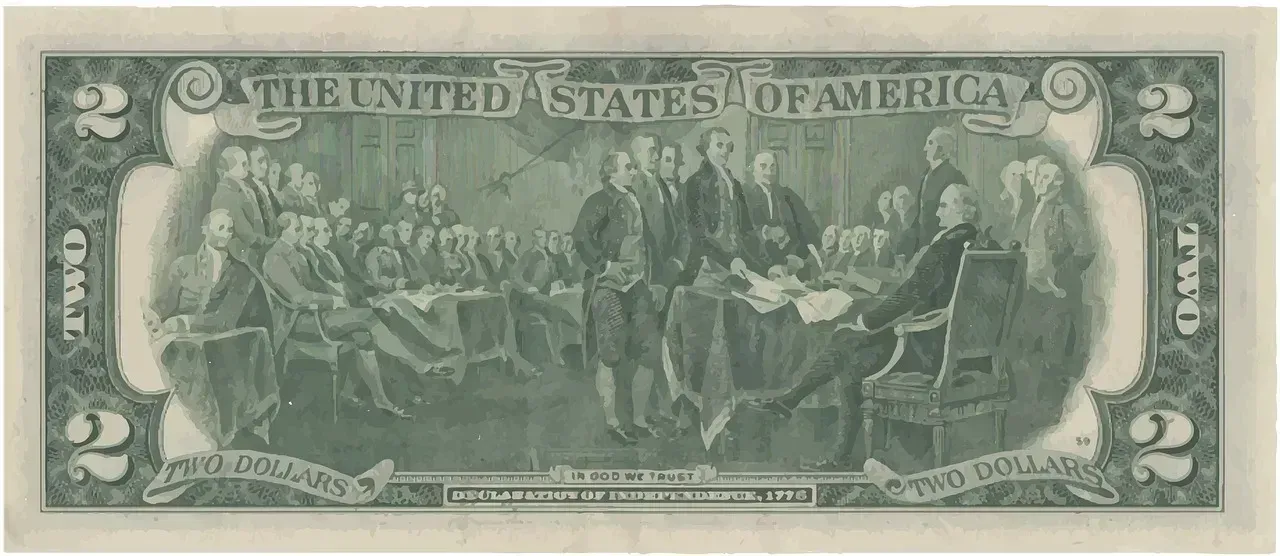
The rarest $2 bill known in the collector community is a ladder note, which means its serial number reads 12345678. These notes can be worth thousands of dollars at auctions. A ladder serial is exactly what the name suggests – each digit climbs one step at a time, from 1 through 8, forming a perfectly sequential number that the Bureau of Engraving and Printing almost never produces by design. A ladder serial number is an extremely rare pattern where all the digits in the serial number appear in ascending or descending order. These combinations are incredibly scarce and are highly sought after by collectors.
In most U.S. banknote runs, there is only one bill per full ladder combination for each printing district, making them one in nearly 100 million. That statistical scarcity is what drives the market frenzy. Dustin Johnston, vice president of Heritage Auctions, noted: “What we look at is fancy serial numbers. A serial number ‘1’ for a 1976 $2 bill would be worth $20,000 or more. But for a majority of those people holding 1976 $2 bills, they are only worth face value.”
Other Valuable Serial Number Patterns Driving the Market in 2024–2025
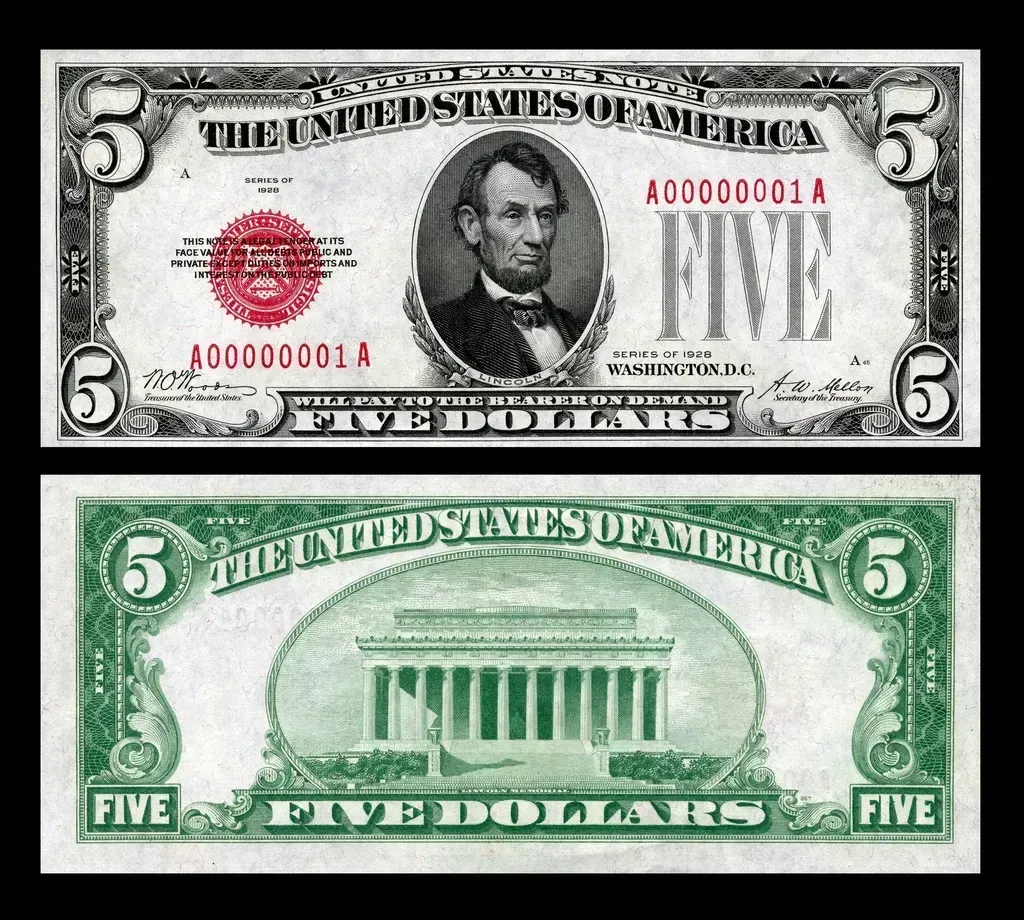
Among the most collectible patterns are: low serial numbers, such as 00000001 or 00000123, which are extremely rare and highly collectible; solid serial numbers, where all digits are identical, such as 77777777 or 99999999; ladder serial numbers that run in sequence, such as 12345678 or 87654321; repeater serial numbers with patterns like 45454545 or 23232323; and star notes, where serial numbers ending with a star symbol indicate a replacement note. Each of these patterns represents a meaningful statistical anomaly within printing runs that produce millions of bills at a time.
A solid serial number is one where every digit is the same, like 55555555. Only about one out of every 11 million notes is a solid, and they can be worth $500 or more. Some super-rare ones are listed on eBay for thousands of dollars. Meanwhile, valuable patterns like “00000001,” repeaters like “12341234,” or palindromes like “12344321” can reach $5,000 or more depending on condition and pattern. The market recognizes clear tiers of rarity, and collectors have become sophisticated enough to understand exactly where each pattern sits.
Real Auction Results: What These Bills Are Actually Selling For
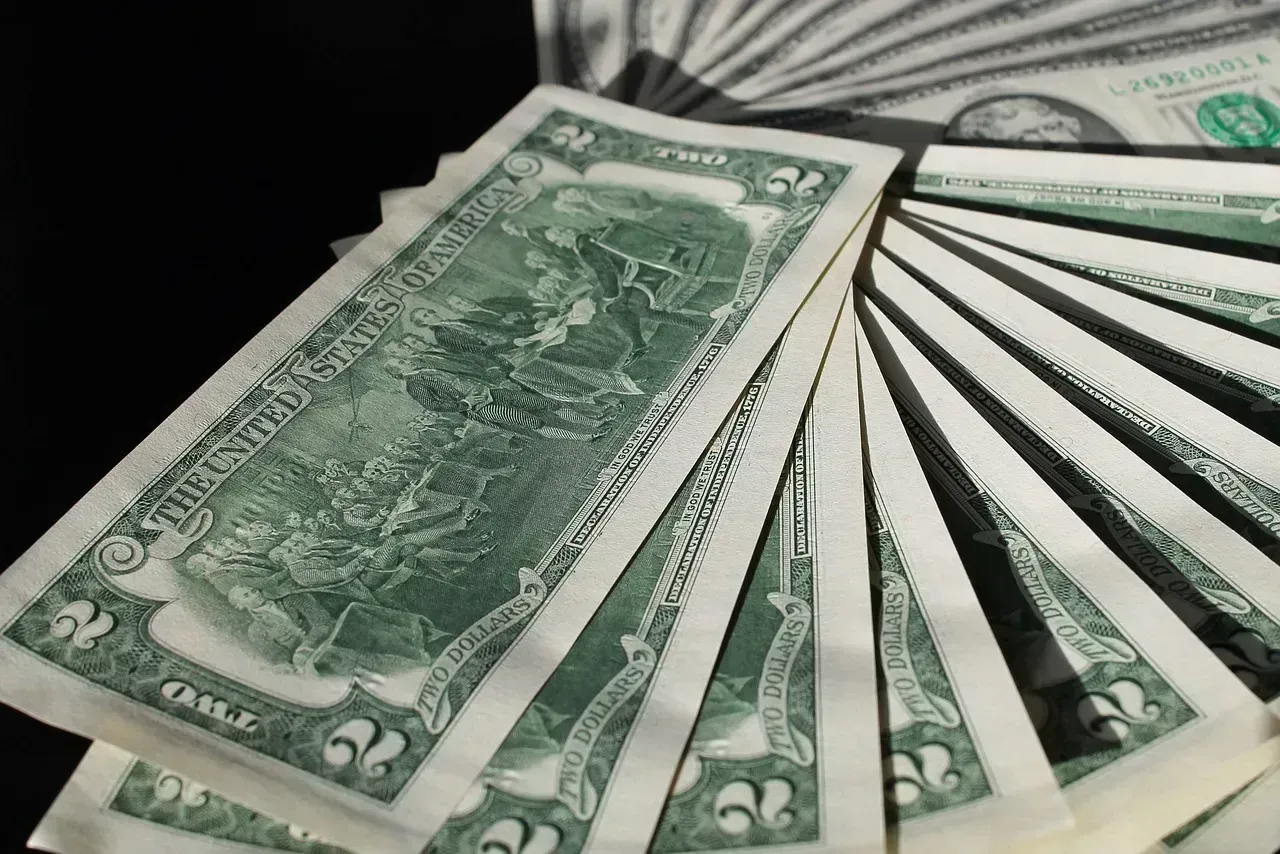
A $2 bill from 2003, bearing the impressively low serial number of 00000008, was graded at 64 PPQ by PCGS and sold for $900 at Heritage Auctions. Although not very old, the low serial number catapulted its value. Older series command even more. A $2 bill from 1976 also had a low serial number of 00000009 but was graded at 64 by PMG. That bill sold for over $2,000. The higher value is likely due to the bill’s older age and rarity, along with a similar low serial number.
A $2 bill from 2003 had the ultimate low serial number of 00000001. That bill sold for a staggering $21,600. Its grade was 65 by PMG, nearly perfect. It goes to show that a truly unique serial number can sometimes overshadow other factors. On the historical end of the spectrum, uncirculated $2 bills from 1890 can fetch up to $4,500, while certain 1928 red seal notes in pristine condition are valued over $1,000. According to Heritage Auctions, the largest auction house in the world that deals with currency, a $2 bill from 2003 with a very low serial number recently sold at auction for $2,400.
Why Condition Decides Everything – The Role of Professional Grading
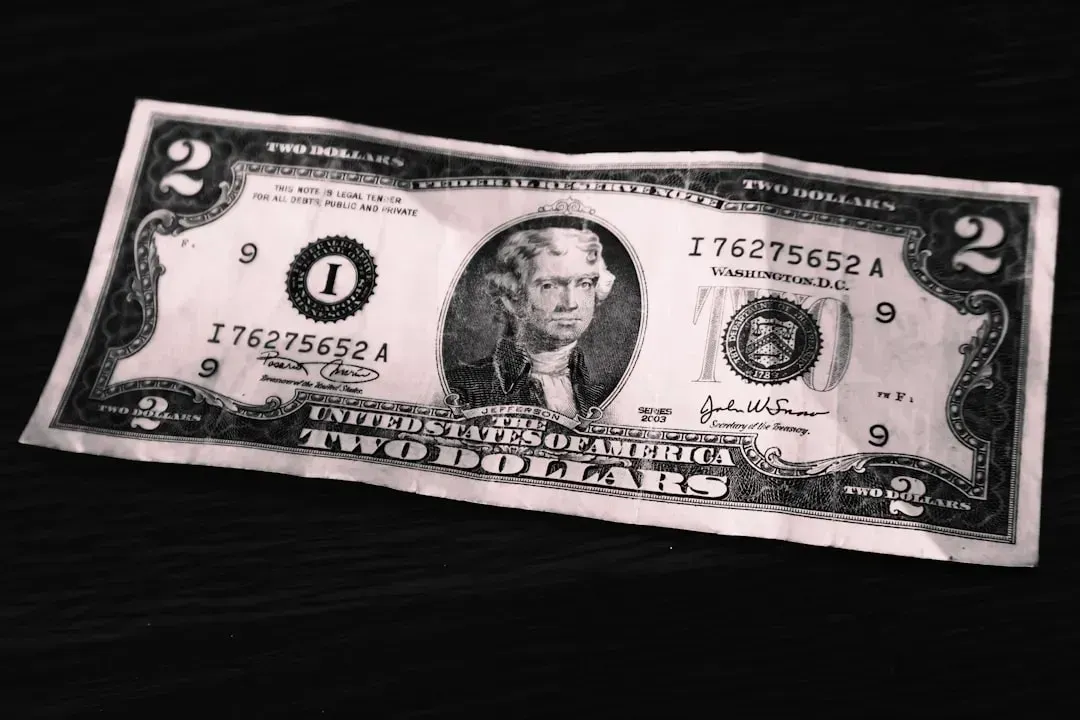
Condition directly affects how much a collector is willing to pay. Bills are graded on a scale ranging from heavily circulated to uncirculated. Even a rare serial number loses value if the bill is torn, stained, or heavily folded. Uncirculated bills with sharp corners, clean paper, and bright ink are the most valuable. A single fold across an otherwise extraordinary bill can knock hundreds – or even thousands – of dollars off its market price. Collectors take this seriously, and so do the grading services.
Paper Money Guaranty (PMG) and PCGS Currency are grading companies that receive and examine banknotes and assign them a grade from a scale of 1 to 70, 70 being the best and rarest. The selected banknote is then graded in terms of visual appeal, folds or creases, even margins, and many other factors not seen by the naked eye. Notes graded 65 or higher may receive “Exceptional Paper Quality” (PMG) or “Premium Paper Quality” (PCGS) designation, indicating original paper with no restoration. EPQ/PPQ notes command 20–50% higher prices than non-designated notes of the same grade. Getting a bill professionally graded before selling is now considered an essential step in the market.
How to Find, Store, and Sell a Valuable $2 Bill in 2026
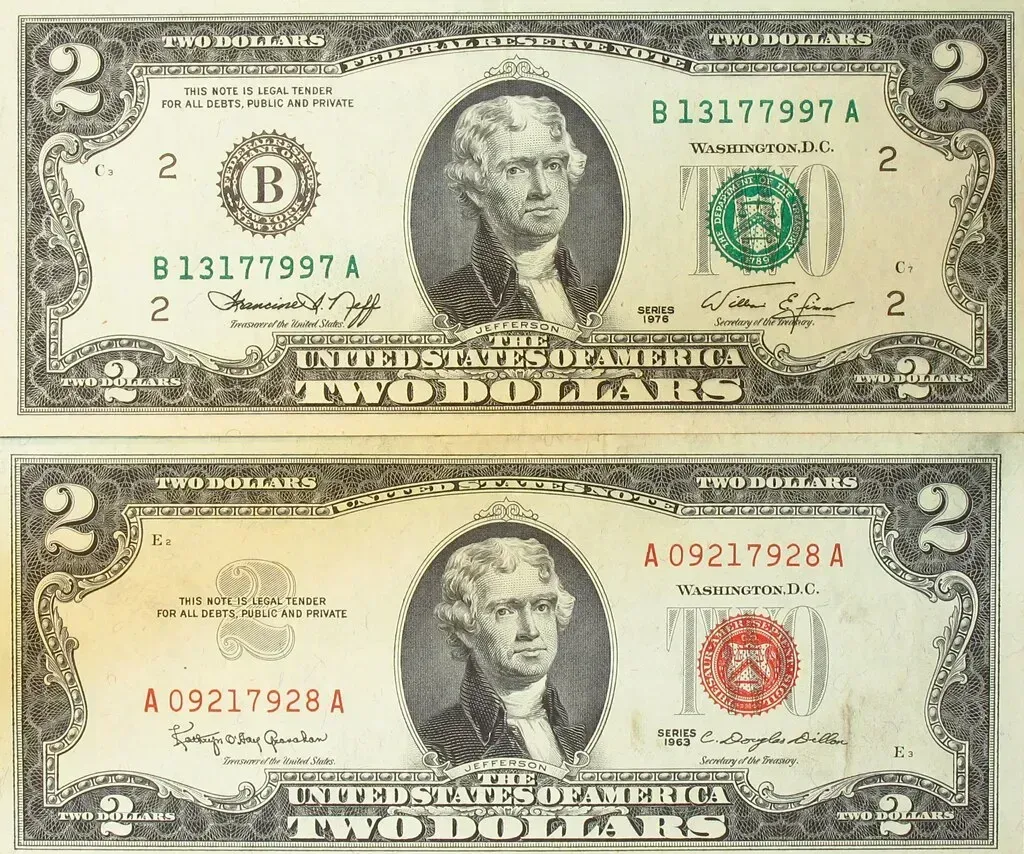
As of 2025, the U.S. Treasury reports that over $3.4 billion worth of $2 bills are still in circulation. In fiscal year 2024–2025, the Bureau of Engraving and Printing printed around 130 million new $2 bills. The sheer volume means valuable bills are still out there, hiding in old wallets, inherited collections, and forgotten shoeboxes. In 2025, the market for $2 bills continues to thrive, with collectors eager to acquire notes that possess unique features, historical significance, or are in exceptional condition. The first step is simply checking the serial number on every $2 bill you encounter.
If you’ve found a potentially valuable note, preservation is key. Use acid-free sleeves or Mylar currency holders for storage. Gloves are recommended to avoid oil or moisture damage. Store the bill in a cool, dry, and dark place. When it comes to selling, trusted auction houses include Heritage Auctions and Stack’s Bowers. Online marketplaces like eBay and specialized collector forums like CoinTalk are popular platforms. Professional grading services PCGS and PMG provide authentication and valuation before sale. The demand for rare $2 bills means that sellers can often find buyers quickly, especially for well-preserved or unique bills. In general, older bills and bills with errors tend to sell the fastest and at the highest prices.