The 8 Most Costly Mistakes in History – And Their Billion-Dollar Impact
History has a funny way of reminding us that even the most powerful institutions, the brightest engineers, and the richest corporations are just one bad decision away from catastrophe. Some mistakes cost a few million. Others reshuffled entire nations. A handful literally changed the course of civilization, and not in a good way.
What makes these stories so compelling is not just the staggering dollar amounts. It is the fact that many of these disasters came down to something embarrassingly small – a misplaced decimal point, a piece of software, or a simple refusal to listen. So buckle up, because what follows is equal parts shocking, fascinating, and deeply instructive. Let’s dive in.
1. The Chernobyl Nuclear Disaster – The Most Expensive Man-Made Event in History
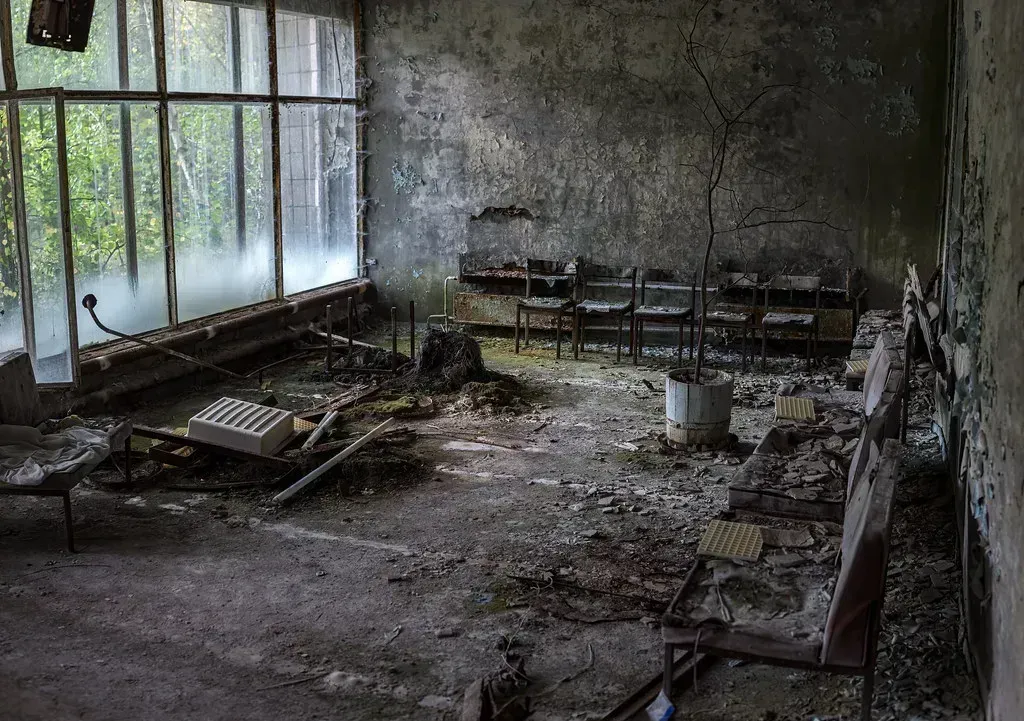
There are catastrophes, and then there is Chernobyl. On April 26, 1986, reactor number four at the Chernobyl Nuclear Power Plant in Ukraine exploded during a safety test gone horribly wrong. The disaster occurred while running a test to simulate cooling the reactor during an accident in blackout conditions, and the operators carried out the test despite an accidental drop in reactor power – a design flaw then caused the situation to spiral into an uncontrollable power surge.
The response involved more than 500,000 personnel and cost an estimated 18 billion rubles. It remains the worst nuclear disaster and the most expensive disaster in history, with an estimated total cost of $700 billion USD. That number is so enormous it barely feels real. To put it in perspective, it is larger than the annual GDP of most countries on Earth.
Coping with the impact placed a massive burden on national budgets. In Ukraine, five to seven percent of government spending each year is still devoted to Chernobyl-related benefits and programs. In Belarus, government spending on Chernobyl amounted to nearly a quarter of the national budget in 1991. The disaster did not just irradiate land – it financially irradiated entire economies for decades.
Estimations have only increased over time, with the most recent figures coming from newly released government data. Furthermore, the cost is expected to perpetually increase for several thousand years as cleanup operations and the economic impact of the Chernobyl Exclusion Zone continue indefinitely.
2. BP’s Deepwater Horizon Oil Spill – $65 Billion and Counting
If Chernobyl represents the catastrophic price of nuclear recklessness, the Deepwater Horizon disaster is the environmental equivalent for the oil industry. On April 20, 2010, the Deepwater Horizon oil rig exploded off the Gulf Coast, killing 11 people and injuring 17, beginning an 87-day oil spill that spewed nearly 134 million gallons into the Gulf of Mexico. That is not a spill. That is a slow-motion environmental execution.
The Deepwater Horizon oil spill is considered the largest marine oil spill in the history of the petroleum industry, estimated to be between eight and thirty-one percent larger in volume than the previous record-holder. The disaster left the region reeling from a devastated ecosystem, including the deaths of as many as 105,400 sea birds, 7,600 adult and 160,000 juvenile sea turtles, and up to a fifty-one percent decrease in dolphins in Louisiana’s Barataria Bay.
BP provisioned more than $69 billion relating to the spill, including response, cleanup, economic claims, government payments, settlements, and restoration. The U.S. Travel Association estimated that the economic impact on tourism across the Gulf Coast over a three-year period alone could exceed approximately $23 billion, in a region that supports over 400,000 travel industry jobs.
A six-year scientific study found that the 2010 BP Deepwater Horizon oil spill did $17.2 billion in damage to natural resources in the Gulf of Mexico alone. That figure covers only ecological destruction – not legal costs, not lost tourism revenue. The full human and environmental toll is still being calculated today.
3. Volkswagen’s Dieselgate Scandal – When Cheating Costs $34 Billion

Honestly, this one still makes me shake my head. The idea that one of the world’s most iconic car brands deliberately programmed its vehicles to cheat on emissions tests is the kind of corporate betrayal that belongs in a thriller novel. In September 2015, the Volkswagen emissions scandal known as Dieselgate erupted, exposing significant fraud involving emissions test manipulation and misleading marketing. Around 11 million cars worldwide, manufactured between 2009 and 2015, were affected.
The engine control software was programmed to reduce emissions to legal levels when vehicles underwent testing. In normal use, however, pollution levels increased as much as forty-fold. Forty times the legal limit. For years. Sold under the marketing claim that these were clean, eco-friendly cars.
The scandal has cost the German carmaker more than 32 billion euros, equivalent to $34.8 billion, in fines, refits, and legal costs. Stock prices fell by a third, directly impacting investors. The scandal also led to the resignation of CEO Martin Winterkorn. It remains one of the most destructive corporate scandals in automotive history.
A 2025 study by the Centre for Research on Energy and Clean Air found that, beyond exclusively Volkswagen vehicles, excess emissions from diesel vehicles are estimated to have caused 124,000 premature deaths across the EU and UK over the period from 2009 to 2024. The financial damage is enormous. The human cost is almost incalculable.
4. The AOL and Time Warner Merger – A $165 Billion Delusion

Few business decisions in modern history have been as spectacularly, painfully wrong as the AOL-Time Warner merger of 2000. The merger, valued at $165 billion, was hailed as a revolutionary integration of media and technology. However, the bursting of the dot-com bubble drastically reduced AOL’s value almost immediately. As broadband technology emerged, AOL’s dial-up service became increasingly obsolete.
Cultural clashes between the two companies hindered every integration effort, leading to billions in compounding losses. By 2009, Time Warner had severed ties with AOL entirely. What was once described as the deal of the century became a textbook case study in how not to conduct a merger. The combined company lost a staggering amount of value – estimates put total write-downs north of $200 billion.
Here’s the thing – the core problem was not just bad timing with the dot-com crash. It was a fundamental misunderstanding of what each company actually was. AOL brought internet users. Time Warner brought content. But the cultures, the strategies, and the visions never merged in the way the boardrooms imagined. It is the corporate equivalent of trying to mix oil and water and being surprised when it does not blend.
This costly debacle illustrates that even monumental business deals can fail catastrophically when technological advancements outpace corporate strategies. Two decades later, it is still cited in business schools around the world as the definitive cautionary tale about ego-driven megamergers.
5. NASA’s Mars Climate Orbiter – A $125 Million Unit Conversion Error

I know it sounds crazy, but NASA lost a spacecraft worth $125 million because two teams used different units of measurement. That’s it. That’s the whole story – and it’s devastating. On September 23, 1999, NASA’s $125 million Mars Climate Orbiter disintegrated in the Martian atmosphere after a nine-month journey. The cause was not rocket malfunction or computer failure – it was a unit conversion error. One engineering team programmed thrust data in pound-force seconds while another team’s software expected newton-seconds.
The discrepancy caused trajectory corrections to overshoot, sending the orbiter 100 kilometers too low into Mars’s atmosphere where atmospheric friction destroyed it. Known as a “simple human error,” this mistake cost NASA $125 million and delayed further Mars exploration. A spacecraft the size of a small car, built and launched over years of work, incinerated in minutes because of a measurement mix-up.
Lockheed Martin engineers used the imperial system while NASA’s flight team worked in metric. This seemingly minor error caused the spacecraft to enter Mars’ atmosphere at the wrong angle, ultimately leading to its incineration. Think about that the next time someone tells you unit standardization is boring. It saved this mission from failing – except nobody caught it in time.
The incident prompted sweeping reforms to NASA’s verification processes. It also sparked a broader industry conversation about cross-team communication in high-stakes engineering. The incident serves as a stark reminder of the importance of standardized measurements in complex engineering tasks. A reminder that cost the equivalent of a fully loaded spacecraft disappearing into thin Martian air.
6. Blockbuster Rejecting Netflix – A Hundred-Billion-Dollar Pass
Picture the scene. The year is 2000. Reed Hastings, co-founder of a small DVD-by-mail company called Netflix, walks into Blockbuster’s headquarters and offers to sell the whole thing for just $50 million. Netflix CEO Reed Hastings proposed selling his burgeoning company to Blockbuster for a modest $50 million. Blockbuster, confident in its DVD rental model, dismissed the offer. What followed is now one of the most legendary business blunders ever recorded.
Netflix is now worth more than $150 billion, having evolved into a dominant force in streaming, producing original content, and dominating the global entertainment industry. Blockbuster, on the other hand, is now a relic of the past. The decision to pass on Netflix is one of the most famous business mistakes in history.
Still, let’s be real – it is easy to look back and call this obvious. In 2000, streaming did not yet exist in the consumer world. Nobody had broadband internet at home. The decision seemed defensible at the time. Yet what Blockbuster failed to do was even imagine a future where their entire physical model could be disrupted. That lack of imagination is what ultimately cost them everything.
Blockbuster filed for bankruptcy in 2010, the same year Netflix was beginning its explosive growth into streaming. Today, there is exactly one Blockbuster store remaining in the entire world, operating in Bend, Oregon – as much a tourist attraction as a video rental shop. The contrast with Netflix’s current valuation is almost poetic in its cruelty.
7. The Quaker Oats and Snapple Acquisition – $1.4 Billion Flushed Away
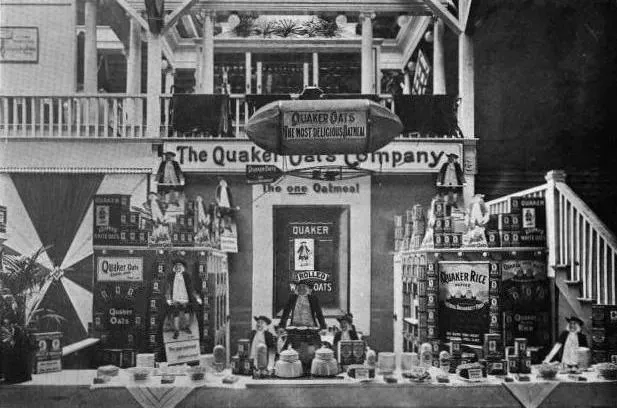
You might not immediately think of a beverage company when you list history’s most costly mistakes, but the story of Quaker Oats and Snapple is a masterclass in corporate overconfidence. Quaker Oats’ acquisition of Snapple in the early 1990s is a classic example of a misjudged business decision. Spending $1.7 billion on Snapple, Quaker hoped to dominate the beverage market. Unfortunately, the integration failed entirely, and Snapple was sold just three years later for only $300 million.
That means Quaker effectively burned through roughly $1.4 billion in three years. Not through some complex financial scheme or market crash – simply through poor strategic planning and a failure to understand the brand they had purchased. Snapple’s quirky, indie identity was precisely what made it popular, and Quaker’s attempts to standardize and mainstream it stripped away the very qualities its fans loved.
The loss was staggering, and Snapple’s eventual success as an independent brand only added salt to Quaker’s wounds. This mistake underlines the challenges of mergers and acquisitions, particularly when corporate cultures and market strategies clash. After the sale, Snapple eventually recovered and thrived under new ownership – making the failure even more glaring in hindsight.
The Quaker-Snapple debacle is often studied alongside the AOL-Time Warner merger as proof that the biggest risk in a major acquisition is not financial – it is cultural. You can buy a brand. You cannot always buy what made it work. It’s a lesson the corporate world seems to keep relearning, at tremendous expense.
8. France’s SNCF Train Order – $20 Billion Worth of Trains Too Wide to Fit

This one is almost too absurd to believe, but every word of it is true. France’s national railway company SNCF made a costly mistake when it ordered new trains that turned out to be too wide for the platforms at over 1,000 of the country’s stations. The mistake, which cost the company around $20 billion, was due to a miscommunication between the railway operator and those responsible for measuring the station platforms. The company failed to consider the older stations built before the 1980s.
In 2014, SNCF purchased 2,000 trains that were simply too large. Most of their platforms were too narrow to fit the new trains, costing the company about 50 million euros just in platform modifications. This happened when the operator neglected to factor in measurements of train platforms that had been built more than 50 years ago. Think of it like ordering a sofa for your living room, only to find out it does not fit through the front door – except on an industrial, national scale.
France’s national rail company SNCF put in an order for 2,000 brand-new trains that would fit many big, metropolitan stations like Paris’s newer infrastructure, but in rural France, the platforms were too narrow. This happened because somebody at the French Rail Network gave SNCF the wrong measurements. As a result, SNCF was forced to widen numerous stations, quietly spending billions on this oversight.
The trains themselves cost around $20 billion and modifying the platforms added over $60 million more. The thing that makes this case uniquely painful is that a simple data check – cross-referencing all platform widths including older ones – would have caught the problem before a single euro was spent. Sometimes the most expensive mistakes in the world are also the most preventable.