The Curious Relationship Between Boredom and Creativity
There’s a particular kind of restlessness most people know well. You’re sitting somewhere unremarkable, with nothing urgent to do, and an uncomfortable itch starts to creep in. That’s boredom. It feels like nothing, but it turns out, it might be one of the more interesting things the brain ever does.
For decades, boredom was filed away as a purely negative experience, something to eliminate as quickly as possible. The science has started to complicate that picture considerably. What researchers keep finding is that share a quieter, more productive relationship than almost anyone expected.
What Boredom Actually Is

Boredom isn’t simply the absence of stimulation. It’s a signal from the brain that the current environment or task lacks meaning or challenge. In that state, the brain becomes restless and starts actively looking for mental novelty or purpose. That restlessness is the key. It’s not passivity – it’s a kind of low-grade urgency.
Boredom is generally viewed as an unpleasant emotional state, characterized by feelings of dissatisfaction, restlessness, and mental fatigue. While often viewed as negative or unproductive, boredom is increasingly recognized as a functional mental state that serves an adaptive role in cognition and development. The distinction matters. Calling boredom purely bad is a bit like calling hunger bad. It’s uncomfortable, yes, but it exists for a reason.
The Brain’s Secret Workshop: The Default Mode Network
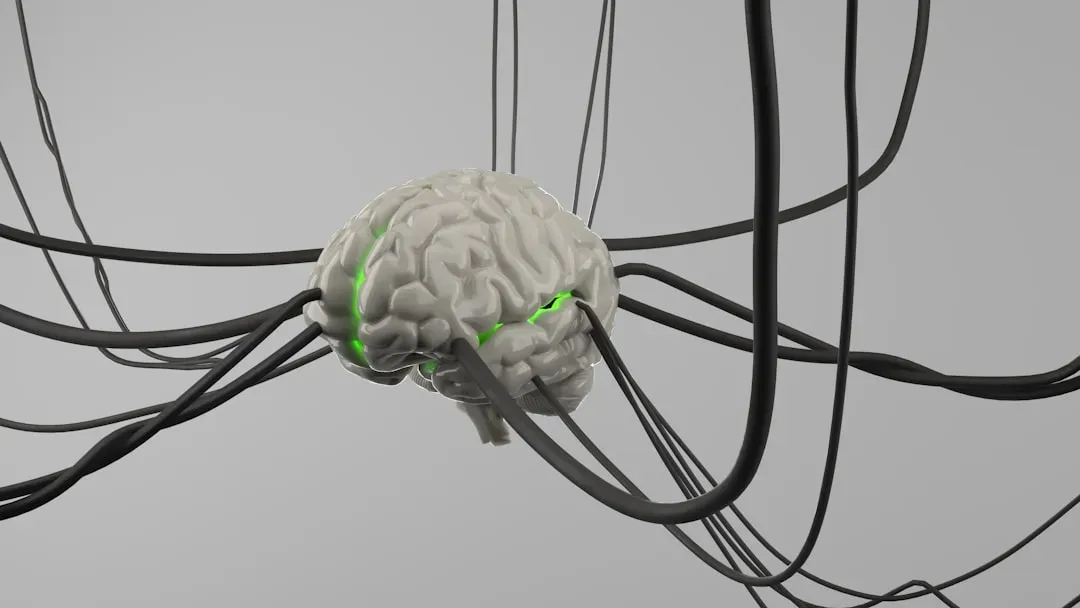
Neuroimaging studies show that boredom activates the brain’s default mode network, a set of brain regions involved in self-referential thought, imagination, and memory retrieval. The DMN is most active when we’re not focused on external tasks, such as when we’re daydreaming, reflecting, or mentally simulating future scenarios. This activation creates the mental space needed for divergent thinking and spontaneous insight, both of which are linked to higher-order intelligence and creativity.
The creative imagination hypothesis suggests that the DMN is involved in facilitating creativity and generating original ideas. When a person is at rest or involved in tasks that do not require external attention, the DMN becomes active, allowing the mind to wander and explore different mental scenarios. This not only aids reflection on past experiences but also the construction of mental narratives about the future. DMN activity during these periods of creative imagination can promote the association of seemingly disconnected concepts, leading to insights and innovative solutions.
The Daydreaming Connection

The default mode network is a system of connected brain areas that show increased activity when a person is not focused on what is happening around them. It is especially active when one engages in introspective activities such as daydreaming, contemplating the past or future, or thinking about the perspective of another person. Unfettered daydreaming can often lead to creativity.
Studies on mind-wandering have revealed that it is not a uniform phenomenon, but rather can vary in content and purpose. Research by Baird and colleagues found that mind-wandering with a purpose – such as daydreaming about future goals – can enhance creativity and motivation. This type of constructive mind-wandering is facilitated by the DMN, which integrates disparate pieces of information in novel ways, often leading to innovative solutions and ideas. In short, a wandering mind is not necessarily a wasted one.
What the Lab Studies Actually Show

In one landmark study, 80 participants took part in either a boring writing activity or not, followed by a creative task. A second study involved a further 90 participants who varied in the type of boring activity they undertook – either a boring written activity, a boring reading activity, or a control group. Results suggested that boring activities resulted in increased creativity.
Research results suggest that a boring state may enhance creativity in terms of fluency, a tendency largely aligned with the findings of past research. The influence of boredom on creativity varied depending on the dimension of creativity being measured, and taking on tedious tasks may actually help individuals achieve more creative performance. These are small studies with real limitations, but their consistency across different cultural contexts and age groups makes the pattern hard to ignore entirely.
The Challenge Question: Not All Boredom Is Equal
Based on psychological theory and cognitive load research, the negative effects of boredom appear when it’s combined with being overchallenged, whereas boredom combined with being underchallenged might actually enhance creativity. That’s a genuinely useful nuance. The type of boredom matters just as much as the experience of it.
Both boredom and overchallenge can hinder creativity, suggesting that an optimal level of challenge is necessary for fostering creativity. Empirical evidence for the positive link is contradictory, with some results supporting a positive connection, while others rejected this link or even found negative correlations between the two. This means the boredom-creativity story is more nuanced than the popular version suggests – it’s not a simple switch. Context, challenge level, and the individual all shape the outcome.
Highly Creative People Experience Boredom Differently
Higher originality scores on a divergent thinking task were associated with less perceived boredom, more words spoken overall, more freely moving thoughts, and more loosely-associative transitions during periods of baseline rest. In other words, people who are more naturally creative seem to be better at entertaining themselves with their own inner world.
Across more than 2,600 participants, those who reported higher self-rated creativity also reported less perceived boredom during the COVID-19 pandemic, a time during which many people experienced unusually extended periods of unstructured free time. Overall, these results suggest a tendency for creative individuals to be more engaged and explorative with their thoughts when task demands are relaxed. This raises a chicken-and-egg question that researchers are still untangling: does creativity reduce boredom, or does tolerance for boredom build creativity over time?
Boredom as Motivation: The Seeking Signal

Some studies suggest that boredom proneness can boost creativity by motivating individuals to seek novel, engaging activities, fostering creative thinking as they attempt to escape boredom. On a neurochemical level, boredom is linked to the brain’s dopamine system. Dopamine is associated with reward-seeking behavior and motivation. When dopamine levels drop due to lack of stimulation, the brain starts seeking new challenges to restore equilibrium. This mechanism helps explain why boredom can lead to curiosity, learning, and risk-taking – all of which can have positive outcomes for brain development when channeled productively.
Studies on boredom and creativity suggest that boredom can actually enhance creativity. Scholars have found that the boredom we experience during passive activities motivates people to seek out new and rewarding activities. Studies have found that people experiencing a moderate level of boredom are more likely to engage in problem-solving and creative thinking. Additionally, boredom can encourage individuals to start new hobbies and interests, or pursue challenges for themselves.
Smartphones and the Death of Productive Boredom

As of 2025, global average screen time across all devices is estimated between six and seven hours per day, depending on age group and region. In the U.S., average daily smartphone internet usage among adults is projected at over four hours in 2025, with some regional data suggesting users check their phones roughly 58 times per day on average. Every one of those check-ins is a moment boredom never gets to begin.
Checking your phone releases a bit of dopamine, and much like a smoker craving a cigarette, people begin to crave that hit in part because it distracts from the uncomfortable feeling of boredom. Although it’s comforting to use phones as digital pacifiers, this can reduce our capacity for creativity. Research on screen time and brain development has found that constant stimulation from phones and tablets may limit opportunities for boredom-related brain activity. When every quiet moment is filled with fast-paced digital content, the brain has fewer chances to enter the reflective states supported by the default mode network.
What Children Lose When They’re Never Bored

Boredom, although uncomfortable, has historically been an engine of creativity. When there are no digital distractions, children invent games, tell stories, draw, or look for ways to entertain themselves. When children lack immediate external stimuli, they resort to imagination to invent games, create stories, or experiment with their surroundings. This process activates divergent thinking, a crucial aspect of innovation and creative problem-solving.
Overscheduling produces overstimulation, a common characteristic of lives packed with organized activities, and denies children the boredom they may need to ignite their imaginations – the very stuff of creativity. Creative play is usually the result of unstructured time and fueled by intrinsic motivation. Extrinsic motivation, such as promised rewards, often inhibits exploration and imagination, especially for kids. There’s a real cost to never letting a child sit with an empty afternoon.
How to Work With Boredom Instead of Against It

In small doses, boredom is the necessary counterbalance to the overstimulated world in which we live. It can offer unique benefits for the nervous system and mental health. This is opposed to long periods of boredom, where increased default mode network activity may be associated with depression. The goal isn’t to seek out misery. It’s to let the mind breathe occasionally.
Supporting the default mode network doesn’t require complete withdrawal from daily life – it asks for intentional spaciousness. Practices like walking without a podcast, lying down with your eyes closed, journaling without direction, or simply sitting in silence can activate the DMN and restore creative flow. The science now affirms what creative traditions have always understood. Giving the mind room to wander is not slacking. It’s part of the work.
The irony of the digital age is that we’ve built extraordinary tools to fill every gap in time, and in doing so may have quietly eroded the very cognitive space where original ideas are born. Boredom was never the enemy. It was always the opening.