5 Reasons Las Vegas Is Losing Its Shine for U.S. Travelers
Las Vegas has long held the title of America’s ultimate playground. For decades, the promise of cheap rooms, round-the-clock entertainment, and the thrill of the casino floor was enough to keep tens of millions of visitors coming back year after year. That streak is now firmly broken. Las Vegas tourism suffered its worst year since the pandemic in 2025, with visitor arrivals dropped 7.5%, the sharpest decline outside a pandemic year since the city started keeping records in 1970. Something has clearly shifted, and it isn’t just one thing. It’s a slow accumulation of frustrations that are pushing everyday travelers toward other options.
The boom years told a confident story: visitor numbers climbed from 38.8 million in 2022 to 40.8 million in 2023, and the city’s biggest year on record remains 2019 at 42.5 million. The reversal in 2025 was sharp enough to turn heads across the entire hospitality industry. The LVCVA itself has noted that “Las Vegas is often a reflection of the broader U.S. economy,” adding that “shifts in spending and behavior tend to surface here first.” What those shifts are revealing about Sin City’s future makes for a sobering read.
1. The Cost of a Vegas Trip Has Quietly Become Outrageous
The idea that Las Vegas was once an affordable getaway feels almost nostalgic at this point. Room rates on the Strip have increased by roughly 43% since 2019. That’s not a small jump over six years. Most Strip hotels now charge between $40 and $65 per night in resort fees alone, covering amenities such as Wi-Fi, gym access, and local calls that few guests actually use. Tack on parking, food, and entertainment, and the bills stack up fast.
Several luxury properties now charge $55 per night in resort fees before tax, including ARIA, Bellagio, Caesars Palace, Wynn, Encore, Venetian, Palazzo, Fontainebleau, and Waldorf Astoria, which comes to $62.36 per night with tax. Las Vegas Advisor Publisher Anthony Curtis has noted the rapid climb, and Casino Reports counted 15 Strip resorts with $50-plus resort fees. Food and beverage pricing has reached unprecedented levels, with cocktails at most Strip properties costing $18 to $25 and wine by the glass ranging from $14 to $24. For a family or even a couple on a moderate budget, a few nights in Las Vegas can now feel comparable to an international trip.
Las Vegas casino executives have acknowledged that pricing likely turned away some visitors in 2025, with ongoing cost hikes from resort fees and parking to cocktails and coffee resulting in a poor perceived value. One analyst theorizes that guests “may have the same budget they had last trip, but less is spent on gambling and more on higher priced meals, parking, special fees, or one of the many other line items that increasingly populate the receipts in Vegas.” The city built its reputation on giving visitors the sense that they were getting a deal. That feeling is fading fast.
2. The Canadian Boycott Has Dealt a Crippling Blow
For years, Canadians were among the most reliable and highest-spending visitors Las Vegas could count on. That relationship collapsed in 2025. The boycott began in early 2025, after U.S. President Donald Trump’s tariff war heated up and he suggested Canada should become the 51st U.S. state. Comprising roughly 3% of Las Vegas’ 41.7 million visitors in 2024, Canada’s estimated 1.4 million international tourists were a notable demographic, and an economics professor at the University of Nevada, Las Vegas revealed that Canadians added $3.6 billion to the local Nevada economy that year, with Canadian spending supporting around 43,000 jobs in the region.
In June 2025, Air Canada transported 36,075 passengers to Las Vegas, a 33% drop from 54,022 a year earlier; WestJet moved 46,878 flyers, down 31%; and ultra-low-cost Flair Airlines fell 62% to just 3,745 passengers. The lack of steady Canadian tourism also contributed to Air Canada removing 82,000 seats to Las Vegas in the first quarter of 2026. The political dimensions of the boycott made it particularly stubborn. Among Canadian travelers who said U.S. policy affects their travel choices, 80% noted that U.S. tariffs were key deterrents and 71% said they were put off by political statements by American leaders.
In August 2025, Las Vegas Mayor Shelley Berkley told reporters that their Canadian visitation, which comprised the city’s biggest international market, had “slowed to a drip” during what she called the worst of the economic Trump Slump. Las Vegas launched several marketing campaigns to attract more tourists with little success, and Canadian tourism officials even prompted Las Vegas tourism officials to head to Vancouver in 2025 in an effort to win them back. Despite these efforts, the boycott remained firm well into 2026.
3. The Rise of Online Gambling Is Changing the Game

Las Vegas has always sold itself as the place where you had to be physically present to feel the rush of gambling. That exclusive edge is eroding rapidly. In 2024, the U.S. online gambling market was worth $12.68 billion, and analysts are predicting nearly 10% growth every year through 2030. That’s not a passing trend. It’s a structural shift in how Americans choose to gamble, and it’s happening in their living rooms, on their phones, at any hour of the day.
U.S.-based iGaming revenue hit $905.6 million in March 2025, up 26.2% from the year before, and by July 2025, the American Gaming Association reported $1.78 billion in online gaming revenue, a 20.8% jump over the prior year. Younger players especially aren’t chasing the Vegas fantasy anymore. They’ve grown up with phones in their hands, so gambling online doesn’t feel like a compromise. Like everything from movies to arcade games, doing it on an app feels normal. Las Vegas built its entire identity around the idea that the trip was part of the experience. That argument is getting harder to make when the casino is already in your pocket.
The LVCVA did not mention the steady rise of online gambling, which was a center focus of the gambling industry’s 2025 G2E conference in Las Vegas itself. The industry’s own conference acknowledged the competition, even as the city’s marketing body stayed quiet about it. Despite the tourism downturn, Las Vegas Strip gaming revenue reached roughly $8.8 billion, a slight year-over-year gain that set a new annual record, but this divergence reflects a tourism slowdown rippling through the hospitality sector even as gaming at high-stakes tables and premium slots buoyed earnings for casinos. The casino floor may still be profitable, but it’s increasingly sustained by fewer, wealthier players rather than the mass-market visitors who once filled the Strip.
4. Economic Anxiety Is Keeping U.S. Travelers Home
Las Vegas is a discretionary destination. When people feel financially squeezed, it’s one of the first trips they skip. LVCVA CEO Steve Hill has described a “downturn largely driven by consumer sentiment, concern about the economy, jobs, and affordability,” calling Las Vegas a sort of “canary in a coal mine” early warning system about the broader economy. That framing is telling. The city’s fortunes are tightly linked to whether ordinary Americans feel confident enough to spend on leisure.
Gaming and tourism leaders were looking past 2025, a year beset by economic upheaval locally and nationally, a 43-day government shutdown, and a steep decline in international visitation brought on by boycotts of travel to the U.S. by Canadians. Shifting travel dynamics and economic uncertainty spurring cautious consumer sentiment defined 2025, according to the LVCVA’s year-end summary. For a city that runs on high volumes of visitors willing to spend freely, that kind of widespread financial caution is genuinely damaging.
Reuters noted that MGM Resorts and Caesars Entertainment’s Las Vegas profit and revenue fell in 2025, with Caesars reporting a 20% drop in profit. U.S. air carriers, according to Cirium data, are offering 7% fewer seats heading to Las Vegas for the first quarter of 2026, and major Canadian carriers have cut capacity by 30%. Airlines don’t shrink routes without good reason. When carriers pull back seats to a destination, it’s a reliable signal that demand has softened in ways that may not bounce back quickly.
5. Competing Destinations Are Offering Better Value
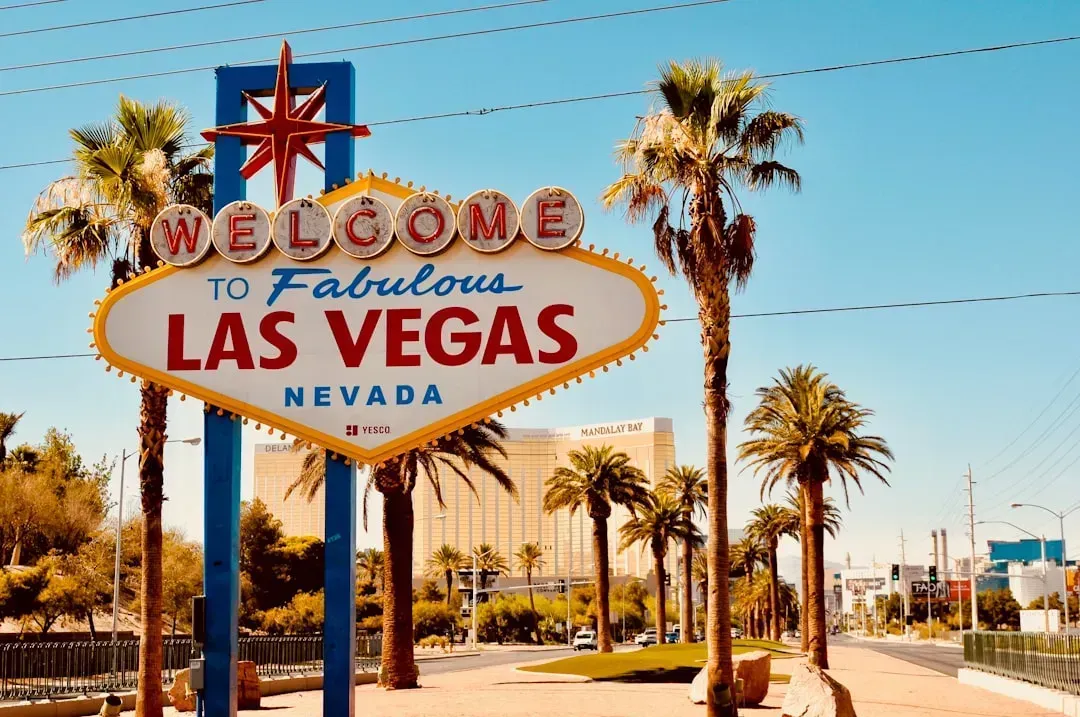
Las Vegas doesn’t just compete with itself. It competes with every other leisure option U.S. travelers consider when they’re thinking about where to spend their money. International tourism has not fully rebounded, and competition from destinations like Orlando, Miami, and even major cruise lines is drawing away budget-conscious travelers, with many visitors who once made annual Vegas trips now choosing a Caribbean cruise or all-inclusive Mexico resort instead. That shift isn’t subtle. It reflects a genuine reassessment of what travelers feel they get for their dollar.
Las Vegas’ shift away from its core gambling identity began in the 2000s as it tried to reinvent itself through luxury dining, concerts, sports, and high-end events. While this strategy attracted affluent travelers, it has also alienated the everyday visitor. This push toward high-end tourism, sometimes referred to as the “gentrification” of the Strip, is making Las Vegas feel increasingly out of reach for average travelers, and as the city targets the wealthy, the mass-market tourists are quietly retreating. All-inclusive resorts, cruise packages, and even domestic alternatives like Nashville or New Orleans offer experiences where you actually know what you’re spending before you arrive.
Macquarie Securities gaming analyst Chad Beynon expects that “the softness from the international and leisure customer will persist” into 2026. Tourism supports $85.2 billion in total economic impact in Southern Nevada and directly employs 252,610 workers, representing 22.6% of the region’s workforce. The economic stakes of a prolonged slump are enormous for the city. According to the LVCVA’s 2025 summary, Las Vegas recorded 12 consecutive months of year-over-year visitor declines. Twelve straight months of falling numbers is not a blip. It is a pattern that Las Vegas will need to take seriously if it wants to reclaim its place as the go-to destination for American travelers looking for a good time at a fair price.