9 Bizarre Historical Coincidences That Scientists Still Can’t Fully Explain
History has a strange sense of humor. Every now and then, two completely unrelated events line up in a way that makes you stop dead and stare. We’re not talking about small, forgettable overlaps. We’re talking about the kind of stuff that makes seasoned historians quietly put down their coffee and rethink everything.
Some of these you’ve probably heard of. Others, maybe not. Some have semi-rational explanations. Others? Well, science is still working on that. Let’s dive in.
1. Lincoln and Kennedy: A Century of Uncanny Echoes

Few historical coincidences are as layered or as chilling as the parallels between Abraham Lincoln and John F. Kennedy. Both presidents were elected to Congress in ’46, Lincoln in 1846 and Kennedy in 1946, and both rose to the presidency in ’60, precisely one hundred years apart. That alone could be dismissed as a calendar quirk. The list doesn’t stop there, though.
Both presidents were shot on a Friday, in the back of the head, while seated beside their wives who remained uninjured. Both of the presidents’ successors were Democrats named Johnson, Andrew and Lyndon, with six-letter first names and born in ’08. Even the assassins mirror each other in a strange way.
The assassins, John Wilkes Booth and Lee Harvey Oswald, were known by their three names, each containing fifteen letters, and both were killed before standing trial. Honestly, it’s the kind of pattern that makes your brain itch. The Lincoln-Kennedy coincidences endure because they tap into something deeper than statistics, suggesting patterns in chaos and meaning in tragedy.
That said, not every item on the famous list holds up to scrutiny. While there are a number of verifiable overlaps, such as the presidents being elected 100 years apart and succeeded by men with matching surnames, many of the more sensational claims are either misinterpreted or simply false. Still, the verified overlaps alone are remarkable enough to keep historians talking.
2. The Novel That Predicted the Titanic – 14 Years Early
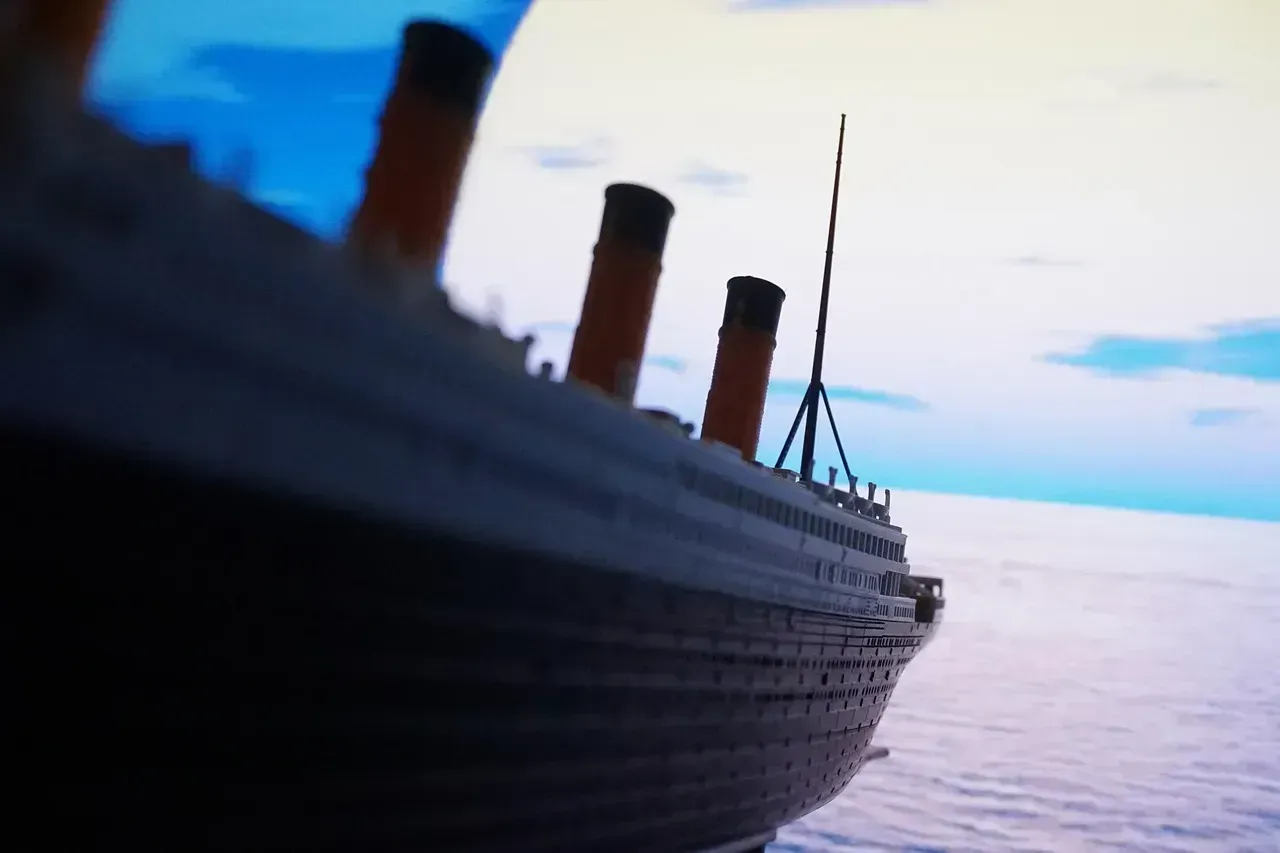
In 1898, a little-known American author named Morgan Robertson published a novella titled “Futility.” It features a fictional American ocean liner named Titan that sinks in the North Atlantic Ocean after striking an iceberg, and the Titan and its sinking are famous for their similarities to the real-life passenger ship RMS Titanic and its sinking 14 years later. Let that sink in. Fourteen years.
Each ship had a capacity of around 3,000 people, making it the world’s largest passenger ship at the time of its construction. The ships were remarkably similar in size, with Robertson’s Titan at 800 feet long while the Titanic measured 882.5 feet. Moving at 25 knots, the Titan also struck an iceberg on the starboard side on an April night in the North Atlantic, 400 nautical miles from Newfoundland. The match is staggering.
Following the Titanic’s sinking, some people credited Robertson with clairvoyance. Robertson denied this, claiming the similarities were explained by his extensive knowledge of shipbuilding and maritime trends. With his first-hand experience of life at sea, it is likely that Robertson had an interest in maritime developments and technology, and the race between the great powers to build larger, faster and more luxurious liners would have been the cutting edge of technology. Reasonable explanation? Sure. Fully satisfying? Not quite.
3. Mark Twain and Halley’s Comet: A Cosmic Appointment
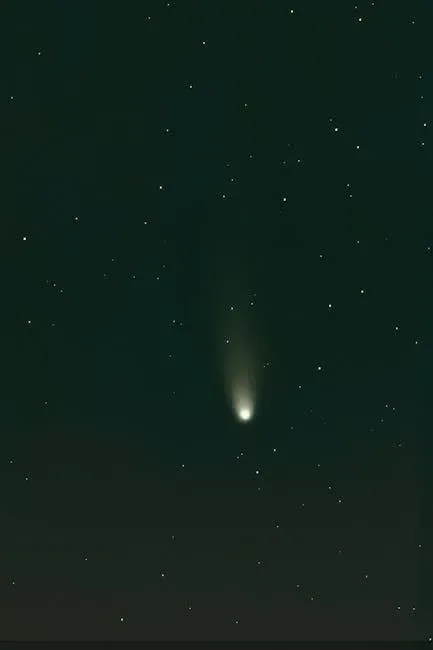
Here’s a story that blurs the line between poetic luck and something far harder to explain. Mark Twain was born in 1835, a year when Halley’s Comet, which only passes the Earth every 76-odd years, was visible. It’s the kind of birth detail most people would never think twice about. Twain did, though.
It reappeared in 1910, the year Twain died. He died the day after it was at its brightest. According to the New York Times, he said in 1909, “The Almighty has said, no doubt, ‘Now here are these two unaccountable freaks; they came in together, they must go out together.'” He essentially predicted his own death with a cosmic metaphor. Then it came true.
In 1910, Twain died of a heart attack the day after the comet’s closest approach. The alignment still stands as an astonishingly personal astronomical coincidence. Statistically, the odds of dying within a day of a celestial event you were born during, after publicly predicting it, are borderline impossible to calculate. Some things just resist a clean explanation.
4. Jefferson and Adams: Dying Together on America’s Birthday
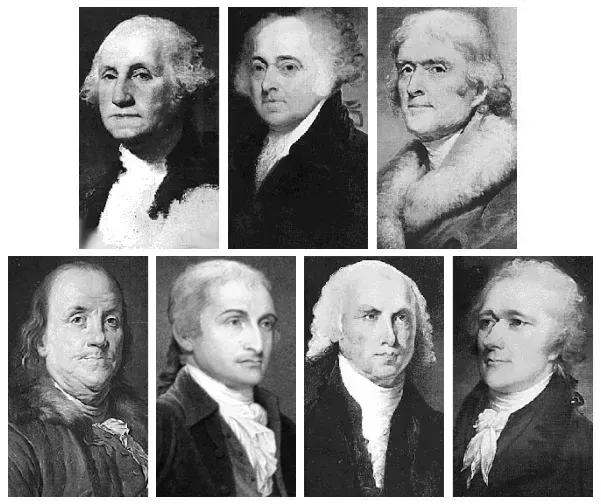
On the surface, two old men dying on the same day doesn’t sound miraculous. But the details here make this one of the most emotionally staggering coincidences in American history. Thomas Jefferson and John Adams, both pivotal Founding Fathers and former political rivals, died on July 4, 1826. That date marked the 50th anniversary of the Declaration of Independence, a document they both helped shape.
These founding fathers, alternately close friends and bitter rivals across their intertwined political careers, died on the same day. At around 6 p.m. on that fateful day, Adams, unaware that Jefferson had died just after noon, uttered his final words: “Thomas Jefferson survives.” He was wrong, though he could not have known it.
The odds of these two giants of American history passing on such a symbolic day are staggering, making their intertwined fates one of the most remarkable coincidences in U.S. history. And if that weren’t enough, fellow founder and president James Monroe also died on the 4th of July, just five years later. Three Founding Fathers. Three July 4th deaths. Coincidence, or something the universe was quietly insisting upon?
5. Napoleon and Hitler: The 129-Year Shadow
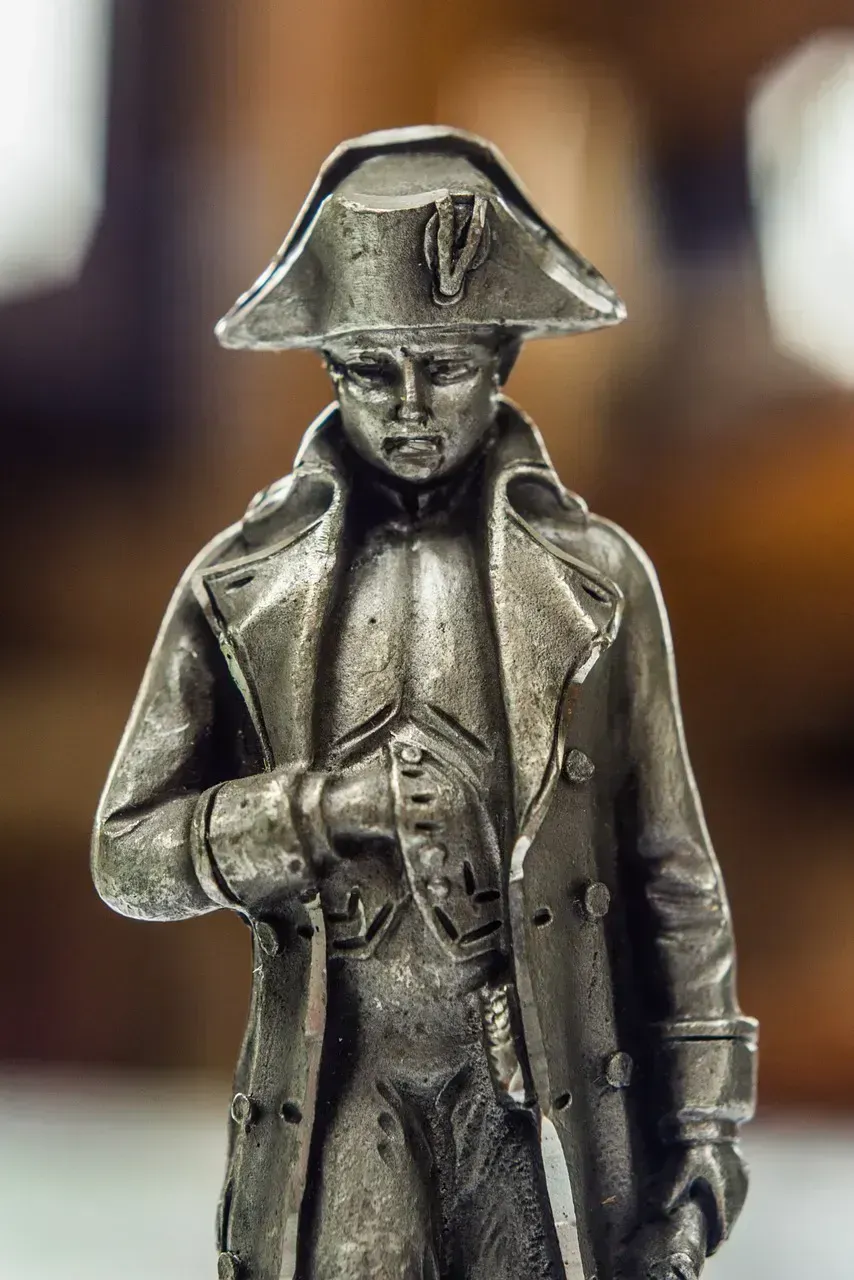
You’d expect two of history’s most destructive military leaders to share a few strategic similarities. But what nobody anticipated was just how precisely their timelines would align on a numerical level. Napoleon and Hitler were born 129 years apart, came to power 129 years apart, declared war on Russia 129 years apart, and were defeated 129 years apart. The same number, repeated across every major milestone.
Russia’s winter didn’t discriminate. It swallowed Napoleon’s Grand Armée in 1812, then turned on Hitler’s forces in 1941. Separated by 129 years, both invasions began in summer and ended in frozen disaster. The parallels in strategy and failure remain among the most analyzed coincidences in modern military history.
To be fair, some skeptics argue that the exact gaps don’t always hold up perfectly depending on which specific dates you choose. The comparative trend opened the door to unrestrained comparison between Napoleon and Hitler, where any basis was found in alleged similarities and coincidental evidence pushed to breaking point. It’s hard to say for sure how much of this is genuine pattern and how much is selective math. Still, the core overlaps remain hard to shake.
6. Edgar Allan Poe and the Real Richard Parker
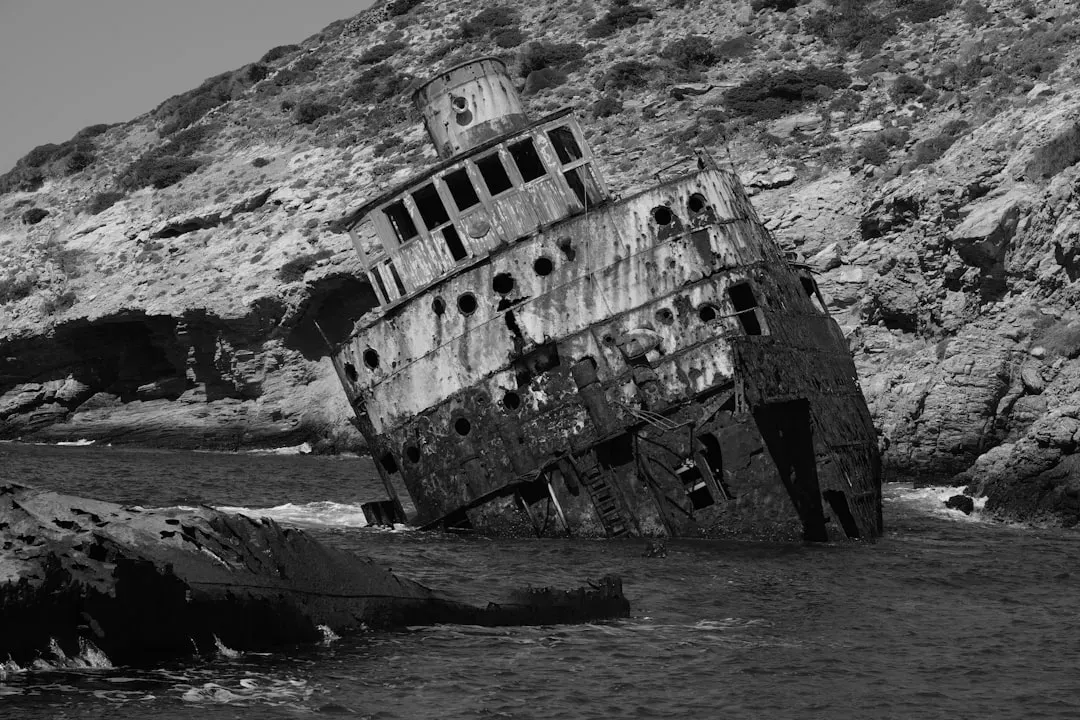
Poe’s imagination was famously dark, but even he probably didn’t expect his fiction to materialize as reality. Edgar Allan Poe’s tale, “The Narrative of Arthur Gordon Pym,” describes a shipwreck where desperate survivors resort to cannibalism, choosing a victim named Richard Parker. Astonishingly, years after Poe’s story was published, a real shipwreck echoed this grim scenario, right down to the victim’s name. The bizarre overlap between fiction and reality leaves readers and historians alike wondering about the limits of coincidence.
The real event was the 1884 sinking of the yacht Mignonette. Survivors were rescued at sea, and indeed a young crew member named Richard Parker had been killed and cannibalized by the other survivors. The name. The act. The sea setting. All matching a story Poe had written decades earlier. The strange tale of Richard Parker blurs the line between fiction and fate. Edgar Allan Poe wrote of a shipwrecked crew resorting to cannibalism, naming their victim Richard Parker.
Unlike the Titan-Titanic story, there’s no “Robertson knew ships” explanation here. Poe had no particular reason to land on that specific name. The name “Richard Parker” isn’t unusual in the way something like “Archibald Featherstone” would be, but the match to a real event of this specific nature? That’s in a different category of eerie entirely.
7. The Hoover Dam’s Father and Son Bookend

Construction projects claim lives, and the Hoover Dam was no exception. But buried in its tragic history is one of the most haunting numerical coincidences ever recorded. The first worker to die during the dam’s construction was J.G. Tierney on December 20, 1922. The last person to die there was J.G. Tierney’s son, who died on December 20, 1935. Father and son. Same name. Same exact date. Thirteen years apart.
George Tierney died during Hoover Dam’s early survey in 1922. Fourteen years later, on the same day, his son Patrick passed away while working on the project. Neither event was linked by circumstance, but the dates and bloodline make it unforgettable. There is no causal connection between the two deaths, which makes the date alignment even harder to process rationally.
Probability experts would note that, given thousands of workers and years of construction, some overlapping death dates are statistically expected. But the same surname, the same project, and the exact same calendar date across two generations of the same family? That’s not a pattern mathematics alone can satisfyingly dismiss. It feels like something out of a Greek tragedy written by the universe itself.
8. Stephen Hawking’s Death and the Date That Defied Belief
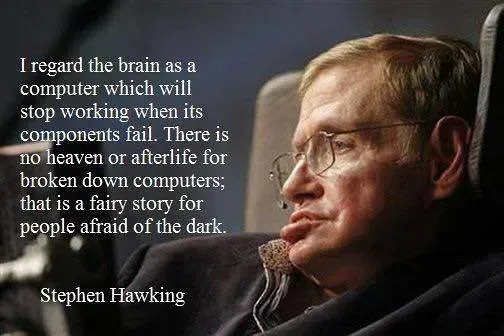
When Stephen Hawking died on March 14, 2018, the date carried an almost theatrical weight. As Hawking himself would tell you, time is relative. But that doesn’t quite explain why his death occurred on Einstein’s 139th birthday, Galileo’s 300th death anniversary, and Pi Day, when the date reads 3.14. Three separate scientific milestones, landing on the same day as the death of one of science’s greatest modern minds.
Galileo died on January 8, 1642. Einstein was born January 14 of the same year, though in the new calendar system, Hawking’s death fell on March 14, which is Pi Day. The convergence of these scientific giants across time on a single calendar day is the kind of thing that makes even committed rationalists raise an eyebrow. It’s almost as if history was paying its respects in the only language science understands.
Hawking, who spent his career exploring the very structure of time and space, might have appreciated the absurdity of it. Or perhaps not found it absurd at all. The fact that the man who wrote “A Brief History of Time” exited the world on a day loaded with scientific symbolism isn’t something probability charts fully absorb without blinking.
9. The Jim Twins: Separated at Birth, Living Identical Lives

When psychologists at the University of Minnesota reunited a pair of identical twins in 1979 who had been separated at birth, what they discovered went far beyond what genetics alone seemed capable of explaining. Separated at birth, a set of twins from Ohio each grew up knowing nothing of the other’s existence. They were both named James on their adoptions, both grew up to be police officers and marry women named Linda. They each had a son, one named James Alan and one named James Allan. They also each had a dog named Toy. They both got divorced, but later each remarried women named Betty.
The study became one of the most cited cases in behavioral genetics research. It raised difficult questions about the extent to which our choices are truly our own and how deeply DNA shapes not just our biology, but the specific texture of our lives. The same job, the same wife’s name, the same pet’s name, and the same pattern of divorce and remarriage. These were not shared memories. These men had never spoken.
Scientists have since explored twin studies extensively, and genetics clearly plays a larger role in behavior than most people intuitively accept. But even the most committed genetic determinists struggle to explain why both men independently chose the name “Toy” for their dog. That one detail alone doesn’t feel like science. It feels like something else entirely.