I Asked ChatGPT Why People Are Skipping Retirement in Florida – Here Are 10 Reasons
Florida has spent decades living rent-free in the American retirement imagination. Sun-soaked beaches. Year-round warmth. Golf at every corner. No state income tax. It sounded almost too good to be true, and honestly? For a growing number of would-be retirees, it turns out it was. The Sunshine State is losing its grip on the retirement crowd, and the reasons are stacking up fast.
So I went ahead and asked ChatGPT to break it all down. What came back was a surprisingly honest, data-backed list of why more and more people are quietly crossing Florida off their retirement shortlist. Some of it you might expect. Some of it genuinely surprised me. Let’s dive in.
1. Home Prices Have Gone Through the Roof – Literally

Let’s start with the most obvious gut-punch. In just half a decade, the median price of a single-family house in Florida rose by $150,000, or about 60%. That’s not gradual appreciation. That’s a full-on market transformation that left fixed-income retirees scrambling.
According to Redfin, the average cost of a home in March 2018 was approximately $250,000. By July 2024, the median sale price had climbed to $409,700. For someone planning retirement on a fixed Social Security income, that’s a completely different financial universe than what they budgeted for.
Remote workers and the wealthy have been flocking to the state, driving up home prices and leaving those on a fixed income feeling the pinch. Think of it like someone turning up the heat on a stove while everyone else is trying to enjoy a steady simmer. The people who can’t adjust the temperature are the ones who eventually leave the kitchen.
2. The Insurance Crisis Is Unlike Anything Seen Before

Florida property insurance rates have skyrocketed to unprecedented levels, with the average premium reaching $3,023 in recent years. The typical Florida policy now averages $5,376 annually for a home with $300,000 in dwelling coverage, well above the national average of $2,181. That’s a staggering difference that hits retirees where it hurts most – the monthly budget.
While the average U.S. homeowner pays about $140 per month for insurance, Floridians pay closer to $500 per month, and in coastal, high-risk zones, some homeowners pay well over $800 per month. That’s basically a car payment – just to keep your house insured against storms you hope never come.
A 2024 Redfin survey found that roughly 70% of Florida homeowners have experienced rising insurance costs or coverage changes, such as their insurer dropping them entirely. For a retiree counting on a predictable monthly budget, that kind of financial ambush isn’t just stressful – it can be genuinely devastating.
3. Hurricanes Are No Longer Just a “Seasonal Inconvenience”
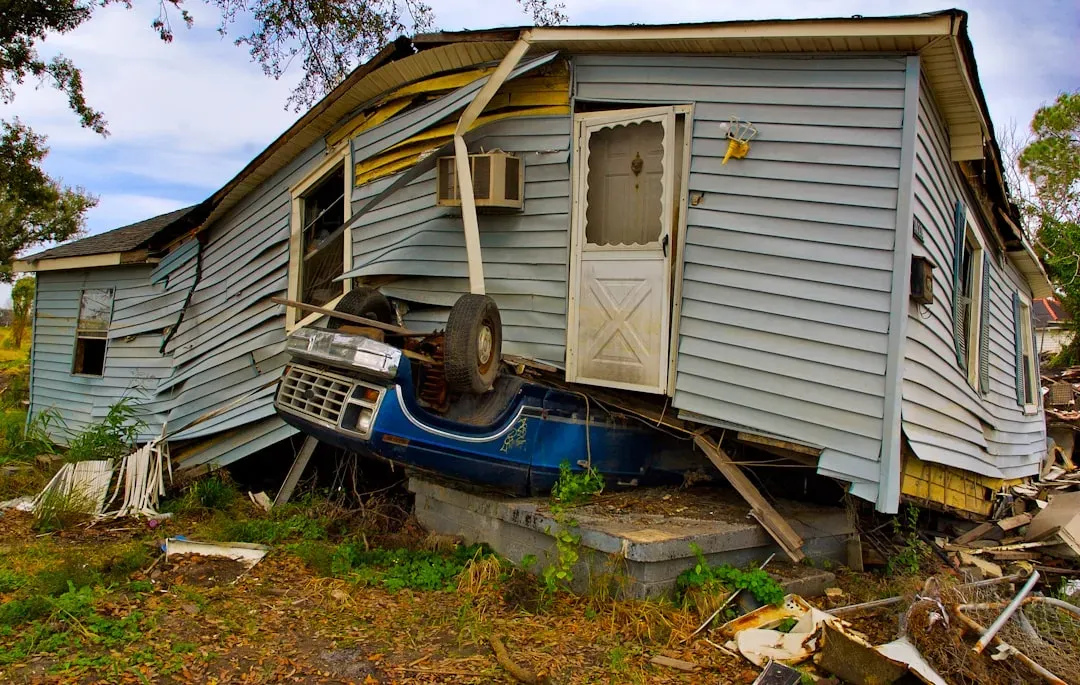
Everyone knows Florida has hurricanes – that’s nothing new. But what is new is how frequent and powerful they’ve become. In recent years, Florida has seen several devastating storms, and the pattern is starting to worry long-time residents. The threat has graduated from an annual worry into something that shapes major life decisions.
In September 2024, Hurricane Helene hammered Florida and the Southeast, killing more than 230 people and making it the deadliest hurricane to strike the U.S. since Hurricane Maria devastated Puerto Rico in 2017. Some estimates put the economic impact of Hurricane Helene as high as $200 billion, which makes it the costliest storm in U.S. history.
Retirees who move to Florida are often shocked to discover that deductibles for hurricane insurance frequently range from 2% to 5%, and sometimes as much as 10%, of the policy coverage amount – rather than the fixed dollar amount they were accustomed to in their previous states. It’s the kind of detail that nobody mentions in the retirement brochure.
4. The “No Income Tax” Promise Is Only Half the Story

Here’s the thing – Florida’s no-state-income-tax benefit gets repeated like a mantra. It’s real, and it matters. But the full picture is a lot more complicated. Don’t confuse “no state income tax” with “no taxes at all.” The combined state and local sales tax averages 7.00% in Florida, according to the Tax Foundation. That adds up quickly when you’re buying groceries, goods, and services every single month of the year.
Even if you already own your home, rising costs for maintenance, HOA fees, and utilities can slowly chip away at your fixed income. Groceries and gas are more expensive than in many other states, and once you factor in sales taxes, property taxes, and hidden fees, the overall affordability starts to fade.
Florida is on the higher end of the spectrum when it comes to retirement savings requirements. The annual cost of living minus Social Security income runs to about $36,829, and the minimum savings needed for 20 years of retirement is roughly $736,588, according to a GOBankingRates study. That’s a significant barrier for middle-class retirees who didn’t plan around those numbers.
5. HOA Fees and Condo Assessments Are Exploding

This one caught a lot of people completely off guard. At least 45% of Florida homes are bound to homeowners’ associations, which is higher than any other U.S. state except California. That means nearly half of all Florida homeowners are subject to additional monthly costs that can be raised, changed, or dramatically restructured at any time.
Before a new Florida law kicked in, condo boards – often run by retirees on fixed incomes – could vote to waive saving money for major repairs to keep monthly fees low. That option ended on December 31, 2024. Now, thousands of buildings are legally required to fully fund decades of deferred maintenance immediately, and condo HOA fees are suddenly surging.
Some owners are waking up to special assessment bills for $50,000, $80,000, or even $100,000 per unit, due in weeks, not years. These assessments are for mandatory items like structural waterproofing and roof replacements. If you can’t pay, you face foreclosure. I know it sounds extreme, but this is happening to real people in real Florida retirement communities right now.
6. The Heat Is Becoming a Genuine Health Hazard

The reality is that 2024 and 2025 were the hottest years on record. For seniors, this heat is not just uncomfortable – it is physically dangerous. Florida’s notorious humidity turns a simple afternoon walk into something that feels like exercising inside a dishwasher. For younger people, that’s annoying. For older adults with cardiovascular concerns, it’s a genuine risk.
Florida’s warm climate results in heavy reliance on air conditioning, pushing electricity bills higher than the national average. Retirees should budget for estimated monthly utility costs, including electricity, gas, water, garbage, and internet, which on average hover around $639.25 in 2025. That’s nearly $7,700 a year just for basic utilities – before the first round of golf or beach visit.
For older adults, extreme weather conditions can be dangerous. Power outages during storms can leave people without air conditioning or critical medical equipment. When you’re depending on electricity to power medical devices, a hurricane season isn’t just a weather inconvenience – it becomes a matter of survival planning.
7. Overcrowding Has Quietly Destroyed the Lifestyle That Attracted Retirees

There’s a dark irony here. Florida became popular because it offered open skies, manageable towns, and a relaxed pace. Then everyone moved there, and the very thing people loved about it began to disappear. Florida is the third most populous state, with between 300,000 and 380,000 new residents arriving each year. Its aging infrastructure is scrambling to keep up, and it’s very much a seller’s market as developers race to meet demand.
Major highways and urban centers are often gridlocked, making daily commutes a frustrating and time-consuming experience. In cities like Miami and Orlando, the average commute time has increased by over 20% over the past five years. For a retiree who just wanted to drive to a farmers market on a Tuesday morning without sitting in traffic, this is a deal-breaker.
Florida’s rapid population growth has resulted in increased traffic congestion, overdevelopment, and a loss of the serene environment many retirees seek. The proliferation of strip malls and high-density housing has altered the state’s landscape, diminishing its appeal. The postcard version of Florida is still out there – it just gets harder to find every year.
8. Florida’s Ranking as the Best Retirement State Has Collapsed

Not long ago, this conversation wouldn’t even exist. Florida was the automatic answer to the question “where should I retire?” Today, the data tells a very different story. Florida is no longer the retirement haven it once was, according to a Bankrate survey that placed it eighth on a list of the best states for retirement. Bankrate’s analysis, which considered affordability, overall well-being, the cost and quality of healthcare, and crime rates, found that Florida ranked eighth for the second year in a row.
It was ranked behind Delaware, West Virginia, Georgia, South Carolina, Missouri, Mississippi, and Pennsylvania. West Virginia and Mississippi outranking Florida for retirees would have seemed absurd a decade ago. It’s a sign of just how dramatically the landscape has shifted for people on fixed incomes.
The shift in perception is dramatic. While Florida would have been a no-brainer for retirement ten years ago, the skyrocketing home prices, property taxes, and homeowners insurance now mean retirees need to pause and carefully assess whether they can truly afford the retirement lifestyle they want in Florida.
9. The “Half-Back” Trend: Retirees Who Tried Florida and Left

There’s actually a term for what’s happening. North Carolina’s appeal among Floridians, especially retirees, is so notorious that it has a name: “half-backs” are retirees who tried Florida, then decided to relocate part of the way back home, making a trade-off in both humidity and senior services. It’s become a quietly widespread pattern that real estate agents across the Southeast know well.
Many of these people are retirees from the Northeast who moved to Florida, realized the math didn’t work, and moved halfway back, settling in states like Tennessee, North Carolina, and Georgia. These states offer four seasons, lower insurance risks, and a cost of living that more aligns with a fixed income. Tennessee and Georgia are picking up Florida’s discarded retirees at a remarkable rate.
In 2025, an estimated 1,000 people move out of Florida every day – more than any other year on record. While thousands still move to Florida each month, the growing number of people leaving is creating a population shift that could reshape the state’s demographics in the coming years. Over 300,000 people left Florida in 2024 alone, with even more expected to depart in 2025.
10. Middle-Class Retirees Are Specifically Being Priced Out

Here’s perhaps the most pointed conclusion that emerges from all the data: Florida isn’t turning away retirees across the board. It’s selectively pricing out the middle class. Florida is still a top destination for retirees and remote workers, but the state is becoming a revolving door – with wealthier newcomers moving in while working-class families and retirees move out.
The overall allure of the state will likely continue attracting seniors, but we may see a shift in the types of retirees moving there. Those with larger budgets may still be drawn to the state, but those on fixed incomes might be forced to explore alternative locations. It’s a retirement bifurcation that nobody planned for but everyone is now navigating.
South Florida is still a paradise – it often reminds some of living in a postcard. But increasingly, it’s a postcard reserved for the wealthy. That’s a blunt summary of what’s happened to one of America’s most iconic retirement destinations. The dream is still alive – it just comes with a much higher price of admission now.