The 10 Most Dangerous Airports in the World (You’ve Probably Flown Through One)
Most people board a plane, buckle their seatbelt, and think the hardest part is finding overhead bin space. Honestly, that’s fair. Flying is remarkably safe in the grand scheme of transportation. But there’s a small, fascinating, slightly terrifying club of airports on this planet where the landing itself is the adventure, and where routine skill simply isn’t enough to survive the approach.
A handful of airports scattered across the globe are built in locations where geography, weather, and technical limitations combine to create a nerve-wracking approach. Some runways are carved into mountain valleys where pilots navigate steep descents, sharp turns, and cliff drops. Others sit on small islands surrounded only by the ocean, leaving little to no margin for error. This list covers ten of those places. Some are remote. Some are surprisingly famous. And a few might be on your travel bucket list right now. Let’s dive in.
1. Tenzing-Hillary Airport (Lukla), Nepal – The World’s Most Notorious Runway
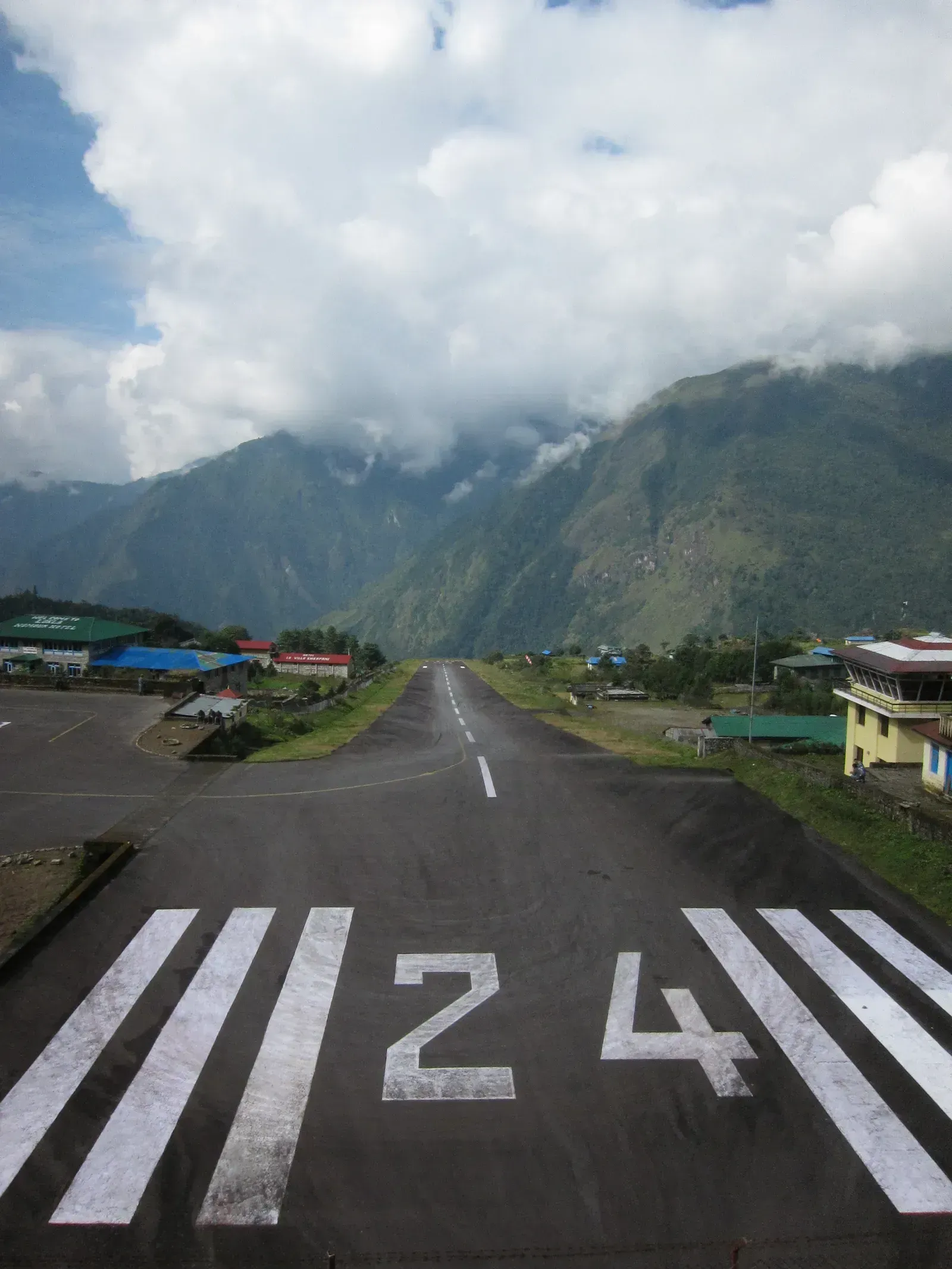
If there’s one airport that has earned its terrifying reputation fair and square, it’s this one. Perched on a narrow mountain ledge at 2,845 meters (9,334 feet), Lukla Airport holds the infamous title of the most dangerous airport in Nepal and arguably the world’s most dangerous airport. Officially known as Tenzing-Hillary Airport since its February 2008 renaming, this small airstrip serves as the primary gateway to Mount Everest, welcoming over 30,000 trekkers annually.
The airport has earned its fearsome reputation through a combination of extreme factors: an impossibly short runway measuring just 527 meters, a 12% gradient slope, unpredictable Himalayan weather, and a cliff drop at the end of the strip. Think about that for a second. The runway is shorter than five football fields, sits nearly two miles above sea level, and ends at a cliff. There is no plan B here.
Unlike other airports, the terrain configuration at Lukla makes a go-around procedure impossible on final approach. This demands that the approach be stabilized and perfect from the very beginning; decision-making must be flawless before reaching the commitment point.
Due to the difficulties of successfully landing at the airport, the Civil Aviation Authority of Nepal sets high standards, requiring only experienced pilots who have completed at least 100 short-takeoff-and-landing missions, have over one year of STOL experience in Nepal, and have completed ten flights into Lukla with a certified instructor pilot. 2008 and 2012 marked the years when the airport saw two of its deadliest accidents, where 18 and 19 people were killed, respectively.
2. Paro International Airport, Bhutan – Where Only a Handful of Pilots Can Land
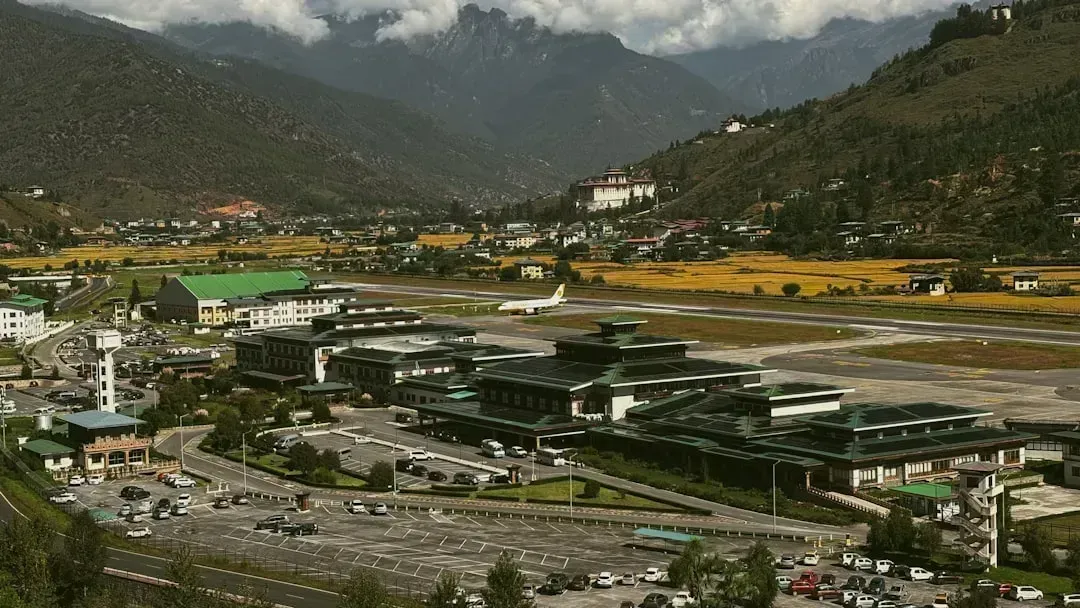
Bhutan is often called the Land of Happiness, but getting there is anything but relaxing. Paro Airport is situated in a deep valley at a striking elevation of 2,235 meters (7,332 feet) above sea level, surrounded by gigantic mountains that rise over 5,500 meters (18,000 feet). It is the only international airport in the entire kingdom, which means there is absolutely no alternative if things go wrong.
Flights are only allowed during daytime and under visual meteorological conditions, in which pilots make their judgements by eye rather than relying on aircraft instruments. The dramatic approach to the runway is completely out of sight for the pilots until the last minute, as they maneuver between mountains at a 45-degree angle before dropping quickly onto the runway.
There’s no radar that can help with the descent and touchdown, so pilots need to know the area’s geography by heart, and nighttime flights are forbidden. Strong wind conditions at Paro mean all incoming flights need to make it there before midday to avoid the churn of thermals from the warm ground. As of 2020, only 20 pilots had permission to land there, but neither the Aviation Safety Network nor the Bureau of Aircraft Incidents Archives show any accidents. That’s actually a remarkable record, all things considered.
3. Toncontin International Airport, Honduras – The Pilot’s Nightmare in the Mountains
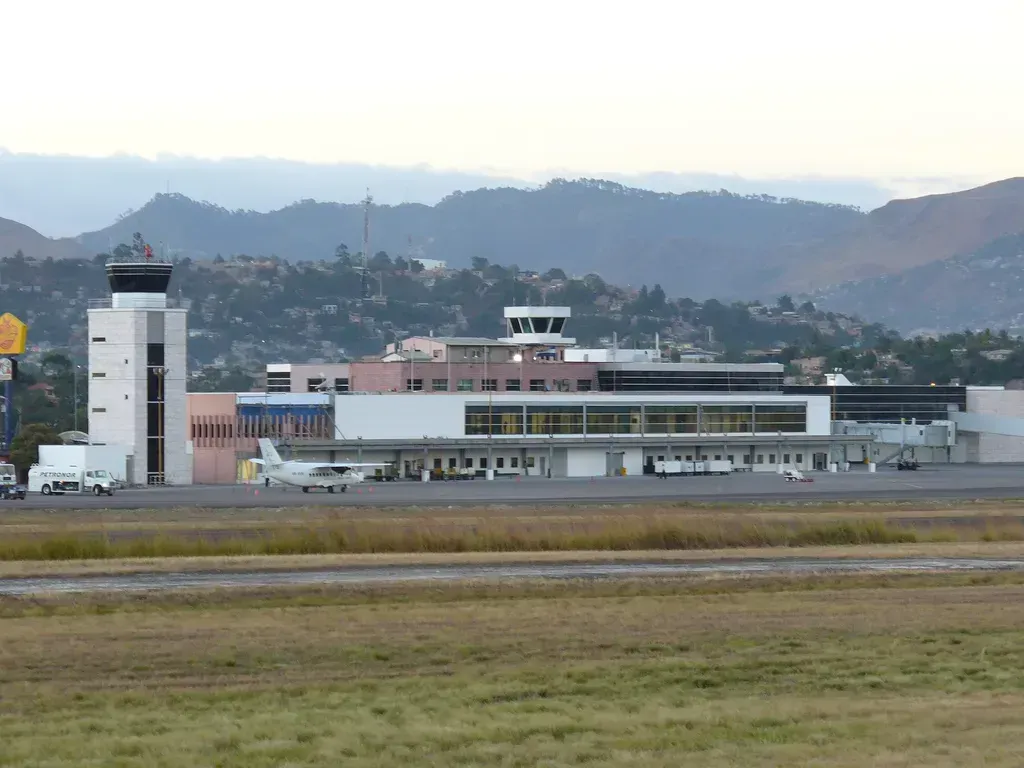
Ranked as the second most dangerous airport in the world by the History Channel, the approach to Toncontin International Airport is considered as one of the most difficult in the world, especially in inclement weather conditions. Located near Honduras’s capital of Tegucigalda, this airport has a long and sobering list of serious incidents tied to its name.
Toncontin International Airport presents considerable obstacles to flight operations, centered on its 7,136-foot runway. The surrounding mountains dictate a steep approach, necessitating a sharp 45-degree turn just before touchdown. Imagine a fully loaded commercial jet having to execute that kind of turn just seconds before touching down. It’s the aviation equivalent of parallel parking a bus at highway speed.
In 1989, a Boeing commercial plane crashed into a mountainside on approach, killing 132 people. At least five more planes have since followed suit and crashed in or around the airport. Toncontin airport witnessed 10 accidents since its inauguration, the worst was in 2008 when a TACA Airlines Airbus A320 overran the runway on a rainy day, killing five onboard and two on the ground. The landing strip was lengthened in 2009 after a pilot overshot the runway the previous year.
4. Princess Juliana International Airport, St. Maarten – Where Planes Skim the Beach
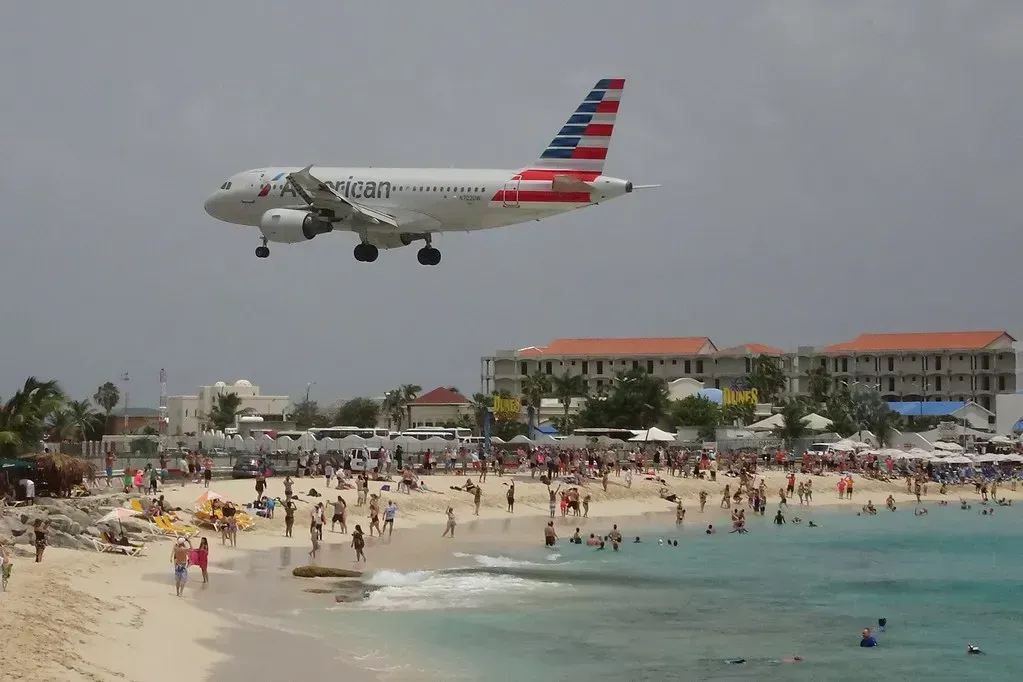
Here’s the thing about Princess Juliana: it’s become so famous for its low approaches that tourists actually go to the beach specifically to watch planes fly over their heads. Regarded as one of the busiest airports in the Caribbean, the extremely short runway means that planes have to approach the runway at about 60 feet above a crowded beach area. You really can’t make this stuff up.
Princess Juliana International Airport on the Caribbean island of St. Maarten has become world-famous for its spectacular beach approaches. Aircraft must fly extremely low over Maho Beach, a popular tourist destination, creating dramatic photographs and videos that have made this approach a social media sensation. Beach visitors experience powerful jet blast effects when aircraft depart, with warning signs alerting tourists about potential dangers.
In 2017, a New Zealand woman died from injuries sustained by jet blast from a departing aircraft. She was holding onto a fence near the runway when the blast knocked her into a wall. Princess Juliana International Airport has never had a serious aviation accident despite its tricky approach, which makes this truly a case where the real danger is on the ground, not in the air.
5. Madeira Cristiano Ronaldo International Airport, Portugal – The Runway on Stilts
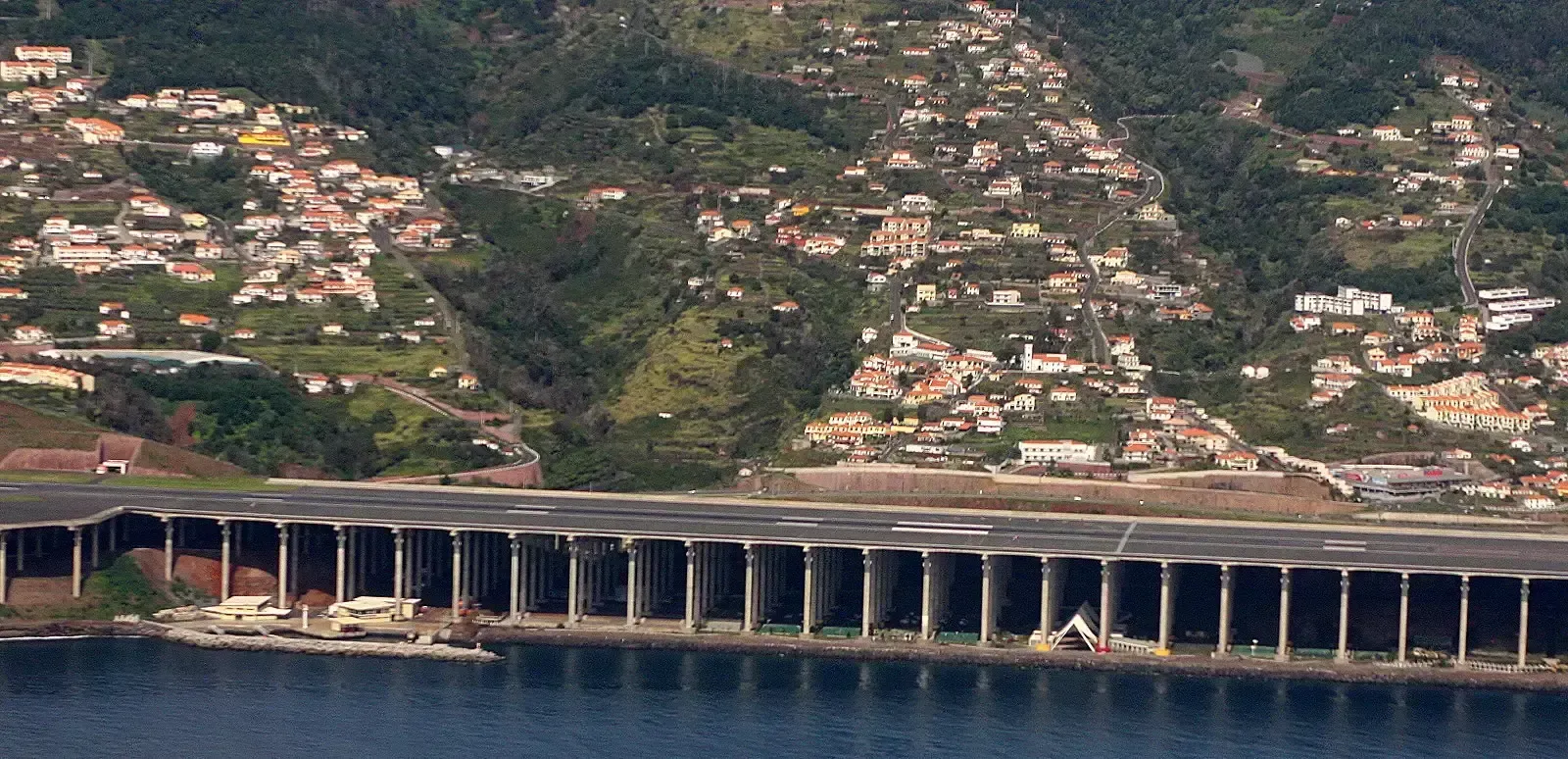
Madeira International Airport Cristiano Ronaldo, formerly known as Funchal Airport, on the Portuguese archipelago of Madeira in the Atlantic Ocean is considered one of the most dangerous airports in the world due to its spectacular construction. Yes, they named it after the footballer. Yes, it is still terrifying. Those two facts coexist peacefully.
The original runway was only 1,600 meters long, but was extended to 2,781 meters after a fatal plane crash in 1977 when 164 people died after a Boeing 727 fell off the end of the runway onto the beach below. The runway extension is supported by 180 columns, partly over the ocean, which have to withstand serious shock loading during landings. It is, in essence, a runway built on a bridge over the sea.
The airport features a runway so narrow that pilots must fly toward the mountains and execute a sharp turn to ensure a safe landing, which can appear quite alarming from inside the cabin. Despite the runway’s extension, only specially trained pilots are allowed to land or take off at the airport. Strong Atlantic winds and turbulence from the surrounding peaks make this an almost daily challenge for flight crews.
6. Courchevel Altiport, France – The James Bond Airport
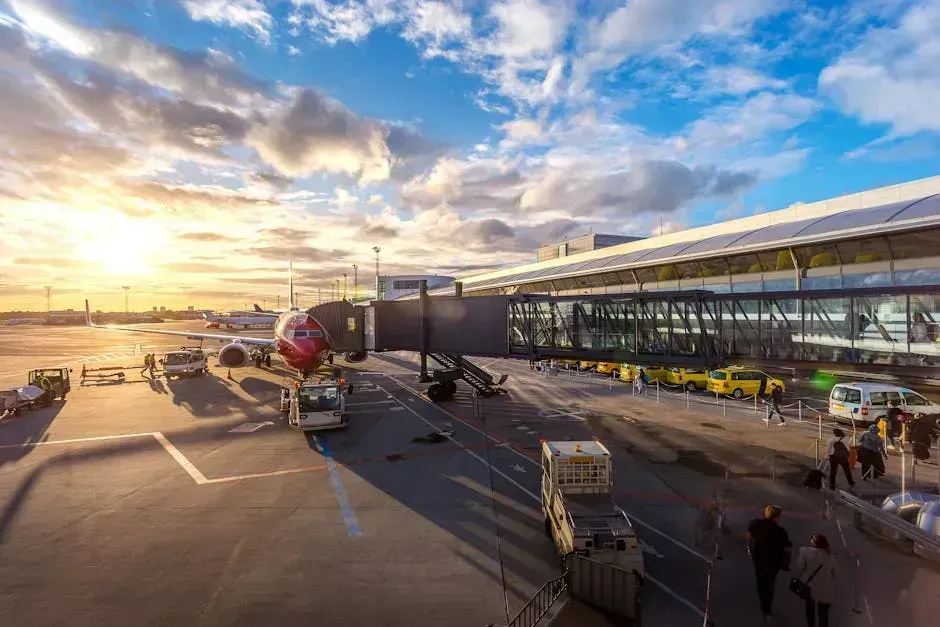
Featured in movies including the James Bond film “Tomorrow Never Dies,” Courchevel Altiport is ranked as the seventh most extreme airport in the world by the History Channel program Most Extreme Airports. That’s a fitting origin story for a place that looks like it was designed as a movie prop.
Nestled in the French Alps, Courchevel Altiport serves the prestigious ski resort and represents one of Europe’s most technically demanding airports. The facility’s abbreviated runway extends just 1,762 feet (537 meters) and features an exceptionally steep 18.6 per cent uphill gradient designed to help aircraft decelerate rapidly upon landing. This extreme slope, approximately four times steeper than standard, creates visual illusions that challenge even experienced pilots.
Landing at Courchevel Altiport is considered extra dangerous because, with so many surrounding mountains, there is no room for a go-around approach. That means that if the pilot is going to land, they have to be ready to do so on the first try. After a Pilatus PC-12 was heavily damaged in a February 2024 crash at Courchevel Altiport, French investigators determined that the pilots’ lack of experience in mountainous terrain contributed to the aircraft’s nosegear striking the slope during landing.
7. Gibraltar International Airport – Where Cars and Planes Share the Same Road
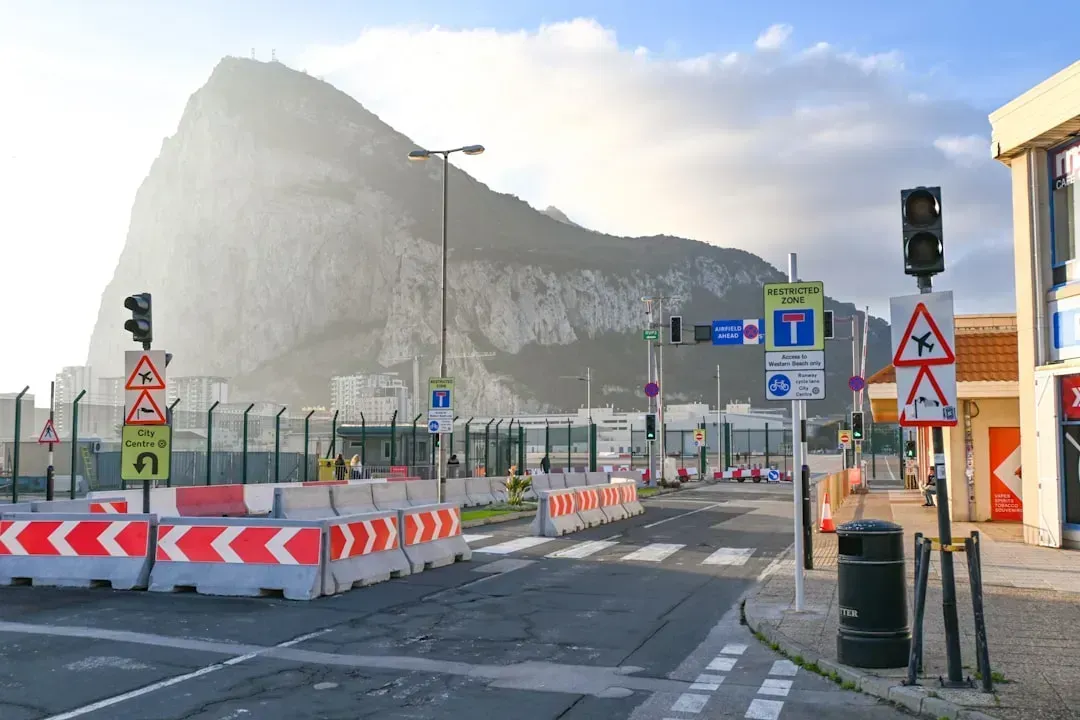
It’s hard to say for sure which is stranger: the fact that this airport exists, or the fact that millions of people have used it without a second thought. Gibraltar International Airport is well-known for its unusual runway, which crosses directly through Winston Churchill Avenue, the main road into the city. This setup demands a pause in vehicle traffic whenever a plane is landing or taking off, creating a rather unique traffic management challenge.
Due to the meagre size of the British Overseas Territory of Gibraltar, the airport runway has to extend into the sea and pass through Gibraltar’s main road. This means that each time a plane arrives or departs the airport, traffic at both sides of the road stops via a traffic light system. Until 2023, there was a four-lane road that ran right through the runway. It is the busiest road on the peninsula, at least it was until a tunnel was constructed in 2023 that directed traffic under the landing strip.
With a runway size of 1,776 meters long and water on both sides, landing at Gibraltar International Airport is not only tricky but scary. The airport is situated next to the Rock of Gibraltar and is exposed to strong crosswinds making the landings at the airport in winter challenging. Diversions and go-arounds are common, especially in winter.
8. Barra International Airport, Scotland – Landing on a Beach
Some airports are dangerous because of mountains or short runways. This one is dangerous because the runway literally disappears underwater twice a day. Barra International Airport presents a truly unique aviation experience as the only commercial airport worldwide using a beach as its runway. The airport’s three runways are completely submerged during high tide, meaning flight schedules must coordinate precisely with tidal patterns. This unusual arrangement creates a perpetually changing landing surface affected by weather, water conditions, and sand compaction.
Barra International Airport in Barra, Scotland, is the only airport in the world that doubles as a public beach. The runway is the sand itself, and the path changes depending on the tide. At certain points of the day, the runway is underwater. When the sand isn’t acting as a landing strip, it’s crowded with beachgoers flying kites and harvesting clams.
The airport implements special procedures to assure the safety of flights, which include no public access to the beach when the airport wind sock is flying. The air traffic control tower illuminates a strobe light to indicate aircraft movements. It’s genuinely one of the more surreal places on earth.
9. Juancho E. Yrausquin Airport, Saba – The World’s Shortest Commercial Runway
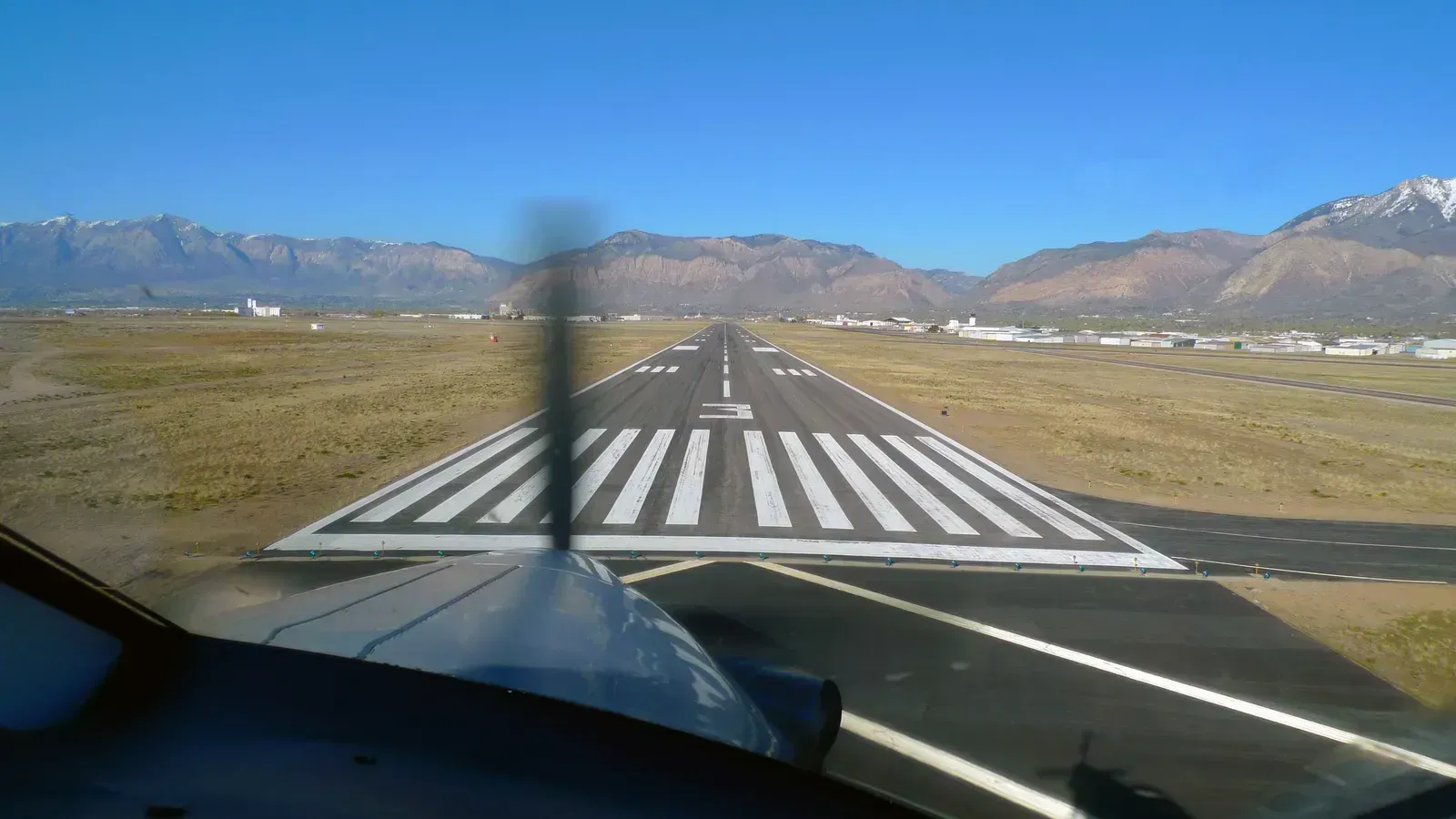
The tiny Dutch Caribbean island of Saba is one of the most overlooked destinations in the region. There’s a reason for that, and it has a lot to do with what counts as an airport here. Saba’s airport holds a world record: it has the shortest commercial runway, at just 1,312 feet. The runway is surrounded by cliffs on one side and the ocean on the other, leaving no room for error.
Juancho E. Yrausquin Airport has the shortest commercial runway in the world, measuring a mere 1,300 feet. Planes landing here must navigate cliffs on both sides of the runway and a steep slope that falls into the sea. A standard commercial runway is typically between six and ten thousand feet. Let that sink in.
I think what makes this one particularly alarming is the complete absence of any margin for error. There’s no room to brake late, no room to touch down slightly off-center. Pilots need to approach with precision to ensure they hit the runway perfectly, since there isn’t much room for error between the beach and the water beyond. Only small propeller aircraft are certified to operate here, which is the only reason this remains a functioning commercial airport at all.
10. Congonhas Airport, São Paulo, Brazil – A Deadly Runway in the Heart of the City
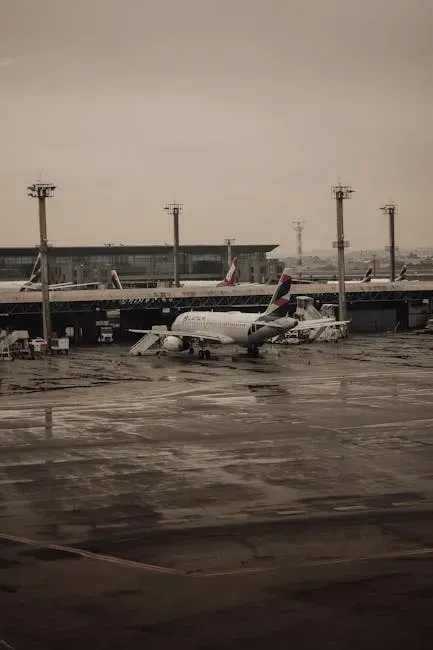
Unlike many airports on this list that are remote or exotic, Congonhas sits right in the middle of one of the world’s largest cities. It is the kind of dangerous that creeps up on you, disguised as something perfectly ordinary. Flying into Congonhas Airport in São Paulo offers a breathtaking view of the city’s skyline, and the landing itself certainly takes your breath away. As the plane descends, it can feel like you’re about to brush the tops of the skyscrapers.
In 2007, a TAM Airlines Airbus A320 skidded off the runway and crashed into a warehouse, resulting in the deaths of 187 passengers and several people on the ground. The aircraft overran the runway on a rainy night due to the slick surface conditions and the absence of reverse thrust engagement. All 187 passengers and crew perished. 199 bodies were recovered from the crash site, including passengers, crew and people who were working at the warehouse. It remains one of the deadliest aviation accidents in Brazilian history.
The airport has seen significant safety improvements since then, but its short runways and dense urban surroundings continue to demand extreme precision from every single pilot who lands there. It is a reminder that danger doesn’t always come wrapped in mountain peaks or ocean cliffs. Sometimes it hides in plain sight, right in the middle of a familiar city skyline. The question worth sitting with after reading this: next time you board a plane without a second thought, do you really know what the pilot on the other side of that cockpit door is about to deal with?