The 10 Most Dangerous Cities in the U.S., According to 2025 Crime Statistics
Every year, millions of Americans wonder whether their city is truly safe. The nightly news cycles through violent incidents, political debates center on public safety, and families quietly weigh their options before deciding where to put down roots. Crime statistics, as dry as they sound on paper, tell a genuinely human story. They reflect poverty, opportunity, abandonment, and resilience all at once.
The FBI has released detailed data on over 14 million criminal offenses for 2024, reported by more than 16,000 law enforcement agencies covering over 95 percent of the U.S. population. In 2024, national violent crime and property crime rates dropped to their lowest levels since 1976. But here’s the thing – those national averages can be dangerously misleading. Zoom into specific cities and the picture looks very, very different. Let’s dive in.
1. Memphis, Tennessee – America’s Most Dangerous Large City

If you want to understand just how stark the gap can be between a national trend and a local reality, Memphis is your clearest example. Memphis, Tennessee had the highest violent crime rate among cities with populations over 100,000, recording 2,501 violent crimes per 100,000 residents in 2024. That is a number that genuinely stops you in your tracks.
Memphis stands out with a total crime rate more than three times the U.S. average, driven by high numbers of both violent and property crimes. The FBI’s data shows homicides fell from 156 in 2023 to 129 in 2024, robberies dropped nearly 30 percent, and assaults ticked down slightly. Progress is real, but the baseline remains shockingly high.
As of 2025, Memphis has the highest overall crime rate in the nation, with nearly 98 incidents per 1,000 residents, and its violent crime rate – driven by aggravated assaults, robberies, and gang activity – continues to make it one of the most dangerous cities in America despite ongoing community safety programs. Honestly, those numbers are hard to contextualize until you consider that the national violent crime rate in 2024 was just 359 per 100,000 residents. Memphis is operating in a different world entirely.
2. Detroit, Michigan – A City Fighting Its Own Legacy
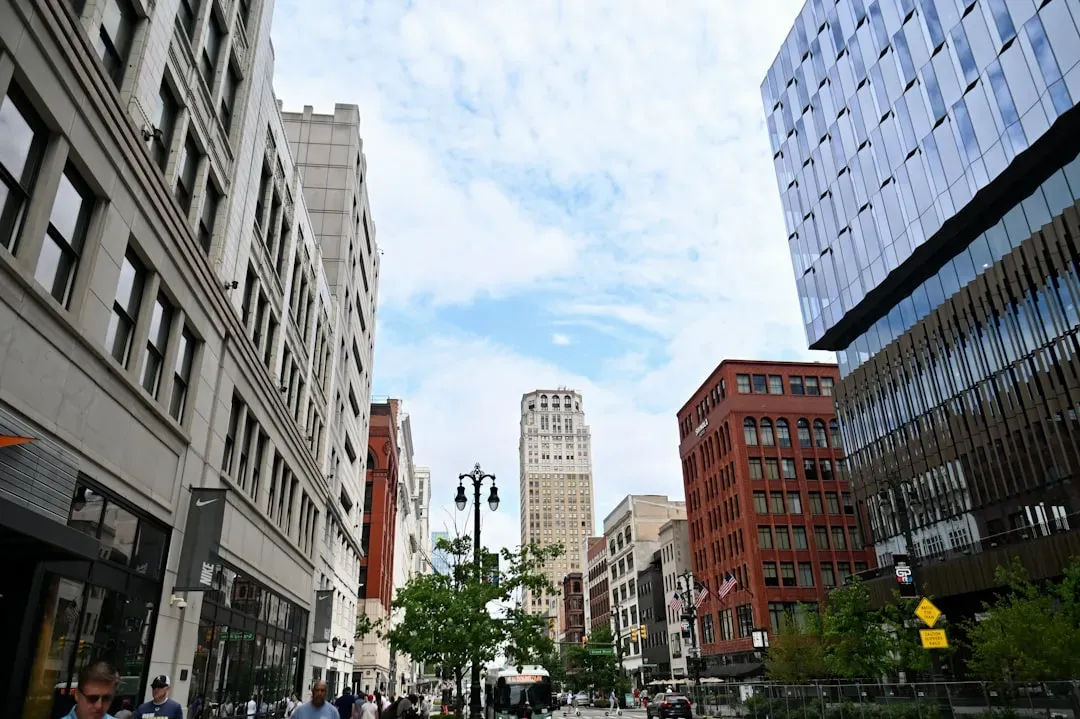
Detroit’s reputation as one of America’s most dangerous cities has deep roots, but the picture in 2025 is more complicated than the headlines suggest. Crime remains high compared to national averages, but both violent and property crime are falling, with 2023 marking Detroit’s lowest homicide count in 57 years. That kind of historical milestone deserves acknowledgment.
Oakland, California and Detroit, Michigan followed Memphis at 1,925 and 1,781 violent crimes per 100,000 residents respectively in 2024. Property crime rates in Detroit exceed national averages, with burglary, car theft, and break-ins occurring at a rate of around 3,000 per 100,000 residents – significantly higher than the U.S. average of 2,000.
Detroit has the third-highest murder rate among cities of similar size, and it remained near the top across several violent crime categories, continuing its long struggle with high crime rates rooted in decades of economic decline, population loss, and inadequate resources following the city’s 2013 bankruptcy. Detroit recorded the lowest murders through November 2025 since 1964 – which shows that meaningful change is possible, even if the road is long.
3. St. Louis, Missouri – Dangerous by the Block

Few cities in America carry a more complex reputation than St. Louis. St. Louis is often cited for having one of the highest homicide rates in the country, and despite its relatively small size compared to other major cities, its per capita violent crime rate makes it one of the most dangerous places in the nation.
Among medium-sized cities, St. Louis had the highest murder rate in 2024. St. Louis remains notorious for its high homicide rate, ranking among the deadliest cities per capita. Gun violence, economic hardship, and political instability contribute to the city’s ongoing challenges, and despite efforts to reform the police department and implement social programs, crime rates have remained stubbornly high.
More recent reporting shows signs of hope: homicide rates in St. Louis have fallen approximately 22 percent in the first half of 2025 – the lowest mid-year murder numbers in more than a decade. St. Louis’s danger is real but hyper-localized. For residents and visitors, the city divides sharply between high-crime north-side districts and stable, thriving neighborhoods elsewhere, meaning risk depends heavily on where you live, work, or spend time.
4. Baltimore, Maryland – A City on a Slow Road Back

Baltimore is one of those cities that has become almost synonymous with violence in American culture. Baltimore ranked second in murders while maintaining its position as the nation’s leader in robbery rates. Baltimore’s reputation for violence remains largely unchanged as the city grapples with one of the highest per capita homicide rates in America. In 2024, over 200 homicides were recorded, and drug addiction, systemic corruption, and a history of strained police-community relations continue to contribute to the city’s ongoing struggles.
Baltimore’s crime challenges stem from decades of economic decline, the opioid crisis, and other systemic issues. However, the city has shown remarkable progress recently: as of mid-2025, robberies and auto thefts are down compared to the previous year, while the homicide clearance rate has jumped from 40.3 percent in 2020 to 68.2 percent in 2024, according to Mayor Brandon Scott.
Detroit and Baltimore both have violent crime rates more than triple the U.S. average. Large homicide declines are still concentrated in higher homicide cities such as Baltimore and St. Louis, according to the Council on Criminal Justice. The trend is promising – but Baltimore is still very much in the danger zone by any objective measure.
5. Oakland, California – Property Crime Capital of the West

Oakland is a fascinating and frustrating case. It is a city of real cultural energy and economic potential, sitting right across the bay from San Francisco. Yet the crime numbers are brutal. Oakland topped the list in multiple property and violent crime categories, leading all medium-sized cities in aggravated assault, robbery, larceny-theft, and motor vehicle theft.
Oakland led in property crime rates with 7,230 crimes per 100,000 residents according to FBI 2024 data – a figure that puts it in a category almost by itself among American cities of comparable size. High levels of violent crime and property crime persist in Oakland, driven by homelessness and organized criminal activity.
Oakland recorded its lowest murder numbers through November 2025 since 1967 – which is genuinely historic. Oakland experiences a high rate of motor vehicle theft, with approximately one vehicle stolen for every 27 residents, and the city is actively pursuing policing reforms and community engagement strategies, with early successes in certain crime categories demonstrating potential for broader improvements. It is a city that is clearly trying to turn the corner.
6. Birmingham, Alabama – Where Assault Numbers Alarm

Birmingham rarely makes national headlines the same way Detroit or Baltimore do, but the crime data puts it firmly on this list. Birmingham has long struggled with violence tied to poverty, gun access, and concentrated disadvantage. Homicides have declined since 2024, but violent crime overall has increased, mainly because aggravated assault rose nearly 10 percent in the first half of 2025.
Birmingham’s high violent crime rate is driven primarily by aggravated assault, and the city is implementing multifaceted approaches, including crime-prevention education and improved community-police relations, to address these challenges. To address the high rates of violent crime, particularly those involving firearms, Mayor Randall Woodfin put together a blueprint at the start of 2025 for deterrence and intervention.
Although Birmingham’s violent crime rate of 1,683 per 100,000 and property crime rate of 3,964 per 100,000 are lower than in some peer cities, the crime cost per capita is very similar to other highly dangerous cities at around $7,900. The burden falls hardest on working-class neighborhoods that can least afford the human and economic costs of persistent violence.
7. Cleveland, Ohio – Elevated Violence in a City in Transition

I think Cleveland is one of the most underappreciated entries on this kind of list. It rarely gets the national attention it deserves, but the raw numbers are striking. Cleveland’s violent crime rate, hovering around 1,550 incidents per 100,000 people in 2025, is alarmingly high, putting it among the most dangerous big cities in the U.S. Yet beneath that headline number lies a city in transition, leaning on local leadership and targeted strategies to chip away at longstanding issues.
Violent crime remains elevated in Cleveland, with about 1,703 incidents per 100,000 residents in 2025, far above both the state average of 287 and the national average of 364. That gap between Cleveland and Ohio’s statewide average is almost hard to believe – it is nearly six times higher.
St. Louis, Cleveland, and Oakland dominated the lists for mid-sized cities, appearing across violent and property crime categories in SafeHome’s 2025 crime analysis based on FBI data. Cleveland has a high rate of violent crime, including assault and robbery, and the underlying economic pressures that feed these statistics – deindustrialization, population loss, concentrated poverty – have been building for decades.
8. New Orleans, Louisiana – The Homicide Capital by Rate
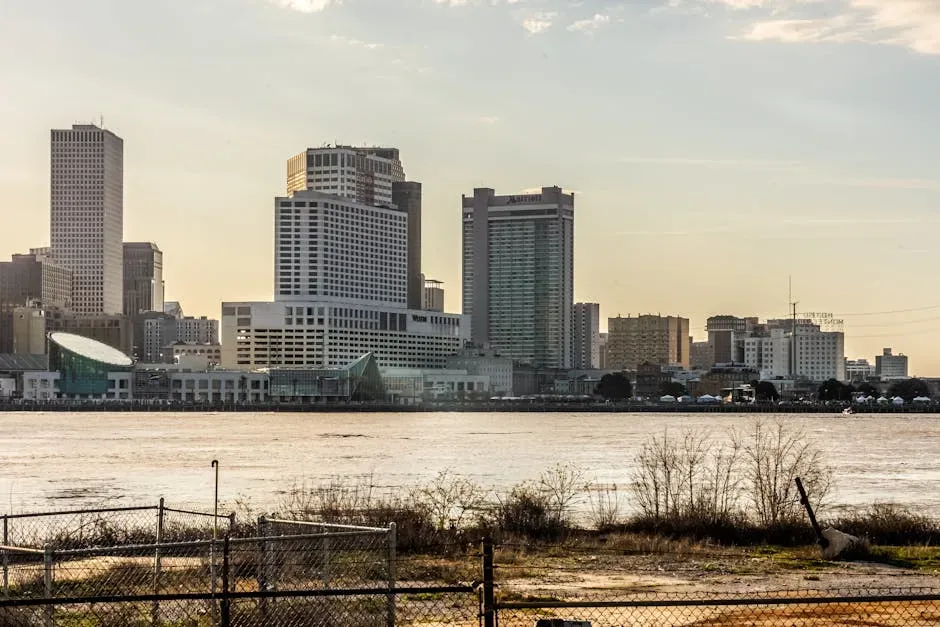
New Orleans holds a uniquely grim distinction. New Orleans reports the highest homicide rate among major U.S. cities, at 46 deaths per 100,000 people. To put that in perspective, the national average sits at just 5 per 100,000. That gap is almost incomprehensible.
Louisiana consistently records the highest combined violent and property crime rates in the U.S., with cities such as New Orleans, Alexandria, and Monroe contributing significantly to these figures. Persistent poverty, unemployment, and organized crime remain key factors driving these elevated crime statistics, although law enforcement continues to expand prevention and community engagement programs.
New Orleans is on pace for the fewest murders since 1970 – a headline that would have seemed unthinkable just a few years ago. New Orleans demonstrates one of the highest homicide rates among large urban counties, and the city’s motor vehicle theft rate is particularly concerning, with approximately one car stolen per 54 residents. Multi-agency collaborations and community rehabilitation programs are ongoing to address these interconnected challenges.
9. Kansas City, Missouri – Rising Violence in Middle America

Kansas City is not a name that most people immediately associate with crime, and that’s precisely why it deserves a spotlight. Kansas City, often overshadowed by its bigger neighbors, now ranks among the top cities for violent crime. The city’s challenges are very real and growing harder to ignore.
Kansas City has experienced upward trends in homicide rates, prompting city officials to deploy more focused law enforcement units and increase mental health service support. The city also leads nationally in robbery rates at 1,731 per 100,000 residents, requiring specialized commercial security interventions.
Kansas City emerged as the top city for vehicle theft in 2024, primarily driven by a specific vulnerability in popular car models. The city recorded over 5,000 stolen auto reports in just the first eight months of 2024, with about half involving Kias and Hyundais, which are particularly easy to steal. Murders in Kansas City also saw an increase of 6.2 percent in 2025 – one of the few major cities bucking the national downward trend.
10. Philadelphia, Pennsylvania – Gun Violence in a Major Metro

Philadelphia is America’s sixth-largest city and a place of extraordinary historical significance. It is also, by the data, one of the most dangerous urban environments in the country. Rising gun violence and assaults place Philadelphia among the nation’s most dangerous cities. The numbers behind that statement are sobering.
Philadelphia’s violent crime rate stands at 1,627 incidents per 100,000 residents, driven by high poverty rates, declining infrastructure, and systemic unemployment. The city’s crime-reduction strategies emphasize community policing and social service support to address root causes of violence, and the city’s homicide rate remains a significant concern, prompting ongoing adjustments to law enforcement tactics and resource allocation.
Philadelphia recorded its lowest murder numbers through November 2025 since 1966 – a genuinely historic and hopeful sign. The rate of homicides in study cities was 17 percent lower in the first half of 2025 than in the first half of 2024, with 10 percent fewer reported aggravated assaults and 21 percent fewer gun assaults. Philadelphia is bending its curve downward, but it remains, by any national standard, a city where danger is still a daily reality for too many residents.