The Subtle Difference Between Escapism and Restoration
Most people can’t name the moment they crossed the line. One evening you settle into the couch with a show and a cup of tea, feeling genuinely recharged an hour later. Another evening looks nearly identical from the outside, but you close the laptop at midnight feeling vaguely hollow, still restless, still carrying whatever you were trying to put down. The activity was the same. The outcome was not.
That gap, quiet and easy to dismiss, is where the psychology of actually lives. They share a surface, which is why we so often mistake one for the other. Understanding the difference is crucial for personal wellbeing because it helps individuals recognise when such behaviours provide healthy relief and when they might be masking deeper psychological issues. The distinction is worth taking seriously.
Two Paths Away From the Same Pressure

People usually look for escapism to get instant relief from the problems and anxiety that come from being human. Everyone has their own problems and they find their own ways to deal with them. Sometimes, they do healthy activities, and sometimes they engage in activities that take them away from reality.
Restoration works differently. Rather than running from something, it’s about replenishing something. The antidote, according to Attention Restoration Theory, is to take time out from attention-demanding tasks associated with modern life, and spend time in environments that demand less of our cognitive resources and enable us to recover our attentional capacities. The destination might look the same. The direction of travel is opposite.
What Psychology Actually Says About Escapism

In psychology, escapism describes the ways people avoid facing difficult thoughts, emotions, or situations by immersing themselves in alternative activities or fantasies. The idea of “escaping” reality isn’t inherently bad – it can serve as a form of relaxation or even creative inspiration.
Research consistently frames escapism as a dual-natured phenomenon. Escapism is predominantly assumed to be a negative aspect of media consumption. However, research also indicates that escapism may spur positive psychological outcomes. The key variable isn’t the activity itself, but the motivation behind it and whether it’s oriented toward growth or toward avoidance.
Self-Expansion vs. Self-Suppression
Researchers have developed a two-dimensional model to explain why the same activity can be healing for one person and harmful for another. A dualistic escapism scale with two dimensions, Self-Expansion and Self-Suppression, demonstrated good validity in studies of gamers and streaming users. In the gaming sample, self-expansion was related to positive psychological outcomes, whereas self-suppression substantially overlapped with internet gaming disorder and negative psychological outcomes.
Research has shed light on escapism’s positive side, which certainly exists, since escapism can lead not only to suppression of self but also to its enrichment and expansion. Self-suppression, by contrast, is where things quietly unravel. You’re not stepping away to come back stronger. You’re stepping away to avoid coming back at all. That’s the territory where restoration ends and harm begins.
The Science of Genuine Restoration
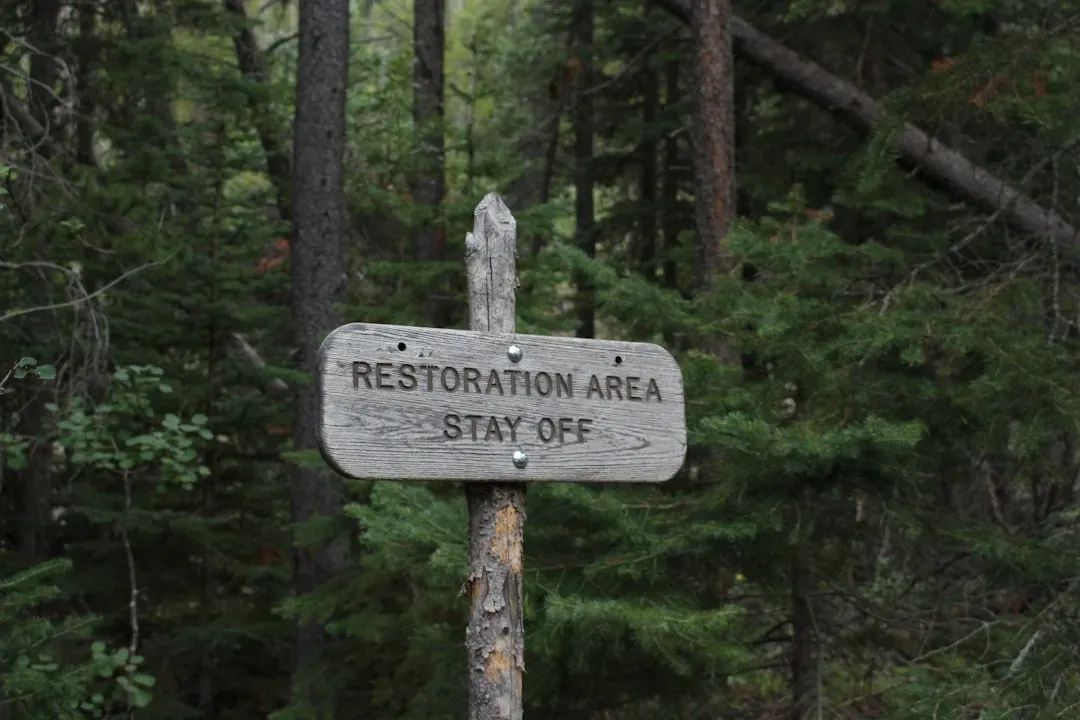
Attention Restoration Theory proposes that exposure to nature is not only enjoyable but can also help us improve our focus and ability to concentrate. This theory was developed and popularized by Stephen and Rachel Kaplan in the late 1980s and early 1990s, a time period characterized by rapid technological advancement and ever-increasing indoor entertainment.
The Kaplans based their theory on the distinction between two types of attention: directed attention, which requires effort and can be easily fatigued, and involuntary attention, which is automatic and effortless. This distinction lays the groundwork for understanding how nature can facilitate a much-needed mental reset. True restoration, in their framework, isn’t passive numbing. It’s an active, if effortless, process of cognitive renewal.
Hard Fascination vs. Soft Fascination

One of the most practically useful ideas from this body of research is the distinction between “hard” and “soft” fascination. Stephen and Rachel Kaplan argue that directed attention is often taxed in stimulating modern environments. Soft fascination facilitates restoration and involves effortless attention on gentle, interesting stimuli, similar to mind-wandering but still directed outward. Soft fascination contrasts with hard fascination, which fully captures attention and affords little reflective capacity.
Restorative environments hold your attention without you having to focus or direct it a certain way, and in a natural environment this might include listening to birdsong or the wind in the trees, watching clouds move by or water flow, or being absorbed in the beauty of a sunset or sunrise. A gripping thriller show, a fast-paced video game, and a busy social media feed all demand hard fascination. The mind stays occupied, but it doesn’t rest. The distinction matters more than most people realize.
When the Screen Becomes the Problem

Research found that binge-watching was significantly associated with five types of mental health concerns, with the most robust correlations found with stress and anxiety. That feels counterintuitive. People binge-watch precisely because they’re stressed. Yet the research suggests that for many, it amplifies the problem rather than resolving it.
Binge-watching could enhance viewer wellbeing through perceived autonomy, whereas excessive indulgence could reduce wellbeing through negative emotions such as guilt and regret. People may often feel a sense of melancholy or feelings of frustration and emptiness after watching multiple episodes of a TV show in a row. That post-session flatness is the feeling of escapism without restoration, stimulation without replenishment.
Nature’s Particular Power to Restore

Environmental neuroscientist Marc Berman describes how taking a walk in nature without a phone or earbuds reduces mental fatigue, restores and improves attentional capacity, and alleviates rumination and depression. What makes nature uniquely effective isn’t mystery. It’s the absence of demands. Nature, unlike the city, is full of stimuli that are interesting in themselves and do not require mental effort. This allows involuntary attention to be activated, allowing our brain circuits responsible for attentional functions to rest and refresh.
The same effects are observed with exposure to natural images or sounds without being physically present in nature, though the effects are weaker than when in nature. This is a practical finding. Even looking at a photograph of a forest, or listening to rain sounds, carries some restorative value. You don’t need a vacation to access restoration. You just need to stop asking your attention system to perform.
The Role of Guilt as a Diagnostic Signal

One of the most reliable ways to tell escapism from restoration is how you feel during and after. If you’d enjoy the activity even without stress, it’s likely restorative. If it only feels necessary under pressure, it may be a sign of escape. If your answers lean toward avoidance and guilt, chances are your escapism might be veering into unhealthy territory.
Problems arise when escaping turns into avoidance. Drinking to numb emotions or endlessly scrolling social media to avoid work deadlines creates a cycle where the underlying issue is never resolved. Guilt is worth paying attention to here. It tends to show up precisely when we know, somewhere, that the activity is pulling us further from our actual life rather than preparing us to re-enter it.
Adaptive Escapism: The Middle Ground

It would be a mistake to treat all escapism as harmful and all restoration as wholesome. Adaptive escapism is the healthy form of temporary retreat. It is characterized by an intention to return and amend one’s physical life. It serves as a necessary emotional regulation strategy.
Research proposed that escapism can provide individuals with four pillars of psychological wellbeing: greater ability to manage negative emotions and enhance positive ones, mood repair through satisfaction of basic needs, effective management of internal and external stressors, and restoration following cognitive and emotional exhaustion. In this reading, the best forms of escapism are also restorative. The two categories aren’t mutually exclusive. They overlap most richly when an activity both takes you somewhere else and brings you back replenished.
Making the Distinction Practical

Escapism possesses dual aspects; it can be a source of relief and creativity, but it can also lead to avoidance and dependency if not balanced carefully. The practical implication is that the question isn’t “should I take a break?” It’s “what kind of break am I actually taking?” A thirty-minute walk, a quiet read, some unhurried gardening: these tend to restore. Compulsive scrolling through social media under a sense of emotional pressure tends not to.
Replacing harmful escapism with restorative practices like exercise or creative outlets is a meaningful step forward. Therapy can help people use escapism intentionally, without letting it undermine personal growth or mental wellbeing. The goal isn’t to eliminate the impulse to step away from life’s weight. It’s to get more deliberate about where that step lands you when it’s done.
The line isn’t drawn by what you do. It’s drawn by what you come back with.