Why Creativity Often Peaks When You Least Expect It
Most people assume creativity is something you sit down and summon. You open a blank document, stare at the screen, and wait for the ideas to arrive. Sometimes they do. More often, they don’t. What’s strange is that the real breakthroughs tend to show up somewhere else entirely – in the shower, on a walk, or in that foggy moment right before sleep pulls you under.
This isn’t coincidence, and it’s not romantic mythology about the tortured artist. There’s a growing body of neuroscience explaining why the creative mind tends to flourish when you stop chasing it. The brain has its own schedule, and it rarely aligns with your calendar.
The Brain Has a Creative “Default State”
Creative thought is a hallmark of humanity, but it’s an ephemeral, almost paradoxical ability, striking unexpectedly when it’s not sought out. This is partly because the brain’s most generative work happens outside of focused attention. Research has suggested that creative thought relies strongly on parts of the brain that are also activated during meditation, daydreaming, and other internally focused types of thinking – a network of brain cells known as the default mode network, or DMN, so called because it’s associated with the “default” patterns of thought that happen in the absence of specific mental tasks.
The brain’s default mode network is increasingly recognized as key to creative thinking. It’s active when you’re not actively solving anything, not clicking through emails, not planning your next meeting. The DMN appears responsible for a wide range of cognitive processes unfolding over the entire timeframe of the creative process. In other words, the brain keeps working on your problems even when you think you’ve stepped away from them.
Two Networks, One Creative Output
Recent research indicates that creativity is not a single, unified faculty, but rather evolves from the dynamic interaction among various distributed neural networks. The picture is more complex than simply “relax and ideas come.” Current neuroscientific evidence indicates that creativity requires both the activation of networks associated with the default mode during spontaneous idea generation and the involvement of central executive networks during the elaboration and refinement of these ideas.
Findings reveal that divergent thinking neural patterns span brain regions associated with diverse cognitive functions, with positive weights in the default mode and frontoparietal control networks and negative weights in the visual network. Think of it as a relay: the DMN generates raw, loosely connected ideas, while the executive network steps in to evaluate and refine them. Emerging evidence suggests that the executive and default networks actually cooperate whenever it is necessary to perform a task that requires extended evaluation of internal information, including evaluating creative ideas.
The Science Behind the “Shower Effect”

People often seem to generate creative ideas during moderately engaging activities, such as showering or walking. One explanation of this shower effect is that creative idea generation requires a balance between focused, linear thinking, which limits originality, and unbounded, random associations, which are rarely useful. It’s a specific cognitive sweet spot, and researchers have found that not every mundane activity creates it equally. Across two studies, researchers found that mind wandering leads to more creative ideas, but only during moderately engaging activities.
When you’re in the shower, according to cognitive neuroscientist John Kounios, director of the Creativity Research Lab at Drexel University, “you don’t have a lot to do, you can’t see much, and there’s white noise. Your brain thinks in a more chaotic fashion. Your executive processes diminish and associative processes amp up. Ideas bounce around, and different thoughts can collide and connect.” That collision is often exactly where something new is born.
The Role of Incubation: Stepping Away to Move Forward
This is often referred to as “the incubation effect,” which occurs when you spend time away from a particular problem or challenge and your mind has the chance to wander and generate novel ideas through unconscious associative processes. Far from being wasted time, these gaps in active thinking are where much of the real cognitive work happens quietly. These idle moments can act as mental incubators, enabling the synthesis of disparate ideas and facilitating breakthroughs that structured thinking may not achieve. Far from being wasted time, such pauses can serve as powerful tools for creative and cognitive growth.
To discover when people get their most innovative ideas, researchers asked professional writers and physicists to keep a diary for two weeks, in which they reported their most creative idea of the day and what they were doing when it occurred. Approximately 20 percent of their most significant ideas occurred while they were engaging in an activity other than working, or while they were thinking about something unrelated to the creative idea. That’s a meaningful proportion of breakthroughs happening completely off the clock.
Sleep Onset: The Creative Sweet Spot Between Worlds

Researchers found evidence that the brief period when drifting off to sleep may be a sweet spot for dreams that facilitate creative thinking and problem solving, adding to growing evidence that the earliest stage of sleep might be harnessed and guided to enhance creativity. This transitional state, known as hypnagogia or N1 sleep, is neither wakefulness nor full sleep – it’s something stranger and more generative than either. These states, known as hypnagogia and hypnopompia, are highly creative – so much so that in recent research, they have been referred to as a “creative sweet spot” because the brain enters a highly associative mode, allowing distant ideas to connect in novel ways.
Brain activity common to the twilight zone between sleep and wakefulness, known as N1, ignites creative sparks. Spending at least 15 seconds in N1 during a resting period tripled the chance to discover a hidden rule in a problem-solving task, and this effect vanished if subjects reached deeper sleep. Historical figures such as Salvador Dalí and Thomas Edison famously harnessed hypnagogia to generate novel ideas, suggesting that this altered state of consciousness can serve as a powerful tool for creative enhancement.
Spontaneous Brain Fluctuations and the “Aha” Moment
Slow, spontaneous fluctuations in neuronal activity, also known as “resting state” fluctuations, may constitute a universal mechanism underlying all facets of human creativity. Support for this hypothesis is derived from experiments that directly link spontaneous fluctuations and verbal creativity. These fluctuations aren’t random noise. They’re the brain quietly reshuffling its deck, looking for combinations it hasn’t tried before. The spontaneous fluctuations play the role of noise; by randomly activating relevant neuronal networks, they enlarge the exploration of possible network states, allowing the discovery of an optimal creative insight. Hitting upon such an insight is instantiated, neuronally, as a large amplitude increase in network activity – experienced as an “aha” moment in which the individual becomes aware of the creative insight.
This is why insight so often feels surprising. It isn’t generated consciously. The ability to produce novel and useful ideas, or original thinking, is thought to correlate well with unexpected, synchronous activation of several large-scale, dispersed cortical networks, such as the default network. Your brain wasn’t being idle. It was doing the hardest part of the work without telling you.
Why Focused Effort Can Sometimes Block Creativity
When you’re mired in a demanding task, the brain’s executive control systems keep your thinking focused, analytical, and logical. That’s useful for many things, but not always for innovation. Highly focused thought narrows attention and filters out the unusual connections that tend to produce original ideas. The key lies in a cognitive process known as divergent thinking. Unlike convergent thinking, which involves narrowing down to the most logical solution to a problem, divergent thinking encourages the exploration of multiple possibilities and novel connections.
Many people feel compelled to fill every spare moment with podcasts, scrolling through social media, or responding to emails. The pursuit of constant optimisation has prioritised output at the expense of novelty, serendipity, and innovation. It overlooks the fact that boredom, and the mental wandering it offers, is not a flaw but a feature of the human mind. Filling every gap with stimulation essentially blocks the conditions in which creative thought naturally arises.
The Causal Link Between the DMN and Real Creative Output
Researcher Ben Shofty, MD, PhD, published an innovative study in the journal Brain using high-resolution neural recordings across the default mode network to study higher cognitive processes and the origins of creativity in the brain. The study went beyond correlation by using direct brain stimulation. The study demonstrated that using direct cortical stimulation to disrupt DMN function limited original or divergent responses and, thus, creativity as it was being measured.
Disrupting DMN activity with high-frequency stimulation reduced only the originality of the responses, but had no effect on fluency, variability, or flexibility of content. In other words, stimulation specifically modulated how original the alternative uses produced were, without affecting the variability across responses or number of semantic categories used. It’s a subtle but important finding: the DMN doesn’t just generate more ideas, it generates more original ones. That’s a different thing entirely.
Music, Flow, and the Creative Brain in Motion
Research into the DMN’s activation and deactivation in relation to music performance and listening tasks has revealed a far more nuanced and complex picture of the default mode network and its implication in task-states. Music has emerged as a primary area of exploration given its multimodal, cross-disciplinary, and integrated nature. When musicians improvise, they often describe a state of flow – a feeling of effortless creative momentum that is neither forced nor fully conscious. A scoping review of existing literature on the relationship between the DMN and different modes of generative creativity found a meaningful connection between the DMN and musical creativity, as well as DMN-related neural correlates of flow states, which are often implicated in creative task performance and engagement.
Flow states share something important with the shower effect and with hypnagogia: in all three, the executive critic steps back. Advancements in noninvasive neuroimaging techniques have made it possible to gain more concrete insights into creative processes. Rather than understand the DMN as a monolithic network unit, imaging studies of musicians’ and non-musicians’ brains have provided insight into the complexities of the network and ways that they may be altered and harnessed in both creative and clinical settings.
Practical Implications: What This Means for How You Work
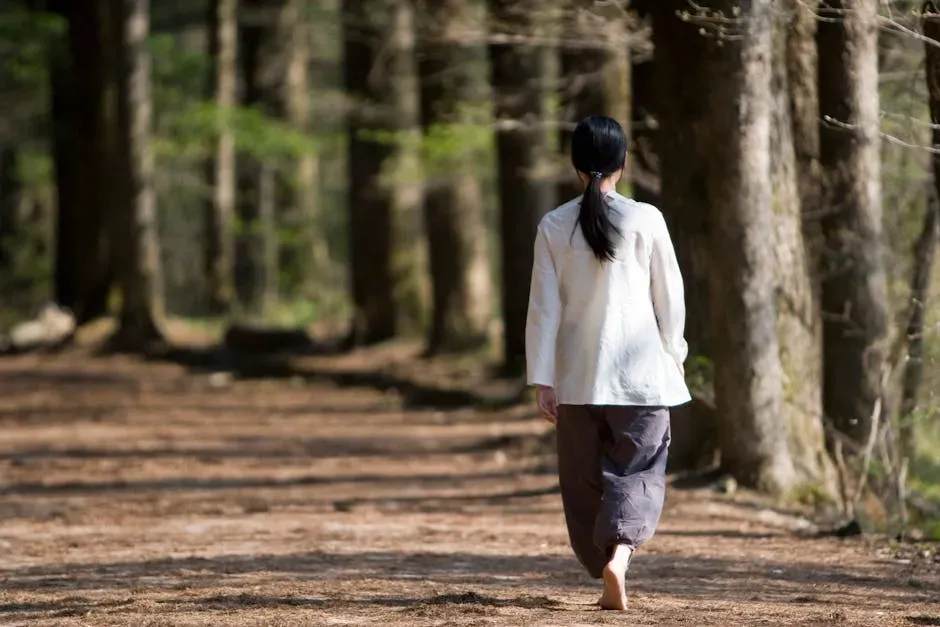
Researchers emphasise that engaging in activities like walking through nature, driving, sitting in a waiting room, or staring out the window can aid in problem-solving and emotional regulation. These activities, especially when experienced without a phone, a podcast, or an objective, allow the mind to drift freely and generate insights that might otherwise remain buried. The implication is fairly direct: protecting unstructured time isn’t laziness, it’s strategy. Research on the default mode network, a network of brain regions that becomes active during periods of rest and mind-wandering, shows that activation of the DMN during breaks is associated with enhanced creativity, problem-solving, and insight.
The trick is not to optimize for how to spark your creative spirit, but to make sure you capture it whenever it happens. Instead of looking for better ways to brainstorm or otherwise come up with ideas, the key is to not let go of the tiny, fragile ones, once they enter your head. Keeping a notepad close during walks, resting periods, or those groggy morning minutes isn’t superstition. It’s a practical response to how the brain actually produces its best work – quietly, without announcement, and almost always when you weren’t quite looking for it.