A Different Way to Think About Creative Confidence
Most people carry a quiet assumption about creativity: that you either have it or you don’t. It’s the kind of belief that sits in the background, rarely examined, occasionally surfacing when someone laughs off an invitation to an art class or flinches at being asked to brainstorm in a meeting. The belief feels harmless, but research suggests it shapes behavior in ways that are anything but small.
Creative confidence is not the same as creative talent. That distinction matters more than it might seem at first, and unpacking it changes how we understand why some people engage freely with creative work while others hold back entirely. The psychology here is both more interesting and more hopeful than the conventional story allows.
The Belief That Blocks Before You Even Start
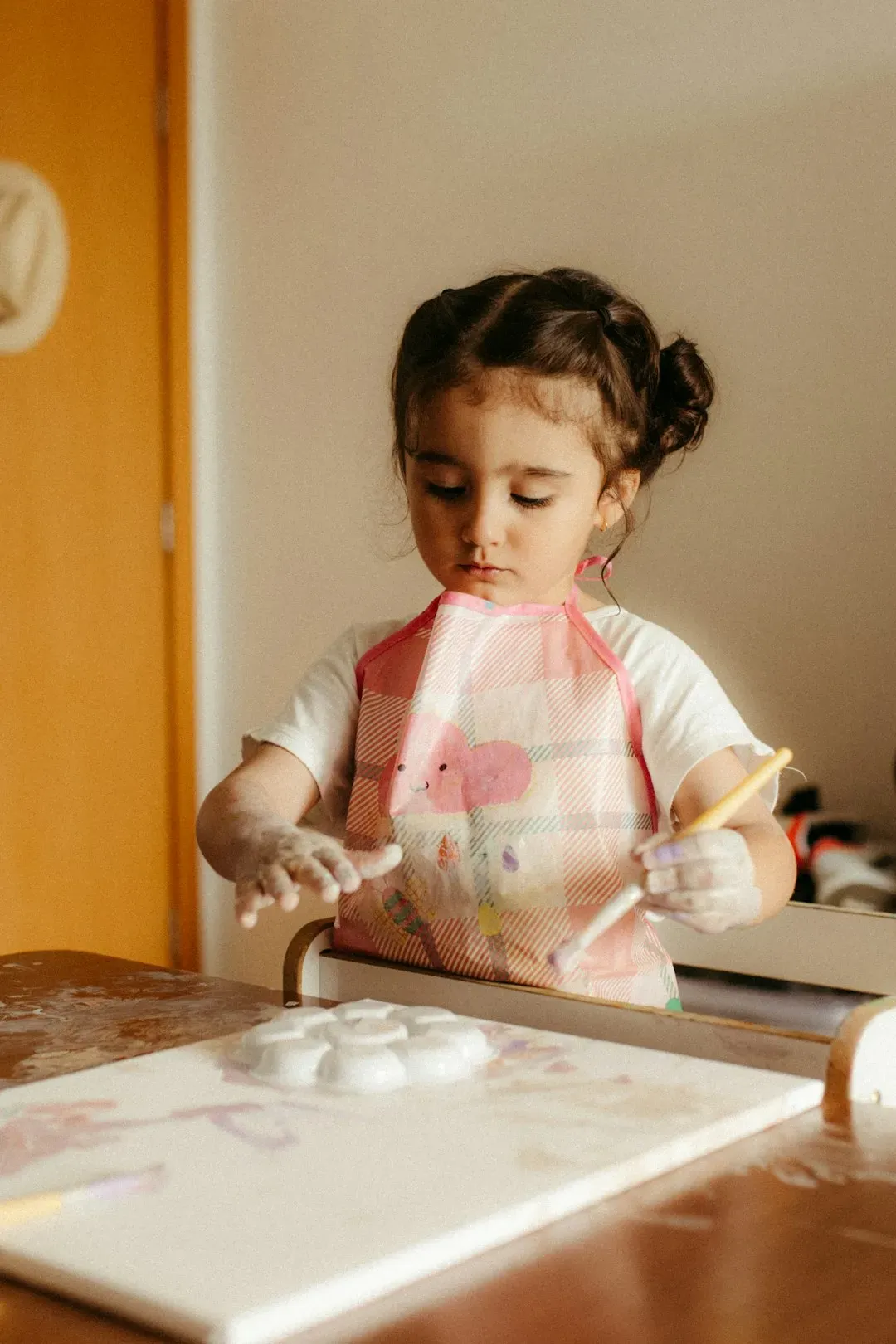
Most people are born creative. Over time, though, many learn to stifle those impulses. They become warier of judgment, more cautious, more analytical, and the world seems to divide into “creatives” and “noncreatives,” with too many people resigning themselves to the latter category.
Creativity doesn’t usually disappear with age – it fades much earlier, often during childhood, and often in a way that goes unnoticed. According to behavioral scientists, many adults who claim they’re not creative can trace that belief back to a single moment when something they made was judged instead of understood. Interestingly, this turning point rarely involves harsh criticism. More often, it comes from well-meaning responses – grades, comparisons, or even simple praise – that shift a child’s focus from expressing meaning to seeking approval.
What Creative Confidence Actually Means

Creative confidence, or creative self-efficacy, is a belief that we can successfully complete tasks in the creative process – from coming up with original and valuable ideas, to judging which are the best and most feasible ones, to taking action to develop them into performances or products. It’s not about raw ability. It’s about whether you believe you can engage meaningfully in the first place.
Creative self-efficacy is a person’s prospective belief that they can organize and execute the necessary actions for a successful creative process, leading to a successful creative product within a specific context. It differs from other types of self-efficacy because it is a generative and innovative type of confidence. It is not only necessary for persistence once creative efforts are launched; it is also key for choosing to take the risk of engaging in a creative task from the very onset.
The Research That Reframes Everything

Research that jointly analyzed results from 41 studies with more than 17,000 participants shows that those who have greater creative confidence tend to do better on tests of creative thinking and be more creative in what they do, whether students in elementary school science class or professionals at work evaluated by their supervisors. That’s a wide sample. The consistency across very different contexts is striking.
Creative self-efficacy is defined as “the belief that one has the ability to produce creative outcomes.” Research highlights that it shapes individuals’ creativity and their tendency to engage in creative performance or efforts to achieve creative challenges. One study on 1,322 college and high school students revealed that a high level of creative self-efficacy is correlated with a positive perception of success in studies and a greater motivation to learn.
How Fear of Judgment Gets in the Way
Decades of research on group brainstorming suggests that people can experience social anxiety while generating ideas together with group members, and that evaluation apprehension can make group members withhold their most novel ideas in favor of more mundane solutions. Individuals generate fewer ideas that encompass a narrower range of idea categories when they fear evaluation and judgment.
Many so-called “blocks” are actually fear in disguise: fear of not being good enough, of wasting time, of being judged. Fear shuts down curiosity because it narrows attention toward perceived threats. The creative mind, by contrast, needs freedom to play. From a psychological perspective, creative block can arise from fear of judgment, perfectionism, or external pressures, leading to heightened stress and anxiety that inhibit the free flow of ideas. Neurologically, it may also be linked to reduced activity in the prefrontal cortex, the brain region responsible for creative thinking and decision-making.
The Mindset That Makes the Difference
Creative mindset concerns specifically people’s inner beliefs regarding the source and dynamic nature of creativity – whether creativity is an inborn and unchangeable ability or a malleable and developable skill. Mindset research has primarily revealed that individuals with a growth mindset tend to exhibit more adaptive learning strategies, higher persistence, more mastery-oriented goals, and higher academic achievement than those with a fixed mindset. The effects of an individual’s mindset become especially apparent when they encounter setbacks. For individuals with a growth mindset, failure represents a lack of effort or the use of ineffective strategies, whereas for those with a fixed mindset, failure represents permanent incompetence.
In a poll of 143 creativity researchers, there was wide agreement that the number-one trait underpinning creative achievement is precisely the kind of resilience and fail-forward perseverance attributed to the growth mindset. Creative mindset concerns specifically people’s inner beliefs regarding the source and dynamic nature of creativity – whether creativity is an inborn and unchangeable ability or a malleable and developable skill. The two positions lead to very different creative lives.
Small Steps, Real Progress

The trick to rebuilding creative confidence is to overcome the four big fears that hold most people back: fear of the messy unknown, fear of judgment, fear of the first step, and fear of losing control. The approach, based on the work of psychologist Albert Bandura, involves breaking challenges down into small steps and then building confidence by succeeding on one after another.
Research has found that creative confidence at the end of a creative task is predicted by feelings of satisfaction and ease of working on it at different times during the process. The more we notice our progress, the more confident we get. Progress recognition, not grand achievement, is what actually moves the needle. That’s a more accessible starting point than most people assume.
Context Shapes Confidence More Than We Realize

The effects of creative self-efficacy on creative performance may vary depending on task conditions, particularly when individuals respond to evaluative feedback, suggesting that creative self-efficacy is best understood as a context-sensitive facilitator rather than a uniformly strong predictor across all creative tasks. In other words, confidence isn’t a fixed internal resource. It responds to the environment around it.
Creative self-efficacy can change based on an individual’s environment and experiences. Research indicated that although elevated levels of creative self-efficacy predicted employees’ likelihood to be creative in their work, this process was unique to the setting. Feedback from supervisors operated as a mediator in the relationship between creative self-efficacy and creative performance. The implication for teams and classrooms is direct: the environment is not neutral.
Creativity and Children: What the Latest Data Shows

Among children aged 6 to 12 surveyed in a 2024 study, the vast majority – roughly nine in ten – believe that being creative boosts their confidence. The research highlights creativity’s role as a powerful catalyst for educational, emotional, and cognitive growth. Nearly two thirds of children shared that engaging in a creative activity makes them feel happy and excited to participate. Nearly six in ten shared that participating in a creative activity gives them a sense of pride. More than half shared that creativity makes them feel like they’ve accomplished something.
The results highlight evidence that creativity not only helps children express themselves but also helps build the self-efficacy and resilience needed to navigate life’s complexities. Psychology distinguishes between intrinsic motivation – doing something for its own sake – and extrinsic motivation, doing it for rewards or approval. Creative work thrives on intrinsic motivation. When children become focused on praise, grades, or validation, their reason for creating changes. They no longer create because they have something to express; they create to be told they’re good.
Confidence as a Trait and a State

Trait creative self-efficacy underpins long-term creative pursuits, such as an artist’s sustained confidence in their craft or a scientist’s enduring belief in their innovative potential. State creative self-efficacy, by contrast, can be observed in temporary contexts, like a student feeling empowered to propose novel ideas during a classroom activity after receiving encouraging feedback.
Generally, individuals with high self-efficacy are more confident in achieving their goals and are also more likely to view negative feedback as an opportunity rather than a threat. They tend to adopt proactive coping strategies and typically achieve better performance. Research findings indicate that positive feedback can effectively enhance individuals’ creative self-efficacy and promote originality, offering valuable insights for both educational and workplace settings.
Rethinking What “Being Creative” Actually Requires
Adopting a view that creativity isn’t a rare gift does not imply denying that exceptionally creative individuals often share certain personality traits. While these traits do not necessarily make people “unique and great,” they can form a combination of factors that facilitate creativity. Such traits include boldness, risk-taking ability, tolerance for frustration and uncertainty, motivation to excel, and a healthy degree of self-confidence.
According to social cognitive theory, self-efficacy influences how individuals approach tasks, regulate efforts, and persist during difficulties. In creative contexts, individuals with stronger creative self-efficacy are more likely to engage confidently in creative tasks, explore unconventional ideas, and sustain efforts when encountering uncertainty, thereby increasing the likelihood of successful creative performance. None of those qualities are innate gifts. They’re behaviors shaped by beliefs – which means they’re accessible to almost anyone willing to examine what they actually believe about their own capacity to create.